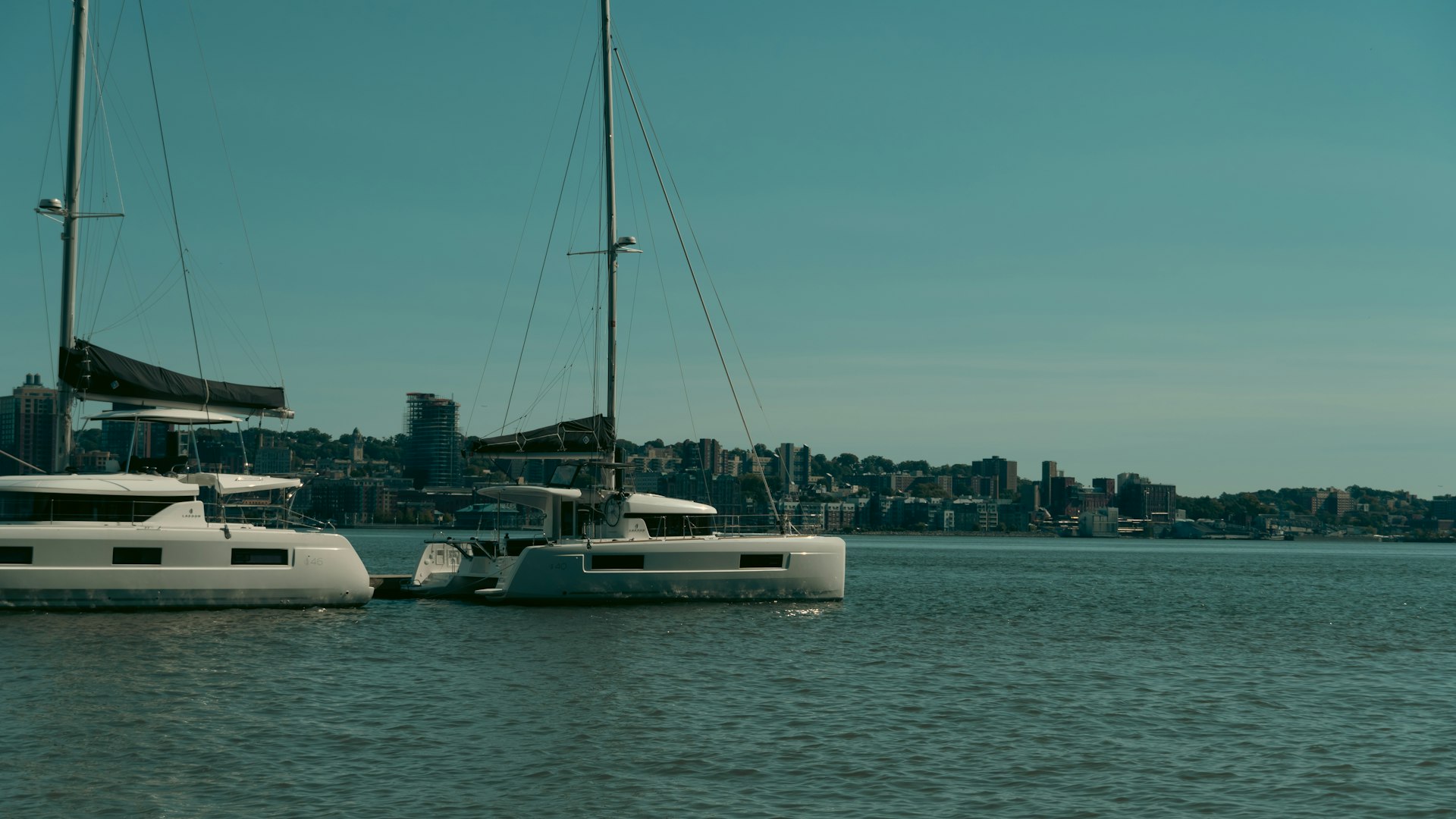
Sailing Yacht Charters
From the trade wind passages of the Atlantic to the intricate island chains of Southeast Asia, a sailing yacht charter places the world's most compelling coastlines within reach — on your own schedule, under canvas.
Featured Sailing Yachts

Bareboat Sailing Yacht ENCORE
Sun Odyssey 49
From
$37/week

Crewed Sailing Yacht NEREIDA
Rena Class ketch · 1984
From
€850/week

Bareboat Sailing Yacht Sun Odyssey 349
Sun Odyssey 349 · 2015
From
€900/week

Luxury Crewed Sailing Yacht Oceanis 361
Oceanis 361 · 2003
From
€1k/week

Bareboat Sailing Yacht IFIGENIA
Bavaria 35 Cruiser · 2012
From
€1k/week

Bareboat Sailing Yacht Hanse 315
Hanse 315 · 2016
From
€1k/week

Crewed Sailing Yacht Hanse 54
Hanse 540 · 2006
From
€1k/week

Bareboat Sailing Yacht Patriot- Impression 344 by Elan
Elan Impression 344 · 2011
From
€1k/week

Bareboat Sailing Yacht Sun Odyssey 36
Sun Odyssey 36i · 2011
From
€1k/week

Bareboat Sailing Yacht Oceanis 35
Oceanis 35 · 2015
From
€1k/week

Bareboat Sailing Yacht Delphia 37
Delphia 37 · 2010
From
€1k/week

Bareboat Sailing Yacht Oceanis 37
Oceanis 37 · 2010
From
€1k/week
Sailing Yacht Charters by Destination
Caribbean
Mediterranean
Asia Pacific
Indian Ocean
Northern Europe
Sailing yacht charter is not a single product. It is a spectrum that runs from a crewed 52-metre aluminium sloop built for bluewater passage-making to a bareboat performance cruiser slipping out of a Greek marina at dawn. What unites every vessel in the category is the relationship between hull, rig, and wind — a dynamic that changes the quality of movement through a place in ways that motor vessels simply cannot replicate. The sail itself is the experience, not merely the means of propulsion.
SelectYachts' global sailing fleet spans builders from Alloy Yachts and Ada Yacht to custom Phinisi yards in Sulawesi, with vessels available across every ocean basin. Whether you are planning a structured Caribbean circuit between November and April, an Atlantic crossing with a professional delivery crew, or a private charter through the Banda Sea in Indonesia, the right sailing yacht exists in this fleet. The question is matching rig, range, and crew configuration to what you actually want from the water.
Why Charter in Sailing Yacht charter worldwide
The fundamental reason experienced charterers return to sailing yachts year after year is efficiency of motion. A well-found yacht running before the trade winds on a broad reach covers distance with almost no mechanical noise, no exhaust, and a motion that, once you have acclimatised to it, becomes deeply satisfying. In destinations with reliable prevailing winds — the Aegean meltemi, the Caribbean trades, the Indian Ocean monsoon — this is not a concession to romance; it is a genuinely superior way to travel.
Sailing yachts also access anchorages that larger motor vessels cannot reach. A draught of under three metres on a 24-metre sailing yacht opens up the Exumas' shallow sand bores, the narrow passages of the Dalmatian coast, and the isolated reef anchorages of the Tuamotus. This is especially relevant for charterers who have done the headline destinations and are looking for the quieter version of a place — the bay without a beach bar, the fishing village that has not yet been discovered by the flotilla crowd.
From a crew perspective, a sailing yacht of serious size typically carries a skipper, mate, and chef as a minimum, occasionally with a dedicated deck hand on larger vessels. This crew-to-guest ratio allows for a more personal, less regimented experience than large motor yachts, and the best sailing crews tend to be deeply knowledgeable about the waters they work — the kind of people who know which anchorage holds best in a northerly swell and where the fish market opens at 0600.
Sailing Yacht charter worldwide Highlights
The Grenadines, Eastern Caribbean — the 60-mile chain between St Vincent and Grenada offers consistent trade wind sailing, protected anchorages at Tobago Cays and Petit St Vincent, and almost no significant swell inside the island chain.
The Dalmatian Coast, Croatia — over a thousand islands and islets from Istria to Dubrovnik, with the maestral afternoon sea breeze making for reliable downwind passages between the national park islands of the Kornati and the walled city of Hvar.
The Aegean, Greece — the Cyclades and Dodecanese chains reward sailors who understand the meltemi wind pattern; passages from Mykonos to Amorgos or Patmos to Rhodes are serious blue-water sailing, not coastal pottering.
Raja Ampat and the Banda Sea, Indonesia — for the remotely adventurous, a crewed Phinisi through the Coral Triangle offers marine biodiversity that has no rival elsewhere, best sailed May through October when the northwest monsoon has passed.
The Whitsunday Islands, Australia — reliable south-easterly trade winds, the protected waters of the Coral Sea, and access to the outer Great Barrier Reef make this one of the southern hemisphere's most consistent sailing destinations.
The Society Islands, French Polynesia — Bora Bora, Raiatea, Tahaa, and Huahine form a navigable circuit anchored on the Raiatea-Tahaa lagoon, with long passages from the Tuamotus available for vessels with bluewater range.
The Norwegian Fjords — midsummer charter in Norway, based out of Bergen or Ålesund, offers glassy waters inside the fjords, midnight sun sailing, and a scale of scenery that demands a vessel capable of serious passage-making between the outer skerries.
When to Sail
Because sailing yachts are global in their range, there is no single best season — each ocean basin follows its own logic. The practical answer for most charterers is to follow the trade winds and avoid the tropical cyclone belts during their respective active seasons.
High Season (Jun-Sep)
The Mediterranean operates at full pace from June through September, with the Aegean meltemi blowing Force 4-6 from the northwest from late June onwards — excellent sailing conditions for performance yachts, though timing departures around the afternoon build matters. The Baltic is superb in July and August, with long daylight hours and uncrowded anchorages in the Swedish archipelago and Finnish skerries. The Pacific Northwest — British Columbia and Southeast Alaska — peaks in July and August with stable high-pressure systems and spectacular scenery. Meanwhile, the Southern Hemisphere's winter season makes the Whitsundays and New Zealand reliable options from June through August.
Shoulder Season (May, Oct)
May and October represent the sweet spot in several of the world's most popular sailing grounds. The Eastern Mediterranean in May offers settled conditions, lower temperatures than August, and marinas that have not yet reached capacity. The BVI and Leeward Islands in late April and May retain the trade winds while crowds thin considerably after Easter. October in the Ionian is arguably the finest sailing month of the year — consistent northwesterlies, warm water, and a landscape shifted by the light of early autumn. The Caribbean transitions back into season by late October, and the Indian Ocean — specifically the Maldives and Seychelles — reaches its own shoulder window between seasons.
Choosing the Right Yacht
For most worldwide sailing charters, the critical choice is between a monohull and a catamaran-rigged sailing yacht. Monohulls — particularly the aluminium and steel bluewater designs from yards such as Alloy Yachts, Andre Hoek, and Advanced Italian Yachts — are the appropriate choice for passage-making in open ocean conditions. They carry fuel and water range, perform well in 20-plus knots of breeze, and offer the kind of structural integrity that matters on a ten-day offshore passage. A performance monohull of 30 to 50 metres also carries a crewed complement properly suited to longer voyages, with crew quarters separated from guest accommodation in a way that smaller cats rarely manage.
Seven Days in the Cyclades — Athens to Santorini
A suggested week-long charter route
Depart Alimos Marina, Athens, transiting the Saronic Gulf southbound. With a favorable morning breeze off the Attic coast, pass the cape at Sounion and set course for Kythnos. Anchor in the sheltered bay at Kolona — a sand spit connecting two headlands — for the first night.
Sail south to Serifos, arriving at the main port of Livadi before the afternoon meltemi builds. The village of Chora above the harbour is worth the climb — small tavernas, no tourist infrastructure to speak of, and a view across the western Cyclades. Anchor stern-to in Livadi or take a mooring in the inner bay.
An early start is essential for the passage to Sifnos, a 12-mile run that can become uncomfortable if the meltemi is already blowing north-to-south at strength. Kamares harbour receives yachts well; the village is known for its pottery and for chickpea-based cooking that is specific to the island.
Transit to Milos — specifically the anchorage at Kleftiko on the southwest coast, accessible only by sea and notable for its sea caves and white volcanic rock formations. Spend the afternoon here before moving to the main harbour at Adamas for the night, where provisions and fuel are readily available.
A longer passage day: Folegandros, 25 miles from Milos and one of the least developed islands in the group. The harbour at Karavostasis is compact; the main settlement, Chora, sits dramatically on a cliff edge above. The meltemi channel between Folegandros and Sikinos requires attention — it accelerates considerably in mid-afternoon.
Sail to Ios, making landfall at the main port by mid-morning before the anchorage fills. Ios has a reputation it does not entirely deserve for a sailing charter guest; the southern beaches at Manganari are quiet and accessible by dinghy. Overnight at anchor or stern-to on the town quay.
Final passage to Santorini (Thira) — approach from the north, entering the caldera through the channel between Thirasia and the main island. The scale of the volcanic cliffs becomes apparent only from within the caldera. Anchor in the southern section of the caldera off Vlychada or arrange a berth at the Ammoudi commercial quay. Depart crew and guests by arrangement.
Local Tips
- •Entry documentation varies significantly by ocean basin. The Caribbean and Mediterranean are broadly straightforward for EU and UK passport holders, but Indonesia requires a specific yacht permit (CAIT) arranged well in advance, and French Polynesia mandates a bond or travel insurance equivalent to a return flight for non-EU nationals. Confirm current requirements with your charter broker at least six weeks before departure.
- •Provisioning quality is uneven globally. Athens, Palma de Mallorca, Antibes, and Tortola have well-established yacht provisioning suppliers who deliver to the marina and work to dietary specifications. Remote Pacific and Indonesian itineraries require a full provisioning run at a regional hub — typically Papeete for French Polynesia or Sorong for Raja Ampat — before heading off-grid.
- •Fuel management matters on performance sailing yachts. A 40-metre sailing yacht running the generator continuously for air conditioning and watermakers will burn 80-120 litres of diesel per day even at anchor. In destinations with sparse fuel infrastructure — the Banda Sea, the outer Tuamotus — factor fuel range into the itinerary planning, not as an afterthought.
- •Marina reservations in high season are not optional. In the Aegean from late June to mid-August and in the BVI from Christmas to Easter, failure to secure berths in advance means anchoring out every night, which is fine on its own terms but removes the option of a town dinner or shoreside access at specific ports. Dubrovnik's Old City marina typically books out by April for August.
- •Respect local fishing and anchoring regulations. Posidonia seagrass meadows in the Mediterranean are protected by EU law, and anchoring on them carries meaningful fines in Spain, France, and Greece. Many popular anchorages now operate mooring buoy systems specifically to protect the seabed — use them where provided.
- •Cuisine is genuinely regional and worth engaging with. The distinction between a Cretan taverna in Heraklion and a meze spread in Rhodes is not cosmetic — the olive oil, the greens, and the fish preparation differ meaningfully. In Indonesia, Phinisi crews typically include a cook who works with local wet-market ingredients at each port; allow the cook to provision locally rather than importing everything from the charter base.
Frequently Asked Questions
What is the minimum budget for a crewed sailing yacht charter worldwide+
How far in advance should a worldwide sailing charter be booked+
What is an APA and how does it work on a sailing charter+
Is sailing experience required to charter a sailing yacht+
What is the difference between a monohull sailing yacht and a sailing catamaran for charter+
Can a sailing yacht cross oceans as part of a charter+
Tell us where you want to go and when, and our sailing specialists will match the right vessel to your itinerary within 24 hours.
Request Your Charter