Croatia Yacht Charters

Croatia Yacht Charters

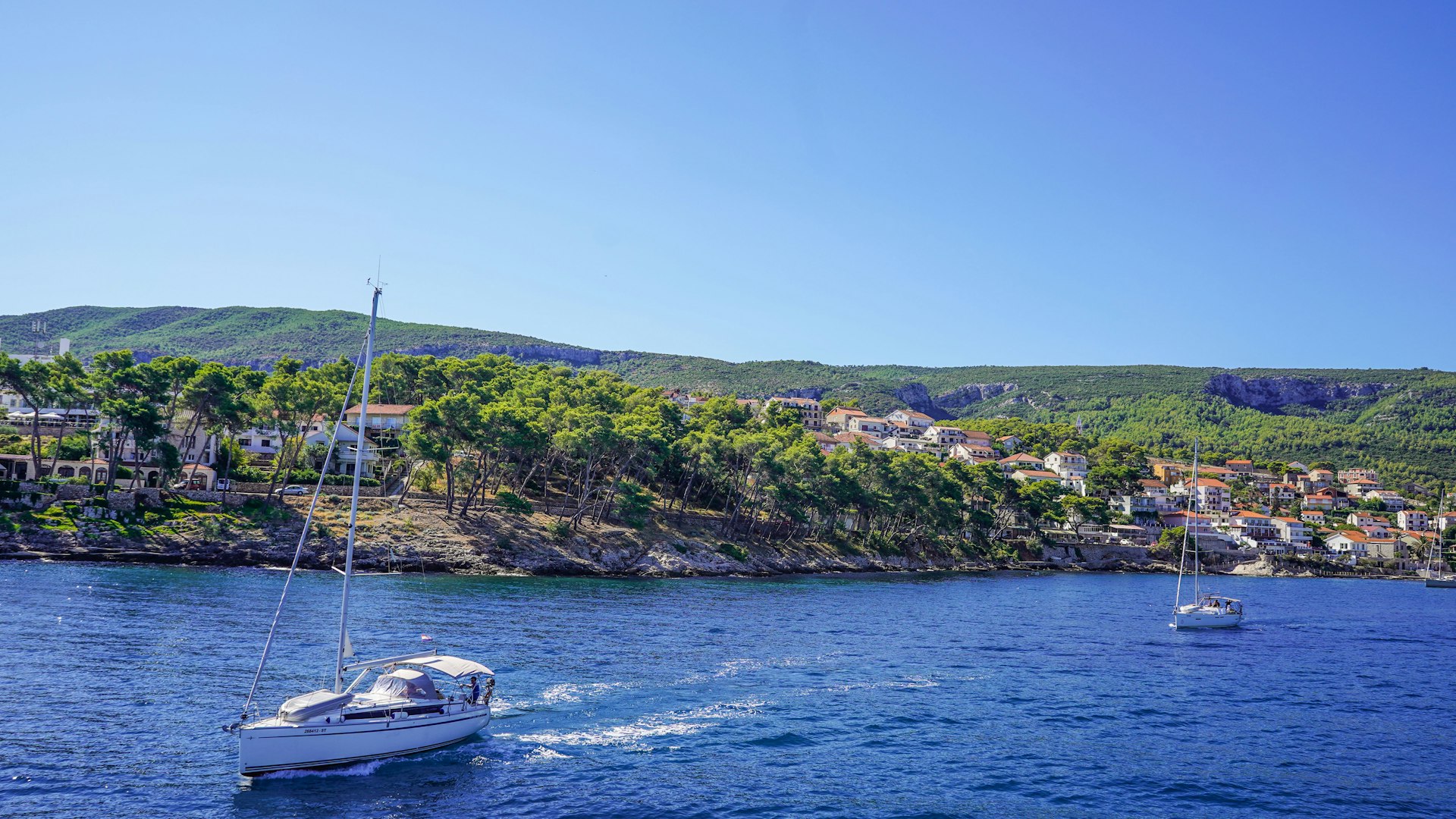
Over a thousand islands, reliable summer winds, and a coastline that rewards experienced charterers with hidden coves, walled medieval towns, and some of the clearest water in the Mediterranean.

Croatia's Adriatic coast stretches roughly 1,800 kilometres from Istria in the north to the Prevlaka peninsula in the south, with the Dalmatian archipelago offering the kind of island-hopping that takes multiple seasons to exhaust. The country has built one of Europe's most capable charter infrastructures without sacrificing the wild anchorages and stone-village character that make it worth visiting in the first place.

Split and Dubrovnik serve as the principal charter bases, with Šibenik and Zadar offering less congested alternatives that put you closer to the Kornati National Park and the northern island chains from the outset. Whether you are running a performance sailing yacht between the Brač and Hvar channels or taking a gulet at a relaxed pace through the Pelješac peninsula's oyster villages, the logistics are straightforward and the sailing genuinely varied.

Why Charter in Croatia

The Adriatic's summer wind patterns are predictable in a way that serious sailors appreciate. The maestral — a north-westerly sea breeze — fills in most mornings from May through September, typically reaching 12 to 18 knots by early afternoon before easing at sunset. It is consistent enough to plan around and rarely aggressive enough to force itinerary changes. The bora, a fierce north-easterly katabatic wind, is the one to monitor in shoulder months; when it arrives it can exceed 40 knots in exposed channels, but it clears quickly and forecasting in the region is reliable.

Ashore, the quality gap between Croatia and other Mediterranean charter destinations has closed considerably. Michelin-recognised restaurants now operate in Dubrovnik, Hvar Town, and on Korčula, and the Dalmatian wine regions — Plavac Mali from the Pelješac peninsula, Pošip from Korčula, Grk from the sandy soils of Lumbarda — have moved well beyond novelty status. Provisioning from ACI marinas is efficient, and the number of skilled local skippers and hostesses available for crewed charters has grown in step with the fleet.

The national park network is a practical differentiator. The Kornati archipelago alone comprises 89 islands and islets, most of them uninhabited, with anchorages that feel entirely removed from the rest of the season's charter traffic. Mljet National Park, accessible on a southern Dalmatia itinerary, has two interconnected saltwater lakes inside dense Mediterranean forest — unusual enough to justify the routing entirely.

Croatia Highlights

1

Kornati archipelago — 89 mostly uninhabited islands in a protected national park, with dramatic karst cliffs dropping directly into 30-metre visibility water and anchorages that require a park permit purchased in Murter or Žut.

2

Vis island — the furthest inhabited island from the mainland, with the blue cave at Biševo nearby, a serious wine tradition (Viška Vugava), and a British Raj-era cricket pitch that has been in continuous use since the Napoleonic Wars.

3

Hvar Town and Paklinski Islands — the town itself warrants a morning's walk for its Venetian loggia and 16th-century arsenal theatre, while the Paklinski island chain a short motor south offers calm anchorages in Palmižana and Vinogradišće.

4

Dubrovnik and the Elafiti Islands — use Gruž harbour as a base rather than fighting the Old Town marina; the three Elafiti islands (Koločep, Lopud, Šipan) to the north-west are an easy day sail and almost entirely car-free.

5

Mljet National Park — the two saltwater lakes, Malo and Veliko jezero, can be navigated by dinghy and kayak; anchor off the national park village of Pomena and arrange park permits on arrival.

6

Korčula Town — a walled medieval settlement on a narrow peninsula, widely regarded as the best-preserved example of Gothic-Renaissance urban planning on the Adriatic, with Pošip white wine produced in vineyards immediately outside the walls.

7

Šibenik and the Krka River approach — the Cathedral of St James is a UNESCO World Heritage site built entirely without mortar, and charter yachts can motor up the Krka estuary to anchor within walking distance of Skradinski Buk waterfall, one of the few cascades in Europe you are permitted to swim in.

When to Sail

Croatia's charter season runs from May through October, with the summer core delivering reliable winds and warm water but requiring advance berth reservations at the most popular marinas.

High Season (Jun-Sep)

July and August bring sea temperatures around 25°C, the maestral at its most consistent, and the longest days. The trade-off is that Hvar Town, Dubrovnik Old Harbour, and Vis attract significant traffic; arriving before noon to secure a buoy or town quay berth is standard practice. August in particular requires marinas to be booked well ahead — ACI Palmižana and ACI Dubrovnik fill by mid-morning in peak weeks. June and September offer nearly identical sailing conditions with noticeably fewer vessels and more approachable pricing on both yachts and shoreside experiences.

Shoulder Season (May, Oct)

May is underrated: air temperatures reach the mid-20s, the bora risk is manageable with proper monitoring, and the Dalmatian interior is green rather than the bleached summer palette. October brings some of the clearest visibility of the year and excellent fishing. Both months suit experienced crews comfortable adapting to variable conditions, and charter rates tend to sit measurably below summer peaks. Marinas are uncrowded, restaurants are unhurried, and the islands feel more like places people actually live in.

Choosing the Right Yacht

Croatia suits almost every yacht configuration, which explains why the available fleet spans catamarans, sailing yachts, motor yachts, and gulets in roughly equal measure. Catamarans are the pragmatic choice for families or groups prioritising deck space and shallow-draught anchoring — the Paklinski Islands and parts of the Kornati require anchoring in 3 to 4 metres where a monohull's keel can be limiting. Performance sailing yachts reward the maestral-reliable channels between the central Dalmatian islands; the Brač and Hvar channels see consistent afternoon wind that makes ocean-class monohulls genuinely fast rather than motor-assisted. For groups of eight to sixteen who want the pace of a proper cruise rather than a racing schedule, gulets — traditional Turkish-built wooden motor-sailors — are particularly well suited to the Croatian archipelago, offering broad deck space, a shallow draught, and a pace that matches the unhurried character of the northern islands.

Seven Days in Central Dalmatia — Split to Dubrovnik

A suggested week-long charter route

Day 1

Board in Split ACI Marina and spend the afternoon in Diocletian's Palace — the UNESCO-listed Roman retirement complex that became the medieval city's skeleton. Depart early evening for a first night at anchor in the Paklinski Islands off Hvar, using the buoyed anchorage at Vinogradišće.

Day 2

Morning in Hvar Town for the fortress and market, clear before the day-trip crowd peaks around 11:00. Afternoon maestral south-east to Vis; arrive in Vis Town for dinner at one of the seafront konobas serving grilled fish and the local Viška Vugava white.

Day 3

Early tender trip to the Blue Cave at Biševo — lighting is optimal between 10:00 and 12:00 when the sun enters through the underwater aperture. Return to Vis for provisioning, then sail east to anchor in the protected bay of Stiniva on Vis's southern coast, one of the most photogenic coves in the archipelago.

Day 4

Passage day south-east to Korčula Town. Arrive for lunch and spend the afternoon walking the walled old town. Book ahead for dinner at a restaurant serving peka — lamb or octopus slow-cooked under a cast-iron bell covered with embers — a method the inland villages of Dalmatia do better than anywhere else.

Day 5

Sail across the Pelješac Channel to Mali Ston for the oyster beds — the Mali Ston Bay has been farmed continuously since Roman times and the oysters are worth the detour. Continue west along the Pelješac peninsula, stopping to swim off the beaches near Žuljana before anchoring for the night at Polače on Mljet.

Day 6

Full day in Mljet National Park — arrange park permits through the harbourmaster at Pomena. Hire bicycles to reach Malo jezero and kayaks to explore the lake interior. The 12th-century Benedictine monastery on the island within Veliko jezero is accessible by small ferry and worth a visit.

Day 7

Sail south to Dubrovnik, entering Gruž harbour for the final night. Evening walk through the Pile Gate into the old town; the summer crowds thin noticeably after 19:00. Return the yacht the following morning.

Local Tips

  • Croatian entry formalities are straightforward for EU-registered yachts and have been since Croatia joined the Schengen Area in 2023. Non-EU flagged vessels must check in at a port of entry with a Customs clearance (E-Crew application via the e-Customs portal), which takes around 30 minutes. Keep the vinjeta (cruising permit) on board throughout — harbour inspectors do check.
  • ACI marina reservations for July and August should be made two to three months in advance for the most popular locations (Palmižana, Dubrovnik, Hvar). Away from these hotspots, the northern Dalmatian island marinas — Žut, Piškera, Tkon — remain bookable with far less lead time and are usually quieter.
  • Local currency is the euro since January 2023. Credit cards are widely accepted in marinas and most restaurants, but small harbour-front konobas in villages like Komiža, Zaton, and Vela Luka typically prefer cash. Keep 200 to 300 euros in notes for national park permits, tender fuel, and informal mooring fees at town quays.
  • Provisioning is best handled in Split, Šibenik, or Dubrovnik at the outset. Island supermarkets exist but stock is limited and prices are notably higher. The Pazar open-air market below Diocletian's Palace in Split is the most efficient place to stock fresh produce, olive oil, and Dalmatian cured meats before departure.
  • National park fees apply separately for Kornati, Mljet, and the Krka River zone. Permits are available at the park entrance points (Murter for Kornati, Pomena for Mljet) or in advance via park authority websites. Budget roughly 150 to 200 euros per day for a yacht in the mid-size range depending on the park; fees scale with vessel length.
  • Tipping culture is relaxed by Mediterranean standards — rounding up or leaving 10 per cent is appreciated rather than expected. The exception is crewed charter crew gratuity, where 10 to 15 per cent of the charter fee remains standard and is best handed to the captain in cash at the end of the trip for distribution.

Frequently Asked Questions

Do I need a skipper's licence to charter in Croatia+
Croatia requires a valid International Certificate of Competence (ICC) or equivalent national licence to charter a bareboat yacht. The minimum licence requirement is a VHF operator's certificate alongside the ICC. If your party does not hold the appropriate certification, chartering with a professional skipper — either provided by the charter company or hired locally — is straightforward and often preferred for first-time visitors to the archipelago.
Which is the better base — Split or Dubrovnik+
Split gives you immediate access to the central Dalmatian islands (Brač, Hvar, Vis, Šolta) and is the logical start for itineraries running south. Dubrovnik suits groups whose priority is the southern islands (Mljet, Korčula, Lastovo) or who are working a one-way itinerary finishing in Montenegro or Albania. Šibenik and Zadar are worth considering as bases if the Kornati archipelago or northern island chains are the focus — they avoid the Split embarkation bottleneck during peak weeks.
What are the hidden costs of chartering in Croatia+
Beyond the charter fee, budget for the cruising permit (vinjeta), national park entrance fees if your itinerary includes Kornati or Mljet, marina berth fees (ACI rates range roughly from 40 to 300+ euros per night depending on vessel size and location), fuel, provisioning, and crew gratuity on crewed charters. APA (Advance Provisioning Allowance) on fully crewed bookings is typically 20 to 30 per cent of the charter fee and covers fuel, port dues, and provisioning; any unspent portion is returned at the trip's end.
How crowded does Croatia get in August+
The flagship destinations — Hvar Town, Dubrovnik Old Town, and the Paklinski Islands — are genuinely busy in late July and August. Town quay berths in Hvar are typically full by midday. However, the overall scale of the archipelago means genuinely quiet anchorages remain accessible with modest repositioning. The Lastovo archipelago, the outer Kornati islands, and the western coast of Vis see a fraction of the traffic encountered in the central Hvar-Brač corridor.
Is Croatia suitable for novice charterers+
Yes, with the right configuration. The sheltered channels between the mainland and the inner islands, combined with well-marked harbours and dense marina infrastructure, make Croatia one of the more forgiving bareboat destinations in the Mediterranean. First-season charterers are advised to avoid the bora months (October through April) and to base themselves centrally in Split or Šibenik rather than attempting long passages. Hiring a local skipper for a first season is worth the additional cost for the local knowledge alone.
What is the best yacht type for a group of twelve adults+
A gulet or a large catamaran in the 20 to 24-metre range is typically the most comfortable configuration for twelve guests. Gulets built in the 55 to 75-foot range offer six private cabins, wide aft decks suitable for dining, and a draught shallow enough for the inshore Dalmatian anchorages. Large catamarans provide similar cabin counts with more living deck area but less of the traditional character that suits the pace of island cruising. Motor yachts in this guest count require a considerably higher budget but offer significantly faster passage-making if the itinerary is ambitious.

Speak to a SelectYachts charter specialist to match the right vessel to your dates, group size, and preferred Adriatic route.

Request Your Charter

Request Your Charter

Tell us about your dream voyage and we will find the perfect yacht for you.