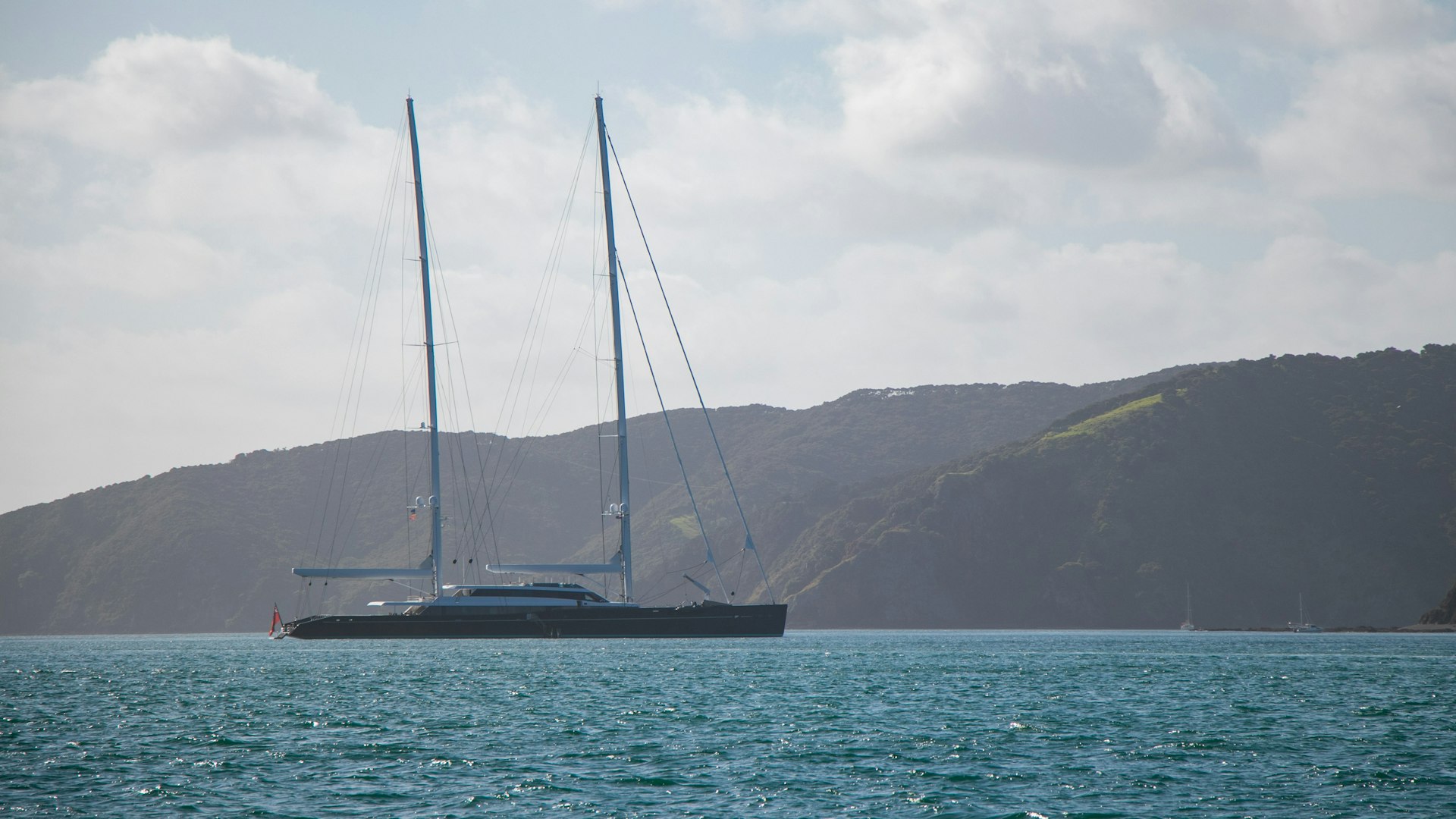
New Zealand Yacht Charters
From the sheltered fiords of Southland to the island-studded reaches of the Hauraki Gulf, New Zealand offers some of the southern hemisphere's most varied and technically rewarding sailing — across two main islands separated by the unpredictable Cook Strait.
Charter by Vessel Type
Catamaran Charter in New Zealand
Spacious twin-hull vessels offering stability, comfort, and generous deck space for the ultimate charter experience.
Browse Catamarans →
Sailing Yacht Charter in New Zealand
Classic sailing vessels that combine timeless elegance with the thrill of wind-powered adventure.
Browse Sailing Yachts →
Motor Yacht Charter in New Zealand
Powerful luxury vessels delivering speed, sophistication, and effortless cruising across any waters.
Browse Motor Yachts →
Available Yachts in New Zealand
No yachts listed yet. Request a charter and our specialists will find the perfect vessel for you.
New Zealand's coastline runs to over 15,000 kilometres, yet the country receives a fraction of the charter traffic that Europe's crowded sailing grounds attract. That ratio is, for the right sailor, the entire point. The Marlborough Sounds, a drowned river valley system at the northern tip of the South Island, alone offers hundreds of anchorages that can absorb a fleet without any two boats sharing a bay. Add the fiords of Te Anau, the Bay of Islands to the north, and the Coromandel Peninsula, and you have a destination that rewards extended, unhurried exploration.
New Zealand sits in the Roaring Forties corridor, and the sailing reflects that latitude — passages are often brisk, sometimes demanding, and the light has a particular clarity found nowhere else. The country operates on its own terms: biosecurity regulations are strict, provisioning requires planning in smaller centres, and the distances between populated anchorages are real. Charter clients who arrive expecting Mediterranean convenience will be surprised. Those who arrive expecting genuine wilderness sailing, fresh crayfish pulled from a pot, and near-total solitude will not be disappointed.
Why Charter in New Zealand
The Bay of Islands, roughly three hours north of Auckland, is where most charter itineraries begin and where New Zealand's sailing culture is most concentrated. Paihia and Russell serve as the principal bases; the surrounding 144 islands provide immediate variety. The anchorages at Roberton Island, Urupukapuka, and Oke Bay are properly protected, and the underwater visibility in this subtropical pocket of the Pacific rewards those who bring dive gear. The Treaty of Waitangi was signed here in 1840, and several of the historic sites are accessible only by water — context that adds weight to a passage that might otherwise be purely recreational.
On the South Island, the Marlborough Sounds represent a different proposition altogether. The Pelorus Sound and Queen Charlotte Sound branch into dozens of named inlets — Kenepuru, Mahau, Pelorus — where the water runs deep right to the shoreline and native bush comes down to the waterline. Provisioning stops at Havelock and Picton bookend most itineraries. The local salmon and green-lipped mussel aquaculture operations visible throughout the Sounds are worth understanding: this is world-class produce available at the source, and a competent skipper will know where to stop.
Milford Sound and Doubtful Sound in Fiordland sit at the extreme end of the difficulty spectrum for New Zealand charter sailing. Access to Milford Sound is through a notoriously narrow entrance subject to williwaw gusts, and the sheer walls of Mitre Peak create wind shadows that can reverse without warning. Doubtful Sound, accessible via Lake Manapouri, demands more planning still. Neither is a casual day charter destination, but for experienced bluewater sailors, the scale and geological drama of Fiordland is available almost nowhere else on earth at this latitude.
New Zealand Highlights
The Bay of Islands: 144 islands between Cape Brett and the Purerua Peninsula, with Roberton Island's twin lagoons offering one of the country's best protected overnight anchorages and a short walk to 360-degree views across the gulf.
Marlborough Sounds, Pelorus and Kenepuru Sounds: a labyrinthine network of drowned valleys where distances between anchorages are short, winds are typically light-to-moderate, and the local mussel and salmon farms supply restaurants in Havelock and Picton — worth sourcing directly from the water.
Great Barrier Island (Aotea): 90 kilometres northeast of Auckland in the outer Hauraki Gulf, with no mains electricity or reticulated water on the island, multiple anchorages at Tryphena and Whangaparapara, and trails through native kauri forest that most New Zealanders have never visited.
Poor Knights Islands Marine Reserve: declared a reserve in 1981 and widely regarded as one of the top ten dive sites in the southern hemisphere by those qualified to judge. Anchoring is permitted outside the reserve boundary; the underwater archways and sea caves are accessible by tender with dive gear.
Fiordland — Milford and Doubtful Sounds: only viable for properly equipped charter yachts with experienced blue-water crews and thorough weather briefings. The scale — 1,200-metre vertical walls, permanent waterfalls, bottlenose dolphins resident year-round in Doubtful Sound — is unlike anything else in New Zealand waters.
Queen Charlotte Sound and the Track: the Queen Charlotte Track runs 70 kilometres along the ridge above the Sound between Ship Cove (where Cook made six anchorages between 1770 and 1777) and Anakiwa. A yacht acts as mobile base camp, moving anchorages each evening while crew walk sections of the track by day.
Coromandel Peninsula, Mercury Bay: Shakespeare Cliff, Cook's Beach, and the anchorage off Cathedral Cove combine accessible coastline with strong historical associations — Cook observed the Transit of Mercury from this bay in November 1769 — and the hot water beach at Hahei is an unusual geothermal curiosity accessible from anchor by tender.
When to Sail
New Zealand's sailing season runs from November through April in the north, with the South Island and Fiordland best approached between December and March when weather windows are more reliable and the risk of early autumn fronts is reduced.
High Season (Jun-Sep)
Winter in New Zealand — this is not a conventional charter season for the South Island or open coastal passages. The Bay of Islands receives fewer fronts than southern regions and remains navigable for experienced crews, but expect cold nights, shorter days, and the possibility of significant swells on exposed coasts. The Hauraki Gulf, being well-sheltered and close to Auckland's services, is the most viable winter sailing ground. Racing season is active here through winter, and berths at Westhaven Marina and Orakei are in demand. This window suits those who specifically want colder, quieter sailing with reduced traffic rather than those seeking warmth.
Shoulder Season (May, Oct)
October and November represent the genuine sweet spot for those combining the Bay of Islands with a South Island leg. Northeasterly winds build reliably through spring in Northland, and the Marlborough Sounds in late October benefit from long evenings and settled high-pressure systems tracking east across the Tasman. May — early autumn — brings stable conditions to the Sounds before the first winter fronts arrive, and the deciduous introduced plantings around some of the Sound's homesteads turn gold. Both shoulders carry lower commercial traffic than the December-February peak and are strongly worth considering for those with flexible schedules.
Choosing the Right Yacht
New Zealand's coastal and offshore sailing conditions reward well-found monohulls with serious rigs, adequate watermakers, and the fuel capacity to motor through the calms that can sit inside the Marlborough Sounds for days. A performance cruiser in the 50-65 foot range handles the variable conditions encountered on a Northland-to-Marlborough itinerary competently — there is enough coastal passage-making involved that a boat that can sail well upwind matters. Stability and seakeeping in a chop are more valuable here than flat-water speed.
Ten Days in the Bay of Islands and Outer Hauraki Gulf
A suggested week-long charter route
Join the vessel at Paihia in the Bay of Islands. Afternoon briefing from the skipper on local regulations, weather patterns, and biosecurity requirements. Short afternoon sail to anchor off Roberton Island for the first night. Evening swim in the lagoon.
Circumnavigate Urupukapuka Island, the largest in the Bay of Islands and the site of an early twentieth-century farm complex. Anchor at Oke Bay on the island's eastern side for lunch, then move to the anchorage below Cape Brett and the Hole in the Rock — a sea arch navigable by yacht in settled conditions — for the night.
Sail to Russell, the country's first European settlement, for a morning ashore. The Pompallier Mission (1842) and Christ Church, with its bullet holes from the 1845 skirmish with Hone Heke, are a short walk from the dinghy dock. Provision at Paihia in the afternoon and depart east toward the Cavalli Islands.
The Cavalli Islands sit just north of Matauri Bay on the eastern Northland coast. Anchor off Motukawanui, the largest island, in a bay protected from the prevailing swell. Snorkelling on the wreck of the Rainbow Warrior, scuttled here in 1987, is accessible by tender from the anchorage.
Passage south along the coast with the possibility of an interim stop at Tutukaka Harbour — the gateway to the Poor Knights Islands. Fuel available at the marina. Afternoon sail to anchor off the Poor Knights reserve boundary for an early dive in the morning.
Poor Knights Islands morning. Early dive on the Rikoriko Cave — one of the largest sea caves in the world — before wind builds in the afternoon. Sail southwest toward the Hauraki Gulf and anchor in the northern lee of Great Barrier Island at Whangaparapara by evening.
Great Barrier Island exploration day. Kayak or walk to the kauri dams built by the logging industry in the early 1900s. The thermal hot springs at Kaitoke are a 45-minute walk from the nearest anchorage. No resupply on the island beyond a small general store at Tryphena.
Sail across the outer Hauraki Gulf to Coromandel Town on the peninsula's western shore. The town runs a seasonal ferry service to Auckland and offers the best provisioning on the peninsula. Anchor or take a berth at the town wharf.
Round the tip of the Coromandel to Mercury Bay on the eastern coast. Anchor off Cook's Beach for lunch and a walk to the memorial marking Cook's 1769 observation point. Move to the anchorage off Cathedral Cove in the afternoon — approach by tender from outside the marine reserve boundary.
Return passage to Auckland via the Waitemata Harbour, arriving at Westhaven Marina or Orakei Basin. Debrief with the skipper; most guests overnight in Auckland before onward flights. Allow a full morning for the passage in variable Gulf conditions.
Local Tips
- •New Zealand biosecurity is enforced at the point of entry, not on trust. Arriving yachts must report to a designated first port of entry — Auckland, Opua in the Bay of Islands, or Whangarei — with all stores, produce, and equipment declared. Failure to declare organic material, used footwear, or honey carries substantial fines. Brief your crew in advance and carry accurate stores lists.
- •Diesel and water availability varies significantly outside Auckland and the Bay of Islands. Havelock and Picton in the Marlborough Sounds are reliably supplied. Great Barrier Island, the Coromandel peninsula's east coast, and Fiordland require careful fuel planning — arriving with less than 60% tank capacity on a South Island passage is poor seamanship.
- •Fresh green-lipped mussels and Coromandel oysters are available direct from operators throughout the Hauraki Gulf and Marlborough Sounds. In the Sounds, purchasing directly from aquaculture farms is possible with advance contact. The crayfish (spiny rock lobster) season and bag limits are managed by the Ministry for Primary Industries — check current regulations before any recreational fishing.
- •VHF Channel 16 is the working channel throughout New Zealand coastal waters, with Maritime Radio providing weather forecasts via scheduled broadcasts. The MetService marine forecast is detailed and reliable, but local conditions in Cook Strait and off exposed Northland headlands can diverge sharply from the synoptic pattern — local knowledge from your skipper is not optional on these passages.
- •Tipping is not customary in New Zealand in the way it is in the United States or the Caribbean. Service is expected to be professional as standard. A genuine gratuity for exceptional service from a charter crew is appreciated but should not be assumed as obligatory; 5-10% of the charter fee is appropriate for outstanding performance.
- •Maori place names and cultural sites deserve genuine respect rather than cursory acknowledgement. Waitangi, in the Bay of Islands, is the founding constitutional site of New Zealand — visiting the Treaty Grounds is worthwhile and the on-site cultural programme is substantive. Te Papa's regional presence around the coast includes several sites accessible from the water.
Frequently Asked Questions
Do I need a licensed skipper to charter a yacht in New Zealand+
Is a Cook Strait crossing manageable on a charter yacht+
What is the best base for a one-week charter in New Zealand+
Can I sail to Fiordland on a standard charter yacht+
What should I expect to pay for a charter in New Zealand+
Are there marine reserves I need to know about before sailing+
Tell our charter team your preferred season, sailing experience, and itinerary ambitions, and we will identify the right yacht and skipper configuration for New Zealand's particular demands.
Request Your Charter