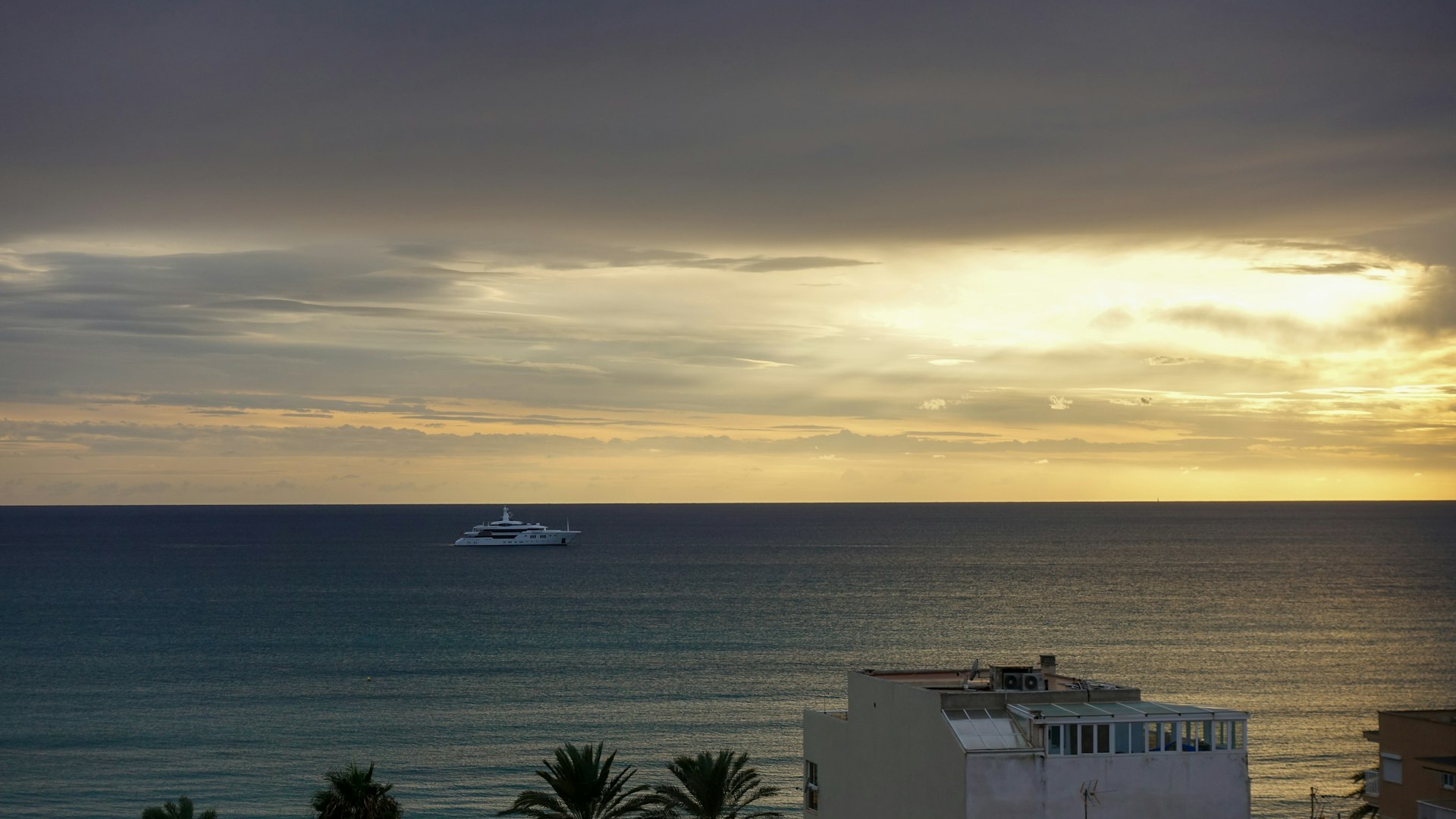
Spain and the Balearics Yacht Charters

Spain and the Balearics Yacht Charters

From the limestone calanques of Mallorca's north coast to the Atlantic-facing rias of Galicia, Spain offers more sailing variety per nautical mile than almost anywhere in the Mediterranean — with the infrastructure to match.

Spain's charter waters divide into three genuinely distinct sailing theatres. The Balearic Islands — Mallorca, Menorca, Ibiza, and Formentera — sit at the western Mediterranean's crossroads, with reliable summer thermals, world-class marinas, and an anchorage quality that rewards both the sociable and the solitary. The Costa Brava and Costa Dorada extend northward to the French border, where Cap de Creus juts into the Tramontane and the Alt Empordà fishing villages remain largely untroubled by mass tourism. Further west, the Valencian coast and the Costa del Sol bridge the gap between the Balearics and the Strait of Gibraltar.

What separates serious charterers from casual holidaymakers here is knowing which island to use as a base, which anchorages fill by noon in August and which remain accessible all day, and how the Tramontane, Llevant, and Mistral interact across the archipelago at different points in the season. This page is built around those distinctions. Our fleet in Spanish waters runs from compact performance catamarans at the entry level through to large custom motor yachts capable of crossing to Morocco in a day.

Why Charter in Spain and the Balearics

The Balearics benefit from some of the most reliable summer sailing wind in the western Mediterranean. The Embat, a diurnal sea breeze that builds along Mallorca's southern coast from late morning, routinely delivers 12–18 knots through the afternoon — enough to keep a sailing yacht moving without the sustained 30-knot blows that characterise parts of Greece or Croatia. Menorca, positioned to catch the Tramontane channelling down from the Gulf of Lion, is rougher in the north but rewards the effort with near-empty anchorages along its southern coast that would be overrun on any other island.

Marina infrastructure in the Balearics is exceptional. Port Adriano, redesigned by Philippe Starck and located on Mallorca's southwest coast, offers berths for yachts up to 70 metres with provisioning and shipyard services. Puerto Portals, six kilometres to the north, remains the social hub for the charter circuit. Ibiza's Marina Botafoc handles the larger motor yachts and is a five-minute water taxi from the UNESCO-listed old town. Across the islands, fuel, water, and technical assistance are rarely more than an hour away, which matters when you are running a tight itinerary with guests aboard.

Beyond the islands, the Costa Brava's Cadaqués and L'Escala offer a genuinely different cultural register: Catalan cooking at its most uncompromising, medieval town centres accessible only by sea or narrow mountain road, and dive sites around the Cap de Creus marine reserve that rival anything in the Balearics. For charterers who want a single base and day-sailing variety, a berth in Palma de Mallorca gives you the old city, the Serra de Tramuntana backdrop, and a 90-minute sail to four different island coasts.

Spain and the Balearics Highlights

1

Sa Dragonera and Sant Elm (Mallorca southwest) — The uninhabited island nature reserve off Mallorca's western tip offers clean holding in settled conditions and a lighthouse walk with unobstructed views toward Ibiza. The adjacent village of Sant Elm has one of the island's better fish restaurants.

2

Cala Galdana to Cala Macarella (Menorca south coast) — This short coastal passage along Menorca's southern shore connects a series of enclosed coves carved from white limestone. Approach from the water is the only way to reach most of them; the cliffs drop directly into 4–8 metres with sand below.

3

Formentera's Ses Illetes sandbank — A narrow bar of sand extending north from Formentera toward Ibiza, with water shallow enough to anchor stern-to on sand in two metres. The visibility underwater here consistently reaches 30 metres. Arrive before 10:00 in summer.

4

Cap de Creus Marine Reserve (Costa Brava) — The easternmost point of the Iberian Peninsula, where the Pyrenees meet the sea. The reserve covers 13,000 hectares of protected water with defined anchoring zones; the diving around the volcanic rock formations at Norfeu is among the best accessible by charter yacht in Spain.

5

Palma de Mallorca old city — Arriving by sea gives you the Gothic cathedral rising directly from the city walls in a way that no land approach replicates. Palma has invested seriously in its restaurant scene over the past decade; the Santa Catalina neighbourhood now holds several addresses that would draw attention in any European city.

6

Ibiza's west coast coves, Es Vedrà anchorage — The rock stack of Es Vedrà rises 382 metres from the sea off Ibiza's southwest coast and functions as a navigational and visual landmark. The anchorage off Cala d'Hort in its lee provides good holding and an unusual perspective on an island more commonly experienced from its beaches and clubs.

7

Mahón (Menorca) — One of the deepest natural harbours in the Mediterranean, with a navigable length of nearly five kilometres. The approach past the 18th-century fortifications and into the town waterfront is one of the more theatrical harbour entrances in Spanish waters; gin distilleries and Georgian-influenced architecture reflect the island's period of British occupation.

When to Sail

The core Mediterranean charter season runs from June through September, with the shoulder months of May and October offering quieter anchorages, lower berth costs, and more manageable temperatures for active guests.

High Season (Jun-Sep)

July and August are the busiest months across the Balearics, and popular anchorages such as Cala Macarella on Menorca and Cala Saona on Formentera can be at capacity by midday. Wind patterns are generally benign — the afternoon Embat sea breeze dominates the southern coasts, while the north of Mallorca and the entirety of Menorca can see the Tramontane push through with little warning, particularly in June and September. Water temperatures peak at 26–28°C in August. Berth reservations at key marinas should be made months in advance for high summer; late availability exists but comes at a premium. The Ibiza social calendar runs through to mid-September, which suits certain clients and should be factored into itinerary planning.

Shoulder Season (May, Oct)

May is arguably the best month for charterers who prioritise sailing over scene. The Embat has not yet established its reliable summer pattern, so conditions are more variable, but the anchorages are navigable without anchoring four boats deep, marinas are priced more competitively, and the spring wildflowers on Mallorca and Menorca are genuinely worth seeing from the water. October retains warmth well into the month — sea temperatures remain above 22°C — and the autumn light on the Serra de Tramuntana is exceptional. Provisioning quality remains high; most good restaurants on the islands stay open until the end of October.

Choosing the Right Yacht

The Balearics suit virtually every vessel type in a serious charter fleet, but the catamaran is the dominant practical choice for groups of six to twelve guests who want shallow-water anchorage access combined with generous deck space. Twin-hull draught in the 1.2–1.5 metre range opens up coves that are off-limits to a 60-foot monohull, and the wide beam allows the kind of al fresco dining that makes Mediterranean chartering worthwhile. The motor yacht comes into its own for clients prioritising range, speed, and marina lifestyle — a capable 20-knot cruiser can cover the 90 miles from Palma to Ibiza and back in a day, leaving time for two anchorage stops. The fleet available here includes motor yachts from established builders including Azimut, Absolute, and Astondoa, with flybridge configurations that suit the warm weather and social nature of a Balearic itinerary.

Seven Days in the Balearics — Mallorca Clockwise to Menorca

A suggested week-long charter route

Day 1

Embark Palma de Mallorca in the afternoon. Provision at Puerto Portals or use the marina delivery services to stock the yacht for seven days. Dinner in the Santa Catalina neighbourhood — the covered market at Mercat de l'Olivar is useful for provisioning fresh produce if you arrive in the morning. First night on berth in Palma.

Day 2

Depart early for Sa Dragonera and the southwest coast. The passage from Palma to Sant Elm takes around three hours under sail in the morning Embat. Anchor off the island reserve, swim, explore the lighthouse trail by tender. Move to Cala Carbó for the night if conditions allow, or return to anchor off Sant Elm.

Day 3

Round Cap Andritxol and head north along Mallorca's dramatic northwestern coast. The Serra de Tramuntana drops almost vertically to the sea along this stretch — pass Banyalbufar and the terraced agricultural land above the cliffs. Anchor at Cala Tuent for lunch, then continue to Port de Sóller for the night. The tram to Sóller town runs until late evening.

Day 4

The northeastern passage to Menorca covers approximately 45 nautical miles from Port de Pollença, which makes a useful waypoint for a morning fuel stop and crew change if needed. The Tramontane can build along this channel — check the forecast carefully. Arrive Cala Galdana on Menorca's south coast by late afternoon; the wooded valley and white cliffs make it one of the most sheltered overnight anchorages in the islands.

Day 5

A full day along Menorca's southern limestone coast. Move east through Cala Macarella, Cala Mitjana, and Cala Turqueta — all accessible by catamaran in settled conditions. Each cove requires an early arrival in summer. Lunch at anchor, afternoon snorkelling, move to Mahón in the evening for the theatrical harbour approach. Berth in the town marina and dine ashore.

Day 6

Mahón to Formentera is a 60-nautical-mile passage that works well as an overnight run or an early morning departure in calm conditions. Arrive at Ses Illetes by mid-morning before the anchorage fills. The clarity of the water here is the defining experience of the itinerary. Anchor in two metres over sand, deploy the water toys, and take lunch aboard.

Day 7

The short crossing from Formentera to Ibiza takes under two hours. Marina Botafoc for the final night — the old town of Dalt Vila is walkable. Alternatively, anchor off the west coast at Cala d'Hort for the afternoon with the Es Vedrà silhouette before the return passage to Palma the following morning.

Local Tips

  • Anchoring regulations across the Balearics tightened significantly after 2019. Posidonia seagrass beds are legally protected throughout the archipelago; anchoring on or near them carries fines. Several coves now operate mandatory buoy mooring systems in July and August — Cala Macarella and Cala Turqueta on Menorca both operate seasonal buoy fields. Confirm availability before planning an anchorage-heavy itinerary in high summer.
  • Provisioning is best handled through the main marinas. Puerto Portals and Port Adriano on Mallorca have professional victualling services; in Ibiza, Marina Botafoc provisioners can supply to the boat overnight. For fresh fish, the morning market at Palma's Mercat de l'Olivar and the Mahón market (Tuesday and Saturday) are worth the detour. Menorcan cheese, sobrassada, and the island's own gin are worth stocking.
  • Spanish marinas charge differently from Greek or Croatian ports. High-season berth rates at premium marinas — Portals, Port Adriano, and Ibiza's main marinas — are comparable to Côte d'Azur pricing. Budget accordingly if your itinerary involves several consecutive nights on berth rather than at anchor. Port fees are separate from the charter cost and fall under APA (Advance Provisioning Allowance).
  • The Tramontane requires specific attention on passages between Mallorca and Menorca, and anywhere along the Costa Brava north of Barcelona. This northerly wind can accelerate to 35 knots or above with limited forecast warning during June and September in particular. Schedule flexibility in the northern sections of any itinerary; the southern coasts of both islands offer reliable shelter when it blows.
  • Customs formalities for EU-flagged yachts are straightforward, but non-EU flagged vessels must file a Maritime Declaration of Health on arrival and observe standard port authority check-in. Spain requires all charter yachts to hold a valid Despacho de Navegación; your charter manager will confirm this is in order before departure. Non-EU guests should carry passports rather than ID cards.
  • Dining ashore is best planned around Spanish eating hours. Lunch service runs from 13:30 to 15:30; dinner rarely begins before 21:00 and tables at good restaurants in Palma, Ibiza Town, and Mahón are booked weeks ahead in July and August. Reservations made by the yacht's captain or charter manager tend to secure better tables than direct online booking.

Frequently Asked Questions

Do I need a licence to charter a yacht in Spain+
If you want to skipper the yacht yourself, you will need a recognised sailing qualification — typically a Day Skipper or equivalent — plus a VHF radio licence. Most charterers opt for a crewed yacht, in which case the professional skipper holds all required Spanish and EU certifications. All yachts in our fleet comply with Spanish Maritime Safety Agency (SASEMAR) requirements.
What is the best base for a Balearics charter+
Palma de Mallorca is the most practical embarkation point: it has the largest international airport in the islands, the widest choice of marinas, and the most complete provisioning infrastructure. Ibiza Town suits clients who want to start immediately in the southern islands, while Port Mahón on Menorca is the right choice if Menorca itself is the primary focus.
How far in advance should I book for high season+
For July and August, the top motor yachts and larger catamarans are typically reserved six to nine months ahead. May and June availability remains more open, often until two or three months before departure. Shoulder season bookings in May and October can sometimes be arranged within four to six weeks, though specific yacht models may not be available at short notice.
Is the Balearics charter suitable for families with young children+
Yes, and it is one of the most practical family charter destinations in the Mediterranean. The enclosed coves on Menorca and Formentera offer calm, shallow water for swimming; catamarans provide the deck space and stable platform that works well with children aboard. Several charter yachts in our fleet carry water toys, kayaks, and paddleboards as standard equipment.
Can I sail between the Balearics and the Spanish mainland on a one-week charter+
It is possible but not recommended for a seven-day itinerary if you want meaningful time in both areas. The passage from Barcelona to Palma is approximately 130 nautical miles — manageable in a motor yacht but a significant commitment for a sailing yacht. A dedicated two-week itinerary covering the Costa Brava, Mallorca, and Menorca is a more practical structure and allows time to anchor and explore rather than simply transit.
What currencies and payment methods are standard for marina fees in Spain+
All marina charges across Spain and the Balearics are denominated in euros, and credit card payment is widely accepted at all major marinas. Cash is rarely necessary for port dues, though smaller fishing harbours occasionally prefer it. Your captain will handle day-to-day marina payments from the APA float provided at the start of the charter.

Tell us your preferred dates and party size, and our Spain specialists will match you with the right yacht and outline an itinerary built around your priorities.

Request Your Charter

Request Your Charter

Tell us about your dream voyage and we will find the perfect yacht for you.