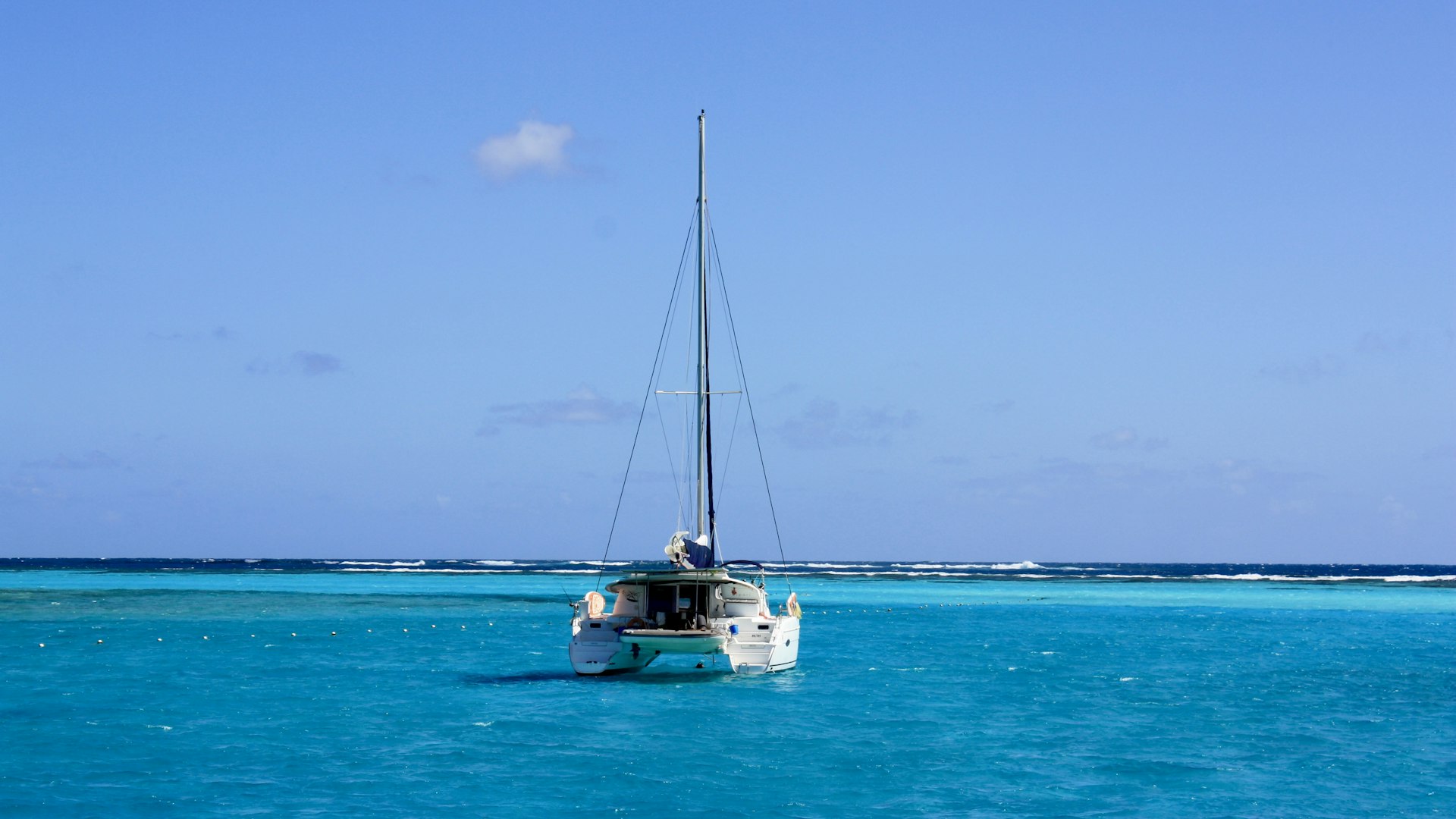
Catamaran Charter Spain and the Balearics
From the sheltered coves of Menorca to the busy passages off Ibiza's north coast, the Balearics offer catamaran sailing that rewards proper seamanship — reliable trade winds, short overnight passages, and a shoreside culture that genuinely repays exploration.
Catamarans Available in Spain and the Balearics
Browse our selection of catamarans available for charter in Spain and the Balearics.

Crewed Sailing Catamaran LAGOON 380
Lagoon 380
From
€1k/week

Crewed Catamaran Cat 23
Custom Built · 2005
From
€2k/week

Bareboat Catamaran Lagoon 39
Lagoon 39 · 2016
From
€2k/week

Bareboat Catamaran Lagoon 400
Lagoon 400 · 2011
From
€2k/week

Bareboat Catamaran Lagoon 440
Lagoon 440 · 2010
From
€2k/week

Bareboat Catamaran Lagoon 400 S2
Lagoon 400 S2 · 2014
From
€3k/week

Crewed Catamaran SENSATION
Catamaran
From
€3k/week

Corporate Event Yacht Sun Cat 22
Sun Cat 22 · 2004
From
€3k/week

Bareboat Catamaran Lipari 41
Lipari 41 · 2012
From
€3k/week

Bareboat Catamaran Lagoon 400
Lagoon 400 · 2010
From
€3k/week

Bareboat Catamaran Lagoon 421
Lagoon 421 · 2015
From
€3k/week

Bareboat Catamaran Lagoon 400 S2
Lagoon 400 S2 · 2014
From
€3k/week

Bareboat Catamaran Lagoon 450
Lagoon 450 · 2011
From
€4k/week

Bareboat Catamaran Bali 4.5
Bali 4.5 · 2016
From
€4k/week

Bareboat Catamaran Lagoon 470
Lagoon 470 · 2013
From
€4k/week

Bareboat Catamaran Lagoon 380
Lagoon 380 · 2010
From
€4k/week

Bareboat Catamaran Lagoon 400
Lagoon 400 · 2010
From
€4k/week

Bareboat Catamaran Bali 4.5
Bali 4.5 · 2015
From
€4k/week

Bareboat Catamaran Nautitech 40 Open
Nautitech 40 Open · 2015
From
€4k/week

Crewed Catamaran AMANACI
Lagoon 46 · 2022
From
€5k/week

Bareboat Catamaran Lagoon 450
Lagoon 450 · 2013
From
€5k/week

Bareboat Catamaran Lagoon 450
Lagoon 450 · 2014
From
€5k/week

Bareboat Catamaran Lagoon 380
Lagoon 380 · 2016
From
€5k/week

Bareboat Catamaran Lagoon 450
Lagoon 450 · 2012
From
€5k/week
Other Vessel Types in Spain and the Balearics
Spain's Mediterranean coastline and the Balearic Islands form one of Europe's most coherent cruising grounds for a catamaran charter. The four principal islands — Mallorca, Menorca, Ibiza, and Formentera — sit close enough together to allow meaningful island-hopping within a single week, yet each retains a distinct character, sailing profile, and cuisine. Add the Costa Brava, the Costa Dorada, and the quieter anchorages of the Costa Blanca to the mix, and you have a region that can absorb ten successive charters without repetition.
A catamaran is arguably the most practical hull form for this region. Shallow draught opens anchorages that monohulls must bypass, the broad beam provides living space that makes multi-day passages genuinely comfortable in July heat, and the twin-hull stability matters when the Tramontane or the Mistral pushes a steep chop across the Gulf of Lion towards the northern Balearics. Whether you are chartering a Lagoon 42 for a family of six or a Fountaine Pajot Samana 59 for a larger group, the waters here are well-matched to the format.
Why Charter in Catamaran charter in Spain and the Balearics
The Balearics sit at the intersection of two distinct wind regimes. In summer, the thermal Embat breeze builds most afternoons along the Mallorcan coast, offering reliable 12-18 knot south-westerlies that push you comfortably north towards Menorca. Around the western tip of Ibiza, the Cap de Barbaria passage to Formentera is short enough — roughly six nautical miles — to be manageable in a beam sea, yet the water colour changes dramatically as the depth drops over the Es Freus channel. This is sailing that has texture without being aggressive.
Beyond the sailing itself, the region offers a provisioning and marina infrastructure that is genuinely well-developed. Palma's Paseo Marítimo hosts fuel docks, chandlers, and a Saturday market that is one of the better places to stock a charter galley in the western Mediterranean. Menorca's Mahón harbour is one of the deepest natural ports in the world, calm in almost any condition and surrounded by good restaurants within walking distance of the visitors' pontoons. The Ibiza marinas at Marina Botafoc and Santa Eulària cover different ends of the island's social spectrum, giving charter guests a genuine choice.
The coastline of mainland Spain adds a further dimension. The Costa Brava's rocky inlets between Cadaqués and Palamós are less visited by charter fleets than the islands and offer a quieter, more Mediterranean-village experience. Tarragona's Roman amphitheatre and the anchorage below the old city walls make for an unusual overnight stop. For charterers who prefer to avoid the high-season island crowds without sacrificing quality, a mainland-focused itinerary along the Catalonian coast consistently over-delivers.
Catamaran charter in Spain and the Balearics Highlights
Cala Turqueta and Cala Macarella, Menorca — two of the western coast's most protected anchorages, accessible from the sea but not reachable by road in anything larger than a small vehicle. The turquoise shallows are well-suited to catamaran draught, and the pine-backed beaches remain relatively quiet outside August.
Formentera's Es Freus passage — the shallow, reef-threaded channel between southern Ibiza and Formentera requires careful navigation but opens into some of the clearest water in the western Mediterranean. Overnight in La Savina and dine at one of the fish restaurants along the harbourside.
Mahón harbour, Menorca — entering the two-nautical-mile channel at dusk, past the lighthouse at La Mola, is one of the more quietly impressive arrivals in European sailing. The town's Georgian architecture — a legacy of British occupation — is unlike anywhere else in Spain.
Cabrera Archipelago National Park — a day's sail south of Mallorca's Cap Ses Salines, this protected marine park requires a free permit obtained in advance through the Balearic Islands government. Anchoring is restricted to designated zones; the reward is exceptional clarity and undisturbed wildlife.
Cadaqués and Cap de Creus, Costa Brava — the north-eastern tip of mainland Spain, where the Pyrenees meet the sea. The anchorage off Cadaqués is open to the south-east but otherwise sheltered; the village, associated closely with Dalí, has a character that is distinct from anything on the islands.
Ibiza's north coast, from Portinatx to Cala d'en Serra — largely bypassed by charter fleets focused on the marinas and clubs, this stretch of rocky coast has small, navigable coves where you can anchor within 50 metres of completely undeveloped hillside.
Palma's old town from the water — arriving by boat under the Catedral de Mallorca at golden hour remains one of the great urban sailing approaches in the Mediterranean. The Parc de la Mar anchorage is not permitted for overnight stays, but a morning approach before heading to the marina is entirely manageable.
When to Sail
The charter season runs from late April through to early November, with conditions varying considerably between the open Atlantic-influenced north and the sheltered southern coasts of the islands. Peak summer brings reliable winds and warm water but also busy marinas; shoulder months offer the better balance of conditions, crowd levels, and price.
High Season (Jun-Sep)
Water temperatures reach 26-28°C and the afternoon Embat is reliable on most days, typically 10-20 knots from the south-west. July and August are the busiest months; marina reservations are essential at Palma, Santa Eulària, and Ciutadella, and should be made at least six to eight weeks in advance. The Tramontane can push strong northerlies — occasionally above 30 knots — into the northern Balearics in July, so passage timing between Menorca and Mallorca merits attention. Formentera's Ses Illetes anchorage is spectacular but congested in August; arriving before 0900 is the only reliable strategy.
Shoulder Season (May, Oct)
May and October are among the most rewarding months in the region. Daytime temperatures sit in the low-to-mid twenties, marina berths are easier to secure, and the anchorages at Cala Mondragó, Cala Turqueta, and the northern Menorcan coves are quieter. Wind patterns are slightly less predictable in May — the occasional Sirocco can kick up a short, steep swell from the south — but for experienced crew this is a manageable trade-off. Charter rates in shoulder season typically sit 20-30 per cent below July peaks, which is meaningful at this level of spend.
Choosing the Right Yacht
A catamaran is the logical choice for this region, and not simply for comfort reasons. The shallow-draught advantage is decisive in the Balearics: many of the most desirable anchorages — the northern Menorcan coves, the Es Freus shallows, the beaches of Formentera's north-west coast — carry depths of 1.5-2.5 metres over sand, which a performance catamaran can access where a 55-foot monohull cannot. The broad beam also means that the large cockpits and dual helm stations found on models such as the Lagoon 46 and the Fountaine Pajot Samana 59 allow a group of eight to ten people to exist on deck without crowding, which matters on long summer passages when the sun is directly overhead.
Seven Days in the Balearics — Palma to Ibiza
A suggested week-long charter route
Board in Palma and clear formalities. Spend the afternoon provisioning at the Mercat de l'Olivar before an evening departure west along the southern Mallorcan coast. Anchor off Cala Pi — a narrow limestone inlet — for dinner aboard.
Sail south-west past Cap Salines, rounding Mallorca's southern tip in the morning when the sea is typically calm. Head for the Cabrera Archipelago — permit required and best arranged before departure — for an afternoon swim in the national park's protected waters. Anchor in the main harbour.
Morning departure west-northwest towards Ibiza. The passage runs roughly 55 nautical miles and catches the afternoon Embat on the beam if timed correctly — a comfortable, fast point of sail for a catamaran. Arrive Marina Botafoc by early evening. Dine in the D'Alt Vila, the UNESCO-listed walled town above the port.
Explore Ibiza's north coast by day, anchoring in Cala d'en Serra and Cala Xarraca before the afternoon crowds arrive. Return to Santa Eulària marina for the night — quieter than Ibiza town, with good restaurants on the Passeig Marítim.
Transit the Es Freus channel to Formentera — take the northern passage if in any doubt about depths. Anchor off Ses Illetes for the morning; move to La Savina for the afternoon and overnight. Fresh fish at the harbour restaurants is the reliable choice here.
Sail north-east back towards Ibiza and then continue to the smaller island of Espalmador for a final afternoon anchorage. The natural lagoon on the island's western side is one of the few genuinely quiet spots remaining in the southern Balearics in high summer. Return to Santa Eulària for a final evening ashore.
Return passage to Palma, approximately 85 nautical miles north-east. Depart early to make the most of the morning calm and arrive in the afternoon. Berth at the Reial Club Nàutic or the marina area near the Paseo Marítimo for a final night before disembarkation.
Local Tips
- •Cabrera requires advance permits: the Parc Nacional de l'Arxipèlag de Cabrera limits daily visiting vessels, and the permit is free but must be obtained through the Balearic Islands government before departure. Do not assume you can obtain clearance on arrival.
- •Formentera anchorages are regulated: Posidonia oceanica seagrass meadows are protected throughout the Balearics. Anchoring on or near seagrass is prohibited, and fines are enforced by the Guardia Civil Maritime. Check the designated anchoring zones on official Spanish nautical charts before dropping the hook.
- •Fuel and water in Menorca: Ciutadella's marina on the island's western end is the more compact facility; Mahón is the better option for reprovisioning larger catamarans, with easier access, more dock space, and a supermarket within ten minutes' walk of the visitors' pontoons.
- •Spanish cuisine protocol: in the Balearics, lunch is still the main meal of the day for locals, and the best-value menus del día are served between 1300 and 1530. Asking for a table at 1900 in a non-tourist restaurant will often produce blank looks. Plan dinner ashore for 2100 at the earliest; kitchens are not rushed at 2130.
- •Tramontane awareness in July: if your itinerary includes passages north of Mallorca or along the Costa Brava, monitor the Météo-France and AEMET forecasts in parallel. The Tramontane can build from Force 4 to Force 7 within a few hours north of the Balearics, and the chop it generates in shallow shelf water is disproportionate to its stated wind speed.
- •Check marina availability for Palma in August well ahead: the main marinas around Palma's Paseo Marítimo have limited berths for visiting catamarans above 14 metres beam. Book two months in advance for July and August arrivals, and confirm the beam allowance of your specific vessel before assuming a berth will accommodate it.
Frequently Asked Questions
Do I need a licence to charter a catamaran in Spain+
Is a bareboat or crewed charter better for the Balearics+
What is the minimum charter duration in Spain and the Balearics+
How far in advance should I book for July or August+
What are the sea crossing conditions between the islands like+
Are catamarans significantly more expensive to charter than monohulls of similar length+
Talk to our Spain and Balearics specialists to match the right catamaran to your itinerary, group size, and schedule.
Request Your Charter