Windward Islands Yacht Charters
From the volcanic ridgelines of St Lucia to the reef-fringed anchorages of Grenada, the Windward Islands offer some of the most technically engaging and scenically rewarding sailing in the Atlantic basin — without the crowds that have overtaken the Virgins.
Charter by Vessel Type
Catamaran Charter in Windward Islands
Spacious twin-hull vessels offering stability, comfort, and generous deck space for the ultimate charter experience.
Browse Catamarans →
Sailing Yacht Charter in Windward Islands
Classic sailing vessels that combine timeless elegance with the thrill of wind-powered adventure.
Browse Sailing Yachts →
Motor Yacht Charter in Windward Islands
Powerful luxury vessels delivering speed, sophistication, and effortless cruising across any waters.
Browse Motor Yachts →
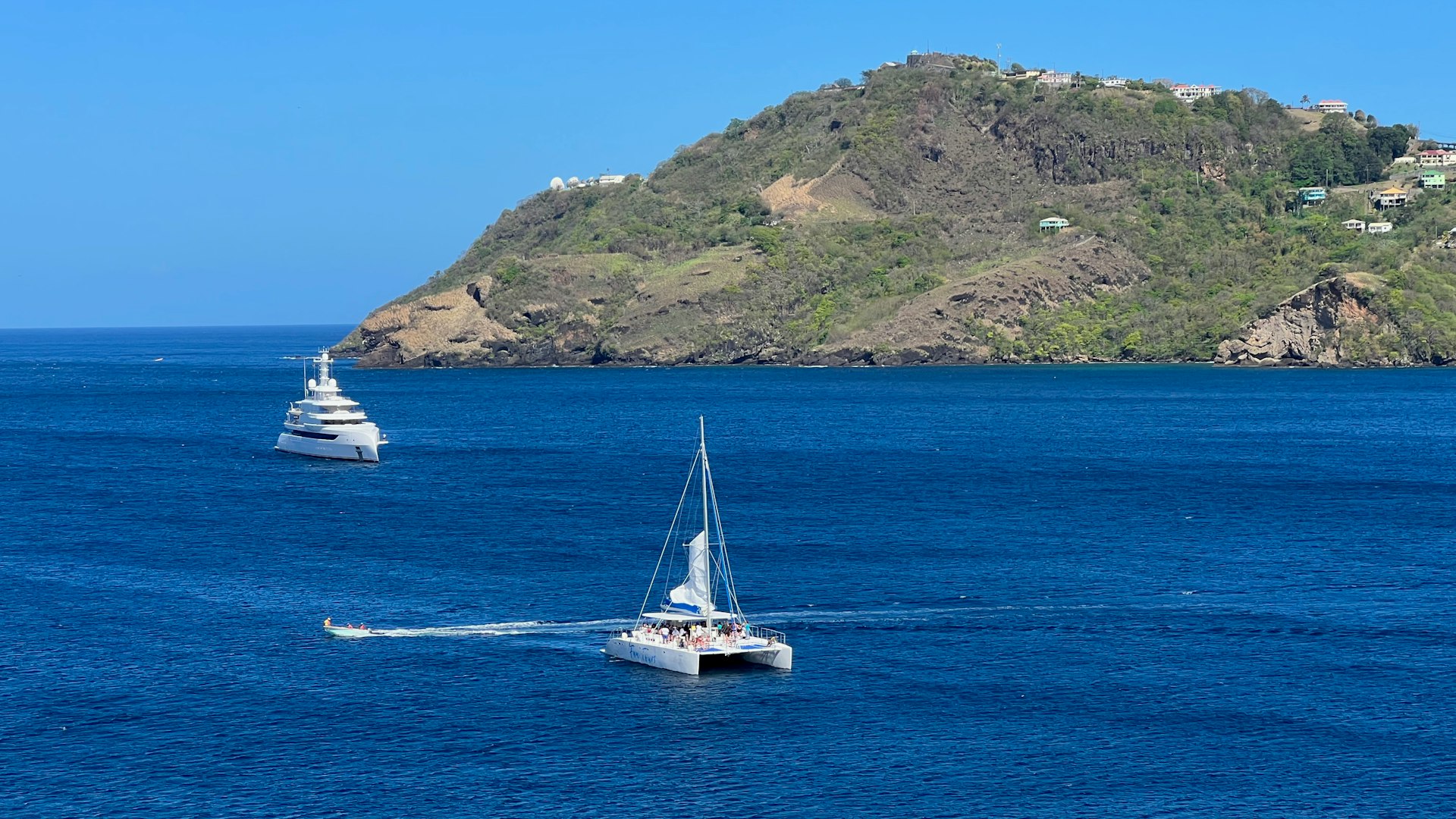
Available Yachts in Windward Islands

Bareboat Sailing Yacht Dufour 405 Grand Large
Dufour 405 · 2012
From
€2k/week

Bareboat Sailing Yacht THOXA VII
Dufour 405 Grand Large
From
$2k/week

Bareboat Sailing Yacht Sun Odyssey 36i
Sun Odyssey 36i · 2009
From
$2k/week

Bareboat Sailing Yacht Bavaria 39
Bavaria 39 · 2008
From
$2k/week

Bareboat Sailing Yacht Jeanneau 43 DS
Jeanneau 43 DS · 2003
From
$2k/week

Bareboat Sailing Yacht Beneteau 463
Beneteau 463 · 1998
From
$2k/week

Bareboat Catamaran Lipari 41
Lipari 41 · 2010
From
€3k/week

Bareboat Sailing Yacht Beneteau Cyclades 43
Cyclades 43 · 2006
From
$3k/week

Bareboat Catamaran Lagoon 380
Lagoon 380 · 2013
From
$3k/week

Bareboat Catamaran Fountaine Pajot Orana 44
Fountaine Pajot Orana 44 · 2010
From
€3k/week

Bareboat Catamaran Fountaine Pajot Orana 44
Fountaine Pajot Orana 44 · 2012
From
€3k/week

Bareboat Sailing Yacht Bavaria 45
Bavaria 45 · 2011
From
$3k/week
The Windward Islands arc southward from Martinique through St Lucia, St Vincent, the Grenadines, and Grenada across roughly 450 nautical miles of the eastern Caribbean. The chain sits squarely in the path of the north-east trade winds, which blow with enough consistency between December and June to make passage-planning genuinely straightforward, yet with enough variety — squalls off volcanic peaks, wind shadows in sheltered bays, current eddies around headlands — to keep experienced sailors properly engaged.
What distinguishes a Windward Islands charter from a week in the northern Caribbean is the depth of contrast packed into short distances. A 35-nautical-mile day sail can move you from the sulphurous otherworldliness of the Soufrière drive-in volcano in St Lucia to the rum-soaked beach bars of Marigot Bay, from French Creole market towns to uninhabited Tobago Cays, from spice plantations to world-class wreck diving. The infrastructure is real — provisioning, fuel, haul-out facilities — but the anchorages still feel genuinely remote.
Why Charter in Windward Islands
The trade winds average 15-25 knots across the chain for most of the high season, predominantly from the north-east. This means the majority of popular routes run north to south with the wind aft of the beam — a detail that matters enormously to anyone chartering a catamaran or a performance cruiser. Long downwind legs between islands are comfortable, fast, and require minimal effort from crew, which is precisely what a serious charter client is paying for. The return trip, north against the trades, is typically done in shorter hops using the lee of each island.
The Grenadines in particular — the island chain shared between St Vincent and Grenada — represent one of the most coherent sailing itineraries in the world. Bequia, Mustique, Canouan, Mayreau, Union Island, Carriacou, and the Tobago Cays form a natural south-running passage of roughly 60 nautical miles, with anchorages rarely more than a two- to three-hour sail apart. Each island has a distinct character: Bequia retains a working fishing and boat-building culture; Mustique is private and controlled access only by sea; the Tobago Cays Marine Park offers some of the best snorkelling on coral in the eastern Caribbean.
Beyond the sailing, the Windwards offer a gastronomic and cultural richness that the northern Caribbean largely lacks. St Lucia's Creole cuisine — grilled mahi-mahi with green fig and saltfish, bouyon broth, dasheen-based stews — reflects genuine French and African heritage rather than resort-hotel interpretation. Grenada grows nutmeg, mace, cloves, cinnamon, and turmeric, and those ingredients appear meaningfully in local cooking. Martinique, though technically French overseas territory and therefore a different customs zone, anchors the northern end of the chain with a sophisticated restaurant scene, covered rum distilleries, and the finest provisioning in the Lesser Antilles.
Windward Islands Highlights
Tobago Cays Marine Park, St Vincent and the Grenadines — Five uninhabited islets encircled by Horseshoe Reef, with turtle-watching in the protected lagoon and some of the clearest water in the Caribbean. Overnight anchorage inside the reef requires careful timing and depth-awareness; arrive before noon for the best spots.
Marigot Bay, St Lucia — A near-perfectly enclosed natural harbour with mangrove-lined creeks, a dedicated superyacht dock, and consistent afternoon thermal winds that make for excellent short sails in the bay itself. The inner lagoon is shallow — dinghies only — but the approach by yacht is one of the most dramatic in the Windwards.
Bequia, St Vincent and the Grenadines — The most complete town in the Grenadines, with a functioning boatyard, good provisioning at Doris Fresh Foods, and an anchorage at Admiralty Bay that regularly holds 150 yachts without feeling crowded. The model-boat carvers on Front Street are a legitimate craft tradition, not tourist kitsch.
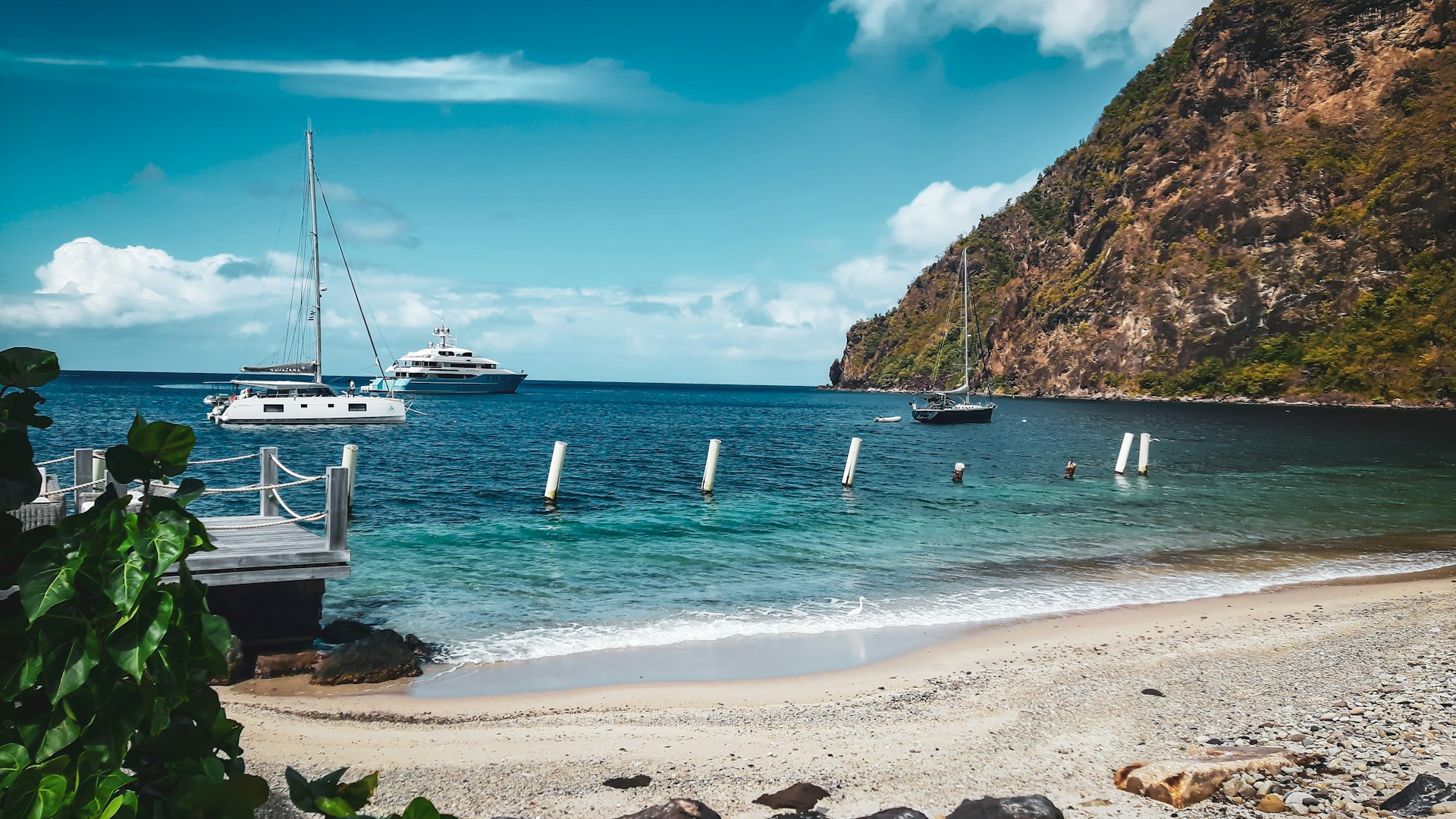
Soufrière, St Lucia — Anchor in the deep water directly beneath the Pitons — Gros Piton and Petit Piton are UNESCO World Heritage listed — and take the short drive to the drive-in volcano at Sulphur Springs. The National Trust moorings here are mandatory and correctly managed; plan to arrive early as availability is finite.
Tyrrel Bay, Carriacou, Grenada — The best natural hurricane hole in the southern Windwards doubles as a genuinely convivial anchorage with a functioning boatyard, reliable wifi at the Lazy Turtle, and free-range oysters harvested from the mangroves by local fishermen who row out to visiting yachts at anchor.
St George's Harbour, Grenada — One of the finest natural harbours in the Caribbean, with a horseshoe-shaped careenage, a proper spice market in the covered Sendall Tunnel area, and the Grand Anse provisioning run for completing stores before the return leg. Clear-out formalities at the Port Louis Marina are efficient and well-organised.
Mustique — Accessible by sea to visiting yachts subject to Mustique Company check-in protocol. Anchor in Britannia Bay, take the ferry ashore, and reserve a table at Basil's Bar — a consistent fixture for charter clientele that justifies its reputation without any assistance from marketing copy.
When to Sail
The Windwards sail well for roughly eight months of the year, with the dry-season trade winds from January through June offering the most predictable conditions; the hurricane season runs June through November, though the southern islands sit below the primary hurricane belt and see proportionally lower risk.
High Season (Jun-Sep)
Counterintuitively, June through August sits at the edge of hurricane season, yet the Grenadines and Grenada — positioned at roughly 12 degrees north — sit below the statistical track of most Caribbean hurricanes. Many experienced charterers deliberately choose this window for lower charter rates, greener landscapes after early-season rains, and noticeably quieter anchorages. Winds remain present but are lighter and more variable than the January-April peak, averaging 10-18 knots, which suits less experienced crews and those prioritising motoring to specific anchorages. The Tobago Cays in particular are far more accessible in August than in February, when the swell can make dinghy landings uncomfortable.
Shoulder Season (May, Oct)
May is arguably the Windwards' best-kept secret. The trades are still blowing consistently from the north-east at 15-20 knots, the charter fleets have thinned following Easter, and the islands are at their greenest without the persistent squall risk of later months. Provisioning is well-stocked, marina staff are less stretched, and negotiating prime anchorages at the Tobago Cays or Salt Whistle Bay, Mayreau, requires far less early arrival. October sits in the statistical peak of Atlantic hurricane season and carries real risk — charterers should ensure comprehensive cancellation and weather-related disruption cover if sailing this month.
Choosing the Right Yacht
The dominant charter vessel across the Windwards is the cruising catamaran, and for good structural reasons rather than trend-following. The consistent trade wind sailing is predominantly downwind or broad-reaching, where a cat's wide beam, stable platform, and generous cockpit genuinely improve the experience. Shallow draft — typically 1.2 to 1.5 metres on a modern 45-foot cat — opens anchorages that are inaccessible to deeper monohulls, particularly inside the Tobago Cays reef system and in the thin-water cuts around Mayreau. For guests who want a deck they can walk around easily while underway, a shaded cockpit that seats ten comfortably, and cabins that remain largely horizontal at anchor, a Fountaine Pajot or Bali catamaran in the 45-55 foot range is the practical optimum for groups of four to eight.
Seven Nights Through the Grenadines, St Lucia to Grenada
A suggested week-long charter route
Embark at Rodney Bay Marina, St Lucia. Rodney Bay has good provisioning options — Budget Marine for any final chandlery, the IGY marina's own dockside — and a protected overnight berth to settle the crew aboard. Briefing with your skipper, safety checks, and dinner ashore at one of the restaurants around the lagoon. The marina is straightforward to navigate but tidal surges can make docking in the outer berths active work.
Sail south from Rodney Bay to Marigot Bay (approximately 12 nautical miles, 2-3 hours). The lee of St Lucia's west coast keeps seas flat for this first leg. Anchor in the outer bay or take a buoy if available. Afternoon swim, dinghy exploration of the inner mangrove lagoon, and sundowners watching the hillside goats negotiate the treeline.
The signature leg: Soufrière and the Pitons. Roughly 15 nautical miles south from Marigot Bay, hugging the coast past Anse Cochon. Pick up a National Trust mooring in Soufrière Bay — do not anchor here given the depth and volcanic seabed — and spend the afternoon at the Sulphur Springs drive-in, the Diamond Botanical Gardens, and a late lunch at the Hummingbird Beach Restaurant on the waterfront. The Piton backdrop at sunset from the cockpit is the image most charterers carry home.
Depart early for the channel crossing to Bequia, approximately 25 nautical miles across the St Vincent Passage. This is the most exposed leg of the route — expect 20-25 knots from the north-east and a two-metre swell in the channel, which is perfectly manageable but a proper sea passage. Arrive at Admiralty Bay mid-afternoon. Clear customs and immigration at the Port Elizabeth customs building on the waterfront. Dinner at Mac's Pizzeria, a Bequia institution that reliably outperforms expectations.
Tobago Cays day. Depart Bequia on a south-easterly heading through the Canouan passage — stop at Canouan for a late morning coffee and a walk into the village if timing allows — then reach the Tobago Cays in early afternoon. Inside Horseshoe Reef the water is turquoise and shallow; swim with the hawksbill and green turtles at Baradal Island under the guidance of the Marine Park rangers, who board visiting yachts to explain the site properly. Overnight at anchor inside the reef — position carefully on the chart, as the reef is unforgiving at night.
Salt Whistle Bay, Mayreau for the morning, then south to Union Island. Salt Whistle is a double-sided beach bay — shallow and calm on the west, a little more exposed on the north — and excellent for a final Grenadines swim before the push south. Clear out of St Vincent and the Grenadines customs at Clifton Harbour, Union Island. The crossing to Carriacou follows in the afternoon: 15 nautical miles with the wind typically aft of the beam and a reliable building afternoon breeze.
Tyrrel Bay, Carriacou. Clear Grenada customs on arrival. This is an anchorage worth spending a full day in — take the dinghy into the Hillsborough market in the morning for the extraordinary local produce (nutmeg, mace, the island's own chocolate), provision the galley, and allow the crew a slower afternoon. The Lazy Turtle's wifi is reliable enough for those who need to surface briefly. Farewell dinner aboard.
St George's, Grenada. The final 30-nautical-mile leg south to Grenada's capital typically arrives before midday. Berth at Port Louis Marina for disembarkation. If schedules allow, walk the careenage, visit the spice stalls in the market, and take the ridgeline drive past Grand Etang forest reserve — a volcanic crater lake at 530 metres elevation that has no sailing equivalent anywhere in the chain.
Local Tips
- •Customs and immigration formalities vary meaningfully by island. St Lucia, St Vincent and the Grenadines, and Grenada are three separate countries with separate entry requirements, even within one itinerary. Carry multiple copies of your crew list and ensure passports are valid for at least six months beyond your charter end date. Fees are payable in Eastern Caribbean dollars at most customs offices; keep USD 50-100 in small denominations per port call for convenience.
- •Provisioning is best done at Rodney Bay (St Lucia) or St George's (Grenada) at the start or end of a trip. JQ Supermarket and the associated marina provisioning services in Rodney Bay are comprehensive for a full week's stores. Between these points, Bequia and Carriacou have reasonable fresh produce but limited long-life goods — plan your galley around local fish, which is almost always available directly from fishermen at anchor.
- •The National Trust moorings at Soufrière and the Tobago Cays Marine Park fee are not optional and are actively enforced. Mooring fees and park entry fees are modest and go directly to site management; budget accordingly and have cash ready. Rangers at the Tobago Cays are professional, knowledgeable, and worth engaging properly — they can identify turtle species, reef fish, and coral health with expertise that adds real value to the visit.
- •Hiring a local guide or day skipper for the St Vincent passage is worth considering for charterers unfamiliar with the Caribbean sea state. The St Vincent Passage and the channel north of Grenada are proper open-water crossings with significant fetch — the swells are not dangerous in normal conditions, but they are large enough to make the first few hours genuinely uncomfortable for crews used to coastal sailing in the Mediterranean or northern European waters.
- •The rum culture of the Windwards is not a tourist confection. Grenada's River Antoine Rum Distillery — still water-wheel powered — produces a rum at 75% ABV that is exported in small quantities; buying a bottle at source is a worthwhile exercise. In Martinique, the AOC-controlled rhum agricole distilleries at Clément, Neisson, and J.M. offer proper estate visits. In St Lucia, the Bounty and Chairman's Reserve brands are made locally and widely available for well under USD 20 a bottle from any supermarket.
- •VHF channel 16 is the working hailing channel throughout the Windwards, as it is everywhere, but local services — water taxis, fuel barges, and the Tobago Cays Park rangers — often switch to channel 68 for working communications. Keep a watch on both if your vessel allows it. The Doyle's Cruising Guide to the Windward Islands remains the most practically detailed printed reference for anchorages, depths, and hazards — worth having aboard regardless of how thoroughly you trust electronic charts.
Frequently Asked Questions
Do I need a licensed skipper to charter in the Windward Islands+
Are the Windward Islands safe for sailing during hurricane season+
What is the currency situation across the chain and should I carry cash+
How many nautical miles is a typical Windwards charter itinerary+
Can I take a catamaran chartered in the Grenadines into Martinique+
What type of yacht suits a family with children for this destination+
Speak with a SelectYachts charter specialist to match the right vessel to your Windwards itinerary — whether you are planning a bareboat passage through the Grenadines or a skippered week based out of St Lucia.
Request Your Charter