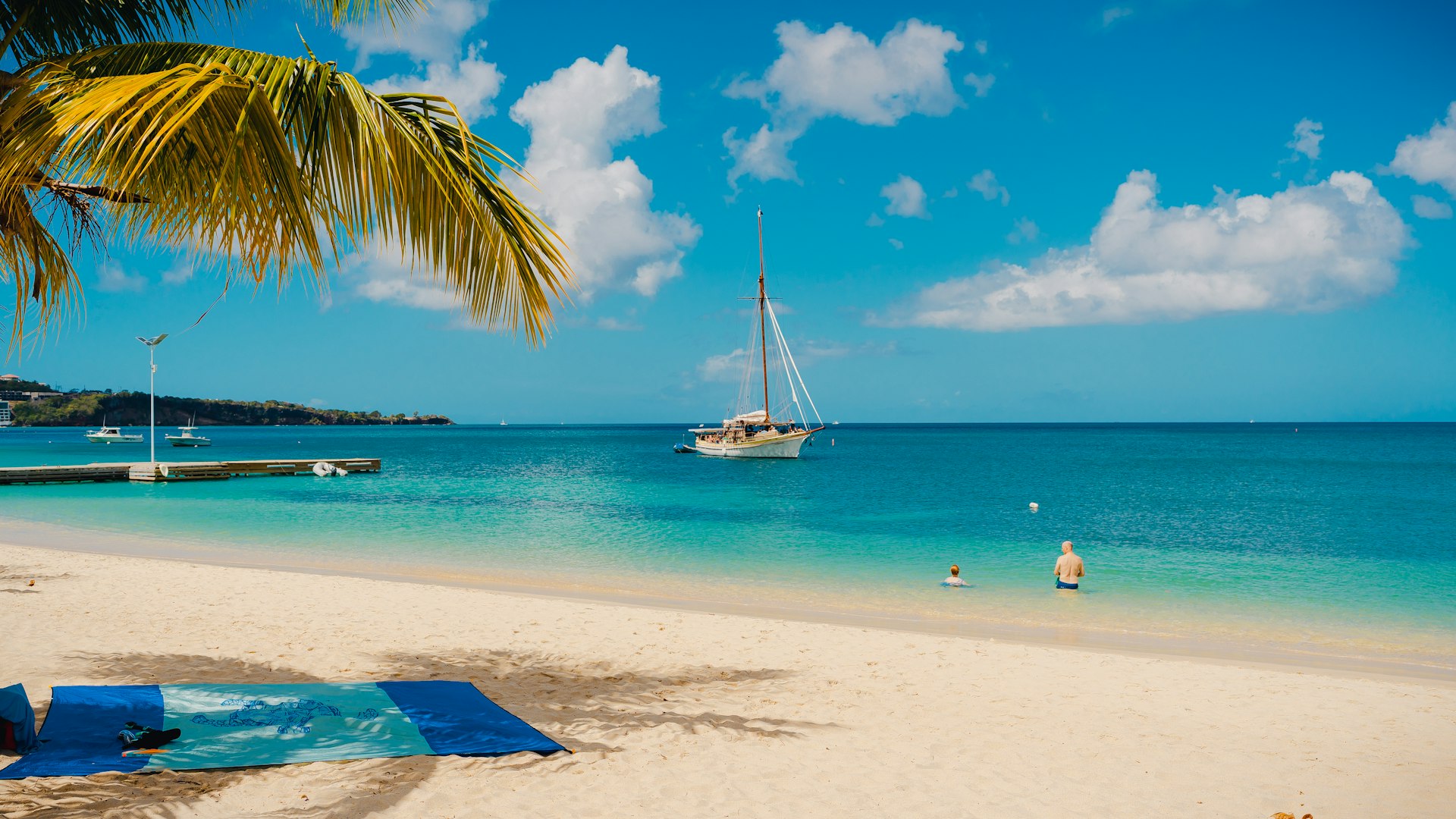
Grenada Yacht Charters
Grenada rewards those who look beyond its famous Carenage harbour — spice plantations, sheltered south-coast anchorages, and some of the most reliable trade wind sailing in the Eastern Caribbean await within a compact, genuinely varied cruising ground.
Charter by Vessel Type in Grenada
Catamaran Charter in Grenada
Spacious twin-hull vessels offering stability, comfort, and generous deck space for the ultimate charter experience.
Sailing Yacht Charter in Grenada
Classic sailing vessels that combine timeless elegance with the thrill of wind-powered adventure.
Motor Yacht Charter in Grenada
Powerful luxury vessels delivering speed, sophistication, and effortless cruising across any waters.
Available Yachts in Grenada
Grenada sits at the southern end of the Windward Islands, roughly 90 nautical miles north of Trinidad, and that geography matters. The island is large enough to generate its own microweather and varied enough — volcanic ridge, rainforest interior, coral-fringed south coast, offshore island chain — to sustain a week or more of purposeful exploration without repetition. The Grenada Grenadines, which include Carriacou and Petite Martinique, extend the cruising range northward for those with the time to use them.
Unlike some Caribbean destinations where the sailing is incidental to beach life, Grenada's appeal is layered. The island produces nutmeg, mace, cocoa, and cinnamon in commercial quantities, and that agricultural identity permeates the markets, the cooking, and the character of the place. The capital, St George's, has one of the most naturally dramatic harbours in the region, and the island's history — Arawak settlers, French colonial architecture, British rule, the 1983 US intervention — gives it a complexity that repays even a passing interest in Caribbean history.
Why Charter in Grenada
The sailing conditions in and around Grenada are consistently good. The north-east trade winds blow reliably at 15 to 25 knots for much of the year, offering beam to broad reach angles along most of the south-coast passages. The island itself provides shelter: the south-coast bays — Prickly Bay, Mount Hartman, Hog Island — are calm enough to use as comfortable overnight anchorages while remaining accessible to open-water sailing when you want it.
Grenada lies just south of the hurricane belt, which means the island and its marina infrastructure sustain less storm damage than destinations further north, and the charter season is effectively year-round. Prickly Bay Marina and Port Louis Marina are well-maintained, properly equipped for provisioning and technical support, and have established the island as a genuine base for extended blue-water passages as well as local cruising.
The Tobago Cays Marine Park, accessible via a northward run through the Grenadines, gives charterers with a week or more the option of combining Grenada's cultural weight with the celebrated snorkelling and anchorages of the Cays. That combination — a proper town, a working agricultural interior, and some of the best reef sailing in the Eastern Caribbean — is difficult to replicate elsewhere in the region.
Grenada Highlights
Prickly Bay (L'Anse aux Epines) — the primary provisioning and check-in anchorage on the south coast, well protected, with a functioning marina, chandlery, and a reliable supermarket within dinghy distance.
Hog Island anchorage — a short dinghy ride from the southern tip, this protected bay offers some of the best holding in calm sand and is the informal social hub for cruising yachts; Sunday barbecues at the beach bar are an institution.
The Carenage, St George's — an inner harbour ringed by 18th-century Georgian warehouses painted in muted ochres and terracottas; arriving by sea into this horseshoe of colour and history is one of the Eastern Caribbean's genuinely memorable entrances.
Carriacou and Sandy Island — the larger of Grenada's outer dependencies hosts the boatbuilding village of Windward and the small reef anchorage off Sandy Island, a shallow coral garden that snorkellers will find properly rewarding.
Grand Anse Beach — a two-mile arc of pale volcanic sand backed by low hills, easily accessed by dinghy from an anchorage off the beach; calm in the mornings, busier by afternoon, best approached early.
Petite St Vincent and the Southern Grenadines — for charters of ten days or more, pushing north through the Grenadines allows access to Palm Island, Union Island, and ultimately the Tobago Cays Marine Park, one of the Caribbean's most significant marine protected areas.
River Antoine Rum Distillery — inland from Grenville on the Atlantic coast, this working distillery has operated continuously since 1785 using water-wheel power; a proper working estate, not a tourist reconstruction, and worth the drive from a dinghy landing at Grenville.
When to Sail
Grenada's position at the southern fringe of the hurricane belt gives it one of the longest reliable charter seasons in the Eastern Caribbean, broadly divided into a drier trade-wind period from December through May and a wetter but still very sailable period from June through November.
High Season (Jun-Sep)
Counterintuitively, Grenada's high charter season partly overlaps with the broader Caribbean hurricane season, but the island's southerly latitude means it is rarely directly threatened. June through August brings warmer temperatures, slightly lighter winds averaging 12 to 18 knots, and greener, more lush scenery ashore as the rains feed the interior. The trade winds remain consistent enough for comfortable passage-making between the islands. Anchorages are quieter than in the northern Caribbean high season, and provisioning in St George's and Hillsborough on Carriacou is straightforward. This period suits those who prefer fewer flotillas and more flexibility in choosing anchorages.
Shoulder Season (May, Oct)
December through April represents Grenada's dry season and delivers the most consistent north-east trades — 18 to 25 knots with excellent visibility and manageable seas on the south coast passages. This period coincides with peak demand across the Eastern Caribbean, so booking well in advance is essential. The Grenada Sailing Festival, typically held in late January or early February, draws a competitive racing fleet and creates a lively atmosphere in Port Louis Marina if you want to observe or participate. October and May sit in transition: conditions are generally good, the island quieter, and negotiating availability easier.
Choosing the Right Yacht
The catamaran is the natural choice for Grenada's south coast and the Grenadines passages, and the Lagoon 46 available through our fleet is well suited to the conditions. The south-coast anchorages — Prickly Bay, Hog Island, Mount Hartman Bay — all have good holding in sand at depths that accommodate a sailing catamaran comfortably. The twin-hull platform provides stability at anchor in the occasional swell that wraps around Lance aux Epines, and the shallow draft allows access to the reef anchorages off Sandy Island on Carriacou without the anxiety that comes with a deeper monohull keel.
Seven Days in Grenada and the Southern Grenadines
A suggested week-long charter route
Board and brief at Prickly Bay Marina, complete customs and immigration formalities (straightforward at the marina office), and sail the short coastal hop west to anchor off Grand Anse Beach for the first night. Walk the beach at dusk, dine ashore at one of the restaurants above the waterfront.
Motor or sail into The Carenage in St George's, tying to the town quay for a few hours. Walk the ridge to Fort George for the view over both the inner harbour and the open Atlantic coast. Visit the Grenada National Museum (small but serious) and the Saturday market at Market Square for fresh produce and local spices. Return south to anchor at Hog Island for the night.
A full day at Hog Island or the adjacent Mount Hartman Bay, which gives access by road (hire a local driver) to the interior nutmeg estates around Gouyave. The Friday night fish fry at Gouyave is one of the island's best food experiences and worth timing an itinerary around if the calendar allows.
Sail north-east around the island to anchor off Grenville on the Atlantic coast, or continue directly north to Carriacou, approximately 35 nautical miles from Prickly Bay in open water. The passage is typically a fast broad reach in settled trades. Anchor off Tyrrel Bay on Carriacou's west coast, which has a good anchorage and shore facilities.
Explore Carriacou — the boatbuilding village of Windward to the north-east, the small museum in Hillsborough, and the snorkelling off Sandy Island inside the reef to the north-west of the main town. The island is quiet, unhurried, and culturally distinct from Grenada proper; local cooking leans Scottish-African in its heritage, reflecting the island's settlement history.
Sail to Petite Martinique, the smallest of the three main Grenada dependencies, or push north to Palm Island or Union Island in the St Vincent Grenadines if your charter paperwork covers both territories (ensure this in advance with your broker). Anchor in the lee of Palm Island for a quiet evening in calm water.
Return passage south to Grenada, using the trade wind on a broad reach for a comfortable run back to Prickly Bay. Clear out formally at the marina office if departing by air, or use the final evening for a meal ashore at one of the restaurants around L'Anse aux Epines that specialise in Grenadian oil-down, the national dish.
Local Tips
- •Customs and immigration in Grenada require a check-in at an official port of entry — Prickly Bay, Port Louis, Carriacou's Hillsborough, or Petite Martinique. If your itinerary crosses into St Vincent and the Grenadines (Union Island, Palm Island, Tobago Cays), you will need separate entry documentation for that territory; confirm this before departure and carry the relevant ship's papers.
- •Provisioning is most comprehensive at Prickly Bay, where the marina-adjacent IGA supermarket stocks imported goods alongside local produce. For fresh fish, the vendors who come alongside by dinghy in the early morning at Hog Island are reliable and the catch is genuinely fresh. Carriacou's Hillsborough market is good for local fruit and vegetables.
- •Fuel is available at Prickly Bay Marina and Port Louis Marina on Grenada, and at Hillsborough on Carriacou. Plan your fuel stops in advance as Carriacou's supply can be intermittent. Carry sufficient reserves for the open-water passage between Grenada and Carriacou.
- •Oil-down is the dish to order ashore — breadfruit, salt meat, callaloo, and dumplings cooked in coconut milk; it is ordered ahead (often the day before) at local restaurants and is nothing like the generic hotel menus that pass for Caribbean food elsewhere. The Nutmeg restaurant on the Carenage is a reasonable starting point for visitors who want to understand the local spice trade through the cooking.
- •Dinghy security is worth taking seriously at popular anchorages. Use a proper dinghy lock when ashore in St George's and Grand Anse, and keep an engine lock in place. This is practical habit across the Eastern Caribbean, not specific alarm about Grenada.
- •The VHF working channel in Grenada is 68 for marina communications and 16 for distress. The Grenada Coast Guard monitors 16. Net broadcasts operating out of Prickly Bay provide daily weather and local cruiser information on Channel 68 in the mornings, and are worth monitoring even if you have independent weather routing.
Frequently Asked Questions
Do I need a licence to charter a yacht in Grenada+
Can I sail from Grenada to the Tobago Cays in one week+
What is the sea state like on the passage between Grenada and Carriacou+
Is Grenada suitable for charter guests who are new to sailing+
What is the currency and how easy is it to access cash in Grenada+
Speak to our Caribbean specialists to discuss availability, crewed or bareboat options, and how to structure an itinerary that makes the most of Grenada's two-season sailing calendar.
Request Your Charter