South Pacific Yacht Charters

South Pacific Yacht Charters

From the trade wind passages of the Tuamotus to the volcanic anchorages of Vanuatu, the South Pacific rewards charterers who plan seriously and sail with intent. This is not a destination for those who want everything handed to them — it is one for those who want to earn it.

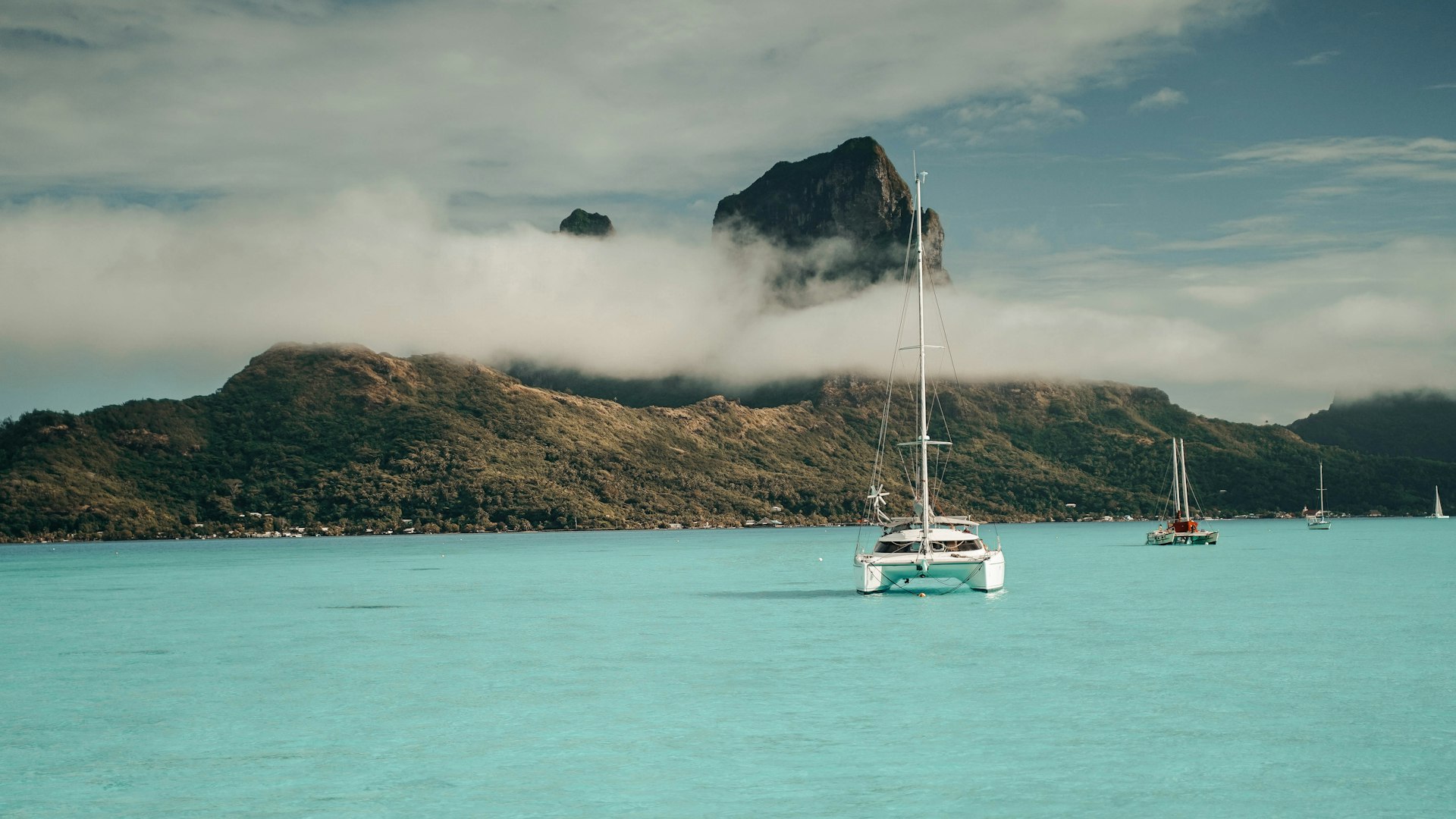
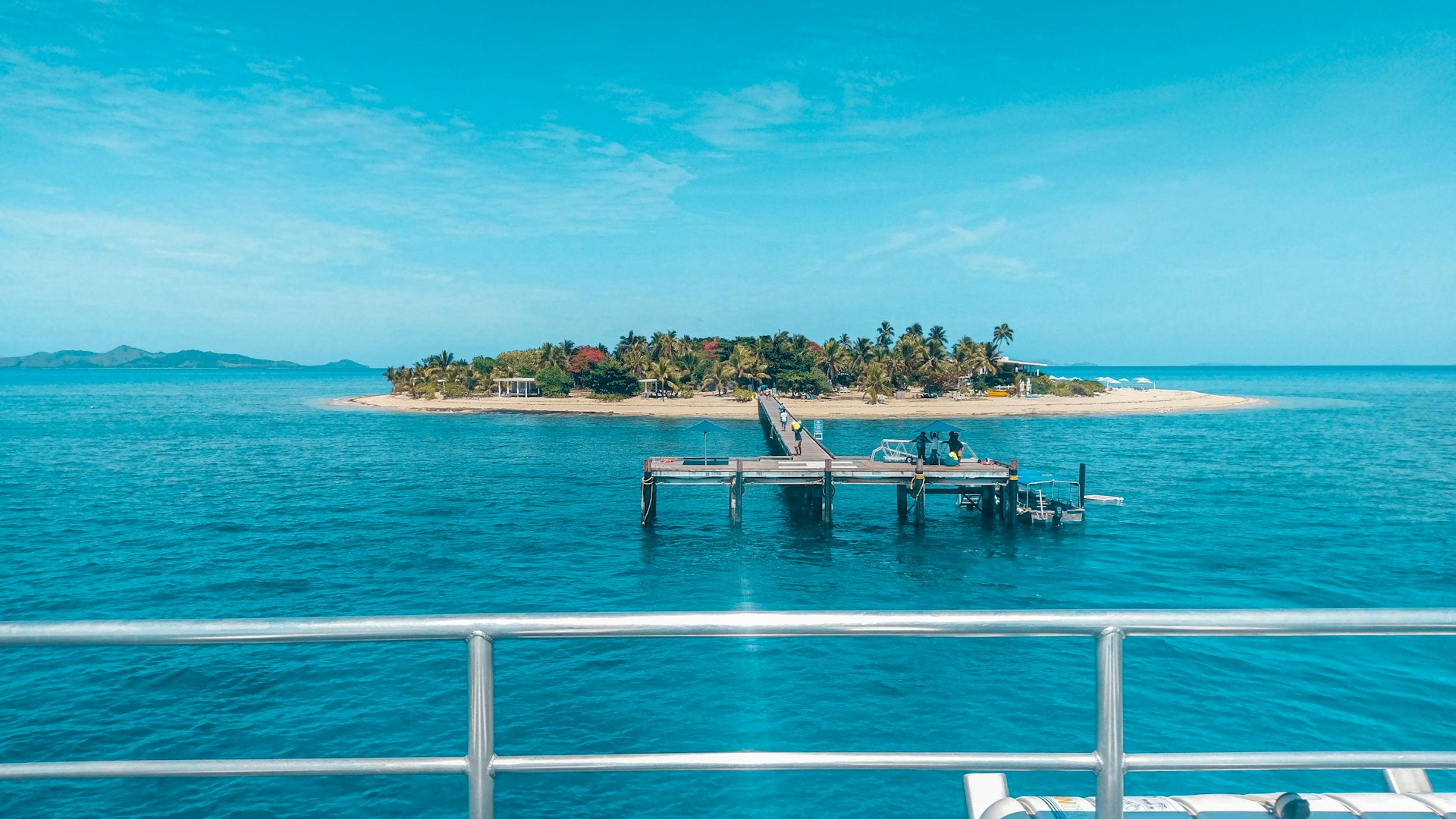
The South Pacific spans roughly a third of the planet's surface, yet its sailing grounds distil into a handful of genuinely extraordinary archipelagoes. French Polynesia, Fiji, Vanuatu, Tonga, and the Cook Islands each offer a distinct character: the coral atolls and cerulean passes of the Tuamotus, the soft volcanic ridges above Bora Bora's lagoon, the Koro Sea's reef-threaded channels, the ash-grey caldera of Tanna. A single charter cannot see all of it. What it can do is go deep into one region and emerge transformed.

Sailing here demands genuine preparation. Passages between island groups run 500 to 1,500 nautical miles, cyclone seasons are non-negotiable constraints, and provisioning windows in remote atolls are narrow. In return, you get anchorages shared with no other vessel, dive sites that have rarely seen a regulator, and a pace of life that recalibrates your sense of time within days.

Why Charter in South Pacific

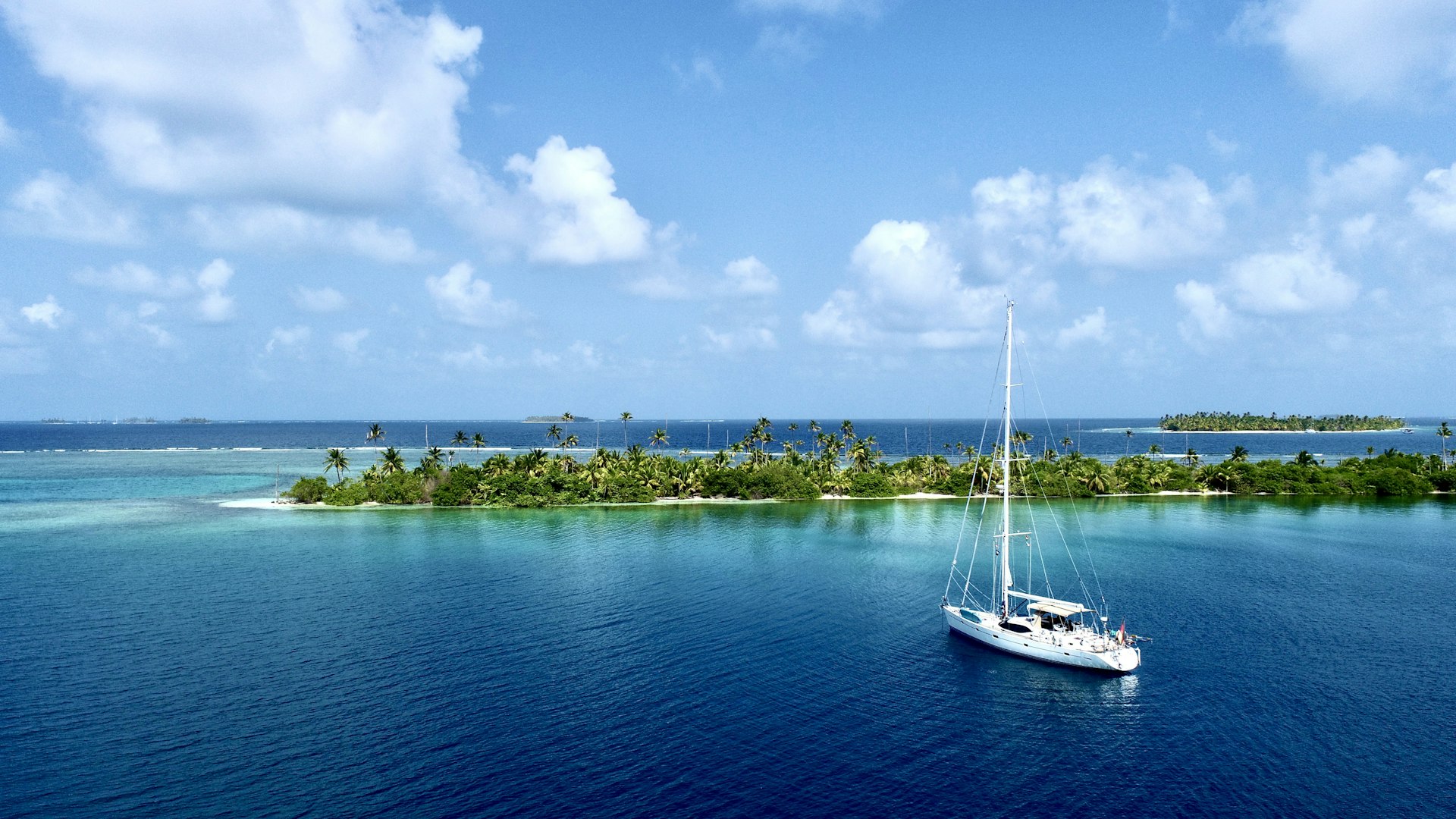
The South Pacific's primary distinction is remoteness at scale. Unlike the Mediterranean or Caribbean, where busy anchorages are the norm, here you can spend a week in French Polynesia's Marquesas without seeing another charter boat. The Tuamotu Archipelago alone contains 78 atolls spread across an area larger than Western Europe, most of them accessible only by sea. When the anchorage is yours alone at dusk, with manta rays feeding in the pass at dawn, the logistics of getting here feel entirely worthwhile.

The underwater world is another category entirely. The passes at Rangiroa and Fakarava — both UNESCO biosphere reserves — funnel nutrient-rich currents that aggregate sharks, dolphins, and pelagic fish in numbers that surprise even experienced divers. Fiji's Bligh Water and Vanuatu's Espiritu Santo offer different but equally compelling dive profiles, from soft coral gardens to the SS President Coolidge wreck, one of the most accessible large wreck dives in the world.

Culturally, the region carries real depth. Tongan ceremonies, Fijian kava protocol, the carved tikis of the Marquesas, and the land-diving ritual of Pentecost Island in Vanuatu are not tourist reconstructions — they are living practices. A charter here, if handled with genuine respect and the right local contacts, opens doors to experiences that no land-based itinerary can replicate.

South Pacific Highlights

1

Fakarava South Pass (Tuamotus, French Polynesia) — A UNESCO biosphere reserve where slack water on the incoming tide draws hundreds of grey reef sharks into the pass. Drift diving here is among the most technically and visually rewarding in the Pacific.

2

Bora Bora and Raiatea (Society Islands) — Bora Bora's lagoon is overexposed in photography and still underrated in person. Its immediate neighbour Raiatea holds Marae Taputapuatea, one of the most significant ancient Polynesian ceremonial sites in the Pacific.

3

Nuku Hiva and Hiva Oa (Marquesas) — These volcanic islands, rising steeply from deep ocean with no protecting reef, offer dramatic anchorages in bays like Taiohae and Hanamenu. The passage from the Tuamotus to the Marquesas is one of the great blue-water legs in Pacific sailing.

4

The Yasawa Islands (Fiji) — A chain of volcanic islands running 80 kilometres north of Viti Levu. The northern Yasawas thin out noticeably in terms of other vessels. The Blue Lagoon and Sawa-i-Lau limestone caves are genuine highlights rather than bucket-list checkboxes.

5

Tanna Island (Vanuatu) — Anchoring off Port Resolution within sight of Mount Yasur, an actively erupting volcano, at night, is an experience with no real equivalent elsewhere in charter sailing. The light and sound carry for miles.

6

Ha'apai Group (Tonga) — Tonga's least-visited major island group, the Ha'apai offers shoal-draft anchorages through low coral islets, humpback whale encounters from July through October, and the kind of quiet that has largely left the Vava'u group.

7

Espiritu Santo (Vanuatu) — Champagne Beach and the Riri Blue Hole are accessible from a charter base here, but the real draw is the SS President Coolidge at Luganville — a 22,000-tonne troopship sunk in 1942, now lying at depths between 20 and 70 metres and diveable independently from the yacht.

When to Sail

The South Pacific's sailing season runs broadly from May to October, when the southeast trades are steady and the risk of tropical cyclones is minimal. The cyclone season (November through April) affects most of the region and requires careful planning or repositioning to higher latitudes.

High Season (Jun-Sep)

The southeast trade winds blow consistently at 15 to 25 knots through this period, making for reliable beam and broad reaches across the island groups. Visibility underwater is at its peak, typically exceeding 40 metres in the Tuamotu passes. Temperatures are warm rather than oppressive — mid-to-high twenties Celsius. This is when French Polynesia's anchorages are at their most settled and the Fijian Koro Sea is navigable without concern. Demand for quality charter yachts is highest; booking six to twelve months ahead is standard practice for the best vessels.

Shoulder Season (May, Oct)

May and October offer a viable alternative to peak season, with lighter crowds and marginally lower charter rates. May can still carry the tail end of the wet season in Fiji and Vanuatu, with occasional squalls, but the trades are beginning to establish. October is generally drier and the trades remain broadly dependable, though they begin to lose their consistency by late in the month. Both months suit experienced offshore crews comfortable managing variable conditions. Cyclone risk in October is statistically low but cannot be entirely discounted.

Choosing the Right Yacht

The multihull dominates South Pacific chartering for well-understood reasons. Catamarans — Lagoon 630s, Fountaine Pajot Samana 59s, Bali 4.3s and 4.5s among the models in the current fleet — offer the shallow draft essential for atoll passes and lagoon anchorages, the deck space for gear-heavy diving or freediving operations, and the stability that makes long passages more comfortable for guests who are not career sailors. In a region where a single charter might involve 300 nautical miles of open-ocean passage between groups, the ability to spread out and sleep properly mid-crossing is not a luxury — it is a practical advantage. Catamarans account for the majority of the South Pacific fleet for exactly this reason.

Ten Days in French Polynesia — Society Islands to the Southern Tuamotus

A suggested week-long charter route

Day 1

Board in Papeete, Tahiti, at Fare Ute marina. Complete crew briefings, provisioning top-up, and customs clearance. Afternoon departure for Moorea — a 17-nautical-mile crossing across the Sea of the Moon. Anchor in Opunohu Bay before dusk, where the interior peaks of Moorea come fully into relief at sunset.

Day 2

Full day in Moorea. Morning snorkel on the outer reef with lemon sharks and blacktips. Afternoon shore excursion to the Belvedere viewpoint and the marae of Titiroa. Dinner at anchor in Cook's Bay — quieter and less frequented than it was a decade ago.

Day 3

Overnight passage to Raiatea, 120 nautical miles on the southeast trade wind. The trade typically allows a broad reach at this time of year. Arrive mid-morning and move through the Raiatea-Taha'a lagoon — one of the few in the Society Islands shared by two islands under a single reef.

Day 4

Explore Taha'a — vanilla plantations are the practical reason to go ashore; the motu anchorages on the east side of the lagoon are the reason to stay. Snorkel the coral garden off Motu Mahaea. Anchor overnight off the motu as the trade wind drops to an evening calm.

Day 5

Sail to Bora Bora, 25 miles. Enter through the Teavanui Pass on the western side of the lagoon. The atoll encircles one of the best-preserved barrier reef systems in the Society Islands. Afternoon dive or snorkel on the lagoon's coral heads. Anchor away from the resort moorings in the south of the lagoon.

Day 6

Passage to Fakarava in the Tuamotus — approximately 250 nautical miles, departing early morning to arrive in time for a daylight entry through the Garuae Pass in the north of the atoll. Garuae is the widest pass in French Polynesia and straightforward in settled trade wind conditions.

Day 7

Fakarava North. Morning dive in Garuae Pass on the incoming tide. Afternoon sail south along the atoll's western lagoon edge — 85 kilometres of flat water with consistent 12-knot trades inside the reef. Anchor in the shallow section near the village of Fakarava for the night.

Day 8

Fakarava South Pass (Tetamanu). The southern pass is the signature dive in all of French Polynesia. Two or three dives through the day depending on tidal timing. The wall on the ocean side drops to 40 metres with visibility that regularly exceeds that depth. Grey reef sharks aggregate here in numbers that require no exaggeration.

Day 9

Return north through the lagoon and overnight passage back toward Tahiti, or divert to Rangiroa if the itinerary allows — the Tiputa and Avatoru passes there offer comparable shark diving to Fakarava with a different ecological profile. Position for arrival back in Papeete by dawn.

Day 10

Morning arrival in Papeete. Final breakfast at anchor or at the quay before checkout. Fare Ute marina is close to the airport; transfers are straightforward. Customs and immigration exit formalities are completed aboard or at the port office.

Local Tips

  • Entry formalities in French Polynesia require a bond or return ticket to prove you are not intending to remain. For charter yachts, the bond is typically waived, but documentation must be in order before arrival. Clearance is handled at Papeete, Nuku Hiva, or Hiva Oa for Marquesas arrivals. Fiji and Vanuatu both require port clearance at designated ports of entry — attempting to visit outer islands before clearing is a serious matter and carries real penalties.
  • Provisioning is best handled in Papeete or Suva, depending on your base. Tahiti's Champion and Carrefour hypermarkets stock European staples, good wines, and local produce reliably. In the Tuamotus, beyond the village stores of Fakarava or Rangiroa, supply is thin and expensive. Provision for the full passage duration before departing the main island base.
  • Tipping is not embedded in Polynesian culture the way it is in the Caribbean. Crew gratuity remains appreciated but should reflect genuine service rather than defaulting to a fixed percentage formula. In Fiji, the sevusevu — a small gift of kava root to the village chief upon arrival — is not optional. It is a genuine protocol and omitting it is considered disrespectful.
  • Cyclone awareness is non-negotiable. The official season runs 1 November through 30 April. Most charter contracts have force majeure provisions for this period, and most reputable operators will not place yachts in cyclone-exposed areas during the risk window. Tonga sits below the main cyclone belt and parts of Fiji can position in cyclone holes, but neither should be treated as fully safe harbours.
  • The Tuamotu passes are navigable only around slack water or on the favourable tide. Entry against a 5-to-7-knot current through a narrow, reef-flanked pass is not a good introduction to any atoll. Download current tide tables for each pass before departure and plan arrivals accordingly. Local pilots and cruising guides (the Charlie's Charts Pacific series and Warwick Clay's French Polynesia guide) are worth having aboard regardless of GPS reliability.
  • Mobile data and communications outside Tahiti, Bora Bora, and Fiji's main islands are unreliable or absent. A satellite communication device — Garmin inReach at a minimum, full Iridium or Starlink at the preferred end — is a practical necessity rather than an upgrade. Inform guests before departure that connectivity will be intermittent; for most, this becomes a feature rather than a complaint by day three.

Frequently Asked Questions

Do I need an offshore sailing qualification to charter in the South Pacific+
Requirements vary by territory. French Polynesia technically requires a skipper to hold an offshore qualification for passages beyond coastal limits, and the distances between island groups clearly fall into this category. Most charter operators in Fiji and Vanuatu have comparable requirements for bareboat charters. In practice, an ICC or equivalent offshore certificate is the baseline expectation. Charterers without qualifications should consider a crewed charter or hiring a professional skipper — this is not a region where local knowledge can be improvised.
How far in advance should I book a South Pacific charter+
For peak season (June through September), six to twelve months ahead is the practical window for quality vessels. The fleet in the South Pacific is genuinely smaller than in the Mediterranean or Caribbean, and the best catamarans and crewed yachts in French Polynesia in particular are committed early. Shoulder season bookings (May, October) can sometimes be confirmed three to four months out, but this is not guaranteed for larger or better-specified yachts.
Which is better for a first South Pacific charter — French Polynesia or Fiji+
French Polynesia is the more predictable choice for first-timers drawn to iconic anchorages, consistent trade winds, and well-charted routes. Fiji suits charterers who want more cultural diversity, shorter inter-island passages, and access to some of the world's most respected dive sites in the Bligh Water and Beqa Lagoon. French Polynesia's remoteness is greater and its provisioning infrastructure thinner outside the main islands; Fiji has a more developed charter infrastructure in Viti Levu and the Mamanucas.
What is the realistic fuel cost for a South Pacific charter+
Fuel costs in French Polynesia are among the highest in the world for marine diesel, reflecting the supply chain through Papeete. Expect to budget APA (Advanced Provisioning Allowance) accordingly — typically 30 to 35 percent of the base charter fee for a crewed motor yacht itinerary with substantial motoring. Catamarans and sailing yachts reduce this materially if you are prepared to sail the passages rather than motor. Fiji and Vanuatu are somewhat more competitive on fuel but still significantly more expensive than European or US charter bases.
Are whale watching encounters possible during a charter+
Yes, and Tonga is the most reliable location in the Pacific for in-water humpback whale encounters with a qualified operator. Humpbacks migrate to Tonga's warm waters to calve and breed from July through October. The Ha'apai and Vava'u groups are the primary areas. In-water encounters require a licensed whale-swim operator, which your charter base or crew can arrange in advance. Whales are also regularly sighted on passages around the Society Islands and in New Caledonian waters during the same season, though in-water access is more restricted in French Polynesia.
What should guests pack that they might not think of+
Reef-safe sunscreen is legally required in French Polynesia and strongly recommended throughout the region — standard chemical sunscreens damage coral and are increasingly restricted. A rash guard provides more reliable UV protection than sunscreen on long passages. Quality underwater torches for night dives and cave exploration in Vanuatu are worth bringing rather than relying on rental. Guests should also carry physical copies of all identity documents, including passports and visas — digital copies are not accepted at all customs clearance points in the region.

Speak with our South Pacific specialists to match the right yacht and itinerary to your dates — serious enquiries receive a tailored proposal within 24 hours.

Request Your Charter

Request Your Charter

Tell us about your dream voyage and we will find the perfect yacht for you.