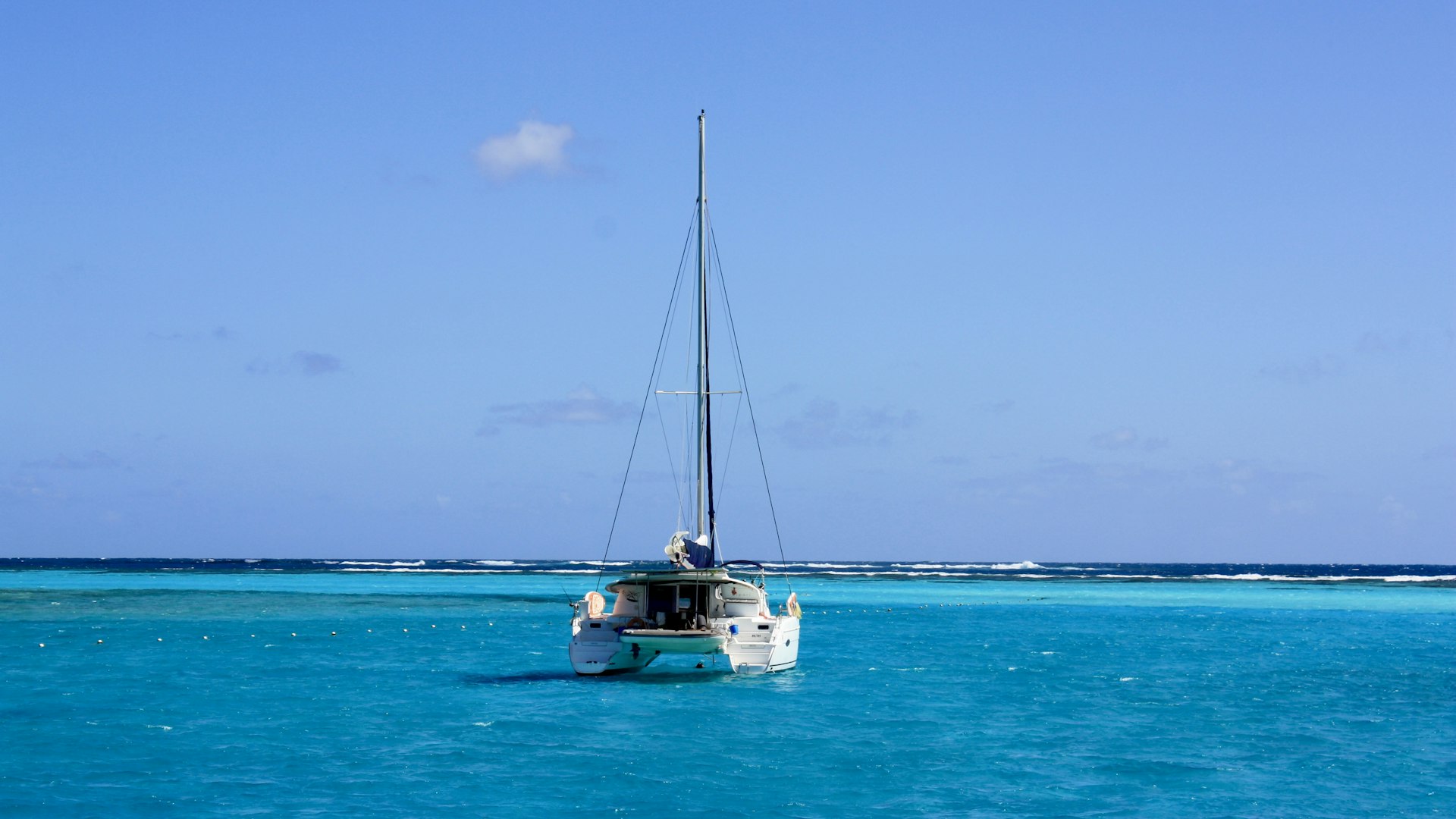
Catamaran Charter South Pacific

Catamaran Charter South Pacific

From French Polynesia's passes to the remote outer atolls of the Tuamotus, a catamaran charter in the South Pacific rewards those who plan carefully and sail with purpose. Vast distances, extraordinary anchorages, and some of the clearest water on the planet await.

Catamarans Available in South Pacific

Browse our selection of catamarans available for charter in South Pacific.

Bareboat Catamaran Catana 41 OC
catamaran

Bareboat Catamaran Catana 41 OC

Catana 41 OC · 2010

12.6m 4

From

€3k/week

View →
Bareboat Catamaran Catana 42 CI with watermaker
catamaran

Bareboat Catamaran Catana 42 CI with watermaker

Catana 42 · 2014

12.6m 4

From

€3k/week

View →
Bareboat Catamaran Mahe 36 Classic
catamaran

Bareboat Catamaran Mahe 36 Classic

Mahe 36 · 2014

11.0m 3

From

€3k/week

View →
Bareboat Catamaran MANWE
catamaran

Bareboat Catamaran MANWE

Bali 4.3 · 2020

43.0m 10 4

From

$4k/week

View →
Bareboat Catamaran Lagoon 39
catamaran

Bareboat Catamaran Lagoon 39

Lagoon 39 · 2013

11.7m 6

From

€4k/week

View →
Bareboat Catamaran Lagoon 400
catamaran

Bareboat Catamaran Lagoon 400

Lagoon 400 · 2012

12.0m 6

From

€4k/week

View →
Bareboat Power Catamaran Lagoon 40 Power Catamaran with watermaker
catamaran

Bareboat Power Catamaran Lagoon 40 Power Catamaran with watermaker

Lagoon 40 · 2015

11.6m 4

From

€4k/week

View →
Bareboat Catamaran Catana 50 Ocean Class
catamaran

Bareboat Catamaran Catana 50 Ocean Class

Catana 50 OC · 2011

16.0m 5

From

€4k/week

View →
Bareboat Catamaran CATANA 47 WITH WATERMAKER
catamaran

Bareboat Catamaran CATANA 47 WITH WATERMAKER

Catana 47 Custom · 2011

14.0m 10 6

From

€4k/week

View →
Bareboat Catamaran Catana 42 (2014)
catamaran

Bareboat Catamaran Catana 42 (2014)

Catana 42 · 2014

12.6m 8 4

From

€4k/week

View →
Bareboat Catamaran Bali 4.5 with Watermaker
catamaran

Bareboat Catamaran Bali 4.5 with Watermaker

Bali 4.5 · 2017

13.6m 6

From

€4k/week

View →
Bareboat Catamaran Catana 47 with watermaker and AC
catamaran

Bareboat Catamaran Catana 47 with watermaker and AC

Catana 47 · 2011

14.0m 6

From

€5k/week

View →
Bareboat Power Catamaran Fountaine Pajot MY 37 Quatuor
catamaran

Bareboat Power Catamaran Fountaine Pajot MY 37 Quatuor

Quatuor 37 · 2018

11.0m 8 4

From

€5k/week

View →
Bareboat Catamaran Lucia 40 Grande Croisiere
catamaran

Bareboat Catamaran Lucia 40 Grande Croisiere

Lucia 40 · 2017

11.7m 4

From

€5k/week

View →
Bareboat Catamaran Catana 55
catamaran

Bareboat Catamaran Catana 55

Catana 55 · 2013

16.8m 6

From

€5k/week

View →
Bareboat Catamaran Bali 4.5 with watermaker & A/C
catamaran

Bareboat Catamaran Bali 4.5 with watermaker & A/C

Bali 4.5 · 2020

13.6m 6

From

€5k/week

View →
Bareboat Catamaran Bali 4.5 with watermaker
catamaran

Bareboat Catamaran Bali 4.5 with watermaker

Bali 4.5 · 2019

13.6m 6

From

€6k/week

View →
Bareboat Catamaran Lagoon 40
catamaran

Bareboat Catamaran Lagoon 40

Lagoon 40 · 2020

11.7m 4

From

€6k/week

View →
Bareboat Catamaran Fountaine Pajot Helia 44
catamaran

Bareboat Catamaran Fountaine Pajot Helia 44

Fountaine Pajot Helia 44 · 2014

13.3m 6

From

€7k/week

View →
Bareboat Catamaran Lagoon 52 F with Watermaker & A/C
catamaran

Bareboat Catamaran Lagoon 52 F with Watermaker & A/C

Lagoon 52F · 2019

15.8m 8

From

€8k/week

View →
Bareboat Catamaran Bali Catspace
catamaran

Bareboat Catamaran Bali Catspace

Bali Catspace · 2020

12.3m 4

From

€9k/week

View →
Bareboat Catamaran Lagoon 42
catamaran

Bareboat Catamaran Lagoon 42

Lagoon 42 · 2019

12.8m 4

From

$9k/week

View →
Luxury Crewed Catamaran MAHANA
catamaran

Luxury Crewed Catamaran MAHANA

Fountaine Pajot Helia 44 · 2015

13.0m 4 3

From

$10k/week

View →
Bareboat Catamaran Lagoon 46
catamaran

Bareboat Catamaran Lagoon 46

Lagoon 46 · 2020

14.0m 10 4

From

$10k/week

View →

The South Pacific is not a single sailing ground but a constellation of distinct island groups, each with its own character, sailing conditions, and bureaucratic requirements. French Polynesia anchors most itineraries, with the Society Islands offering the famous profile of Bora Bora and Moorea, while the Tuamotu Archipelago to the east presents 78 atolls, including Fakarava and Rangiroa, where the diving through the passes is among the most intense you will find anywhere. Further afield, the Cook Islands, Fiji, Tonga, and Vanuatu each offer genuinely different cultures, reef systems, and logistical realities.

The distances involved mean that passage planning is not an afterthought. Papeete, Tahiti is the principal hub for provisioning, customs clearance, and crew changes, and most charters begin and end here or in Raiatea, the only port of entry in the Leeward Islands. Between islands, you are working with the Southeast Trades, which blow reliably from May through October, giving experienced crews the conditions to cover ground efficiently while still leaving time to slow down in the anchorages that matter.

Why Charter in Catamaran charter in South Pacific

The shallow draught and twin-hull stability of a catamaran make it the logical choice for the South Pacific's mix of long ocean passages and delicate lagoon navigation. Draft typically under 1.4 metres on most production catamarans allows access to anchorages inside motus and atoll lagoons that are simply not accessible to monohulls drawing 2 metres or more. The spacious deck area also matters when you are at anchor for days at a time in a Tuamotu lagoon, far from any marina or restaurant.

French Polynesia's cruising permit system, the Carnet de Passage des Îles, is well-managed but requires advance application. Most charter operators based in Papeete and Raiatea handle this on your behalf, and SelectYachts can coordinate the paperwork timeline to ensure there are no delays at the start of your charter. The permit covers the Society, Tuamotu, Marquesas, and Austral island groups, giving serious itineraries considerable geographic range.

The South Pacific is not inexpensive, and provisioning outside Papeete or the larger islands can be limited and costly. What you receive in return is a level of remoteness and natural richness that few other sailing destinations can match at any price. Manta rays in Bora Bora's lagoon, dawn passages through the Fakarava South Pass, a night at anchor off a uninhabited motu with no other vessel within sight: these are not incidental pleasures but the core of why experienced charterers return.

Catamaran charter in South Pacific Highlights

1

Fakarava South Pass (Tuamotus): A UNESCO Biosphere Reserve, the Garuae Pass in the north and the Tumakohua Pass in the south offer drift diving through walls of grey sharks and napoleon wrasse. Anchor off the motu and enter on the incoming tide.

2

Bora Bora lagoon: The main pass, Teavanui, is wide and well-marked. Inside, the lagoon is sheltered and clear, with excellent snorkelling on the coral heads at the northern end and manta ray feeding grounds near Anau.

3

Moorea, Cook's Bay and Opunohu Bay: Two deeply indented bays with secure anchorages, a working agricultural interior with vanilla and pineapple plantations, and easy provisioning. A logical first stop after clearing Papeete, just 17 nautical miles away.

4

Raiatea and Taha'a: Raiatea is the spiritual heart of Polynesia and the only Leeward port of entry. Taha'a, sharing the same lagoon, is known for vanilla cultivation and a quiet pace that rewards a two-night stay.

5

Rangiroa, Tuamotus: The second-largest atoll in the world by lagoon area. The Tiputa Pass offers reliable dolphin encounters and strong diving, while the interior of the lagoon, sometimes called the Blue Lagoon, is an enclosed pool of turquoise water worth the dinghy ride.

6

Huahine: Often overlooked in favour of Bora Bora, Huahine has well-preserved marae (ancient Polynesian temples), a thriving local fishing culture, and fewer charter yachts. The anchorage off Fare is comfortable and the provisioning is adequate.

7

Marquesas Islands: Only viable for those chartering three weeks or more given the 1,000-mile passage from the Society Islands. The volcanic scenery, Polynesian culture, and near-total absence of fringing reef create a sailing environment unlike anywhere else in the Pacific.

When to Sail

The dry season from May to October offers the Southeast Trades at their most consistent, with average winds of 15 to 25 knots and low humidity. The wet season from November through April brings higher temperatures, occasional cyclone risk, and squally, unpredictable conditions that significantly complicate planning.

High Season (Jun-Sep)

The Southeast Trades blow steadily at 15 to 25 knots, temperatures sit comfortably between 24 and 28 degrees Celsius, and humidity is moderate. Visibility underwater is at its peak. This is peak demand for charter yachts, particularly in July and August when French and European clients are most active. Book six to twelve months ahead for the best selection of vessels. Swells can be pronounced on exposed southern and eastern coasts, but lagoon anchorages remain calm. Raiatea and Bora Bora are the most popular bases for Society Islands circuits.

Shoulder Season (May, Oct)

May and October offer a compelling balance between reliable conditions and reduced demand. The Trades are establishing themselves in May and moderating in October, with winds typically 12 to 20 knots and sea states generally manageable. Water temperatures remain warm, rainfall is low, and anchorages are noticeably quieter. October in particular can offer exceptional value and availability, with the added benefit of warmer water than high season for diving. Some cyclone season restrictions begin to apply in November, so October is the practical cut-off for most itineraries.

Choosing the Right Yacht

For the South Pacific, a catamaran between 45 and 60 feet is the practical and experiential sweet spot. Lagoon, Fountaine Pajot, and Catana all have strong track records in these waters, and the Lagoon 630 available in our fleet represents the upper end of range for families or groups of eight to twelve who want serious offshore capability alongside lagoon comfort. Models like the Fountaine Pajot Samana 59 and Bali 4.5 offer the interior volume and generator capacity that make extended atoll passages comfortable when you may be five days from a marina.

Society Islands and Southern Tuamotus, 14 Days from Raiatea

A suggested week-long charter route

Day 1

Board in Raiatea, Uturoa Marina. Complete provisioning and briefing. Afternoon departure south through the Raiatea-Taha'a lagoon, anchoring overnight in the calm bight off Taha'a's vanilla coast.

Day 2

Spend the morning visiting a vanilla farm by dinghy. Afternoon sail northwest to Bora Bora, entering through the Teavanui Pass before dusk. Anchor off the motu on the eastern rim of the lagoon.

Day 3

Full day in Bora Bora lagoon. Morning snorkel on the coral gardens near Anau, afternoon visit to the manta ray feeding grounds. Sundowner at anchor with the profile of Mount Otemanu catching the last light.

Day 4

Sail east to Huahine, approximately 4 hours in the Trades. Anchor off Fare village. Hire bicycles or a local guide for an afternoon tour of the marae at Maeva, one of the best-preserved ceremonial sites in Polynesia.

Day 5

Morning in Huahine's southern bay, snorkelling the pass at Avamoa. Afternoon passage to Moorea, arriving at Opunohu Bay by early evening. Anchor in the upper bay, away from the ferry traffic.

Day 6

Moorea at leisure. Hike the Belvedere trail for views over both bays, snorkel the coral gardens off the motu at the bay entrance, or arrange a 4WD tour of the agricultural interior. Move to Cook's Bay for the night.

Day 7

Provision in Papeete, Tahiti. This is the last opportunity for a full shop before the Tuamotus. Clear any administrative requirements, refuel, and depart east by mid-afternoon, beginning the overnight passage to Fakarava.

Day 8

Arrive Fakarava after an overnight passage of approximately 280 nautical miles. Enter through the Garuae Pass (north pass) on the incoming tide. Anchor in the lagoon and rest. Afternoon dive or snorkel off the yacht.

Day 9

Full day in Fakarava's North Pass. Two drift dives through the Garuae, the widest pass in French Polynesia, with local dive guides essential for timing and navigation. Evening at anchor in the village of Rotoava.

Day 10

Sail or motor south through Fakarava's lagoon to the South Pass, Tumakohua. Anchor off the small settlement. Afternoon snorkel on the famous coral garden walls. This anchorage is remote and provisions should be self-sufficient.

Day 11

Morning dive through Tumakohua South Pass on the incoming tide, with grey reef sharks in concentrations that have made this site internationally known. Afternoon departure northwest toward Rangiroa.

Day 12

Arrive Rangiroa. Enter through Avatoru Pass. Anchor near the village of Avatoru. Afternoon visit to the pearl farm and local market. Arrange dive guide for the following morning's Tiputa Pass dive.

Day 13

Dawn dive through Tiputa Pass for the dolphin school that frequents the channel on the incoming tide. Afternoon dinghy excursion to the Blue Lagoon, a natural pool enclosed within the atoll's interior. Final night at anchor in Rangiroa.

Day 14

Overnight passage west, arriving Raiatea for check-out. Allow a full morning for customs clearance, fuel, and handover. Afternoon departures to Papeete Faa'a Airport, approximately 45 minutes by interisland flight.

Local Tips

  • Cruising permits for French Polynesia must be arranged before arrival. The Carnet de Passage des Îles is issued by customs and typically takes two to four weeks to process. If you are flying in to join the yacht, ensure the permit is already aboard. SelectYachts coordinates this with the base operator as standard.
  • Provisioning beyond Papeete and Raiatea is limited. The Tuamotu atolls may have a small general store, but expect basic tinned goods and irregular supply. Carry sufficient water, fuel, and food for any atoll leg, and plan on at least five to seven days of self-sufficiency. Fresh baguettes are baked daily even on remote atolls, a French inheritance that should not be taken for granted.
  • Pass timing is non-negotiable in the Tuamotus. Entering or exiting an atoll pass against the current is dangerous and in some passes impossible under motor alone. Current speeds of 4 to 8 knots are common. Chart the tides carefully, use local dive guides for advice, and plan arrivals for daylight on a slack or incoming tide.
  • The Polynesian cruising culture is respectful and formal in some respects. When visiting villages, particularly on the outer Tuamotus, dress modestly when going ashore, greet elders first, and ask permission before photographing. Small gifts of coffee, flour, or fishing gear are genuinely appreciated by village families who assist with local knowledge.
  • Currency and connectivity are more constrained than the geography suggests. The CFP Franc (XPF) is used across French Polynesia and cannot be exchanged outside the territory. ATMs exist in Papeete, Raiatea, and Bora Bora, but not on the atolls. Carry sufficient cash before leaving the Society Islands. Mobile data coverage is patchy in the Tuamotus and absent on many anchorages.
  • Cyclone season runs nominally from November through April, but the statistical risk peaks in January and February. If you are chartering outside the dry season, confirm that the charter base and the yacht's insurance both permit operation during cyclone season, and identify the nearest cyclone holes in your intended cruising area before departure.

Frequently Asked Questions

Do I need an offshore sailing certificate to charter a catamaran in the South Pacific+
Most charter bases in French Polynesia require a minimum of an ICC or equivalent offshore certificate for the skipper, plus documented offshore passage experience. The Tuamotu passages in particular involve overnight open-ocean sailing, and some operators require a specific logbook endorsement or a local delivery skipper for these legs. Discuss your experience profile with SelectYachts before booking and we will confirm the base operator's requirements.
How far in advance should I book a South Pacific catamaran charter+
For peak season, June through August, nine to twelve months ahead is the practical minimum for a meaningful choice of vessel. The South Pacific fleet is small relative to the Mediterranean or Caribbean, and popular models from Lagoon and Fountaine Pajot in the 50 to 60 foot range are consistently booked well ahead. Shoulder season departures in May or October can sometimes be confirmed four to six months out, but availability is never guaranteed.
Can I sail from Tahiti to the Marquesas on a standard charter+
The passage from the Society Islands to the Marquesas is approximately 1,000 nautical miles and takes four to six days in the open Pacific. Most charter bases permit this only on extended bareboat contracts, typically three weeks or more, and require the skipper to demonstrate offshore passage-making experience. Some operators will provide a delivery skipper for the passage legs at additional cost. It is an extraordinary itinerary for those qualified, but not a standard week's charter.
What is the sailing like between the Society Islands+
Inter-island passages within the Society Islands group are typically 15 to 40 nautical miles, often on a beam or broad reach in the Southeast Trades. The crossing from Raiatea to Bora Bora is around 18 miles and comfortable in 15 to 20 knots. The passage from Moorea to Papeete takes under two hours. These are manageable day sails for most competence levels and make the Society Islands a logical circuit for charterers who prefer not to do overnight passages.
Are catamarans better than monohulls for this region+
For the South Pacific specifically, catamarans have a clear practical advantage. The shallow draft allows access inside atoll lagoons and to anchorages off motus that monohulls cannot reach. The stability at anchor matters enormously when you are spending multiple nights in remote lagoons with some residual swell. The additional deck and cockpit space also significantly improves the quality of extended passages. Monohull charters are available but represent a minority of the fleet for good reason.
What dining options exist when sailing remotely in the Tuamotus+
On the outer Tuamotu atolls, formal restaurants do not exist. Some families in villages offer home-cooked meals by arrangement, and the French administrative infrastructure means you can usually find fresh baguettes daily. The real advantage is what you can source locally: freshly caught tuna and mahi-mahi, lobster from local fishermen, and poisson cru prepared aboard with limes from a motu shore. Provisioning comprehensively in Papeete and planning to cook aboard is both the practical and arguably the superior approach.

Tell us your dates, group size, and preferred island group, and our South Pacific specialists will present a shortlist of catamarans with detailed itinerary proposals within 24 hours.

Request Your Charter

Request Your Charter

Tell us about your dream voyage and we will find the perfect yacht for you.