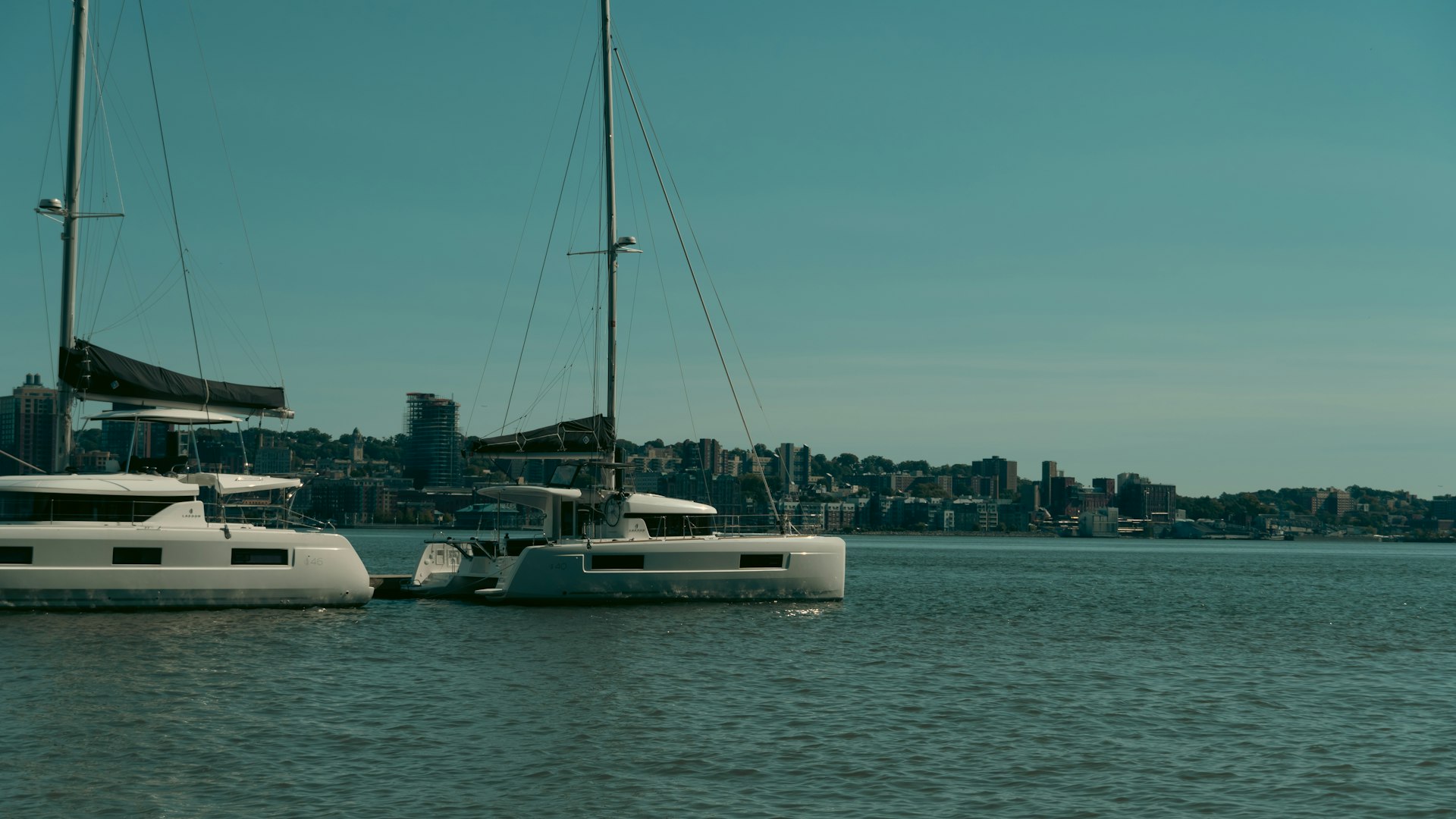
Sailing Yacht Charter South Pacific

Sailing Yacht Charter South Pacific

From the trade-wind passages of French Polynesia to the remote archipelagos of Tonga and the Lau Group, the South Pacific rewards sailing yachts with consistent breeze, uncrowded anchorages, and a scale of natural drama that few other cruising grounds can match.

The South Pacific is not a single destination but a collection of sovereign island nations, overseas territories, and open-ocean passages spread across roughly 30 million square kilometres of the world's largest ocean. A sailing yacht charter here might take you through the Society Islands of French Polynesia, across the Coral Sea to Vanuatu, or down through the Tongan archipelago towards Fiji's Lau Group — each region with its own entry formalities, anchorage character, and prevailing wind regime. This is cruising for charterers who want genuine exploration, not a marina-hopping circuit.

The passages are real and they demand a capable yacht. Distances between island groups run to hundreds of miles, and the seamanship required is of a different order to the Mediterranean or Caribbean. In return, you get anchorages where your yacht may be the only vessel in sight, reef passes navigated with a crew member on the spreaders reading the colour of the water, and evenings spent in villages that see perhaps a dozen visiting yachts a year. The South Pacific operates on its own terms, and that is precisely its appeal.

Why Charter in Sailing Yacht charter in South Pacific

French Polynesia remains the most accessible entry point for first-time South Pacific charterers, and Raiatea's Faaroa Bay — the only navigable river in Polynesia — illustrates the character of the region well. You are not ticking off scenic spots; you are moving through a living landscape where lagoon conditions inside the barrier reefs are genuinely sheltered and navigable, while the outer ocean is immediately present beyond each pass. The contrast between the turquoise interior of an atoll and the deep blue of the Pacific beyond is a constant companion.

Beyond French Polynesia, Tonga's Vava'u Group offers one of the finest concentrated sailing grounds in the Pacific, with over 50 islands and islets within a roughly 30-mile radius of Neiafu, the main town. Humpback whale migration runs through these waters between July and October. The anchorage at Swallows Cave on Kapa Island — where you can take a dinghy directly into the cavern — is the kind of experience that does not appear on a highlights reel anywhere else in the world.

Fiji's archipelago adds a further dimension. The Yasawa Islands offer a 90-kilometre chain of volcanic ridges and white-sand beaches accessible from Port Denarau near Nadi, while the more remote Lau Group to the east requires advance permitting but delivers almost complete solitude. Provisioning and communications thin out considerably once you leave the main island of Viti Levu, which focuses the mind and enhances the reward.

Sailing Yacht charter in South Pacific Highlights

1

Bora Bora's inner lagoon, navigated through the Teavanui Pass — the deep-water main entrance — where manta rays and black-tip reef sharks are routine companions during a morning snorkel off the anchor.

2

The Tuamotu Atolls, particularly Fakarava and Rangiroa, whose UNESCO-listed passes produce some of the world's most concentrated drift-diving through walls of grey reef sharks on the outgoing tide.

3

Suwarrow Atoll in the Cook Islands, a national park with a single ranger on station, offering an anchorage that has changed little since Tom Neale wrote about living there alone in the 1950s.

4

Vava'u, Tonga, where humpback whales calve between July and October and the sheltered inner islands around Neiafu harbour provide a self-contained cruising ground of genuine quality without the need for long offshore passages.

5

The Yasawa Islands, Fiji, a volcanic chain offering consistent SE breeze along its length, numerous village-visit opportunities with the sevusevu (kava ceremony) protocol observed, and remarkably clear water for snorkelling and diving.

6

Huahine, Society Islands, consistently overlooked in favour of its more famous neighbours, offering the densest concentration of marae (ancient Polynesian ceremonial platforms) alongside lagoon anchorages that rarely exceed five yachts at anchor.

7

Swallows Cave, Kapa Island, Tonga, navigable by dinghy at most states of the tide, where the afternoon light refracts through the entrance to illuminate the interior walls in a manner that makes a convincing case for the Pacific over any other ocean.

When to Sail

The austral winter, from May to October, is the primary sailing season across most of the South Pacific, combining the SE trade winds with lower humidity, reduced cyclone risk, and clearer visibility for reef navigation. The cyclone season runs from approximately November to April, with the highest activity in January and February.

High Season (Jun-Sep)

The SE trades blow at a reliable 15-25 knots across French Polynesia, Tonga, and Fiji during these months, making for fast, comfortable passages on broadly reaching or running points of sail between island groups. Humidity is lower, visibility is exceptional, and humpback whales are present in Tongan waters from July onwards. Anchorages in Bora Bora and Vava'u will be at their busiest, though 'busy' in this context remains modest by global standards. Book several months in advance for July and August, particularly if seeking a larger performance yacht.

Shoulder Season (May, Oct)

May and October offer a workable compromise — trade winds are established but anchorages are quieter, and provisioning in main centres such as Papeete and Neiafu is straightforward. Water temperatures remain warm enough for diving without a wetsuit. October carries a slightly elevated weather risk as the transition towards cyclone season begins; close monitoring of the ITCZ position is advisable, and charterers should ensure adequate passage windows are built into any itinerary that includes open-ocean legs.

Choosing the Right Yacht

A monohull sailing yacht of 45 to 55 feet is the most versatile platform for the South Pacific. The consistent trade-wind conditions favour upwind and reaching passages, and a well-found monohull with roller furling headsail, in-mast or in-boom mainsail options, and a reliable engine for reef navigation covers almost all eventualities. Watermakers are not optional here — shore-based water supplies are inconsistent outside of Papeete and Nadi, and a yacht without reliable onboard water production will face constraints quickly. Vessels from Jeanneau, Beneteau, and Dufour at the production end of the fleet, through to custom blue-water designs and the kind of serious offshore yacht represented by a 103-foot Alloy Yachts ketch, all have a place depending on party size and ambition of itinerary.

Ten Days in the Society and Leeward Islands, French Polynesia

A suggested week-long charter route

Day 1

Join the yacht in Papeete, Tahiti, provisioning from the Marché de Papeete and the well-stocked supermarkets along the waterfront. Depart in the afternoon and motorsail or sail in light conditions towards Moorea, arriving in Cooks Bay or Opunohu Bay by evening. Both bays offer reliable holding in 5-10 metres over sand and the volcanic peaks of Moorea provide immediate orientation into what the Society Islands look like from sea level.

Day 2

A full day on Moorea. The northern bays are accessible by dinghy to the beach and the interior road to the Belvedere lookout is a worthwhile hour ashore. In the afternoon, sail or motor through the lagoon towards the southwest corner and anchor in one of the smaller bays off the reef for a quieter evening away from charter traffic.

Day 3

Passage to Huahine, approximately 110 nautical miles on a comfortable reach in the SE trades. Arrive at the northern pass, Avamoa, in the afternoon with the sun still high enough for reef reading. Anchor in the lagoon off Fare, the main village. This is one of the most underrated stops in the Leewards.

Day 4

Explore Huahine Iti and Huahine Nui by yacht and dinghy. The Maeva marae complex on the northern island is one of the best-preserved archaeological sites in Polynesia and accessible from a dinghy landing on the lakeshore. Anchor overnight in the southern lagoon off Haapiti for near-complete quiet.

Day 5

Short passage to Raiatea and Tahaa, the twin islands sharing a single lagoon. Enter through the Rautoanui Pass on the south and sail up to Uturoa, Raiatea's main town, for clearing in with the capitainerie if not already done. Raiatea is the sacred centre of Polynesian navigation history — the Taputapuatea marae holds genuine cultural weight.

Day 6

Circumnavigate Tahaa inside the lagoon, stopping at one of the vanilla plantation villages for a guided walk and direct purchase. The lagoon between Raiatea and Tahaa is shallow in places and requires attentive pilotage, but it is one of the most beautiful enclosed bodies of water in French Polynesia. Anchor off a motu on Tahaa's northern reef.

Day 7

Sail to Bora Bora through the Teavanui Pass, the principal deep-water entrance on the western side. Anchor in the main lagoon or off one of the motus on the eastern reef. The peak of Mount Otemanu at 727 metres defines the skyline from every anchorage. Evening on the yacht — Bora Bora's restaurants are overpriced relative to quality.

Day 8

Snorkelling and watersports day in Bora Bora's inner lagoon. The Muri Muri area and the coral gardens off the eastern motus hold excellent fish life. In the afternoon, sail or motor to the quieter anchorage at Toopua Iti on the lagoon's southwestern edge, away from the resort jetskis.

Day 9

Return passage to Raiatea or, if the itinerary permits, an offshore leg back to Moorea via Maupiti — a 26-square-kilometre island with a notoriously narrow and current-swept pass, Onoiau Pass, that should be attempted only at slack water. Maupiti's lagoon is among the least commercialised in the Leewards and worth the seamanship required.

Day 10

Return to Papeete for disembarkation. Allow a full morning passage from Moorea in light morning trades, arriving in Papeete by noon. The capitainerie at the Quai des Yachts handles clearance efficiently. If flights permit, the Marché de Papeete on a Sunday morning is one of the most vivid produce markets in the Pacific Islands.

Local Tips

  • French Polynesia's clearance procedures require a bond or return air ticket for non-EU nationals — confirm requirements with the crew agency well in advance, as the regulations have changed periodically. Customs clearance in Papeete is handled at the Quai des Yachts and takes approximately half a day if paperwork is complete.
  • Provisioning in Papeete from Carrefour and Continent supermarkets is thorough for a French territory — wine, cheese, and tinned goods are well stocked, though prices reflect the 13,000-kilometre supply chain from France. Fresh fish is better sourced at the market than from supermarkets. Once outside Papeete, provision conservatively — outer island stores carry basics only.
  • In Tonga and Fiji, the sevusevu protocol for village visits is not optional etiquette — it is a genuine social obligation. Bring kava root (yaqona in Fijian) purchased in Nadi or Neiafu before heading to outer islands, and present it to the village chief or headman before anchoring off any village. The process takes perhaps 20 minutes and opens access to the entire village and its reefs.
  • Reef navigation throughout French Polynesia and Fiji requires overcast-free conditions and the sun at a high angle — typically between 10:00 and 14:00 local time. Polarised sunglasses, a crew member stationed at the spreaders, and up-to-date charts (the SHOM charts for French Polynesia are superior to the British Admiralty equivalents in detail) are all non-negotiable. Do not attempt passes in the Tuamotus against the current or in poor light.
  • Water temperature and visibility make the South Pacific one of the world's great snorkelling destinations without any need for dive certification. However, the current through Tuamotu passes during the incoming and outgoing tides is serious — ask local advice before free-diving or snorkelling near pass entrances, as the speeds can reach four to five knots.
  • Cyclone season contingency planning should be discussed with your charter manager before departure. Designated cyclone holes exist in Vava'u (the protected inner anchorages near Neiafu) and in Papeete's main harbour, but any charter running into November or later in the season should have a clear protocol and awareness of the nearest viable shelter along the planned route.

Frequently Asked Questions

Do I need offshore sailing experience to charter in the South Pacific+
It depends entirely on the itinerary. Sailing within the lagoon of Bora Bora or the inner islands of Vava'u requires competent coastal sailing skills, a good helmsman, and reef navigation experience. Any itinerary involving open-ocean passages of 100 miles or more between island groups — Tahiti to the Tuamotus, for example, or Tonga to Fiji — requires a skipper with offshore experience and appropriate qualifications. Most charterers at this level opt for a professional skipper and crew, which simplifies everything and allows you to focus on the experience rather than the logistics.
How far in advance should I book a South Pacific sailing charter+
For peak season (July-August) in French Polynesia or Tonga, six to twelve months ahead is realistic for vessels above 50 feet. The South Pacific fleet is smaller than the Caribbean or Mediterranean, and premium yachts fill quickly once the northern hemisphere summer planning cycle begins, typically around January. Shoulder season departures in May or October can often be arranged with two to three months' notice.
Is the South Pacific suitable for families with children+
Yes, with the right yacht and itinerary. The sheltered lagoons of the Society Islands and the inner islands of Vava'u offer calm, warm, shallow water that is genuinely ideal for children. The biological richness of the reefs means snorkelling holds attention across all ages. The logistical demands — limited medical facilities in outer islands, variable provisions, and the need for reliable sunscreen discipline — are worth factoring in, but families who charter here regularly find it exceptionally rewarding.
What currency and payment systems should I expect in the South Pacific+
French Polynesia uses the CFP franc (XPF), which is pegged to the euro at a fixed rate, and card payments are accepted in Papeete and the larger Leeward Island towns. Beyond these centres, cash is essential. Tonga uses the pa'anga, Fiji the Fijian dollar — both are obtained locally. ATMs exist in Neiafu and Nadi but are not reliable in outer islands. Your crew will handle most fuel and marina payments, but carrying USD 500-1000 in small denominations as an emergency reserve is prudent on any South Pacific itinerary.
Are there marine protected areas with restricted access+
Yes. Fakarava Atoll in the Tuamotus is a UNESCO Biosphere Reserve with anchoring restrictions in certain zones — specifically, anchoring on coral is prohibited and designated sandy-bottom areas must be used. Suwarrow Atoll in the Cook Islands is a national park requiring advance notification to the Cook Islands authorities. Fiji's Lau Group requires a separate permit from the Fijian Ministry of iTaukei Affairs in addition to standard cruising permits. Your charter manager can advise on current requirements, which do change periodically.
What is the typical passage duration between main island groups+
In the SE trades at a comfortable sailing pace, Tahiti to Moorea takes three to four hours, Moorea to Huahine around ten to twelve hours, and the Leeward Islands to Bora Bora four to five hours. The passage from Tahiti to the Tuamotus (Rangiroa) is roughly 200 nautical miles and takes 24 to 36 hours depending on conditions. Tonga to Fiji runs approximately 500 nautical miles — typically a three to four day offshore passage requiring full offshore passage-making capability.

Speak to our South Pacific specialists to match the right yacht and itinerary to your travel window — availability in this region moves faster than most.

Request Your Charter

Request Your Charter

Tell us about your dream voyage and we will find the perfect yacht for you.