Greece Yacht Charters
From the Ionian's sheltered reaches to the Cyclades' open-water passages and the Dodecanese's medieval harbours, Greece offers more than 6,000 islands across some of the most varied sailing terrain in the Mediterranean. This is a destination serious charterers return to year after year, not because it is convenient, but because it is genuinely inexhaustible.
Charter by Vessel Type
Catamaran Charter in Greece
Spacious twin-hull vessels offering stability, comfort, and generous deck space for the ultimate charter experience.
Browse Catamarans →
Sailing Yacht Charter in Greece
Classic sailing vessels that combine timeless elegance with the thrill of wind-powered adventure.
Browse Sailing Yachts →
Motor Yacht Charter in Greece
Powerful luxury vessels delivering speed, sophistication, and effortless cruising across any waters.
Browse Motor Yachts →
Available Yachts in Greece

Crewed Sailing Yacht NEREIDA
Rena Class ketch · 1984
From
€850/week

Bareboat Sailing Yacht IFIGENIA
Bavaria 35 Cruiser · 2012
From
€1k/week

Bareboat Sailing Yacht Beneteau Oceanis 37
Oceanis 37 · 2012
From
€1k/week

Bareboat Sailing Yacht KOS 379
Sun Odyssey 379 · 2012
From
€2k/week

Bareboat Sailing Yacht Sun Odyssey 379
Sun Odyssey 379 · 2014
From
€2k/week

Bareboat Sailing Yacht Dufour 382
Dufour 38 · 2018
From
€2k/week

Bareboat Sailing Yacht Oceanis 54
Oceanis 54 · 2015
From
€2k/week

Bareboat Sailing Yacht Bavaria 40
Bavaria 40 · 2012
From
€2k/week

Bareboat Sailing Yacht Bavaria 50
Bavaria 50 · 2013
From
€2k/week

Bareboat Sailing Yacht Bavaria 41 Cruiser (2014)
Bavaria 41 Cruiser · 2014
From
€2k/week

Bareboat Sailing Yacht Alisahni
Bavaria 41 Cruiser · 2014
From
€2k/week

Bareboat Sailing Yacht Bavaria 41
Bavaria 41 Cruiser · 2014
From
€2k/week
Greece is not a single sailing destination but a collection of distinct archipelagos, each with its own wind regime, anchorage character, and cultural texture. The Ionian Islands — Corfu, Lefkada, Kefalonia, Ithaca, Zakynthos — offer protected sailing in predominantly northwesterly Maestro winds, verdant hillsides, and Venetian-influenced architecture that bears almost no resemblance to the bleached-white Cyclades two hundred nautical miles east. The Cyclades, in turn, are shaped by the Meltemi, a persistent north-to-northwesterly that builds to Force 5 or 6 through July and August, sorting out those who have planned carefully from those who have not. Further south, Crete anchors its own sailing world; east still, the Dodecanese — Rhodes, Kos, Patmos, Symi — sit close enough to the Turkish coast that many charters cross legitimately between the two countries in a single week.
What distinguishes Greece from other premium Mediterranean destinations is the combination of genuine sailing variety and real depth of culture. Ancient sites are not signposted attractions reached by coach; they are often the backdrop to an anchorage — the Temple of Poseidon at Sounio visible from the water, the Minoan palace at Akrotiri accessible on foot from the quay at Fira. The food, too, rewards those who move beyond the port tavernas: a morning market in Nafplio, a family-run psarotaverna in Astypalaia, freshly landed seafood in Galaxidi. Greece is where a well-planned charter pays dividends every single day.
Why Charter in Greece
The Greek islands collectively offer more than 9,000 nautical miles of coastline, with calm-water anchorages and open-sea passages available within minutes of one another. Experienced sailors can push into exposed channels with confidence; novice charterers or those with young families can island-hop the northern Ionians without encountering conditions that demand anything other than basic seamanship. Very few cruising grounds in the world accommodate both simultaneously, and fewer still do so at Greece's range of latitudes, meaning the charter season genuinely runs from late April through early November.
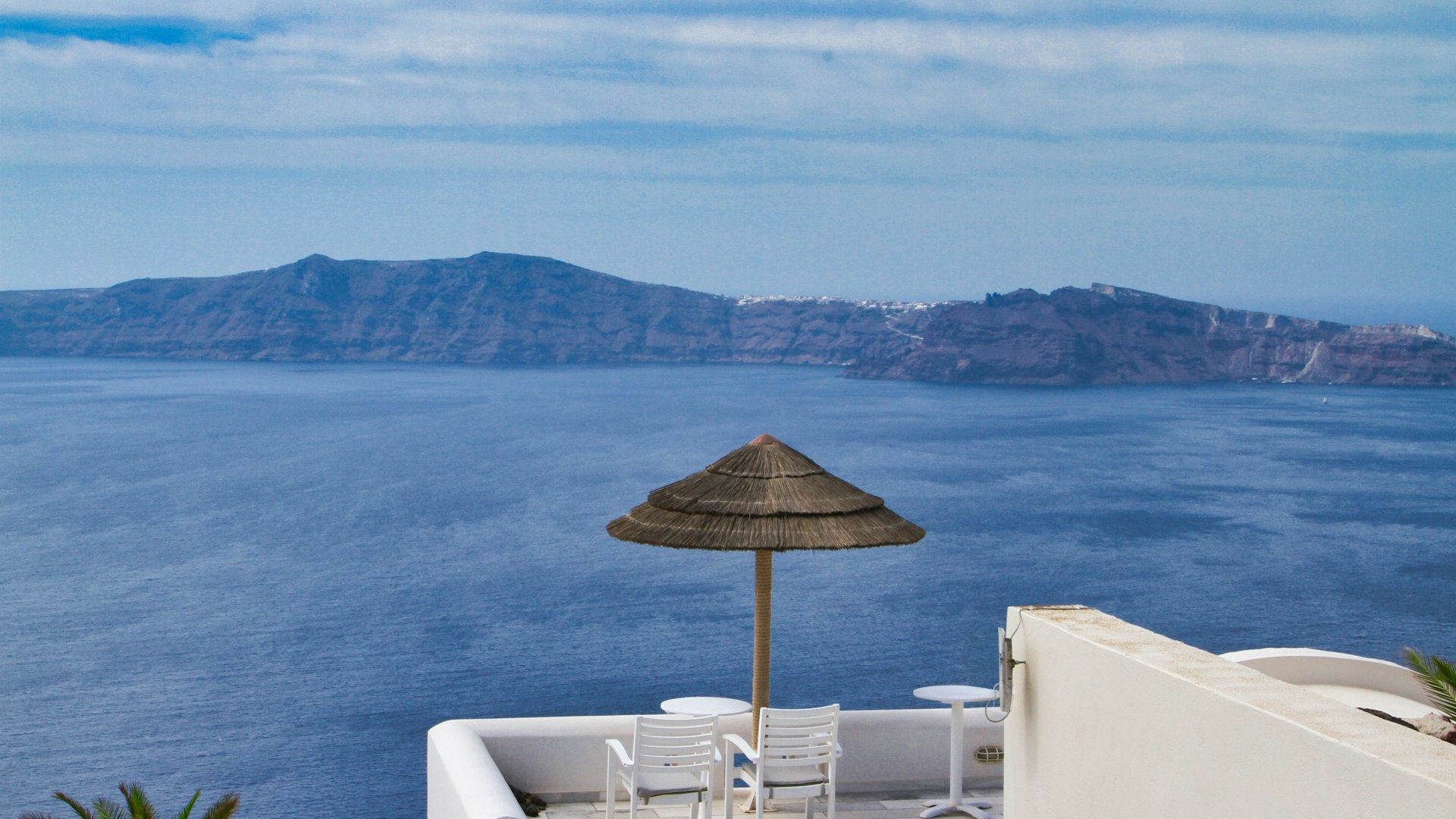
The cultural case is just as strong as the practical one. Greece has been continuously inhabited and contested for four millennia, and the evidence is everywhere on and near the water. Byzantine monasteries perch above Patmos anchorages; crusader fortifications still define the skylines of Rhodes Old Town and Bodrum across the strait. Santorini's caldera is a collapsed Bronze Age volcano, and sailing into it at dawn under engine, rounding the southern tip of Nea Kameni, is one of the genuinely memorable passages in the Aegean. These are not theme-park experiences arranged for tourists — they are the actual geography.
On the practical side, Greek charter infrastructure is among the most developed in the world. Corfu, Athens (Alimos and Flisvos marinas), Rhodes, and Kos all handle large superyachts with ease. Provisioning to a serious standard is straightforward from Athens or Heraklion; specialist yacht provisioners operate out of several island bases. The VAT regime for charters commencing in Greece is well-established — a 12% Greek VAT applies to the base charter fee, with specific rules around yacht flag state and cruising patterns — and any experienced broker will navigate this without drama.
Greece Highlights
Fiskardo, Kefalonia — the only village on the island to survive the 1953 earthquake intact, with a Venetian lighthouse, excellent tavernas, and reliable stern-to berthing alongside local caiques. Approach from the north through the channel between Ithaca and Kefalonia in the morning before the Maestro builds.
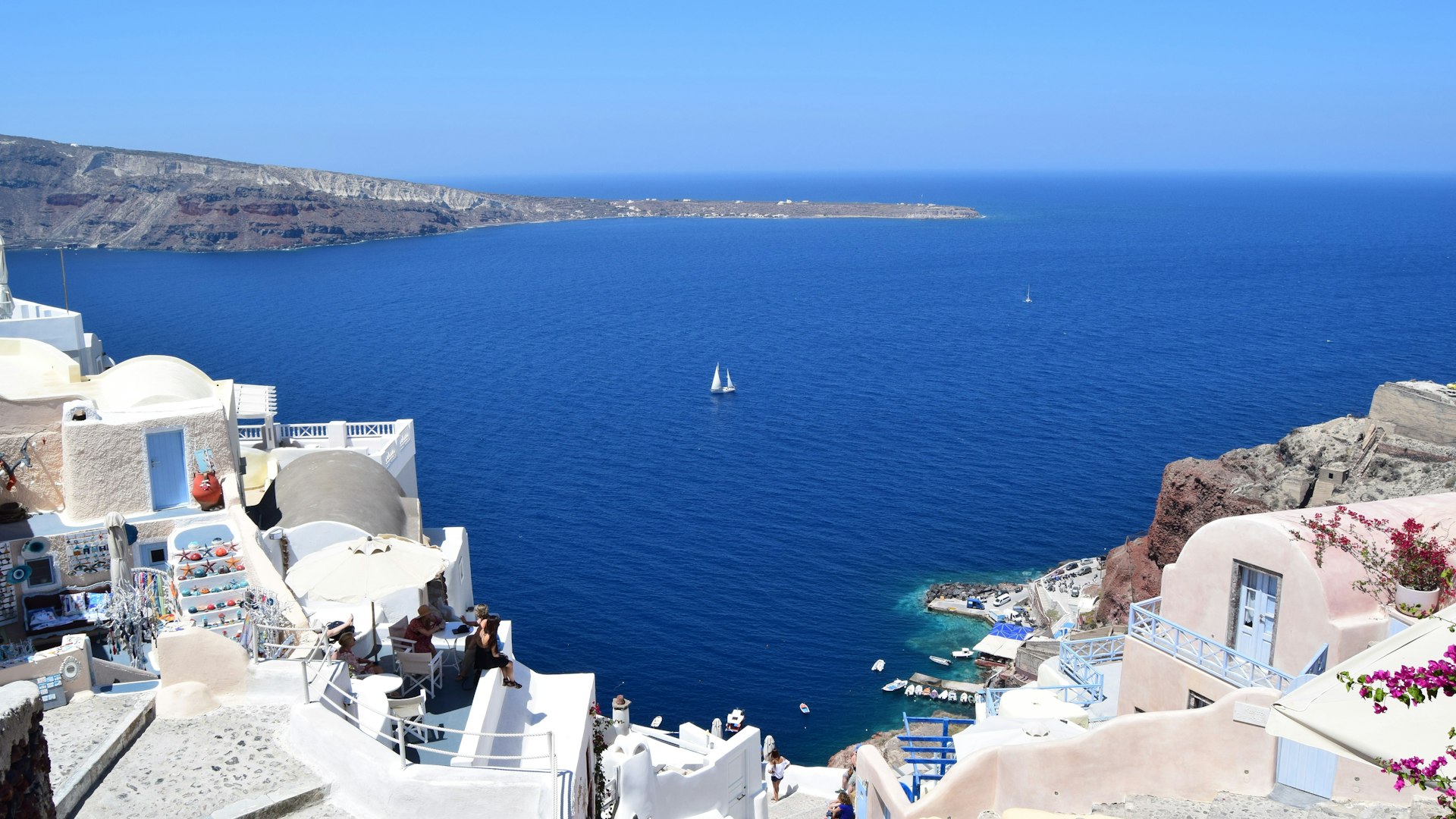
The Santorini caldera — entering through the Akrotiri channel or rounding the south of the caldera wall under sail at first light, with the cliff-face villages above and the water a sharp cobalt blue below, is a passage that requires no embellishment. Overnight anchor off the black-sand beach at Vlychada rather than the chaotic buoyed mooring fields off Fira.
Symi, Dodecanese — one of the most architecturally coherent harbours in the Aegean, the neoclassical mansions climbing the hillside above Gialos still largely intact. The inner harbour at Pedi offers a quieter overnight, and the monastery of Taxiarchis Mihail Panormitis in the southern bay is worth the dinghy ride ashore.
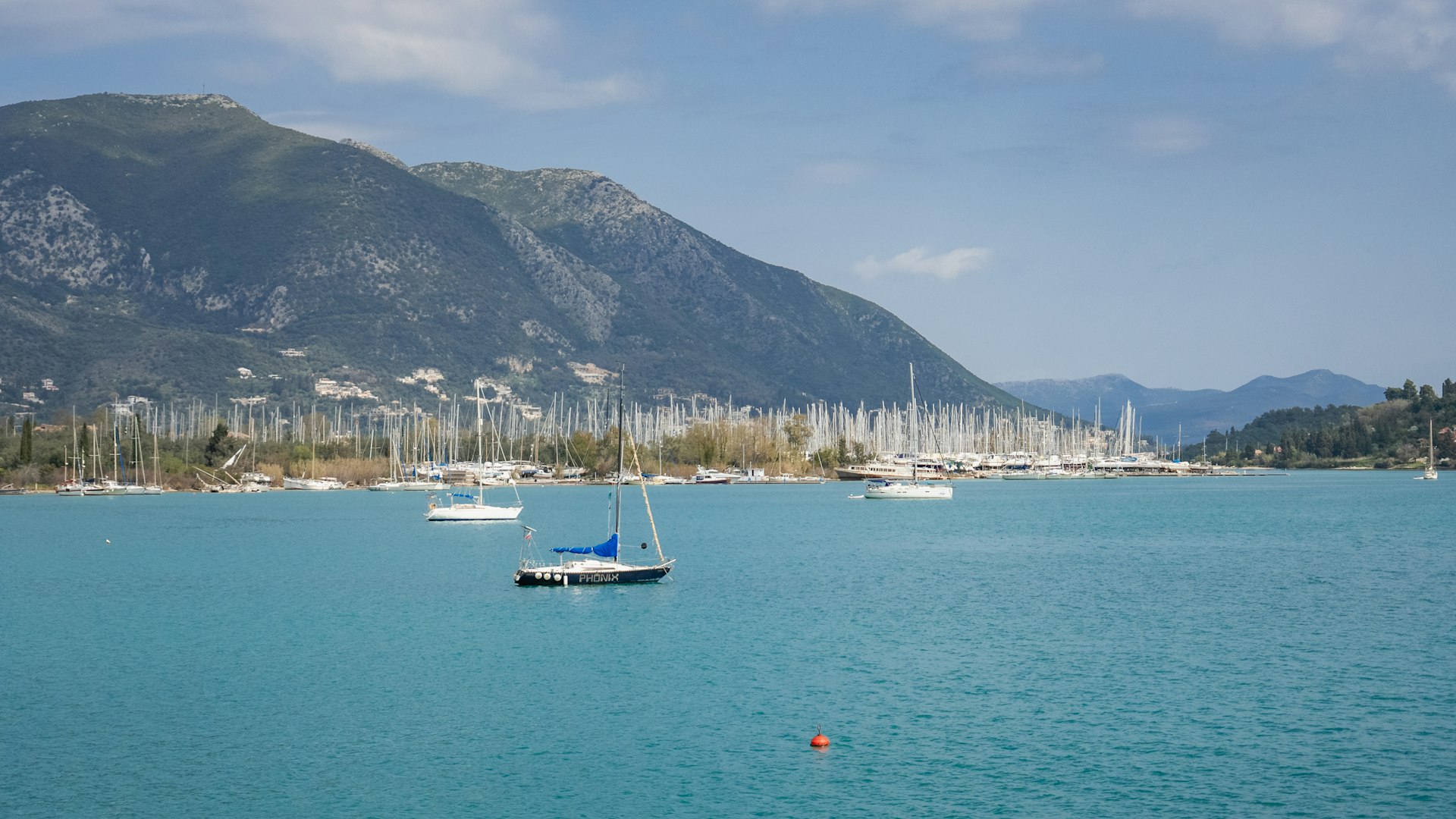
Meganisi, Ionian — the island directly south of Lefkada that most Ionian charters use as a quieter alternative to Nidri. The bay at Spartochori has deep water close to shore, fig trees at the waterline, and a village taverna that serves a proper kakavia fish stew rather than a tourist approximation of one.
Milos, Western Cyclades — the volcanic geology produces an almost lunar coastline of white and ochre rock, sea caves, and the extraordinary Sarakiniko formations that are best appreciated from the water at anchor rather than from the clifftop above. The anchorage at Kleftiko, in the southwest, is among the most sheltered in the Aegean in Meltemi conditions.
Spetses and the Saronic Gulf — for charters based out of Athens or those with limited time, the Saronic offers proper sailing without a long delivery passage. Spetses bans most private motor vehicles; the horse-drawn carriages, Poseidonion Grand Hotel, and the accessible passages to the Peloponnese coast around Nafplio make this a self-contained and underrated itinerary.
Patmos, Dodecanese — the fortified hilltop monastery of Saint John, a UNESCO World Heritage site, sits above the medieval Chora and the harbour of Skala. The north of the island has several uncrowded bays suitable for overnight anchoring, and the Dodecanese position means onward passages to Ikaria or the Turkish coast are both realistic in a week.
When to Sail
The core Greek charter season runs from May to October, with high summer dominated by the Meltemi in the Aegean and the Maestro in the Ionian. Shoulder months offer more manageable winds, warmer sea temperatures relative to air temperature, and noticeably fewer crowds at the most popular anchorages.
High Season (Jun-Sep)
July and August are the most in-demand and most demanding months. The Meltemi arrives reliably by early July in the northern Cyclades — expect Force 4-6 from the north or northwest, building through the afternoon and easing overnight. Passages south of Mykonos and Paros can be boisterous; experienced offshore sailors find this conditions exactly what they came for. The Ionian is more forgiving in summer, with the Maestro providing consistent afternoon sailing, though the anchorages at Fiskardo (Kefalonia) and Nidri (Lefkada) are busy enough that arriving by midday for a stern-to berth is genuinely advisable. Sea temperatures reach 26-28°C across most of the Aegean by August, and visibility is exceptional. June sits slightly outside peak-peak: the Meltemi has not yet fully established, crowds are lighter, and charter rates reflect this.
Shoulder Season (May, Oct)
May and October are increasingly the preference of experienced charterers. May brings settled, variable winds, lush vegetation (particularly in the Ionian and on Crete), and sea temperatures around 19-22°C — cool for swimming for some but perfectly adequate. The Meltemi has not yet built, making Cyclades passages more approachable and anchorages like Koufonisia or Amorgos accessible without tactical planning. October is the stronger shoulder month in many respects: the sea is still warm from summer, the light is extraordinary, and the tourist infrastructure remains fully operational while the crowds have retreated. Autumn gales can arrive from October onwards, particularly in the Ionian, so a weather window strategy and a skipper who knows the region are worth their weight.
Choosing the Right Yacht
Greece's diversity of conditions means the right yacht type genuinely depends on the cruising area rather than personal preference alone. In the Ionian, where anchorages are calm and family groups predominate, catamarans are particularly well-suited: the shallow draft makes beaching in crystal-clear shallows straightforward, the deck space is generous, and the motion in overnight anchorages is negligible. Catamarans of the Fountaine Pajot Samana 59 type carry large groups in real comfort without the need for a full crew. In the Aegean, the Meltemi changes the calculus: a performance sailing yacht or well-found monohull handles the close-hauled work between islands with less drama and more speed than a catamaran being pushed into a Force 5-6 chop. Motor yachts of the Princess 85 class and above come into their own on island-hopping itineraries where the priority is flexibility over arrival time rather than the passage itself, and the gulet — a traditional Turkish-origin vessel now widely based in Greek waters — suits multi-week, slow-pace exploration of the Dodecanese and the Aegean coast. For those chartering at the top of the market, superyacht infrastructure at Corfu, Athens, and Rhodes is comfortably equipped to handle vessels well above 40 metres.
Seven Days in the Cyclades — Athens to Santorini
A suggested week-long charter route
Depart from Alimos Marina, Athens (also known as Marina Zeas) in the late morning after provisioning. The passage south through the Saronic Gulf to Kea (Tzia) is approximately 35 nautical miles and typically straightforward. Anchor in the deep-water bay of Vourkari on the northwestern coast of Kea — a natural harbour with three or four reputable fish restaurants and a functioning boatyard that has served offshore sailors for generations. The Cycladic dry stone walls running down to the water signal immediately that you have left the mainland behind.
An early departure takes advantage of lighter morning winds for the 25nm passage southeast to Syros, the administrative capital of the Cyclades. Ermoupoli, the harbour town, is genuinely urban by island standards — a neoclassical city built on 19th-century mercantile wealth, with an opera house modelled on La Scala and a covered market still operating as intended. Berth stern-to on the main quay or take a mooring at the new marina on the northern side. Loukoumades from the old-town bakeries and a proper Cycladic louza (dry-cured pork) from the deli quarter are worth seeking out.
Depart Syros for Mykonos, 20nm to the northeast. If the Meltemi is building, time the departure for early morning and plan to be in the new marina or anchored off Ornos Bay before the afternoon wind establishes. Mykonos rewards those who engage with it on its own terms: the town of Chora is genuinely beautiful in the early morning before the day-tripper ferries arrive, the Little Venice waterfront has excellent cocktail bars, and the beaches south of the town are properly organised with quality sun beds and beach clubs if that is required. Overnight in the new marina or in the southern anchorage at Kalafati.
A short morning sail or motor south to Delos — the uninhabited sacred island that served as the political and religious centre of the Aegean world for centuries. The archaeological site requires landing by dinghy or tender (the island has no permanent harbour for larger yachts) and covers a substantial area; allow three hours minimum. The mosaic floors of the House of Dionysus and the Avenue of the Lions are extraordinary in scale and preservation. Return to the yacht for a lunchtime passage south toward Paros (35nm). Anchor in the bay at Naoussa on the north coast, where the old Venetian fortress sits at the harbour mouth and the morning fish market is still operational.
Naoussa to Naxos Town, 18nm south. Naxos is the largest and most self-sufficient of the Cyclades, with the agricultural interior producing cheeses (graviera, arseniko), citrus, and potatoes that appear on local menus rather than imported ones. The Portara — the monumental marble doorway of an unfinished Temple of Apollo — stands on a small headland at the harbour entrance, visible from three miles offshore. The marina is large enough for proper berthing; the old town behind the waterfront is dense, medieval, and worth an afternoon on foot. A hire car inland to the villages of Apeiranthos and Filoti is worthwhile if your schedule permits an extra morning.
From Naxos, a 25nm passage south-southwest toward the Small Cyclades — specifically the anchorage at Koufonisia, a flat, beach-fringed island that has become one of the Aegean's most sought-after overnight stops without yet becoming overcrowded. The water in the bay on the east of the island is a clear pale blue over sand, suitable for swimming at anchor in 4-6 metres. The single village has excellent tavernas and a late-night bar culture that runs well past midnight in summer. Alternatively, continue south to the more remote Iraklia or Schinoussa if solitude is the priority — both have simple tavernas and far fewer yachts.
The final passage of the week: Koufonisia to Santorini is approximately 45nm to the southwest, typically a broad reach or run in the Meltemi, making it one of the more enjoyable passages of the week rather than a slog against the wind. Enter the caldera through the channel between Thirasia and the north of Santorini, passing the active volcanic islets in the caldera's centre. Anchor off Ammoudi Bay below Oia for a final afternoon swim, then take a berth at the new Vlychada Marina on the southern tip for handover. The caldera sunset from the water, looking up at the cliff villages, requires no further description.
Local Tips
- •Transit log and port fees — all non-EU flagged yachts (and many EU-flagged commercial vessels) must hold a valid Greek Transit Log (DEKPA), available from port authorities on arrival or arranged in advance through your broker. Port fees vary considerably across the islands; marinas such as Alimos and Zea in Athens charge at full commercial rates, while many smaller island quays operate on an informal and inexpensive basis. Budget for this variability rather than assuming consistency.
- •Provisioning strategy — Athens is the most reliable point for serious provisioning: the Central Market on Athinas Street (Varvakios Agora) covers fresh fish, meat, and produce to a standard that island markets rarely match. For mid-charter provisioning, Mykonos and Rhodes have well-stocked supermarkets near the marina, and both islands have specialist yacht provisioners that can deliver dockside with advance notice. In the Ionian, Lefkada Town has a large supermarket within walking distance of the quay.
- •Meltemi planning in the Aegean — the Meltemi typically builds from noon and eases after sunset. Arriving at anchorage before 13:00 is the default planning assumption in July and August, particularly in exposed Cyclades passages. POSEIDON, the Hellenic Centre for Marine Research forecasting service, provides reliable wind forecasts for the Aegean at higher resolution than most commercial apps. Your skipper should be consulting this daily from May onwards.
- •Eating well — the difference between a port-front tourist taverna and a genuinely good Greek table is not always obvious from the outside. Ask the crew or locals for psarotavernas away from the main quay, and prioritise places with a handwritten daily specials board in Greek. Fresh octopus dried in the sun outside the kitchen is a reliable quality indicator. In the Ionian, look for bourdeto (a spiced fish stew from Corfu) and sofrito (veal in a garlic and white wine sauce); in the Cyclades, fava from Santorini (yellow split pea puree) and fresh swordfish in August.
- •Cultural awareness at religious sites — a significant number of the best anchorages are adjacent to active monasteries or churches. Modest dress is expected ashore at all orthodox religious sites regardless of the temperature; a light shawl or long trousers kept on the yacht avoids any awkwardness. The monastery at Patmos and the various hilltop churches of the Cyclades enforce dress requirements; arriving unprepared results in being turned away rather than accommodated.
- •Cyclades anchorage holding — the Aegean seabed in many popular anchorages is a combination of sand and loose posidonia seagrass, which can give a false sense of security to a dragging anchor. Use a longer scope than you might in comparable Mediterranean conditions and check the anchor is actually set rather than resting on weed. The Meltemi can swing to the northwest and gust significantly harder than the median forecast in exposed anchorages, particularly overnight. A second hook laid to windward is prudent when conditions are forecast above Force 4.
Frequently Asked Questions
Do I need a sailing licence to charter a yacht in Greece+
What is the VAT situation for yacht charters starting in Greece+
Which Greek island group is best for first-time charterers+
How far in advance should I book a Greek charter+
Can I sail from Greece to Turkey on the same charter+
What does a typical crewed charter in Greece cost per week+
Tell us your preferred dates, cruising area, and group size and we will match you with the right yacht from our Greece fleet within 24 hours.
Request Your Charter