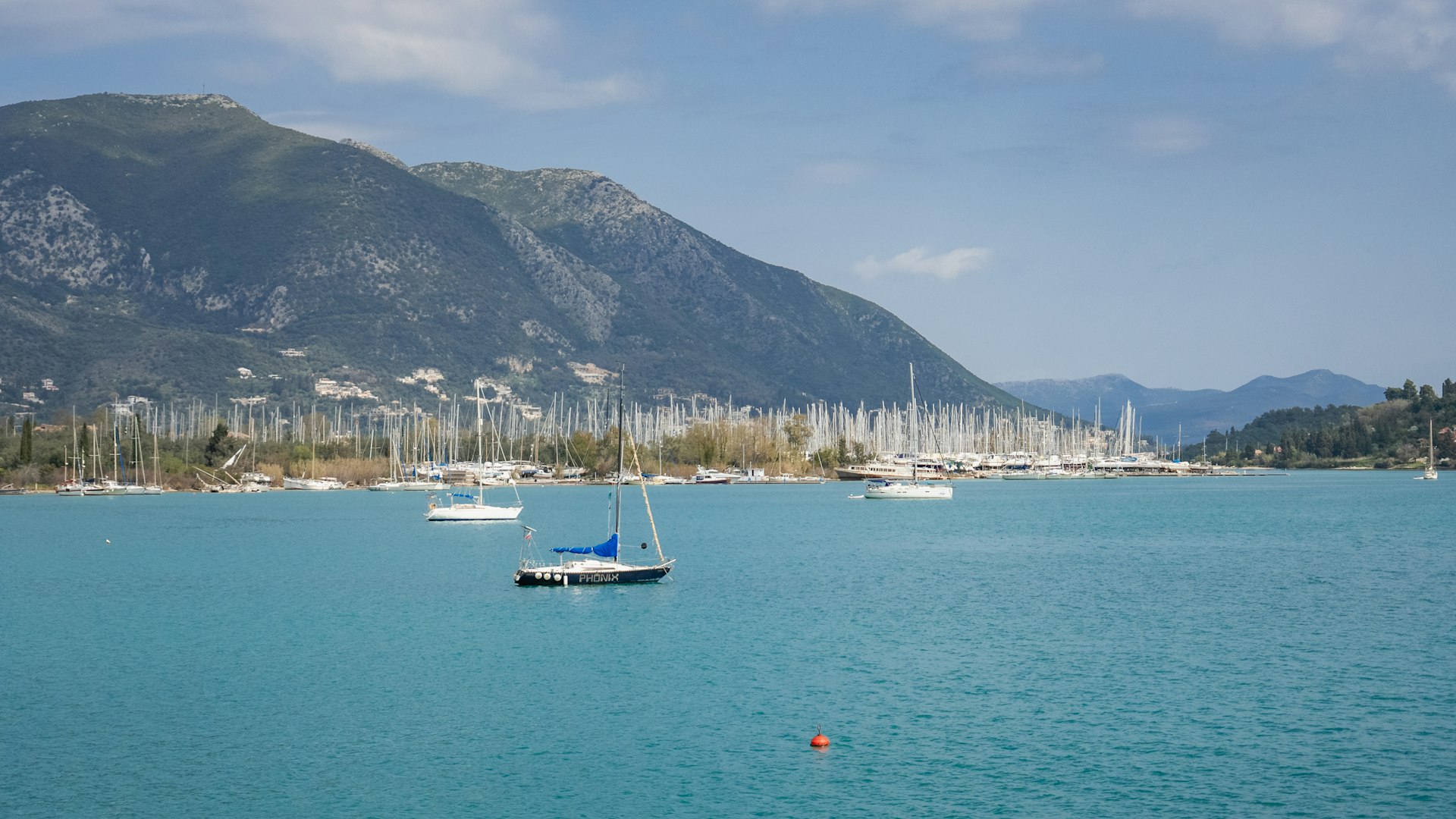
Ionian Islands Yacht Charters

Ionian Islands Yacht Charters

Seven principal islands, consistent summer winds, and a coastline largely free of industrial development — the Ionian remains Greece's most accessible and rewarding charter cruising ground for sailors who want genuine sailing alongside serious eating and culture.

Charter by Vessel Type in Ionian Islands

Catamaran Charter in Ionian Islands

Spacious twin-hull vessels offering stability, comfort, and generous deck space for the ultimate charter experience.

Sailing Yacht Charter in Ionian Islands

Classic sailing vessels that combine timeless elegance with the thrill of wind-powered adventure.

Motor Yacht Charter in Ionian Islands

Powerful luxury vessels delivering speed, sophistication, and effortless cruising across any waters.

The Ionian Islands — Corfu, Paxos, Lefkada, Ithaca, Kefalonia, Zakynthos, and Kythira — form an arc down Greece's western seaboard, separated from the Albanian and Greek mainland by the Ionian Sea. Unlike the Cyclades, where the Meltemi can pin even experienced crews in harbour for days, the Ionian benefits from the Maistros, a reliable north-westerly that builds through the afternoon and eases by evening, giving charter guests a consistent, manageable sailing window virtually every day between June and September.

The cruising ground rewards those who mix ambition with patience. Paxos and Antipaxos sit just sixteen nautical miles south of Corfu, yet the difference in character is absolute — the latter almost empty of development, with clear water and sea caves that reward a tender excursion. Further south, the Lefkada canal and the anchorages of Meganisi offer sheltered overnight stops, while Kefalonia's scale and topographic drama mark the southern boundary of the central Ionian sailing circuit. For charterers with a broader schedule, Kythira — geographically and culturally distinct — lies beyond the Peloponnese and suits those extending into the Saronic.

Why Charter in Ionian Islands

The core practical argument for the Ionian is predictability. The Maistros fills in from the north-west between 1100 and 1400 daily, reaching 12 to 18 knots through the afternoon before dropping off at dusk. Passages are typically short — Corfu to Paxos is two to three hours under sail, Paxos to Lefkada five to six — so the logistics suit both families managing young children and couples who prefer long afternoon swims over extended offshore passages. Tidal range is negligible, and the summer swell is modest compared to the Aegean.

Gastronomically, the Ionian punches well above the Greek average. The islands spent centuries under Venetian rule and the influence endures in the cooking — sofrito (Corfu's veal braised in white wine and vinegar), bianco (slow-cooked fish with garlic and potato), and pastitsada (a spiced meat ragù over thick pasta) are genuinely distinct from mainland Greek taverna food. Kefalonia's robola white wine is produced from a PDO grape grown at altitude; Paxos produces small quantities of serious olive oil. Provisioning in Lefkada Town or Corfu Town provides everything a professional crew could need for a week at sea.

The island chain also absorbs charter traffic more gracefully than the Cyclades in July and August. Meganisi, Kastos, and Kalamos — the quieter satellites east of Lefkada — see a fraction of the vessels you find off Mykonos or Santorini in peak season, and anchorages such as Abelike Bay on Meganisi can still be found in reasonable peace even mid-August with an early departure.

Ionian Islands Highlights

1

Gaios, Paxos — the main port is compact, well-provisioned, and genuinely pretty, with Venetian townhouses lining a harbour entered through a narrow channel between two islets. Anchor off or take a berth alongside; the town rewards an evening on foot.

2

Antipaxos and its sea caves — just two nautical miles south of Paxos, the caves at Grammatiko and Ipapanti are best explored by tender at midday when the light enters the water. The beach at Voutoumi has exceptional clarity and almost no development behind it.

3

Meganisi's anchorages (Abelike, Vathy, Porto Spilia) — the island offers three distinct overnight options within a few miles of each other, all with good holding and local tavernas. Vathy is the main port; Abelike Bay's steep wooded surrounds give it a distinctly private feel.

4

Fiskardo, Kefalonia — the only village on the island to survive the 1953 earthquake intact, Fiskardo retains its Venetian architecture and remains the most sophisticated stop in the southern Ionian, with restaurants that take their wine lists seriously. Anchor in the outer bay or pick up a town quay berth.

5

Lefkada Town and the canal approach — the passage through the narrow canal beneath the drawbridge at Lefkada is a practical necessity and something of a ritual for Ionian charterers. The town itself has a characterful main street and excellent fresh produce markets.

6

Ithaca (Vathy and Kioni) — Ithaca's deep, almost fjord-like main harbour at Vathy is one of the most dramatic natural anchorages in the Ionian. The northern village of Kioni, with its three ruined windmills and waterfront tavernas, is quieter and suits an overnight stay.

7

Cape Lefkatas and the passage south — rounding the southern cape of Lefkada en route to Kefalonia and Ithaca gives a genuine sense of open-water sailing; the cape has a lighthouse, a mythology (Sappho's Leap), and a reliable breeze that makes the passage one of the more satisfying in the region.

When to Sail

The Ionian sailing season runs from late April to late October, with the optimal window from late May through September. Unlike the Aegean, the summer wind pattern here is benign rather than demanding, making it viable for a broader range of charterers.

High Season (Jun-Sep)

The Maistros blows reliably through June, July, and August, making afternoon sailing the norm and mornings ideal for longer passages. Sea temperatures reach 26-28°C by August. Corfu Town and Zakynthos can feel busy on shore, but anchorages off the beaten channel — particularly around Kastos, Atoko, and the south-eastern bays of Kefalonia — remain relatively uncrowded. July and August require advance booking for berths at the more popular marinas such as Lefkada's main town quay. Provisioning and fuel are fully available throughout.

Shoulder Season (May, Oct)

May and October offer arguably the finest conditions for experienced sailors and those who prioritise calm on the quay over guaranteed sunshine. May sees wildflowers still on the hills, tavernas freshly opened and eager, and anchorages to themselves. October light is extraordinary for photography and the sea remains warm enough for swimming into early November. Wind patterns are slightly less predictable in October and rain is possible, but storms are typically short-lived. Prices across the fleet drop meaningfully, and crew receive far more individual attention at marinas and restaurants.

Choosing the Right Yacht

That said, sailing yachts reward the more committed sailor. Bavaria and Beneteau models in the 40 to 50 foot range are prevalent in the mid-market segment and handle the afternoon breeze with considerably more pace than a loaded catamaran. For those chartering in the higher bracket, the Ionian's sheltered waters and well-spaced marinas suit motor yachts — including larger Azimut models and custom builds — which can cover the ground between Corfu and Kefalonia in a fraction of the time, freeing the schedule for extended time ashore. The single gulet in the Ionian fleet suits those who want a traditional aesthetic alongside comfortable group cruising, though gulets are more at home in light conditions and suit the shoulder season particularly well.

Seven Days in the Central Ionian — Lefkada to Kefalonia and Back

A suggested week-long charter route

Day 1

Join the yacht in Lefkada Town after transit through the canal. Provision at the town market, brief the crew, and make the short afternoon passage south to Nydri or directly to Meganisi's Porto Spilia — roughly eight nautical miles. Dinner aboard or at a harbourside taverna in Spartochori above the bay.

Day 2

Morning swim in Abelike Bay, then a midday passage south-east toward Ithaca. Enter Vathy's deep gulf in the afternoon — the approach is scenic and the holding good throughout the anchorage. Explore the town on foot and dine at one of the quayside restaurants serving fresh-caught fish and local wine.

Day 3

Depart Vathy early for Fiskardo, Kefalonia — approximately 12 nautical miles, a comfortable morning passage. Fiskardo rewards an afternoon of exploration; lunch at one of the village's better tables, and an evening walk to the Roman cemetery and Venetian lighthouse ruins on the headland.

Day 4

Day passage south along Kefalonia's dramatic west coast, with an optional stop at Assos — a small Venetian fortress village on a narrow isthmus that must be seen from the water to be properly appreciated. Continue to Argostoli or anchor in Lixouri Bay for the night.

Day 5

Return north via the sheltered eastern side of Kefalonia, making for Kioni on Ithaca — a compact, relatively quiet alternative to Vathy with good overnight holding and three tavernas on the waterfront. This is the most relaxed, swim-heavy day of the week.

Day 6

North to Meganisi's Vathy for a final night at anchor or on the quay. Dinner ashore at one of the village restaurants. This passage typically picks up the Maistros by early afternoon, giving a fast, enjoyable reach if timing aligns.

Day 7

Morning return through the Lefkada canal and back to base for handover. The canal transit requires patience — the drawbridge operates on a schedule and other vessels will be queuing — but the passage is a satisfying bookend to the week.

Local Tips

  • Greek entry formalities require the yacht to hold a valid Transit Log (DEKPA) issued to the skipper. This is arranged through the charter company before departure. Non-EU flagged vessels may face additional clearance requirements; confirm specifics with your broker ahead of time.
  • Lefkada's canal drawbridge operates on a fixed timetable — check the current season schedule before planning your departure, as missing the window means a wait of several hours. The channel itself is shallow and narrow; motor through slowly and ensure your VHF is on Channel 16.
  • Provisioning is best done in Lefkada Town or Corfu Town. Nydri and Fiskardo have small supermarkets but limited fresh produce. If you are chartering with a professional crew, brief the chef before departure and arrange an early market run on Day 1 — the daily fresh fish arrives at Lefkada market before 0800.
  • Fuel and water are available at Lefkada marina, Fiskardo, and Argostoli. Smaller anchorages on Meganisi, Kastos, and Atoko have no services; carry adequate reserves if deviating from the main circuit.
  • Dining protocol in the Ionian is unhurried. Kitchens open late (typically 1930-2000) and the local expectation is that tables are held for the evening rather than turned over. Reservations at Fiskardo restaurants in July and August are strongly advised and your skipper or crew will typically arrange these if asked.
  • Weather monitoring is essential even in the benign Ionian. The Maistros occasionally strengthens to 20-25 knots without much warning, particularly in the channels between islands where it accelerates. Passage planning around Cape Lefkatas and through the Meganisi-Lefkada channel deserves attention; both funnel the afternoon breeze.

Frequently Asked Questions

Do I need a sailing licence to charter a yacht in the Ionian Islands+
Bareboat charter in Greece requires the skipper to hold a recognised coastal or offshore sailing qualification — the ICC (International Certificate of Competence) is widely accepted. You will also need a logbook demonstrating relevant sea miles. Requirements vary by vessel type and size; your broker will confirm the specific qualification needed for your chosen yacht. If you do not hold a licence, a skippered or crewed charter is the straightforward alternative, and the majority of yachts in the Ionian fleet are available with professional crew.
What is the best base port for an Ionian charter+
Lefkada Town is the most practical starting point for a central Ionian circuit — it is accessible by road from Preveza airport (approximately 20 minutes), has a well-stocked marina with good infrastructure, and sits within easy reach of Meganisi, Ithaca, and Kefalonia. Corfu is better suited to a northern circuit focused on the Corfu-Paxos-Albanian Riviera route. Some charterers base from Kefalonia (Argostoli) for a southern-first itinerary, though the airport transfer and marina facilities are less straightforward.
How far in advance should I book for peak season+
For July and August departures, six to nine months ahead is the sensible lead time for the better yachts in the 40+ foot range. The Ionian is extremely popular with European charterers and the most capable boats — particularly well-maintained catamarans accommodating six or more guests — are frequently committed by January. Shoulder season (May, June, late September, October) allows considerably more flexibility, with good availability up to eight weeks before departure.
Are there any restricted or protected areas in the Ionian that affect routing+
Yes. The Zakynthos National Marine Park in Laganas Bay on the south coast of Zakynthos imposes strict anchoring and speed restrictions to protect the loggerhead turtle nesting grounds. Anchoring is prohibited in most of the bay and speed limits of 6 knots apply in the zone. The restrictions are enforced by the port authority and fines are issued. Your skipper will navigate this correctly, but it is worth being aware if Zakynthos is on your itinerary.
What is the wind like for a beginner charterer or mixed-ability group+
The Ionian is among the most forgiving charter destinations in the Mediterranean for less experienced groups. The Maistros is a thermal breeze rather than a pressure-gradient wind, which means it builds gradually through the afternoon rather than arriving suddenly at force. Average afternoon velocities in summer sit between 12 and 18 knots — sufficient to sail comfortably but manageable for those not seeking offshore conditions. The short inter-island passages give new crews an achievable sense of progress, and a skippered catamaran is a particularly good choice for families with children.
What should I budget for beyond the base charter fee+
The base charter rate excludes several costs that add up materially. APA (Advance Provisioning Allowance) for crewed charters is typically 30-35% of the charter fee, covering fuel, provisions, berthing fees, and crew gratuity. Bareboat charterers should budget separately for fuel (diesel consumption varies widely by motor versus sail use), marina fees (Fiskardo and Lefkada town quay are among the pricier stops), and the Transit Log fee. A reasonable working estimate for a week-long bareboat with a group of six, covering these extras, is an additional 20-25% above the charter rate.

Speak to a SelectYachts broker about matching the right vessel to your Ionian itinerary — availability in peak season moves quickly.

Request Your Charter

Request Your Charter

Tell us about your dream voyage and we will find the perfect yacht for you.