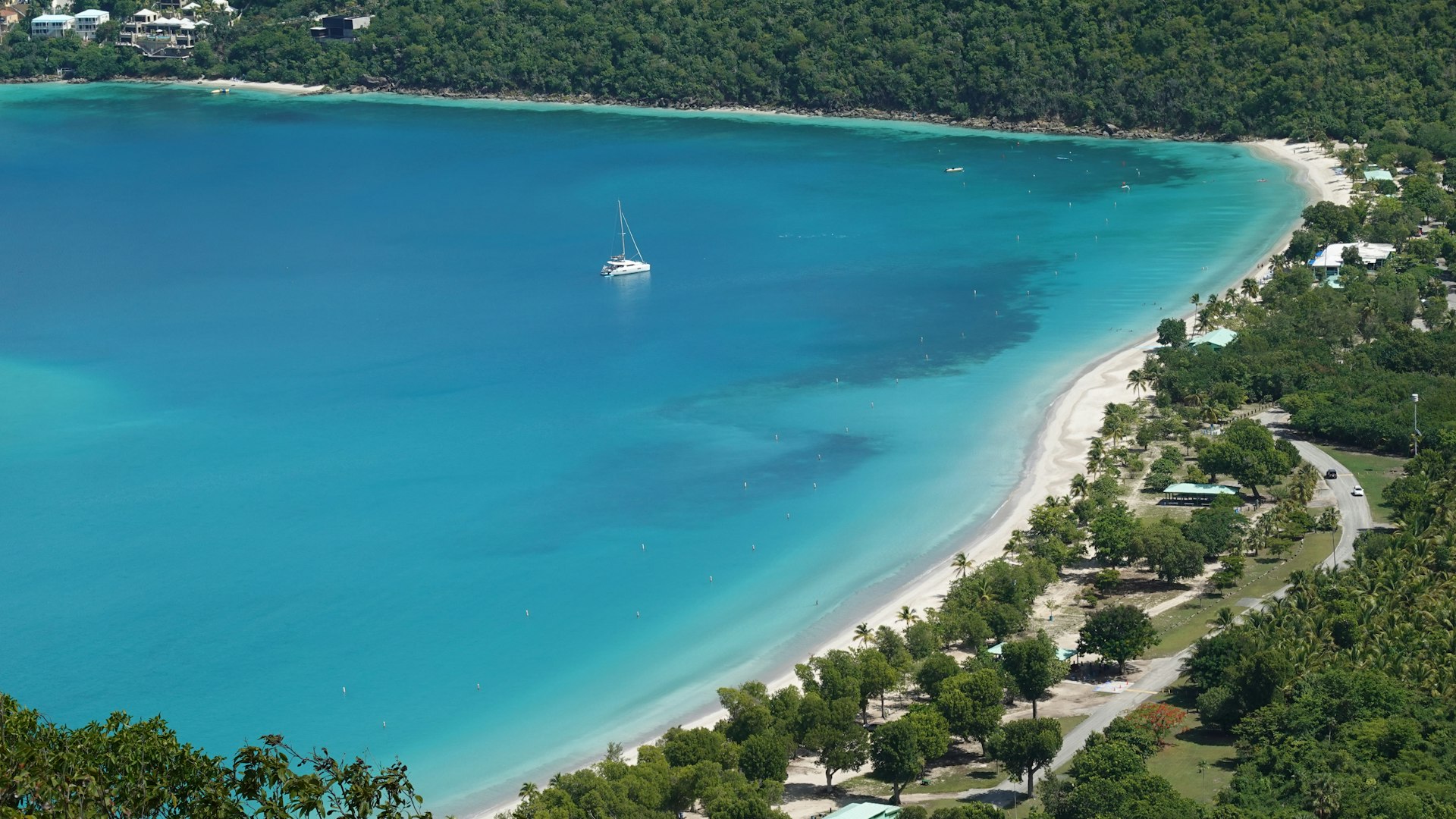
US Virgin Islands Yacht Charters

US Virgin Islands Yacht Charters

Where the Atlantic meets the Caribbean, the US Virgin Islands deliver reliable trade winds, straightforward US entry formalities, and some of the most varied sailing grounds in the West Indies — all within a short reach of each other.

The US Virgin Islands sit roughly 40 miles east of Puerto Rico, comprising three principal islands — St Thomas, St John, and St Croix — plus a scattering of smaller cays that reward explorers willing to leave the more trafficked anchorages behind. Unlike much of the Eastern Caribbean, the USVI operates under US jurisdiction, which means no cruising permit, no foreign-flag restrictions for US charterers, and customs clearance that is considerably less bureaucratic than neighbouring British territories. For those arriving by air, St Thomas's Cyril E. King Airport accepts direct flights from most major US hubs.

Sailing distances here are genuinely approachable. St Thomas to St John is under four miles; the Sir Francis Drake Channel and the BVI are visible on clear days from the eastern hills of St John. A one-way trip across Pillsbury Sound takes less than an hour under sail. That compactness means a week-long charter can cover serious ground — shifting between protected bays, open-water passages, and quiet reef anchorages — without long overnight runs or fatigued guests.

Why Charter in US Virgin Islands

The trade winds — the persistent easterly flow that defines Caribbean sailing — blow consistently across the USVI between December and June, typically averaging 15 to 20 knots. Passages between islands are predominantly downwind or beam reaching, which keeps motion comfortable on multihulls and gives sailing yachts the conditions they were built for. The fetch is long enough to generate an honest sea state on the more exposed northern sides of the islands, but the southern and western shores offer shelter that allows crews to anchor in calm water most evenings.

Provisioning is a genuine advantage over much of the Caribbean. St Thomas's Charlotte Amalie is a proper port city with well-stocked chandleries, good supermarkets, and a fuel dock at American Yacht Harbor in Red Hook that handles large vessels efficiently. Unlike provisioning on some smaller island chains, you can arrive without a full hold and resupply credibly mid-charter. The absence of VAT and competitive duty-free retail also makes chandlery and personal shopping more economical than elsewhere in the region.

The marine environment across the USVI is diverse enough to hold the attention of returning charterers. St John's north shore — protected within Virgin Islands National Park — contains some of the healthiest coral in the Greater Antilles, particularly around Waterlemon Cay and Maho Bay. St Croix stands apart geographically and culturally from its sister islands; its wall diving at Cane Bay drops to serious depths and the island's Danish colonial architecture in Christiansted gives it a distinct character that justifies the 40-mile passage south from St Thomas.

US Virgin Islands Highlights

1

The Bight, Norman Island (BVI day sail) — accessible from the eastern USVI and worth the brief customs stop, this deep natural harbour offers mooring buoys, clear water, and the famous sea caves at Treasure Point.

2

Maho Bay, St John — a shallow, protected bay within Virgin Islands National Park where sea turtles graze on seagrass beds close enough to the surface to observe without snorkelling gear. Mooring buoys are managed by the National Park Service.

3

Christmas Cove, Great St James Island — a sheltered anchorage just east of St Thomas with good holding and a floating bar-restaurant that has become a fixture of USVI charter culture. Quiet on weekday mornings, lively by afternoon.

4

Christiansted Harbour, St Croix — the most historically layered town in the USVI, with Danish-era colonnaded arcades, a well-preserved fort, and several serious restaurants. The anchorage requires care given shoal patches, but the reward is docking within walking distance of genuine island culture.

5

Buck Island, St Croix — a US National Monument with a marked underwater snorkel trail through elkhorn coral. Day trip from Christiansted by fast tender; the beach on the western shore is reliable for those who want a straightforward afternoon stop.

6

Water Island — the least-visited of the main USVI islands, just 20 minutes by tender from Crown Bay Marina in St Thomas. Honeymoon Beach is quiet on weekday mornings and the gentle reef in the shallows is accessible to all swimming abilities.

7

Caneel Bay, St John — the bay itself remains navigable despite the resort's hurricane damage; the anchorage offers good protection from prevailing easterlies and immediate access to the trails of Virgin Islands National Park, including the Lind Point trail to Salomon Beach.

When to Sail

The USVI has a broadly benign climate year-round, but the window from mid-November through late April delivers the most reliable trade winds, the lowest humidity, and the least risk of tropical disturbances. Summer through early autumn is quieter and more affordable but requires awareness of hurricane season.

High Season (Jun-Sep)

This labelling is counterintuitive for the USVI. The conventional Caribbean high season runs December through April, not June through September. The summer and early autumn months coincide with the Atlantic hurricane season (formally June 1 to November 30), with peak activity typically between August and October. Charter rates soften during this period, anchorages are noticeably quieter, and the trade winds — while lighter and less consistent — still provide workable sailing on most days. Crews should monitor NOAA forecasts closely and ensure their charter agreement includes a clear hurricane protocol. Water visibility and sea temperatures are at their best in summer.

Shoulder Season (May, Oct)

May sits just before the formal start of hurricane season and represents excellent value: trade winds remain reasonably consistent, crowds have thinned from the winter peak, and rates begin to ease. October is more variable — it falls within peak hurricane season — but experienced charterers who are flexible with dates and routes can find the islands largely to themselves. Both months carry more rainfall than the December-to-April core season, usually arriving in brief afternoon showers rather than sustained precipitation.

Choosing the Right Yacht

The overwhelming majority of charter yachts operating in the USVI are catamarans, and for good reason. The trade wind passages between islands are predominantly beam reaches or broad reaches — conditions where a catamaran's wide deck, stable platform, and generous cockpit come into their own. Shallow-draught cats can access anchorages that deeper-keeled monohulls must bypass, and the ability to swing at anchor with minimal heel makes life aboard substantially more comfortable for guests who sail infrequently. Manufacturers well-represented in the local fleet — Fountaine Pajot, Lagoon, and Bali — produce boats that are well-suited to the mix of coastal day sailing and overnight passages this destination demands.

Seven Days in the US Virgin Islands — St Thomas to St Croix and Back

A suggested week-long charter route

Day 1

Board and provision at American Yacht Harbor, Red Hook, St Thomas. Evening departure across Pillsbury Sound to anchor in Cruz Bay, St John or Christmas Cove. Settle in, brief the crew on passage plans, and take dinner ashore or on board.

Day 2

Sail the north shore of St John under the easterlies, stopping first at Hawksnest Bay for a morning swim before moving east to Maho Bay. Snorkel the seagrass beds and look for turtles. Anchor overnight at Francis Bay — good holding in sand, calm conditions, and an accessible trail to Mary Point for sunset walks.

Day 3

Continue east to Coral Bay, St John's less-visited eastern settlement. Clear out of the USVI if crossing to the BVI (Norman Island, The Bight). Spend the afternoon at the Treasure Point sea caves, then take a mooring buoy in the Bight for the night. Dinner at the William Thornton floating restaurant if it is operating.

Day 4

Return from the BVI via a broad reach back through Round Rock Passage and re-clear US customs at Cruz Bay. Position the boat in the southern St Thomas anchorages — consider Brewers Bay for its reef and relative quiet — before heading south. Alternatively, use the afternoon to explore Water Island by tender.

Day 5

An early start for the 40-mile passage to St Croix — the longest passage of the week. The trade winds and the prevailing westward current in the St Croix Passage make this a straightforward downwind or broad reach run in settled conditions. Arrive Christiansted Harbour by early afternoon. Walk the Danish waterfront, visit Fort Christiansvaern, and take dinner at one of the established restaurants on Company Street.

Day 6

Morning dinghy trip to Buck Island National Monument — the park service mooring buoys fill by mid-morning, so an early start matters. Snorkel the coral trail, swim the beach. Return to Christiansted for the afternoon and arrange a taxi to the Cane Bay wall on the north shore for those who dive. Final night at anchor off Christiansted or a slip at the St Croix Marina.

Day 7

Depart St Croix on a close reach or beat northward back to St Thomas, arriving by midday for a final afternoon at Christmas Cove before returning to Red Hook for disembarkation and handover.

Local Tips

  • US customs and border protection applies in the USVI. US citizens need no passport within the territory but require one if crossing to the BVI. Non-US nationals must present a valid passport and, if applicable, a US visa at all times. BVI crossings require a separate cruising permit and clearance at an official port of entry — Soper's Hole or Road Town are the most straightforward options.
  • Red Hook's American Yacht Harbor is the most practical base for provisioning on St Thomas. Moe's Fresh Market nearby carries good produce and a reasonable wine selection. For a more thorough provisioning, cost Plus Wines in the sub-base area is worth the trip. Fuel is widely available at Red Hook and at Compass Point Marina.
  • Mooring buoys in Virgin Islands National Park (Maho, Francis Bay, Waterlemon, Hawksnest, and others) are managed by the National Park Service. They fill quickly in high season — aim to be in position by early afternoon. Anchoring within the park boundaries is restricted in many areas; carrying a copy of the NPS mooring map on board is advisable.
  • St Croix's anchorage at Christiansted requires attention to the chart — there are shoal patches east of the harbour entrance and the approach is best made in good light. The St Croix Marina can accommodate catamarans up to 50 feet with advance reservation; call ahead rather than relying on walk-up availability.
  • Eating and drinking ashore in the USVI trends towards American portion sizes and pricing. On St John, the Lime Inn in Cruz Bay and Zozo's at Caneel have established reputations. On St Thomas, Hull Bay Hideaway on the quieter north shore is worth the taxi ride. St Croix's dining scene — particularly along the Christiansted boardwalk and in the Gallows Bay area — has improved considerably and reflects the island's more grounded local culture.
  • Dinghy theft is a known issue at busier anchorages, particularly around Cruz Bay and the Red Hook area. Use a steel cable and padlock when leaving the tender unattended at a dock, and bring the outboard aboard or lock it with a separate cable at night.

Frequently Asked Questions

Do I need a cruising permit to charter in the US Virgin Islands+
No. The USVI is US territory, so there is no cruising permit requirement for vessels operating within the territory. If you plan to cross to the British Virgin Islands — even for a day — you will need to clear out of the USVI at an official port of entry and obtain a BVI cruising permit on arrival. Your charter broker or captain can walk you through the paperwork, which is straightforward.
What is the typical weather like for sailing the USVI+
Easterly trade winds averaging 15 to 20 knots define the core charter season (December through April). Seas on the northern and eastern exposures can be lively, but the southern and western sides of each island provide reliable shelter for overnight anchorages. Water temperature sits between 79°F and 84°F year-round. Summer months are warmer, more humid, and carry hurricane risk; winds are lighter and less consistent from June through November.
Is the USVI suitable for first-time charterers+
Yes, and it is one of the better introductory Caribbean destinations precisely because of its compact geography, US regulatory environment, good provisioning infrastructure, and the availability of crewed charters for those not ready to take the helm themselves. Passages between the main islands are short, anchorages are well-documented, and the language barrier is nonexistent for English speakers.
How far in advance should I book a USVI charter+
For the core high season — particularly the Christmas and New Year period, Presidents' Week, and Easter — serious charterers book six to twelve months ahead. The most popular catamarans from well-regarded operators are often reserved a year in advance for these dates. Shoulder and summer bookings can sometimes be arranged with four to eight weeks' notice, though yacht selection will be more limited.
What size yacht do I need for a group of eight guests+
A catamaran in the 45- to 55-foot range comfortably accommodates eight guests in four cabins, which is the most common configuration requested for groups of that size. Several yachts in our USVI fleet offer this layout, some with crew quarters separate from the guest accommodation. Groups of ten or more should consider a 55-foot-plus catamaran or enquire about the limited number of larger motor yachts available in the territory.
Can I sail from the USVI to the BVI during my charter+
Yes, and many charterers do — Norman Island, the Bight, and Cooper Island are popular first stops when crossing from the eastern USVI. The passage from Cruz Bay or Coral Bay to the BVI is under 10 miles in good conditions. You will need to clear customs in both directions, and some charter agreements require additional insurance or an APA (Advance Provisioning Allowance) adjustment for BVI costs including the cruising permit. Confirm this with your broker before departure.

Speak with a SelectYachts broker to match the right vessel and itinerary to your group — our team has first-hand experience of the anchorages, passages, and provisioning options across the USVI.

Request Your Charter

Request Your Charter

Tell us about your dream voyage and we will find the perfect yacht for you.