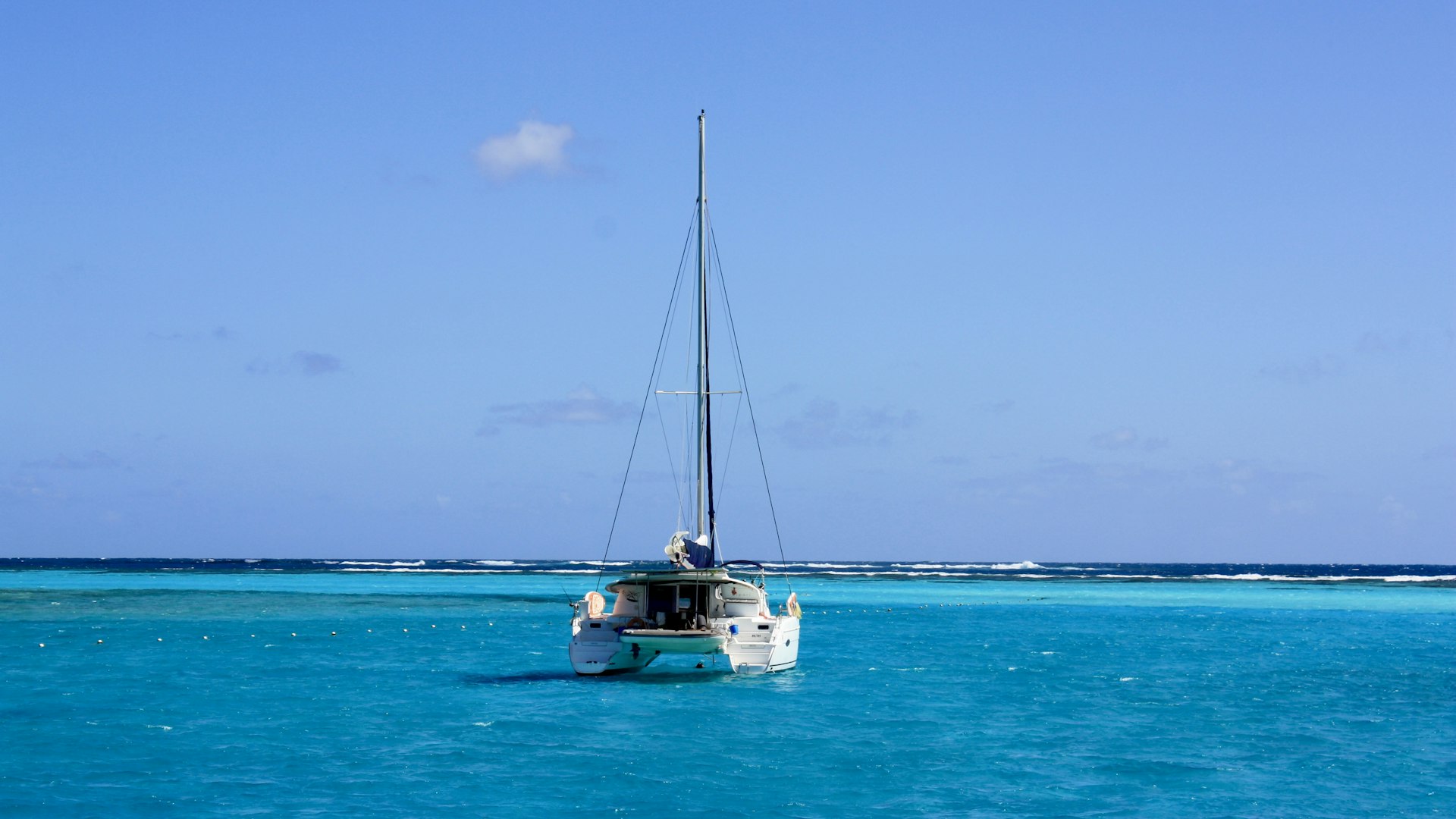
Catamaran Charter US Virgin Islands
The US Virgin Islands offer rare dual-island access — American facilities and entry ease on St Thomas and St John, with the British Virgins a short sail to the northeast. A catamaran earns its keep here, where shallow bays, trade-wind consistency, and long stretches at anchor define the best of Caribbean sailing.
Catamarans Available in US Virgin Islands
Browse our selection of catamarans available for charter in US Virgin Islands.

Crewed Catamaran SECOND WIND
Bali 4.2 · 2021
From
$12k/week

Crewed Catamaran ISLAND TIME
Leopard 44 · 2012
From
$14k/week

Crewed Catamaran ROMPECABEZA
Bali 4.3 · 2018
From
$14k/week

Crewed Catamaran EDDIES IN TIME
Fountaine Pajot Helia 44 · 2017
From
$14k/week

Luxury Crewed Catamaran 3 SISTERS
Fountaine Pajot Lucia 40 · 2018
From
$15k/week

Crewed Catamaran BOKETTO
Astrea 42 · 2022
From
$15k/week

Crewed Catamaran MARIEL
Nautitech 46 · 2021
From
$16k/week

Crewed Catamaran RUCKUS
Fountaine Pajot 45 · 2020
From
$17k/week

Crewed Catamaran LA SPERANZA
Lagoon 50 · 2020
From
$17k/week

Catamaran BLACKFISK
Leopard 444 · 2015
From
$18k/week

Luxury Crewed Catamaran PHYSALIA
Lagoon 51 · 2007
From
$18k/week

Crewed Catamaran MAKIN MEMORIES
Lagoon 450 · 2016
From
$18k/week

Crewed Catamaran VICARIOUS
Leopard 48 · 2017
From
$19k/week

Crewed Catamaran LADY CATRON
Fountaine Pajot Saba 50 · 2017
From
$19k/week

Crewed Catamaran AQUANIMITY
Dufour 48 · 2021
From
$19k/week

Crewed Catamaran BLACK TORTUGA
Fountaine Pajot Saona 47 · 2018
From
$22k/week

Crewed Catamaran ESPERANZA II
Lagoon 50 · 2020
From
$24k/week

Crewed Catamaran DELANA MAE
Lagoon 50 · 2020
From
$24k/week

Crewed Catamaran FELIX
Lagoon 52 · 2015
From
$26k/week

Crewed Catamaran TRES SUENOS
Privilege 61 · 2011
From
$26k/week

Crewed Catamaran ISLAND HOPPIN
Lagoon 52 · 2018
From
$27k/week

Crewed Catamaran ADVENTURE US
Royal Cape 57 · 2022
From
$27k/week

Crewed Catamaran SEA ESTA
Leopard 58 · 2013
From
$30k/week

Crewed Catamaran NAE KAE
Bali 5.4 · 2022
From
$31k/week
Other Vessel Types in US Virgin Islands
The USVI sits at the western end of the Virgin Islands chain, separated from the BVI by the Sir Francis Drake Channel and from Puerto Rico by the Anegada Passage. St Thomas is the commercial hub, with Yacht Haven Grande and Crown Bay Marina offering full refit and provisioning infrastructure. St John, fifteen minutes away by water, is almost entirely national park — two-thirds of the island is protected land, and its north shore bays are among the most sheltered and scenically consistent anchorages in the region.
What makes this territory particularly valuable for charterers is the US entry framework: American passport holders need no paperwork to sail here, and the CBP ROAM app has streamlined clearance for those crossing into the BVI and returning. The sailing distances are short — St Thomas to the Bight at Norman Island is roughly 28 nautical miles — which means more time at anchor and less time offshore. Prevailing easterly trade winds run at 15 to 25 knots through the winter season, with the fetch across the Atlantic keeping conditions honest but rarely extreme.
Why Charter in Catamaran charter in US Virgin Islands
The Virgin Islands Passage and Sir Francis Drake Channel are among the most reliably sailed waters in the Atlantic basin. Easterly trades blow consistently from December through April, giving you beam-to-broad reaches on almost every inter-island leg. The channel between St John and the BVI is largely protected from Atlantic swell, so passages that look significant on a chart are, in practice, comfortable day sails. For a catamaran crew, this means predictable conditions for less experienced guests without sacrificing the quality of the sailing itself.
St John's north shore anchorages — Caneel Bay, Hawksnest, Trunk Bay, Cinnamon Bay, Maho Bay — sit inside the Virgin Islands National Park and are free of the over-development that affects similar bays elsewhere in the Caribbean. Dinghying ashore to walk the Reef Bay Trail or snorkel the Trunk Bay underwater trail provides the kind of structured, high-quality shore excursion that clients travelling with families particularly value. The coral at Waterlemon Cay, at the eastern end of Leinster Bay, is some of the most accessible reef diving in the territory and sees fewer visiting boats than the equivalent spots in the BVI.
Red Hook and Charlotte Amalie on St Thomas serve practical purposes that matter on a charter — cold provisioning, marine hardware, reliable fuel docks, and a deep-water airport served by direct flights from major US hubs. The island also holds Magens Bay, which regularly appears on lists of the best swimming beaches in the Atlantic, and the historic harbour at Charlotte Amalie rewards a morning ashore among the Danish-era stone warehouses and the old fort. The USVI rewards those who treat it as a complete destination rather than simply a gateway to the BVI.
Catamaran charter in US Virgin Islands Highlights
The Bight, Norman Island (BVI) — A natural amphitheatre of a bay, calm in almost any trade-wind conditions, with William Thornton (the Willy T floating bar) and the sea caves at Privateer Point a dinghy ride from the hook. A standard first-night anchorage crossing from St Thomas.
Leinster Bay and Waterlemon Cay, St John — One of the territory's most productive snorkel sites, with large hawksbill turtles resident in the seagrass and intact elkhorn coral closer to the cay. The ruins of the Annaberg sugar plantation sit above the bay and are free to visit.
Caneel Bay, St John — Well-protected, deep enough for catamarans drawing under 1.5 metres, and backed by the hillside that makes St John's silhouette so distinctive. The beach is long, relatively uncrowded mid-week, and the national park hiking trails begin directly from shore.
Christmas Cove, Great St James Island — A sheltered anchorage between Great St James and Little St James, east of St Thomas, popular for overnight stops before an early crossing to the BVI. The snorkelling around the reef fringe is underrated.
Trunk Bay, St John — The National Park Service maintains an underwater snorkel trail here with labelled coral formations — one of the few in the Caribbean. Mooring balls are available and mandatory; anchoring is not permitted to protect the reef.
Coral Bay, St John — The quieter, eastern anchorage of St John has a genuinely local character that Red Hook lacks. Skinny Legs bar and the small provisioning stops around the bay make for an afternoon well spent before heading east toward the BVI.
Magens Bay, St Thomas — A wide, north-facing bay sheltered by a narrow entrance. Not an overnight anchorage for most keelboats, but catamarans in settled conditions can spend a morning here before returning to Red Hook or Charlotte Amalie for an evening berth.
When to Sail
The USVI has a pronounced high season aligned with the northeast trade winds, running from late November through April. The summer months bring lighter winds, warmer water, and significantly reduced boat traffic, but also higher humidity and a non-trivial hurricane risk from June through November.
High Season (Jun-Sep)
Note that in the USVI context, peak charter demand runs December through April, not summer. This window is the off-season by local standards. Winds soften to 10-15 knots from the east-southeast, water temperatures reach 29-30°C, and anchorages that are rafted three-deep in February are often uncrowded. Provisioning and marina berths are readily available. The trade-off is meaningful: the Atlantic hurricane season is formally active June through November, with August, September, and early October carrying the highest statistical risk. Most charter contracts include hurricane clauses and relocation provisions — confirm these in detail before booking summer dates.
Shoulder Season (May, Oct)
May is arguably the most practical month in the calendar. Trade winds remain consistent at 15-20 knots, rainfall is limited, hurricane risk is negligible, and charter rates drop relative to the February and March peak. October sits at the tail end of hurricane season and should be treated with caution — September and October are statistically the most active months for named storms in this part of the Atlantic. That said, many experienced charterers book late October with appropriate insurance cover and find the conditions and the empty anchorages well worth the risk management exercise.
Choosing the Right Yacht
Catamarans are the dominant charter format in the Virgin Islands for sound practical reasons. The shallow draught — typically 1.1 to 1.4 metres on production cats from Lagoon, Fountaine Pajot, and Leopard — opens anchorages that monohulls cannot access, particularly the reef-fringed bays on St John's north shore and the shallower approaches in the BVI. The wide beam provides deck space that groups of six to twelve genuinely use: foredeck seating, multiple cockpit areas, and twin transom steps that make dinghy launching and boarding from the water straightforward. In trade-wind conditions of 15 to 20 knots on a beam reach, a 45 to 58-foot catamaran will sail at 8 to 10 knots in comfort, with minimal heel and significantly less spray than a comparable monohull. For the USVI specifically, larger cats in the 50 to 62-foot range — models such as the Fountaine Pajot Lucia, the Royal Cape 57, or the Silent 62 — offer the cabin volume and watermaker capacity that allows a week-long itinerary with minimal marina time. Air conditioning is effectively standard on charter cats of this size, which matters in July and August. If your priority is sailing performance rather than accommodation volume, the Catana range from Bali and Nautitech designs offer crisper upwind ability and better light-air performance than the more accommodation-focused production cats — worth specifying if your group intends to sail rather than motor.
Seven Nights from St Thomas into the USVI and BVI
A suggested week-long charter route
Board and provision at Yacht Haven Grande or Crown Bay Marina, St Thomas, in the afternoon. Sail or motor the short hop east to Christmas Cove off Great St James Island for a calm first night. The snorkelling around the reef is worth an hour before sundowners.
Early start east-northeast to Caneel Bay, St John. Pick up a mooring or anchor in the outer bay. Afternoon ashore: walk the beach, arrange the national park day pass, and plan the Leinster Bay excursion for the following morning. Dinner aboard in the bay.
Motor east along the St John north shore to Leinster Bay. Dinghy to Waterlemon Cay for the morning snorkel session. Walk up to the Annaberg plantation ruins before the day-tripper crowds arrive from St Thomas. Relocate to Cinnamon Bay or Maho Bay for the night.
Cross the Pillsbury Sound northeast to Coral Bay, St John. Spend the morning provisioning lightly at the marina store and having lunch ashore at Skinny Legs. Afternoon: sail northeast through the Narrows passage into the BVI, clearing in via CBP ROAM before anchoring at Great Harbour, Jost Van Dyke.
Jost Van Dyke day. White Bay in the morning for the beach and the Soggy Dollar bar — arrive before 10:00 to secure a good position. Walk the hill to Great Harbour for lunch. Afternoon sail southeast along the Drake Channel to anchor at The Bight, Norman Island for the evening.
Explore the Norman Island caves by dinghy before the day boats arrive. Sail north to The Indians — four pinnacle rocks with exceptional reef fish and coral — for a mid-morning snorkel. Continue to Virgin Gorda and anchor in the North Sound or pick up a Bitter End mooring for the night.
Morning at The Baths, Virgin Gorda — the granite boulder formations at the southwest tip. Arrive early, ideally by 08:30, before the day-charter boats make the approach congested. Sail back southwest down the Drake Channel to Road Town or Nanny Cay, Tortola, for the BVI departure formalities.
Final sail west-southwest back through the Sir Francis Drake Channel and Pillsbury Sound, re-entering USVI waters via CBP ROAM. Return to St Thomas by midday for disembarkation, crew gratuities, and the ferry or flight connection.
Local Tips
- •CBP ROAM app (formerly the SVRS system) is the standard tool for re-entering the United States from the BVI. Download it before departure and ensure every passenger has a completed profile. Processing is quick when the app is used correctly, but non-US passport holders will still require a face-to-face CBP inspection at a designated port of entry — plan your re-entry point accordingly.
- •Yacht Haven Grande in St Thomas is the premium marina option, with full-service provisioning, a waterfront restaurant row, and easy access to Cyril E. King Airport. Crown Bay Marina is slightly less expensive and closer to the main road into Charlotte Amalie if you need marine hardware or chandlery. Both have reliable fuel docks and water.
- •National Park mooring ball fees in the USVI are mandatory where balls are provided, and anchoring is prohibited at sites like Trunk Bay and near Waterlemon Cay. Fees are modest but must be paid to the park ranger who comes to your boat — keep small US dollar bills accessible. The mooring system has improved significantly in recent years and the hardware is generally well-maintained.
- •Provisioning in St Thomas is notably easier than in the BVI — cost levels are lower, US brand availability is higher, and supermarkets near both marinas are well-stocked. Load cold provisions and spirits here rather than in Road Town or Virgin Gorda, where prices reflect import duties. Wine and spirits are particularly good value in Charlotte Amalie, which retains its duty-free status.
- •The charter fishing permit requirement applies if you intend to fish in USVI waters. US Virgin Islands recreational fishing rules differ from BVI regulations — conch and lobster harvesting from national park waters is prohibited outright. Confirm with your charter company what permits are included with the vessel.
- •Tipping etiquette for professional crew follows the US convention firmly: 15 to 20 per cent of the base charter fee is the established norm for satisfied clients. On a crewed charter, this is typically settled in cash on the final morning, split between skipper and mate or chef at your discretion.
Frequently Asked Questions
Do US citizens need any documentation to charter in the USVI+
What sailing experience do I need for a bareboat catamaran charter in the USVI+
What is the typical charter budget for a catamaran in the USVI+
Can I sail from the USVI into the BVI on a USVI charter+
What are the anchoring rules in Virgin Islands National Park waters+
Is the USVI suitable for a charter with children+
Speak to a SelectYachts charter specialist to match the right catamaran to your dates, group size, and preferred itinerary across the USVI and BVI.
Request Your Charter