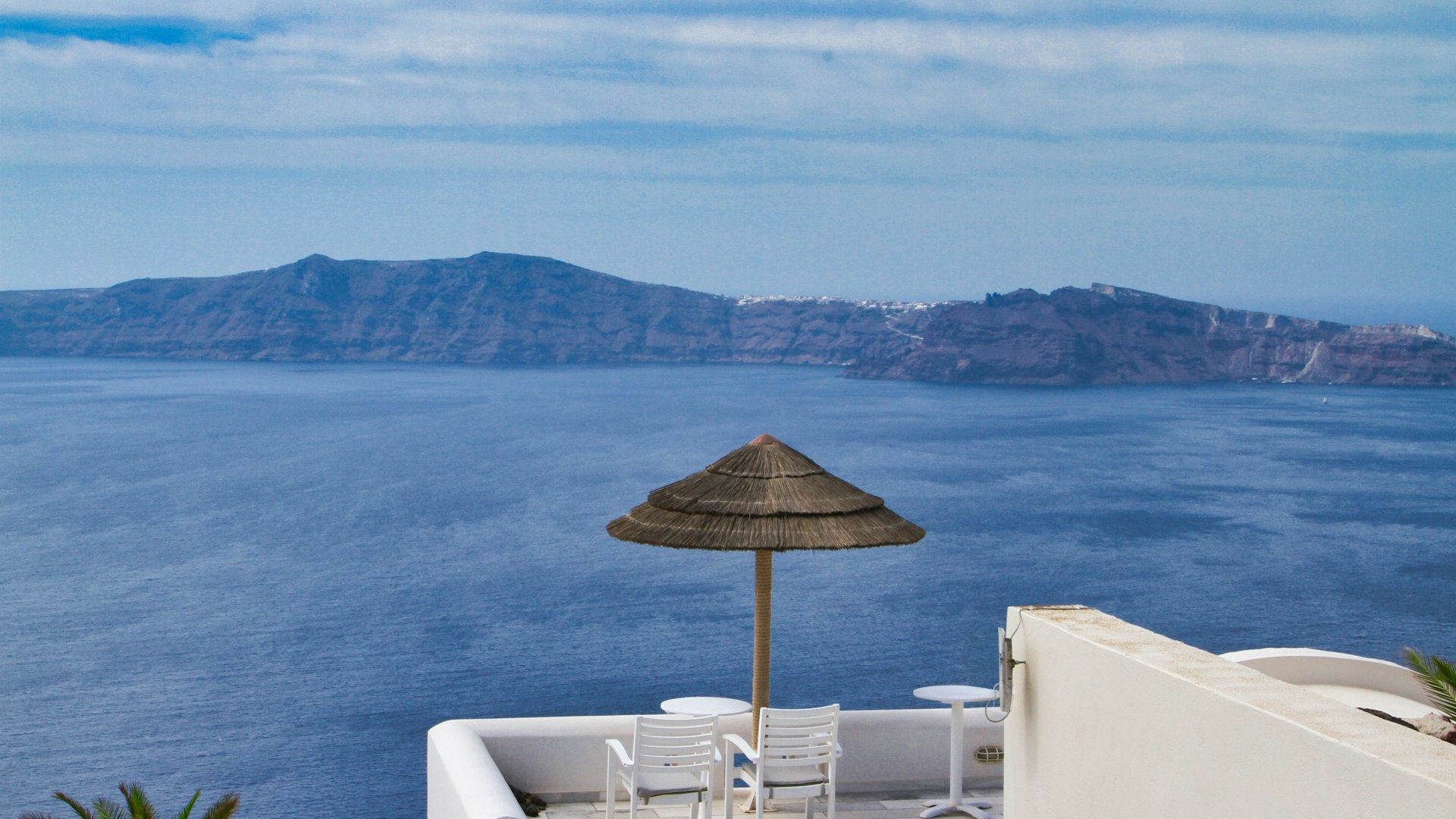
Cyclades Islands Yacht Charters
Forty-plus islands scattered across the central Aegean, each with its own character, anchorages, and prevailing wind — the Cyclades reward charterers who plan carefully and sail with purpose.
Charter by Vessel Type in Cyclades Islands
Catamaran Charter in Cyclades Islands
Spacious twin-hull vessels offering stability, comfort, and generous deck space for the ultimate charter experience.
Sailing Yacht Charter in Cyclades Islands
Classic sailing vessels that combine timeless elegance with the thrill of wind-powered adventure.
Motor Yacht Charter in Cyclades Islands
Powerful luxury vessels delivering speed, sophistication, and effortless cruising across any waters.
Available Yachts in Cyclades Islands

Bareboat Sailing Yacht KOS 379
Sun Odyssey 379 · 2012
From
€2k/week

Bareboat Sailing Yacht Bavaria 40
Bavaria 40 · 2012
From
€2k/week

Bareboat Sailing Yacht Cicerenella
Sun Odyssey 440 · 2019
From
€2k/week

Bareboat Sailing Yacht ALKION
Hanse 345 · 2013
From
€2k/week

Bareboat Catamaran Fountaine Pajot Lucia 40
Fountaine Pajot Lucia 40 · 2018
From
€2k/week

Crewed Motor Yacht Fjord 40 Open
Fjord Open 40 · 2007
From
€2k/week

Bareboat Sailing Yacht MARE NOSTRUM
Hanse 375 · 2015
From
€2k/week

Bareboat Sailboat Oceanis 41.1
41.1 · 2020
From
€2k/week

Bareboat Sailing Yacht Maja of Sweden
Bavaria 45 · 2011
From
€2k/week

Bareboat Sailing Yacht Alinde
Bavaria 45 · 2011
From
€2k/week

Bareboat Sailing Yacht Bavaria 40 Cruiser
Bavaria 40 Cruiser · 2013
From
€3k/week

Bareboat Sailing Yacht Bavaria 40 Cruiser
Bavaria 40 Cruiser · 2013
From
€3k/week
The Cyclades are not one destination but a constellation of them. From the volcanic caldera of Santorini to the quieter marble lanes of Naxos town, from the relentless beach bars of Mykonos to the near-empty coves off Koufonisia, the archipelago offers a range of sailing experiences that few other Mediterranean regions match in such compressed geography. Piraeus and Lavrion serve as the main departure ports, putting the northern Cyclades within reach in a single day's sail and the southern islands in two.
What distinguishes a Cyclades charter from, say, the Ionian or the Dodecanese is the Aegean itself. The Meltemi — the prevailing north-northwesterly that sets in from mid-June and strengthens through July and August — defines the rhythm of sailing here. It demands respect, rewards experience, and makes downwind passages south some of the most exhilarating sailing in European waters. Charterers who understand the Meltemi plan their itineraries around it rather than against it.
Why Charter in Cyclades Islands
The density of viable anchorages and ports within a relatively compact sailing area means that even a seven-night charter can cover five or six distinct islands without feeling rushed. Distances between islands are rarely more than 15 to 30 nautical miles, and the variety of stopping points — from working fishing ports to fully serviced marinas, from windward beaches to sheltered volcanic bays — gives skippers genuine flexibility to adapt to conditions.
Culturally, the Cyclades punch well above their physical size. The culinary offering ranges from grilled octopus and louza (cured pork loin, a Mykonos speciality) to the fresh soft cheese and citrus-laced dishes of Naxos, the island that supplies much of Greece with its dairy produce. Naxos is the largest island in the group and the least reliant on tourism, which gives it a culinary and cultural authenticity that the more famous names sometimes lack.
For charterers at the higher end of the budget, the Cyclades also deliver on infrastructure. Mykonos has a purpose-built superyacht berth at the new marina, Tourlos, capable of handling vessels well over 60 metres, and provisioning through professional concierge services is straightforward. Santorini's Vlychada Marina, though shallow in parts, handles a wide range of vessels and is the sensible base for exploring the caldera and the island's southern coast.
Cyclades Islands Highlights
Koufonisia — the smallest and most charming of the eastern Cyclades, with a crescent-shaped port village, turquoise shallows, and some of the best fresh seafood in the archipelago. Often bypassed by larger charters, it rewards those who seek it out.
The caldera at Santorini — anchoring off Ammoudi or picking up a buoy in the caldera itself at Nea Kameni is an experience specific to this island's geology. The thermal springs at Palea Kameni are a short dinghy ride from anchor.
Antiparos and its cave — the islet opposite Paros town offers a well-protected anchorage in Sifneikos Bay and easy access to one of Greece's most dramatic sea caves, known since antiquity. The main village rewards an evening ashore far more than its proximity to Paros would suggest.
Folegandros — dramatic cliffs dropping to deep water, a Chora that has retained its form without the commercialisation of its neighbours, and anchorages off Agali and Vathy that are workable in northerly conditions. This is the island serious Cyclades sailors return to.
Milos and Kleftiko — the sea caves and chalk-white rock formations of Kleftiko on Milos' southwestern coast are best accessed by yacht; there is no road access and the anchorage in settled conditions is exceptional. The island's volcanic geology produces beaches in seven distinct colours.
Siros (Ermoupoli) — the archipelago's administrative capital is conspicuously absent from most charter itineraries, which is exactly the point. Its neoclassical harbour quarter, opera house, and authentic urban Greek food scene offer a convincing counterpoint to the whitewash-and-windmill aesthetic elsewhere.
Donousa and Iraklia — the 'Small Cyclades' south of Naxos remain genuinely off the charter radar in a way that Ios and Paros no longer are. Donousa's single harbour, Stavros, is sociable and well-sheltered; the hiking inland is serious but rewarding.
When to Sail
The Cyclades sail season runs from late April through October, with the Meltemi at its most forceful in July and August — a period that suits confident sailors and motor yacht charterers but can challenge those seeking relaxed anchorage-hopping.
High Season (Jun-Sep)
June offers the best balance: the Meltemi is building but rarely above Force 5, anchorages are not yet at capacity, and sea temperatures are comfortable. July and August see sustained Force 5-7 conditions across the open Aegean, making passages between the northern and southern Cyclades a serious undertaking in the afternoon. Experienced sailing crews relish it; those on motor yachts or catamarans tend to time departures for the morning window before the wind pipes up. September softens the picture considerably — the Meltemi recedes, the sea remains warm, and the island crowds thin noticeably after the third week of the month.
Shoulder Season (May, Oct)
May is increasingly popular with experienced charterers seeking uncrowded anchorages and mild temperatures in the low-to-mid twenties. Winds are variable and lighter, often from the south or southeast, and some smaller tavernas and beach facilities are not yet open — but the payoff is genuine solitude in anchorages that will be rafted four deep by July. October can be equally rewarding in the first two weeks, though low pressure systems tracking across the Ionian can produce choppy conditions with little warning, and northerly swells build quickly. Later in the month, services become patchy across the smaller islands.
Choosing the Right Yacht
The Cyclades' conditions favour different hull forms at different times of year. Sailing yachts — monohulls and catamarans alike — are at home here, and the Meltemi provides the kind of consistent, powerful sailing that justifies bringing a proper performance yacht rather than a comfortable cruiser. Catamarans handle the steep Aegean chop better than their monohull equivalents in the same wind, and their shallow draught opens up anchorages off Koufonisia, Antiparos, and the back coast of Paros that are inaccessible to deeper-draughted vessels. The wider beam also suits families or groups who want private deck space in a busy anchorage.
Seven Nights in the Central and Southern Cyclades
A suggested week-long charter route
Depart Lavrion in the late afternoon after provisioning at the well-stocked marina facilities. Overnight passage or late evening arrival at Kea (Ioulis), the nearest Cycladic island and an undervisited introduction to the archipelago. Anchor in Vourkari Bay, a sheltered inlet popular with Athenian sailors and backed by tavernas open late into the evening.
Morning sail south-southeast to Syros. Arrive Ermoupoli by early afternoon and take a berth in the commercial port or anchor off the smaller bay of Kini on the island's west coast if Ermoupoli feels busy. An evening in Ermoupoli — dinner in one of the back-street restaurants near the covered market, a walk through the Vaporia quarter — recalibrates expectations of what the Cyclades can be.
Depart with the morning light for Mykonos, bearing in mind that an afternoon arrival will coincide with the Meltemi at its peak and a congested entrance to Tourlos Marina. Book the berth in advance; the new marina handles vessels up to significant LOA but fills quickly in July and August. The town itself repays a full evening.
A short passage southeast to Naxos town (Chora), arriving before the afternoon wind. The town quay in the Venetian harbour district takes smaller vessels; larger charters anchor off and tender in. The Temple of Apollo on the harbour islet, the Portara, is best photographed at the end of the day. Provision here from Naxos's exceptional local produce — potatoes, graviera cheese, citrus.
Daysail through the Small Cyclades — Iraklia, Schinoussa, and Koufonisia lie in a loose chain southeast of Naxos. Anchor off Iraklia's Livadi beach in the morning, press on to Koufonisia by early afternoon. The port village of Chora on Koufonisia is compact, walkable, and produces some of the best grilled fish in the group. Spend the night on anchor or at the small quay.
West to Folegandros, a 35-nautical-mile passage that puts the Meltemi on the beam or quarter — fast, sea-kindly sailing in summer. Anchor in Vathy or Agali on the island's south side. The walk up to Chora through the terraced hillsides above the anchorage is steep but short; the village rewarded the effort consistently for a reason.
Southeast to Santorini — the caldera entrance from the north is dramatic regardless of how many times it has been seen on screen. Pick up a caldera buoy or anchor off Ammoudi in the late afternoon when the light is best and the tourist ferries have docked. Dinner ashore at Oia or Fira via tender from Ammoudi.
Final day: morning visit to the thermal springs at Palea Kameni by dinghy, then depart north via Milos if time permits, or return directly to base at Lavrion depending on the end charter schedule. The 80-nautical-mile passage from Santorini to Lavrion is best started before 10:00 to use the morning calm before the Meltemi reasserts itself.
Local Tips
- •Fuel and water at the smaller islands can be unreliable, particularly at Koufonisia and Folegandros where fuel by jerrycan remains common. Plan full tanks from Naxos, Mykonos, or Santorini before heading to the smaller eastern or western islands.
- •The Port Authority (Limenarchio) requires all yachts to carry a Transit Log (DEKPA) issued on entry at the first port of call in Greece. This should be presented at each port. Crew lists must be accurate and filed before entry; Greek port police do inspect.
- •Advance berthing at Mykonos Tourlos is not optional in July and August — contact the marina directly several weeks ahead for vessels over 15 metres. Arriving without a reservation and expecting to be accommodated will result in being directed to anchor off, which is workable but less convenient for a full crew going ashore.
- •Dining well in the Cyclades means eating where the locals eat. On Naxos, the tavernas near the Nerantzia castle and in the old town consistently outperform the waterfront offerings. On Folegandros, the restaurants on Chora's upper square have changed little in twenty years and are the better for it.
- •The Meltemi typically dies overnight and is lightest between 0700 and 1100. Plan inter-island passages for early morning departures, particularly any passages running north or northwest. Southbound passages under the Meltemi are fast and satisfying; northbound passages against it are exhausting and best avoided.
- •Water is scarce across most of the archipelago. Naxos, being agriculturally self-sufficient, is a partial exception, but elsewhere conserve aboard and fill wherever an official water point is available. Wild anchoring and overnight stays in protected bays are generally permitted, but light fires are prohibited and waste management is taken seriously.
Frequently Asked Questions
Do I need a licensed skipper to charter in the Cyclades+
What is the best base port for a Cyclades charter+
Are the Cyclades suitable for families with children+
How far in advance should I book a Cyclades charter+
Is it possible to reach the Cyclades without sailing from Athens+
What should I budget beyond the charter fee+
Speak to our Cyclades specialists to match your group, dates, and sailing ambitions to the right vessel from our fleet of over 500 yachts available in Greek waters.
Request Your Charter