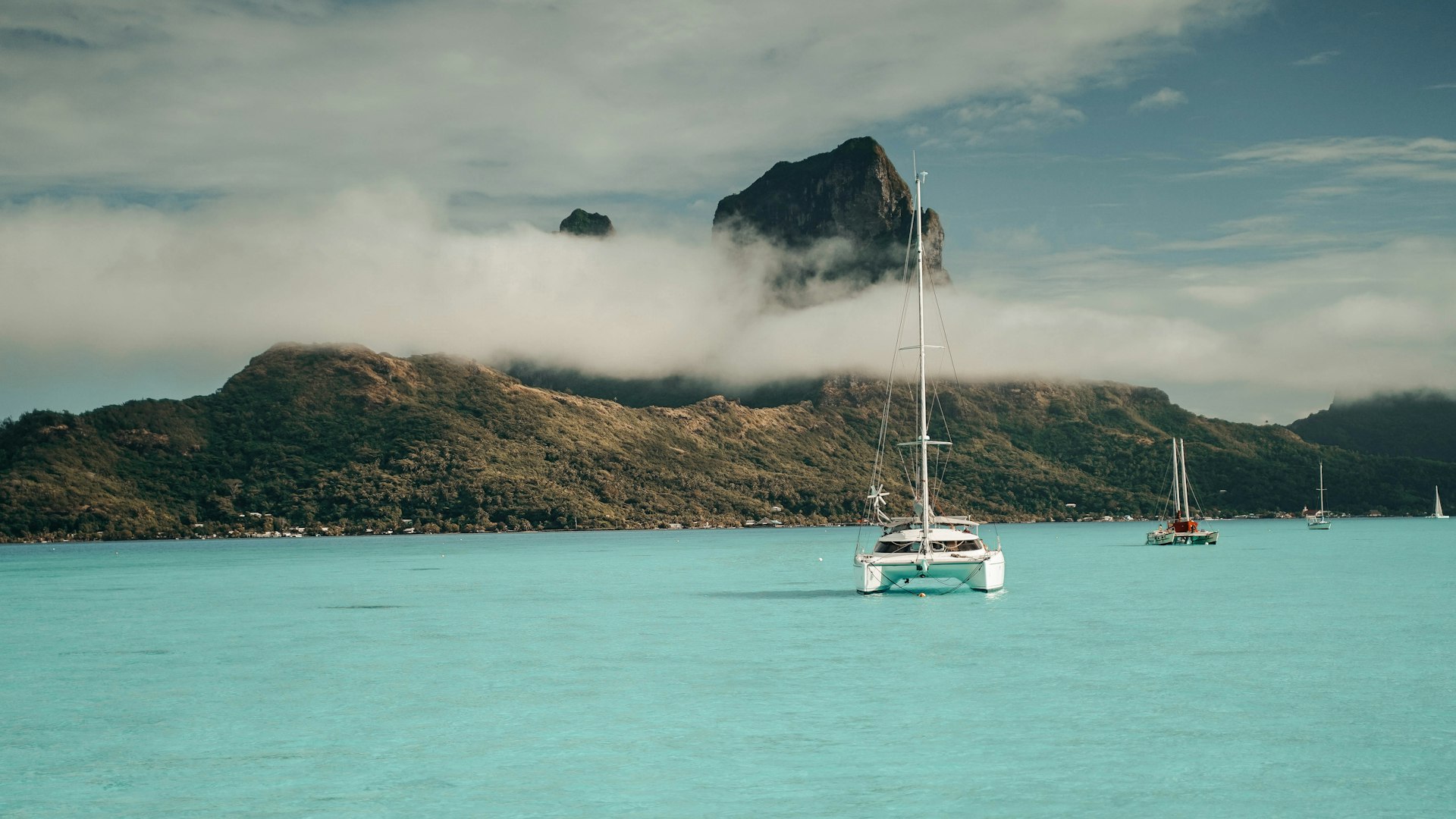
Tahiti Yacht Charters

Tahiti Yacht Charters

French Polynesia's 118-island archipelago rewards serious charterers with **trade-wind sailing**, volcanic peaks dropping into lagoons of extraordinary clarity, and a Francophone sophistication that sets it apart from the broader Pacific.

Charter by Vessel Type in Tahiti

Catamaran Charter in Tahiti

Spacious twin-hull vessels offering stability, comfort, and generous deck space for the ultimate charter experience.

Sailing Yacht Charter in Tahiti

Classic sailing vessels that combine timeless elegance with the thrill of wind-powered adventure.

Motor Yacht Charter in Tahiti

Powerful luxury vessels delivering speed, sophistication, and effortless cruising across any waters.

Tahiti sits at the heart of French Polynesia, roughly 4,400 kilometres southwest of Hawaii and 6,200 kilometres from Sydney, which tells you something important about the experience awaiting you: genuine remoteness, earned through commitment. Most charter itineraries use Tahiti as a staging point before dispersing across the Society Islands, where Moorea, Raiatea, Taha'a, Bora Bora, and Huahine offer a concentrated sequence of distinct anchorages within practical daysailing range.

What distinguishes a Polynesian charter from other tropical sailing grounds is the interplay between oceanic swell and protected lagoon water. The barrier reefs encircling most of the Society Islands create vast, calm lagoons suited to anchoring, snorkelling, and paddling, while the passes between ocean and lagoon generate strong currents that demand timing and attention from the helm. The seamanship required is real, which is precisely why experienced charterers return.

Why Charter in Tahiti

The Southeast Trades, locally known as the *mara'amu*, blow consistently from May through October, offering reliable 15-25 knot sailing between islands with comfortable reaching angles on most inter-island passages. This predictability is rare in tropical sailing and makes French Polynesia one of the few Pacific destinations where a week-long itinerary can be planned with genuine confidence rather than wishful thinking.

The cuisine is a serious argument on its own. Poisson cru, the Polynesian answer to ceviche, prepared with fresh tuna marinated in lime and coconut milk, is available everywhere from dockside roulottes to the terrace restaurants of Bora Bora. French culinary standards apply in provisioning, which means the baguettes are excellent and the wine selection at Marina Taina on Tahiti or Raiatea's Apooiti Marina is broadly competent. Provisioning for a week-long passage is straightforward from either base.

The marine environment remains largely intact relative to other heavily-visited tropical destinations. Lemon sharks patrol the passes at Fakarava and Rangiroa in the Tuamotus, manta rays aggregate at cleaning stations off Bora Bora's Motu Tapu, and the coral gardens inside the lagoon at Taha'a host fish life that will satisfy experienced divers without requiring a dedicated liveaboard schedule. French Polynesia enforces marine park protections with reasonable rigour.

Tahiti Highlights

1

Cook's Bay, Moorea - Deeply indented volcanic bay with reliable holding in 5-7 metres over sand, dramatic ridge backdrop, and dinghy access to one of the island's best produce markets. Practically a mandatory first stop from Papeete.

2

Taha'a vanilla plantations and coral gardens - The 'vanilla island' produces the majority of French Polynesia's vanilla crop. Anchor off the motu, arrange a plantation tour, and snorkel the coral gardens on the eastern side of the lagoon. The two experiences in a single day justify a full stop.

3

Bora Bora lagoon, Motu Tapu anchorage - The main town quay is often crowded and the island itself has commercialised, but the anchorage off Motu Tapu on the southwest side of the lagoon offers seclusion, flat water, and the classic silhouette of Mount Otemanu across clear water.

4

Raiatea, Marae Taputapuatea - A UNESCO World Heritage site and the ancient spiritual centre of Polynesia. This *marae* (ceremonial complex) on the southeast coast of Raiatea predates European contact and carries genuine historical weight. Apooiti Marina on the northwest tip is the practical base for provisioning and checking in.

5

Fakarava, Tuamotu Archipelago - A UNESCO Biosphere Reserve atoll roughly 500 kilometres northeast of Tahiti. The Garuae Pass is the widest in French Polynesia and one of the world's premier drift dives. The south pass, Tumakohua, hosts the famous grouper aggregation in June and July. Requires an inter-island passage but rewards the commitment.

6

Huahine, Fare Village - The least-visited of the main Society Islands, with a market town that operates on local rather than tourist rhythms. The twin lagoons north and south of the island offer varied anchorages across a single charter stop, and the archaeological sites at Maeva rival anything in the region.

7

Rangiroa, Tiputa Pass - The second-largest atoll in the world and a consistent destination for charterers who want to add a Tuamotu dimension to a Society Islands itinerary. Dolphin pods transit the pass on the incoming tide most mornings. The tiny village of Avatoru has a functional quay and reasonable provisioning.

When to Sail

French Polynesia divides neatly into a dry trade-wind season from May to October and a wetter, calmer austral summer from November through April. Most serious charterers target June through September.

High Season (Jun-Sep)

The mara'amu trade winds blow steadily from the southeast at 15-25 knots, with gusts to 30 occasional but manageable. Skies are largely clear, humidity is lower than the summer months, and sea temperatures sit around 26-27°C. This is the season for reliable passages between Tahiti, Moorea, and the Leeward Islands, and for the famous Heiva festival in July, when traditional dance and outrigger racing animate Papeete's waterfront. Book early: fleet availability tightens significantly from late May.

Shoulder Season (May, Oct)

May and October offer a useful compromise. Winds are present but lighter than peak season, typically 10-20 knots, and the anchorages carry fewer boats. October sees the transition toward the wet season and can produce unsettled afternoons, but mornings are typically clear. Water visibility in the lagoons is frequently at its best in October as marine traffic thins. Both months allow more flexibility in itinerary and better rates on popular yacht models.

Choosing the Right Yacht

The catamaran is the dominant charter choice in French Polynesia, and with good reason. Models such as the Lagoon 630, Fountaine Pajot Samana 59, and the Bali range offer the shallow draught necessary to enter lagoons through coral-lined passes where a deep-keeled monohull would be exposed to serious risk. The wide beam provides stable platforms for snorkelling and dive equipment management, and the deck space matters considerably in a destination where the water temperature invites living outside. The trade winds are consistent enough that catamarans sail respectably on this route, particularly on the predominantly reaching passages between islands. The fleet available through SelectYachts runs predominantly to catamarans for exactly this reason, with over thirty models represented across the price range. Motor yachts suit charterers who prioritise reaching the Tuamotus within a single charter week, or who want to cover the full Society Islands arc without the constraint of wind dependency. The pass currents at Fakarava and Rangiroa can run at 6-8 knots on a spring ebb, making engine power a practical asset rather than a luxury. The handful of sailing monohulls available offer a more traditional passage-making experience for those with the experience to manage the passes confidently, but they are the minority of the fleet and suit experienced sailors who are genuinely here for the sailing rather than the anchorage time.

Society Islands Circuit - Tahiti to Bora Bora in Seven Days

A suggested week-long charter route

Day 1

Board at Marina Taina, Tahiti's main charter base on the west coast, approximately 8 kilometres from Faaa International Airport. Complete handover, provisioning checks, and a late-afternoon departure for the 17-nautical-mile crossing to Moorea. The passage is typically a comfortable reach in 12-18 knots. Anchor in Cook's Bay before sunset and take the dinghy ashore to the roulottes for dinner.

Day 2

Morning at anchor in Cook's Bay for snorkelling on the reef shelf and, if timing allows, the island's interior market. Afternoon sail around to Opunohu Bay on Moorea's north coast, a quieter alternative with excellent holding and a backdrop of vertical basalt spires. Evening aboard.

Day 3

Depart Moorea for Huahine, approximately 100 nautical miles to the northwest. A classic trade-wind passage on a broad reach for most of the day. Arrive at Fare in the late afternoon. The concrete quay allows stern-to mooring; alternatively, anchor in the bay to the south of the village. Walk Fare's single main street before the shops close.

Day 4

A full day on Huahine. Morning snorkel in the southern lagoon followed by a hire car or guided tour to the Maeva archaeological complex, where stone fish traps and marae platforms extend along the edge of Lake Fauna Nui. Return to the boat for a late lunch and move to a south lagoon anchorage overnight.

Day 5

Short 25-nautical-mile passage to Raiatea and Taha'a, which share a single barrier reef lagoon. Anchor off the vanilla plantations on Taha'a's western coast in the morning and arrange a guided tour. Afternoon snorkel on the coral garden known locally as the *Coral Garden* off Motu Ceran before moving to Apooiti Marina, Raiatea, for the night.

Day 6

Morning visit to Marae Taputapuatea on Raiatea's southeast coast, a 30-minute dinghy ride and short walk from the nearest anchorage. Depart early afternoon for Bora Bora, a 25-nautical-mile passage that typically arrives in time for sunset over the lagoon. Enter through the Teavanui Pass on the western side of the atoll and anchor off Motu Tapu.

Day 7

Full day in Bora Bora lagoon. Morning manta ray snorkel at the cleaning station off the north side of the main island, followed by lunch anchored off a motu with a view of Mount Otemanu. Late afternoon departure for Vaitape quay, the main town, to clear out with the gendarmerie if departing by air the following morning. Final dinner ashore.

Local Tips

  • Clearance formalities are handled in Papeete at the port captain's office on the Papeete waterfront, or at Raiatea if starting further west. Non-EU nationals entering French Polynesia as yacht crew require an onward ticket or bond equivalent, as Polynesia is technically an Overseas Collectivity of France and falls under French immigration law. Confirm requirements with your broker before departure.
  • Provisioning is excellent at Marina Taina (Carrefour supermarket adjacent) and at Apooiti Marina, Raiatea, where a Champion supermarket is within dinghy distance. Bora Bora's provisioning is limited and expensive; arrive with stores. In the Tuamotus, assume you carry everything you need from your departure port.
  • Pass timing is non-negotiable. The passes at Fakarava (Garuae and Tumakohua), Rangiroa (Tiputa and Avatoru), and Bora Bora's Teavanui Pass all run powerful tidal currents. Enter on a slack or incoming tide. Local tide tables are available from the marina offices and the French Polynesia hydrographic service online. Do not rely on generic almanac times.
  • **Poisson cru, *chèvre frais*, and fresh pamplemousse** (Polynesian grapefruit, sweeter and less acidic than the supermarket variety) are the provisions worth seeking at any local market. The Fare market on Huahine and Uturoa market on Raiatea are the most rewarding. Roulottes in Papeete around the waterfront are open for dinner from around 18h00 and represent some of the best-value meals in the territory.
  • Anchor etiquette in the lagoons is taken seriously by the local sailing community. Coral heads are scattered throughout most lagoon anchorages; a snorkel scout before dropping the hook is standard practice and environmentally expected. Anchoring on live coral is prohibited under French Polynesian marine park regulations and socially frowned upon within the cruising community.
  • French is the working language on the outer islands, though English is spoken by most marina staff and the majority of tour operators. On the outer Society Islands and in the Tuamotus, basic conversational French will open considerably more doors than English alone. Tahitian courtesies, particularly *maeva* (welcome) and *māuruuru* (thank you), are received warmly.

Frequently Asked Questions

Do I need a skipper to charter in French Polynesia+
Most charterers in French Polynesia opt for a skippered or crewed charter, and the pass navigation in both the Society Islands and Tuamotus makes a local skipper a genuinely practical asset rather than a regulatory formality. Bareboat charter is available for holders of a recognised qualification (RYA Coastal Skipper or equivalent) with demonstrated offshore experience. The pass currents at Fakarava and Rangiroa specifically require confident boat handling; this is not a destination for novice bareboat charterers.
How far in advance should I book a Tahiti charter+
High season availability, particularly June through August, depletes by February or March for popular catamaran models. The Lagoon 630 and Fountaine Pajot Samana 59 in particular book early in the cruising season. Shoulder season departures in May and October offer more flexibility. If Heiva festival dates in July are important to your itinerary, twelve months' notice is not excessive.
Can I sail from Tahiti to the Tuamotu Atolls in a week+
It is possible but tight. Fakarava is approximately 500 nautical miles from Tahiti, which represents a meaningful offshore passage each way, leaving limited time in the atolls themselves. A fortnight is the practical minimum for a Society Islands plus Tuamotus combination that doesn't feel rushed. Alternatively, position the charter to fly into Fakarava (regular Air Tahiti service) and charter entirely within the Tuamotus before flying back.
What currency and payment systems apply in French Polynesia+
French Polynesia uses the CFP franc (XPF), pegged to the Euro at a fixed rate of approximately 119.33 XPF per Euro. ATMs are available in Papeete, Uturoa (Raiatea), and Bora Bora's Vaitape. On outer islands and motu anchorages, assume cash only. Marina fuel and provisioning in Papeete and Raiatea accept credit cards; fuel in the Tuamotus typically does not.
Is French Polynesia suitable for families with children+
Yes, with appropriate boat selection. The Society Islands lagoons offer calm, warm water in 26-29°C, gentle snorkelling accessible to younger children, and the convenience of reaching activities by dinghy from the anchor. Catamarans are particularly well-suited given their stability and deck space. The offshore passages between island groups are more demanding; families with young children typically stay within the Society Islands circuit, which is itself a full and rewarding itinerary.
What are the main additional costs beyond the base charter fee+
Expect to budget for APA (Advance Provisioning Allowance) on crewed charters, typically 30-35% of the base fee, covering fuel, marina fees, provisions, and crew gratuity. Marina fees in French Polynesia are moderate by Mediterranean standards; anchoring is free in most lagoons. Air Tahiti inter-island flights add cost if your itinerary includes a Tuamotus segment by air. French Polynesia levies a small daily maritime tax on charter vessels, collected at clearance.

Speak with a SelectYachts broker to match the right vessel to your preferred islands, travel window, and party size.

Request Your Charter

Request Your Charter

Tell us about your dream voyage and we will find the perfect yacht for you.