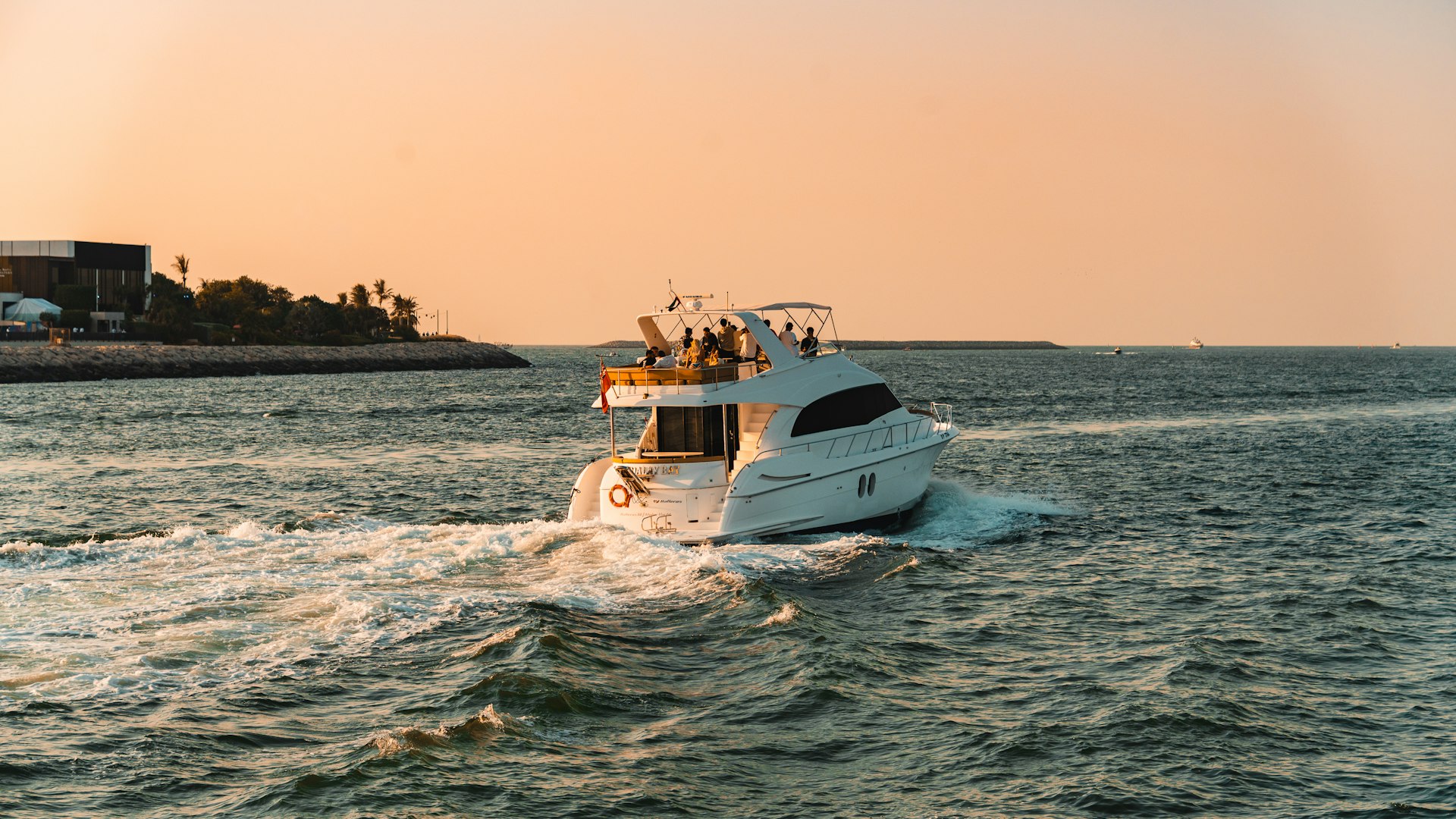
Motor Yacht Charter Spain and the Balearics

Motor Yacht Charter Spain and the Balearics

From the Costa Brava's granite coves to the amber cliffs of Formentera, Spain's coastline rewards motor yacht charterers with calm summer seas, world-class marinas, and a food culture serious enough to justify the voyage on its own.

Motor Yachts Available in Spain and the Balearics

Browse our selection of motor yachts available for charter in Spain and the Balearics.

Crewed Motor Yacht Solemar Zeus 26
motor yacht

Crewed Motor Yacht Solemar Zeus 26

Solemar Zeus 26

0 8

From

€790/week

View →
Crewed Motor Yacht BLUE ICE
motor yacht

Crewed Motor Yacht BLUE ICE

Sunseeker Camargue 46

13.0m 10 2

From

€1k/week

View →
Crewed Motor Yacht Sessa Marine C35
motor yacht

Crewed Motor Yacht Sessa Marine C35

Sessa Marine C35

11.7m 11 2

From

€1k/week

View →
Crewed Motor Yacht Sunseeker Camargue 50
motor yacht

Crewed Motor Yacht Sunseeker Camargue 50

Sunseeker Camargue 50 · 2001

16.1m 9 2

From

€1k/week

View →
Crewed Motor Yacht Sunseeker Superhawk 50
motor yacht

Crewed Motor Yacht Sunseeker Superhawk 50

Sunseeker Superhawk 50

15.3m 12

From

€1k/week

View →
Crewed Motor Yacht Sunseeker Camargue 50
motor yacht

Crewed Motor Yacht Sunseeker Camargue 50

Sunseeker Camargue 50

16.1m 10 2

From

€1k/week

View →
Crewed Motor Yacht Azimut 43
motor yacht

Crewed Motor Yacht Azimut 43

Azimut 43 · 2007

12.8m 11 2

From

€2k/week

View →
Crewed Motor Yacht Sunseeker Camargue 50
motor yacht

Crewed Motor Yacht Sunseeker Camargue 50

Sunseeker Camargue 50 · 2001

15.4m 12 2

From

€2k/week

View →
Crewed Motor Yacht Fairline Targa 43
motor yacht

Crewed Motor Yacht Fairline Targa 43

Fairline Targa 43

13.1m 9 2

From

€2k/week

View →
Crewed Motor Yacht PURE DUTCH
motor yacht

Crewed Motor Yacht PURE DUTCH

Van Dutch 40 · 2011

12.1m 9

From

€2k/week

View →
Bareboat Motor Yacht Rodman 41
motor yacht

Bareboat Motor Yacht Rodman 41

Rodman 41

13.7m 10 3

From

€2k/week

View →
Crewed Motor Yacht TIME FLIES
motor yacht

Crewed Motor Yacht TIME FLIES

Princess 60 · 1996

18.8m 11 3

From

€2k/week

View →
Crewed Motor Yacht Van Dutch 40
motor yacht

Crewed Motor Yacht Van Dutch 40

Van Dutch 40 · 2013

12.1m 9

From

€2k/week

View →
Crewed Motor Yacht AB 58
motor yacht

Crewed Motor Yacht AB 58

AB Yachts 58

17.7m 11 2

From

€2k/week

View →
Crewed Motor Yacht Fjord 44
motor yacht

Crewed Motor Yacht Fjord 44

Fjord 44

0 11 1

From

€2k/week

View →
Crewed Motor Yacht Azimut 46
motor yacht

Crewed Motor Yacht Azimut 46

Azimut 46 · 2004

15.0m 11 2

From

€2k/week

View →
Crewed Motor Yacht DOUBLE K
motor yacht

Crewed Motor Yacht DOUBLE K

CNM 50 · 2012

16.0m 11 2

From

€2k/week

View →
Crewed Motor Yacht SUNSEEKER CAMARGUE 50
motor yacht

Crewed Motor Yacht SUNSEEKER CAMARGUE 50

Camargue 50

15.2m 2

From

€3k/week

View →
Crewed Motor Yacht Princess V53
motor yacht

Crewed Motor Yacht Princess V53

Princess V53

17.1m 11 3

From

€3k/week

View →
Crewed Motor Yacht Sacs Strider 18
motor yacht

Crewed Motor Yacht Sacs Strider 18

Sacs Strider 18 · 2017

18.0m 12

From

€3k/week

View →
Crewed Motor Yacht Fairline Squadron 58
motor yacht

Crewed Motor Yacht Fairline Squadron 58

Fairline Squadron 58

18.0m 12 3

From

€4k/week

View →
Crewed Motor Yacht Astondoa 72
motor yacht

Crewed Motor Yacht Astondoa 72

Astondoa 72 · 2004

21.8m 10 4

From

€4k/week

View →
Crewed Motor Yacht Azimut 58
motor yacht

Crewed Motor Yacht Azimut 58

Azimut 58

19.0m 10 3

From

€4k/week

View →
Crewed Motor Yacht Pershing 62
motor yacht

Crewed Motor Yacht Pershing 62

Pershing 62 · 2006

19.4m 12 3

From

€4k/week

View →

Spain and the Balearics represent one of the Mediterranean's most versatile motor yacht destinations. The mainland coast stretches from the French border at Cap de Creus south through Barcelona, the Costa Dorada, and Valencia to the sun-baked headlands of Cabo de la Nao, while offshore the Balearic archipelago — Mallorca, Menorca, Ibiza, and Formentera — adds four distinct sailing cultures within a day's run of each other. The range is genuinely unusual: a charterer can anchor in a quiet Menorcan creek one afternoon and be moored stern-to in Palma de Mallorca's superyacht marina by sundown.

Motor yachts are particularly well suited to this region. The distances between islands are short enough to cover comfortably between breakfast and lunch, yet the destinations themselves reward time at anchor rather than hours under sail. The Tramontana blows reliably down from the north in July and August, cooling Mallorca's northern anchorages and keeping sea temperatures bearable; the Meltemi equivalent here is mild by Aegean standards. Combined with an infrastructure of well-maintained marinas, efficient fuel berths, and provisioning that draws on Barcelona's wholesale markets and Palma's specialist chandleries, this coastline asks very little of its guests operationally while delivering a great deal aesthetically.

Why Charter in Motor Yacht charter in Spain and the Balearics

The Balearics in particular offer a concentration of anchorage quality that is difficult to match elsewhere in the western Mediterranean. Mallorca's northeastern coast — from Pollença Bay down through the Formentor peninsula to the medieval port of Alcúdia — presents a sequence of turquoise bays backed by pine forests and limestone cliffs, mostly accessible only by sea. Menorca's southern shore is defined by calas cut deep into red-gold sandstone, many of them barely wide enough for two yachts to share, with water clarity that competes with anything in the Aegean.

On the mainland, the stretch between Sitges and Dénia is underrated by charterers who default to the islands. The Costa Daurada's Tarragona anchorages combine Roman archaeology with reasonable shelter, while the Montgo massif above Dénia marks the beginning of the Costa Blanca's more dramatic coastal topography. Barcelona itself functions as an efficient embarkation port: Port Vell and Port Olímpic both handle superyachts, and the city's provisioning and crew resources are among the best in Spain.

Ibiza and Formentera deserve separate mention because they operate almost as a micro-destination within the wider charter area. Formentera's Ses Illetes sandbar produces water of an almost implausible colour, and the ten-minute crossing from Ibiza's La Savina adds almost no time to the itinerary. Ibiza town's UNESCO-listed Dalt Vila fortress, visible from the anchorage at night, provides a rare moment when the island's reputation for nightlife gives way to something more historically grounded.

Motor Yacht charter in Spain and the Balearics Highlights

1

Pollença Bay, Mallorca — a wide, sheltered anchorage in the island's northeast, ringed by the Serra de Tramuntana; the town quay allows easy access to the Thursday market, one of the best on the island.

2

Cala Macarella and Macarelleta, Menorca — two adjacent calas on the southwest coast accessible only by sea or a long walk; the turquoise water and overhanging pines make this among the most photographed anchorages in the Balearics.

3

Ses Illetes, Formentera — a narrow sandbar extending north from the island's tip, with the clearest water in the Balearic chain and a shallow approach that rewards tenders over deep-draught vessels.

4

Dalt Vila anchorage, Ibiza — anchoring off the old town at dusk, with the illuminated fortifications rising above the waterfront, is one of those experiences that justifies the Balearic charter on its own terms.

5

Cap de Creus, Costa Brava — Spain's easternmost point, where the Pyrenees meet the sea; the protected natural park and the proximity to El Bulli's legendary cove (now a foundation) make this a worthwhile northern detour.

6

Dénia to Xàbia (Jávea) stretch, Costa Blanca — the Montgo headland creates a natural weather divide; the Portitxol cove south of Xàbia offers deep, clear water and a restaurant accessible by tender.

7

Palma de Mallorca city berth — a working grand city with genuinely good architecture, the Miró Foundation, excellent tapas in the Santa Catalina neighbourhood, and a superyacht marina infrastructure that handles yachts to 90 metres.

When to Sail

The charter season runs from May through October, with the core summer months delivering the most settled weather and the broadest choice of fleet; shoulder months offer lower prices, thinner anchorage crowds, and — in May especially — a greener, less bleached landscape.

High Season (Jun-Sep)

July and August bring air temperatures of 28-34°C across the Balearics and mainland coast, with sea temperatures peaking around 26°C in the Ibiza channel. Wind is predominantly from the northwest (the Tramontana) in the north of Mallorca, and from the east-southeast (Llevant) on the southern and eastern coasts. Both are generally moderate in summer, rarely exceeding Force 4-5. Anchorages and marina berths at Puerto Portals, Puerto Adriano, and Marina Ibiza fill quickly; booking four to six months ahead is standard for July. The Palma Superyacht Show in late April feeds into a very competitive early summer booking market.

Shoulder Season (May, Oct)

May is arguably the most rewarding month for experienced charterers. The Tramontana can blow more frequently and with greater force than in summer, but settled periods last long enough for comfortable island-hopping, the anchorages are accessible without prior reservation, and the countryside above Mallorca's west coast retains its spring colour. October delivers warm sea temperatures — still around 22-23°C — and significantly reduced boat traffic. Restaurant reservations become easy, berthing costs drop, and the quality of light in the late afternoon is notably different from the flat glare of August. Menorca in October is particularly compelling: the island empties of summer visitors while its calas remain swimmable well into the month.

Choosing the Right Yacht

Motor yachts between 20 and 35 metres represent the sweet spot for this destination. The typical Balearic itinerary involves short passages of 15-40 nautical miles, meaning the range advantage of a motor yacht is deployed on comfort and speed rather than passage-making efficiency. Flybridge cruisers in the 60-80ft range — models such as the Azimut Magellano 76 with its displacement hull and emphasis on fuel economy — suit charterers who want to cover ground without the fuel bills associated with planing hulls at speed. The Magellano's wide-beam aft deck and beach club are well suited to the swim-stop-focused itineraries that define a Balearic week.

Seven Days in the Balearics — Palma to Menorca and Back

A suggested week-long charter route

Day 1

Embark Palma de Mallorca. Arrive at Puerto Portals or Marina Port de Mallorca depending on yacht size. Spend the first afternoon in the city — the Catedral and the Santa Catalina neighbourhood repay the walk. Dinner aboard or at one of the quayside restaurants in the old port area.

Day 2

Depart early northeast along Mallorca's coast, passing the Formentor peninsula and entering Pollença Bay by early afternoon. Anchor off the town quay or in the deeper water to the south. If timing allows, a tender run into town for the afternoon.

Day 3

Cross to Menorca — approximately 35 nautical miles from Pollença, a crossing of around two hours at cruising speed. Arrive at the Cala Macarella anchorage on Menorca's southwest coast in time for a long swim stop and lunch. Move to the marina at Ciutadella in the evening for dinner in the old port.

Day 4

Explore Menorca's southern calas at a relaxed pace — Cala Turqueta, Cala en Turqueta, and Son Bou are all accessible in a day. Anchor at Cala Galdana for the night, a sheltered bay with reasonable holding in sand.

Day 5

Depart for Ibiza, a run of roughly 55 nautical miles southwest. Arrive at Marina Ibiza or anchor off Dalt Vila in the afternoon. Evening at anchor watching the old town illuminate at dusk; late dinner ashore in the Sa Penya quarter.

Day 6

Morning passage to Formentera — 10 nautical miles south from Ibiza's La Savina. Anchor at Ses Illetes for a long afternoon in what is, by any objective measure, the best water in the Balearics. Return to Ibiza for a final evening; Es Vedrà by sunset en route is worth the slight detour.

Day 7

Return passage to Palma — approximately 85 nautical miles northeast, comfortably covered in under four hours at cruising speed. Disembark at the marina; Palma airport is 15 minutes by car from the main superyacht berths.

Local Tips

  • Marina reservations in the Balearics must be made well in advance for July and August. Puerto Portals, Marina Ibiza, and Club de Mar Palma operate waiting lists from as early as February for peak-season berths on larger yachts. Your broker should confirm berthing at the point of booking rather than leaving it to the crew.
  • Spanish customs and immigration apply straightforwardly for EU-flagged yachts; non-EU flagged vessels should budget for Temporary Importation paperwork and ensure the captain has the correct documentation before departure. The 18-month TI regime is enforced with increasing consistency.
  • Provisioning out of Palma is excellent. Mercat de l'Olivar covers fresh produce, fish, and charcuterie; wholesale suppliers operate from the port area for larger yachts. In Ibiza, the Saturday market at Las Dalias in Sant Carles stocks local cheeses, oils, and produce worth incorporating into the galley.
  • The Tramontana wind can descend suddenly into the bays north of Mallorca — particularly Pollença and Alcúdia — with short build times. Experienced captains monitor the Cap de Formentor and Cap Blanc weather stations; guests should expect the anchor watch to be taken seriously in these anchorages.
  • Dining ashore in the Balearics rewards specificity. In Mallorca, the Raïm restaurant in Porreres and the market restaurants of Palma's Santa Catalina neighbourhood consistently outperform the obvious port-side options. On Menorca, the local Mahón gin — produced on the island since the 18th century — is worth requesting at any bar; it predates Gordon's by over a century.
  • Fuel costs in Spanish waters are lower than in France or Italy due to a different tax regime on marina-dispensed fuel. This makes the Balearics comparatively economical for motor yachts with high burn rates, and captains planning longer passages from the mainland can factor in a full fuel stop at Palma or Valencia before departing.

Frequently Asked Questions

What is the best base port for a Balearic motor yacht charter+
Palma de Mallorca is the most practical embarkation point for the majority of itineraries. The city has direct flights from across Europe and North America via connections, the marina infrastructure handles yachts to 90 metres, and it places you within a four-hour cruising radius of all four main islands. Barcelona is a logical alternative if you want to begin with mainland Spain before heading offshore.
How far apart are the Balearic Islands+
At cruising speed on a typical motor yacht (16-22 knots), the main island hops take between one and four hours. Palma to Ibiza is approximately 90 nautical miles (around four hours); Ibiza to Formentera is 10 nautical miles (30-40 minutes); Mallorca to Menorca from Pollença is 35 nautical miles (roughly 90 minutes to two hours). The compact geography is one of the main advantages of the Balearics over longer itineraries such as the Aegean.
Do I need a licence or permit to charter a motor yacht in Spain+
Guests do not require any licence — the yacht is professionally crewed. The captain holds the relevant Spanish maritime authority licences. Yachts operating in Spanish waters must be properly registered and insured, and non-EU flagged charter yachts require the Temporary Importation paperwork mentioned above. Your broker will confirm compliance as part of the booking process.
Is anchoring permitted throughout the Balearics+
Anchoring rules vary by area and have become more restrictive in recent years, particularly in Posidonia oceanica seagrass zones. Formentera's Ses Illetes anchorage operates a buoy system from mid-June to mid-September, with a limited number of berths. Several Menorcan calas require pre-booking of anchor buoys in high season. Captains are responsible for compliance; SelectYachts can advise on current restrictions when confirming itineraries.
What is included in the charter fee and what costs extra+
The weekly charter fee covers the yacht and crew. Additional expenses (known as APAs — Advance Provisioning Allowances) typically amount to 25-35% of the charter fee and cover fuel, marina fees, food, drinks, and port taxes. Given the higher fuel consumption of motor yachts compared with sailing yachts, the fuel component can be significant for faster planing hulls; displacement-mode vessels such as the Azimut Magellano range reduce this meaningfully.
What is the maximum group size for a motor yacht charter in Spain+
The fleet available through SelectYachts for this region accommodates up to 14 guests overnight. Day charter configurations can vary. Most charters in the 50-80ft range sleep 6-10 guests across 3-5 cabins. If your group exceeds 10, a dedicated search for larger vessels with the appropriate cabin configuration is worthwhile from the outset.

Contact our charter team to match your group, dates, and itinerary to the right motor yacht from our Spain and Balearics fleet.

Request Your Charter

Request Your Charter

Tell us about your dream voyage and we will find the perfect yacht for you.