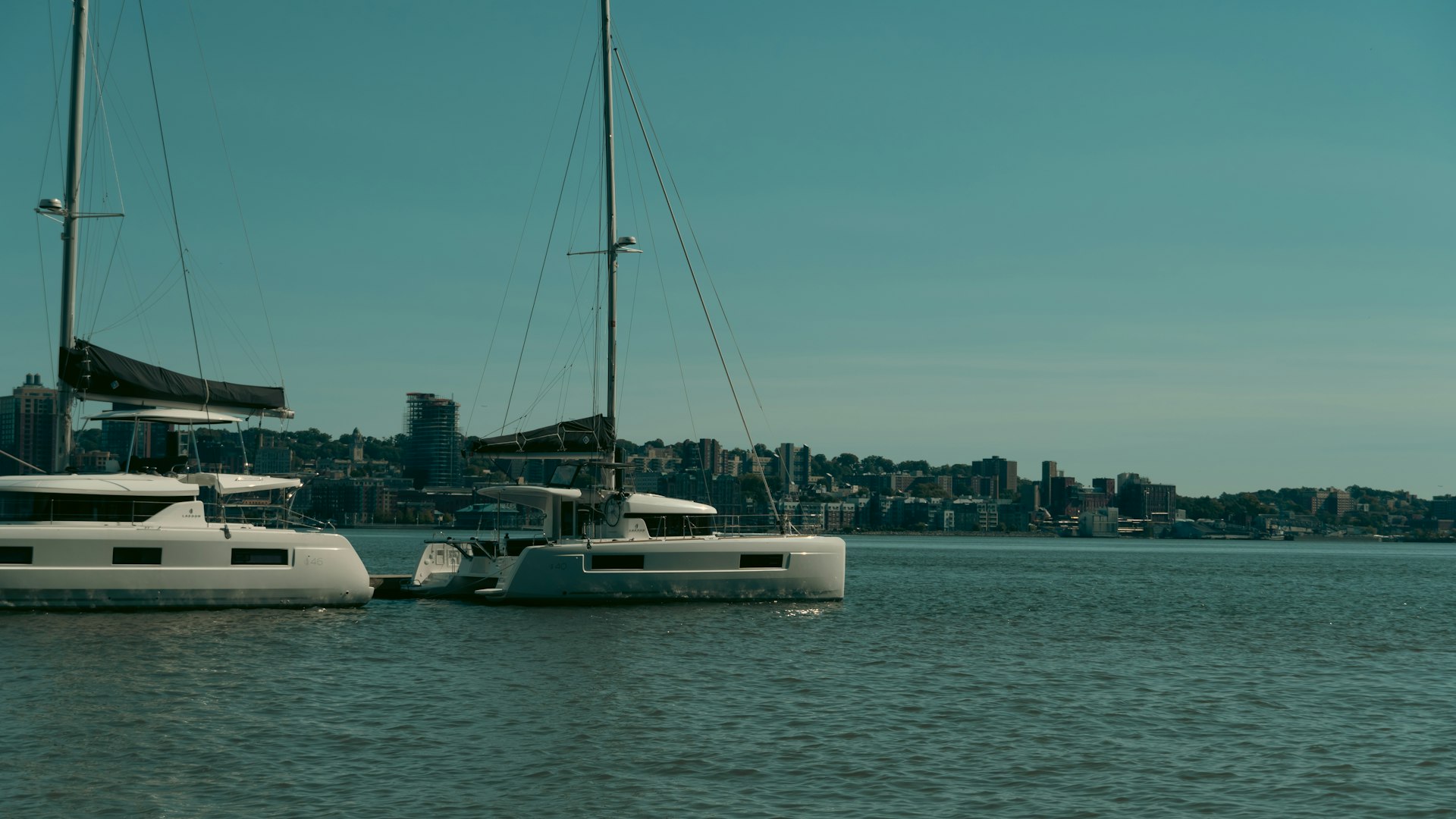
Sailing Yacht Charter Australia
From the Whitsunday Passage to Sydney Harbour, Australia rewards the serious sailor with world-class anchorages, reliable trade winds, and coastline that remains genuinely remote even in peak season.
Sailing Yachts Available in Australia
Browse our selection of sailing yachts available for charter in Australia.
Other Vessel Types in Australia
Australia's sailing geography is vastly underestimated by those who have never studied a chart of its eastern seaboard. The continent's north-east coast alone stretches over 2,000 kilometres from the Capricorn Coast to Cape York, with the Great Barrier Reef acting as a natural breakwater that creates some of the most sheltered blue-water cruising available anywhere in the southern hemisphere. Add the consistently strong south-easterly trade winds that funnel through the Whitsunday Passage between June and September, and you have conditions that genuinely reward a performance sailing yacht.
Further south, Sydney Harbour and the Hawkesbury River offer a completely different character: sandstone headlands, world-class restaurants accessible by dinghy, and a racing scene that keeps local sailors sharp. Farther still, the waters between the mainland and Kangaroo Island in South Australia provide dramatic coastal sailing with wildlife encounters that belong in a different category entirely. For charterers willing to range across this coastline, Australia delivers a plurality of experiences rarely matched on a single itinerary.
Why Charter in Sailing Yacht charter in Australia
The Whitsundays remain the headline act for a reason. 74 islands within a 30-nautical-mile radius, the majority uninhabited national park, with moorings maintained by Queensland Parks and Wildlife Service in the busiest anchorages. The consistency of the south-east trades in the June-to-September window means you can plan a passage itinerary with genuine confidence, not simply drift from anchorage to anchorage at the mercy of fickle conditions. Whitehaven Beach on Whitsunday Island is frequently cited as the finest silica beach in the Pacific, and it earns the description.
For charterers whose interests extend beyond the tropics, the Sydney to Hobart corridor and the waters around the NSW Central Coast offer a rigorous but rewarding alternative. Port Stephens, the Hawkesbury River system, and Pittwater are all within a day's sail of Sydney and present a version of Australian sailing that most international visitors never discover. The light in this part of the world has a particular quality in the austral autumn, with longer evenings and remarkably stable high-pressure systems tracking across the Tasman.
Australia also benefits from well-maintained marina infrastructure in the key sailing centres. Coral Sea Marina at Airlie Beach is the primary base for Whitsunday charters, fully equipped with provisioning, fuelling, and weather briefing services. In Sydney, d'Albora Marinas at various harbour locations and the marinas at Rushcutters Bay provide excellent facilities with easy access to the city's restaurant and provisioning network.
Sailing Yacht charter in Australia Highlights
Whitehaven Beach, Whitsunday Island — 7 kilometres of 98% pure silica sand accessible only by boat, with the swirling tidal patterns of Hill Inlet visible from the headland walk above. Arrive early on a weekday to have the beach substantially to yourself.
Hook Island, Nara Inlet — One of the finest natural harbours in the Whitsundays, with Aboriginal rock art sites accessible via a short walk from the head of the inlet. The holding in the inlet is excellent on sand, and the surrounding peaks provide complete shelter in virtually all conditions.
Sydney Harbour's northern beaches corridor — Sailing from the Heads to Pittwater via Manly, Quarantine Bay, and Church Point offers an entirely different experience of Australia. Anchor at Refuge Bay on the Hawkesbury for a swim in pristine national park water, then dinghy to the general store at Bobbin Head for provisions.
The Coral Sea, Hardy Reef and Heart Reef — Beyond the continental shelf, experienced blue-water crews can access live-aboard quality diving at Hardy Reef, part of the outer Great Barrier Reef. Visibility routinely exceeds 30 metres in the June-August window.
The Passage, between Whitsunday Island and Hamilton Island — A 12-nautical-mile corridor of close-quarters coastal sailing with consistent south-easterlies and dramatic views of the Coral Sea to the east. Hamilton Island's marina provides a well-provisioned stopover with its own resort infrastructure.
Kangaroo Island's north coast, South Australia — For charterers based in Adelaide, the passage to Kangaroo Island across Investigator Strait is a genuine offshore leg in southern ocean swell, rewarded by sea lion colonies at Seal Bay and the remarkable solitude of Vivonne Bay.
Cid Harbour, Whitsunday Island — A deep, sheltered anchorage popular with overnight stops, surrounded by national park. The bush walking tracks from the beach reach ridgelines with panoramic views across the archipelago.
When to Sail
The optimal window depends entirely on your chosen region. The Whitsundays sail best in the southern hemisphere winter, June through September, while Sydney Harbour and the southern coast reward charterers in the shoulder months either side of summer.
High Season (Jun-Sep)
This is the prime window for the Whitsundays and the Queensland coast. The south-east trades blow 15-25 knots with considerable reliability, providing exhilarating sailing through the Whitsunday Passage and comfortable conditions at anchor. Water temperatures sit around 22-24°C, air temperatures peak in the low 30s, and rainfall is minimal. Expect anchorages at Hook Island, Hayman Island, and Whitehaven to be occupied, particularly on weekends. Book moorings where required well in advance. This is also cyclone-free season in the tropics, which removes the primary weather risk for this latitude.
Shoulder Season (May, Oct)
May and October represent a reasonable compromise, particularly for charterers who prioritise fewer boats in the anchorages over guaranteed trade wind sailing. Conditions in the Whitsundays remain settled, with lighter south-easterlies that suit less experienced crews. October in Sydney and NSW waters is particularly attractive: spring air temperatures, a resident population of humpback whales on their southern migration, and the social energy of the Australian sailing calendar picking up with club racing and regattas. The Pittwater-to-Coffs Harbour passage in this window is excellent for those wanting offshore miles in benign conditions.
Choosing the Right Yacht
For the Whitsundays specifically, a sailing yacht in the 40-50 foot range represents the ideal balance between performance in the trade winds and manoeuvrability among the mooring fields and reef passages. The current fleet on this listing includes vessels in exactly this category: a Dufour 412 and a Sun Odyssey 49, both proven blue-water cruisers with the stability and watermaker capacity appropriate for extended passages away from marina infrastructure. The Sun Odyssey 49 in particular has a reputation for excellent upwind performance in 15-25 knots of trade wind, which is precisely the condition you will encounter most frequently in the Whitsunday Passage during high season. Her interior volume also makes multi-day passages with a small group genuinely comfortable rather than merely tolerable.
Seven Days in the Whitsundays, Airlie Beach to Hamilton Island Return
A suggested week-long charter route
Depart Coral Sea Marina, Airlie Beach in the early afternoon once provisioning and a weather briefing are complete. Sail south-east across Pioneer Bay with the trade wind building astern, entering the Whitsunday Passage by mid-afternoon. Anchor in the protected waters of Sawmill Bay on Long Island for the first night. The bay has good holding in 5-7 metres on sand and provides an easy shakedown stop for crew to settle into the boat.
Morning departure north through the Passage to Nara Inlet on Hook Island. This is a substantial sailing day of approximately 25 nautical miles, predominantly close-reaching in 15-20 knots of south-east wind. Nara Inlet rewards an early arrival: the anchorage fills by mid-afternoon. Walk the trail to the Aboriginal rock art site before dark. Dinner aboard with fresh produce from Airlie provisioning.
Anchor or pick up a mooring at Butterfly Bay, on the northern tip of Hook Island, for a dedicated diving and snorkelling day. The fringing reef here holds excellent coral in 3-12 metres depth, accessible directly from the yacht's swim platform. This is a rest day by design; the remaining itinerary is more active.
Sail the 15-nautical-mile passage south-east to Whitehaven Beach. Depart early to claim a spot in the designated anchorage off the beach's southern end. Spend the morning on the beach itself, then take the 20-minute walk to Hill Inlet Lookout before the day-tripper vessels arrive in numbers. Return to the yacht for lunch at anchor, then sail the short hop to Tongue Bay for the evening.
A longer offshore leg: depart Tongue Bay and sail east-northeast toward Hardy Reef if the weather window supports it, or divert to the sheltered anchorages around Hayman Island for a more conservative day. Hayman's north-facing beaches and the protected water behind the reef offer outstanding snorkelling. Return to the island's main anchorage for the night.
Sail south through the Passage to Hamilton Island Marina. This is one of the few paid overnight berths in the itinerary and earns its cost: fresh water, power, and access to the island's provisioning and restaurants. The sunset from the Cat Ba bar on the ridge has become something of a ritual for Whitsunday charterers. Reprovisioning and refuelling for the return leg.
Depart Hamilton Island in the morning for the return passage to Airlie Beach. With the trade wind still south-easterly, this will be a broad reach or running sail of approximately 20 nautical miles, the most comfortable point of sailing for a final day. Arrive at Coral Sea Marina by early afternoon to complete handover formalities, with time to explore Airlie's marina strip before departure transfers.
Local Tips
- •Australian biosecurity regulations are strict and enforced. If arriving from overseas, all fresh food, plant material, and undeclared goods are subject to seizure and potential fines. Familiarise yourself with the Australian Border Force's yachting arrival protocols well before departure and ensure all crew documentation is current. Cruising permits for foreign-flagged vessels require advance application.
- •Provisioning in Airlie Beach is comprehensive but priced at a premium compared to mainland Australian supermarkets. If arriving via Brisbane or Sydney, consider purchasing high-value provisioning items there. The Airlie Beach Coles and IGA are both within comfortable distance of Coral Sea Marina. A local fish market contact can arrange freshly caught coral trout and Spanish mackerel for the first nights aboard.
- •The Queensland National Park mooring system in the Whitsundays requires payment and advance booking during peak season (July-August). Anchoring is prohibited in certain reef areas to protect coral. The QLD Parks app provides real-time mooring availability, which is worth monitoring from a day out. Carrying the relevant charts at 1:50,000 scale in addition to chartplotter data is sound practice in reef-riddled water.
- •Crocodile and marine stinger awareness is not optional in north Queensland. Box jellyfish and irukandji are present in inshore waters from October through May, which is a further reason the June-September window is recommended. Stinger suits are advisable for all snorkelling activity even in the off-season near the mainland coast. Salt-water crocodiles inhabit tidal rivers and some island beaches in the far north.
- •The local wine and food culture in Australia is worth engaging seriously. The Whitsunday region is geographically distant from the main wine-producing areas, but provisions from the Clare Valley (Riesling), the Barossa (Shiraz), and the Yarra Valley travel well and are available through specialist bottle shops in Airlie Beach. Sydney charterers have exceptional access to the Hunter Valley wine regions for pre-departure provisioning.
- •Mobile connectivity across the Whitsundays is better than most international visitors expect, with 4G coverage on Telstra's network extending to most anchorages within the archipelago. For offshore passages toward the outer reef, a satellite communicator is advisable. The Bureau of Meteorology's coastal forecasts (available at bom.gov.au) are reliable and updated four times daily, and are significantly more granular than international weather services for Australian coastal waters.
Frequently Asked Questions
Do I need a sailing licence to charter a yacht in Australia+
What is the best base for a Whitsundays sailing charter+
Are there any sailing restrictions within the Great Barrier Reef Marine Park+
How far in advance should I book a sailing charter in the Whitsundays+
What experience level do I need for a bareboat charter in the Whitsundays+
What currencies and payment methods are accepted in Australia+
Contact our charter team to discuss available dates on the Dufour 412 or Sun Odyssey 49, and we will build an itinerary around your preferred sailing region and schedule.
Request Your Charter
