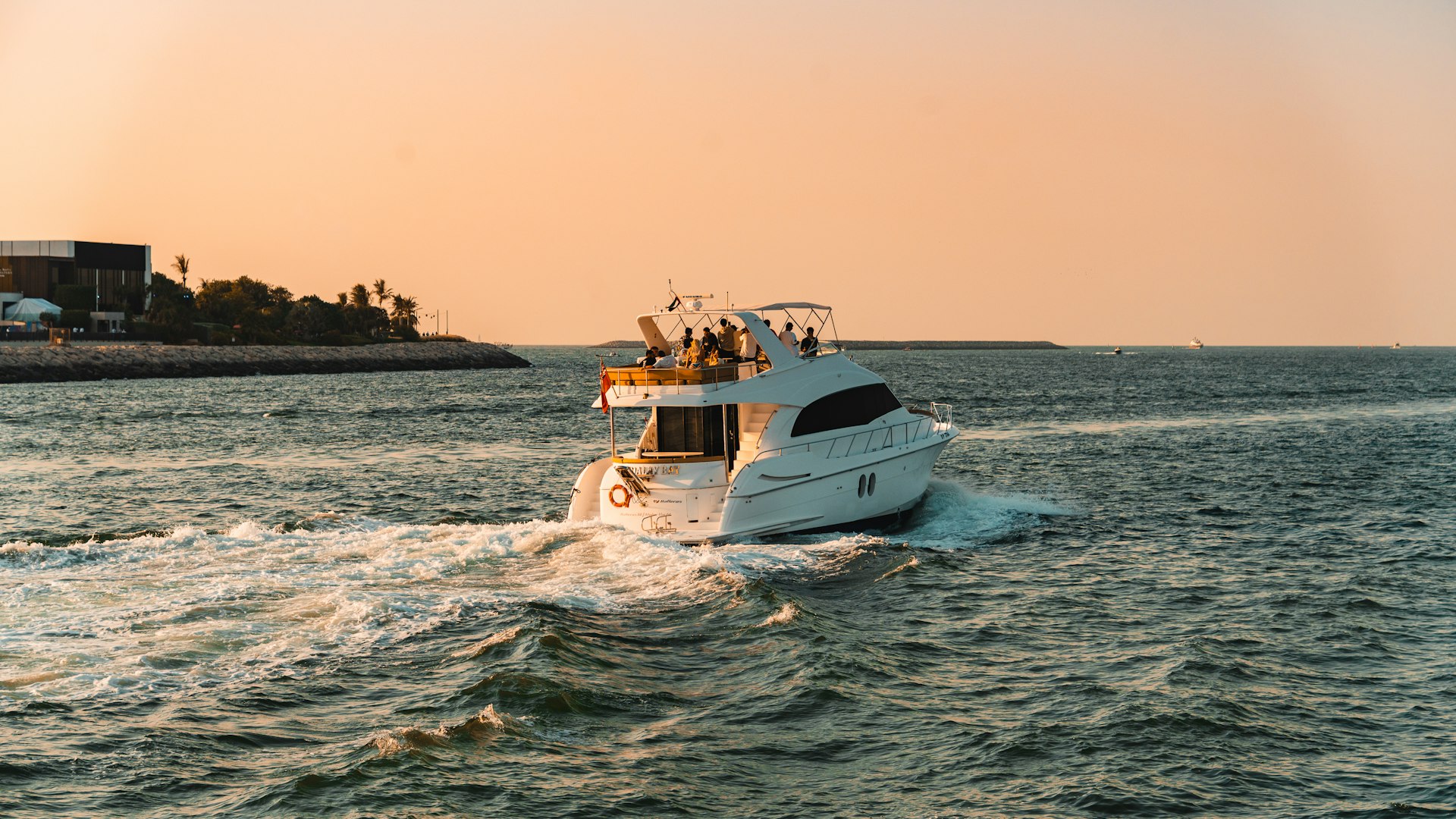
Motor Yacht Charter Australia

Motor Yacht Charter Australia

From the sheltered channels of the Whitsundays to the remote anchorages of the Kimberley coast, Australia rewards motor yacht charterers with distances that demand range, scenery that rewards patience, and a cruising culture that remains refreshingly uncrowded.

Australia's coastline stretches across more than 35,000 kilometres, encompassing tropical reef systems, ancient sandstone gorges that flood with tidal water, world-class urban harbours, and wine-producing peninsulas that reach into cool southern seas. Few countries offer such a breadth of cruising environments within a single flag state, and the motor yacht is the natural vessel for navigating it: the distances between meaningful destinations are real, the tides in the north are dramatic, and air-conditioned comfort is not a luxury when Queensland humidity arrives in earnest.

Charter activity concentrates in three distinct regions, each with its own character. The Whitsundays offer the accessible, postcard version of Australian sailing, with reliable trade winds, resort infrastructure, and the Great Barrier Reef on the doorstep. The Kimberley in Western Australia is the opposite: a remote wilderness of horizontal waterfalls, vertical tides, and Aboriginal rock art that sees only a handful of charter vessels each season. Between them, Sydney Harbour and the New South Wales coast deliver urban sophistication paired with national park anchorages less than an hour from the CBD.

Why Charter in Motor Yacht charter in Australia

Australia operates on a scale that reframes the word 'remote'. In the Kimberley, a superyacht can anchor at Horizontal Falls or Talbot Bay and be the only vessel in sight, surrounded by geology that predates the formation of the Himalayas. Even in the more frequented Whitsundays, passages between Hayman Island, Whitehaven Beach, and the Hook Island anchorages feel unhurried; the archipelago contains 74 islands, the majority of them uninhabited national park.

The quality of marine life elevates every anchorage. The Coral Sea hosts dwarf minke whales between June and July, reef sharks are a constant presence in the Whitsunday passages, and the Kimberley's Montgomery Reef at low tide exposes one of the largest inshore reef systems in the world as water cascades off the exposed platform. For charterers who dive or snorkel, Australia is among the most rewarding destinations on the planet without needing to travel far from the anchor.

Provisioning and logistics are sophisticated relative to the destination's perceived remoteness. Hamilton Island maintains a well-equipped marina with fuel, provisions, and customs clearance. Darwin serves as the staging point for Kimberley expeditions, with experienced local agents who understand the tidal windows and permit requirements for the region's Aboriginal land sea country. Internationally arriving yachts can clear customs in Sydney, Cairns, Darwin, or Fremantle, all with dedicated superyacht facilities.

Motor Yacht charter in Australia Highlights

1

Whitehaven Beach, Whitsunday Island - Seven kilometres of 98% silica sand accessible only by water, with the Hill Inlet tidal lagoon shifting between aquamarine and jade depending on the state of the tide. Most day-trippers leave by 3pm, leaving the anchorage to overnight vessels.

2

The Kimberley Coast, Western Australia - One of the last genuinely frontier cruising grounds in the Asia-Pacific. Horizontal Falls, the Buccaneer Archipelago, and the ancient Gwion Gwion rock art sites in the Prince Regent River are accessible only to those arriving by private vessel or expedition charter.

3

Sydney Harbour - Not simply an arrival point. Anchoring off Shark Bay or taking a berth at The Spit Marina in Middle Harbour positions a yacht within reach of Taronga Zoo, the Opera House foreshore, and the northern beaches surf coast simultaneously. Arguably the world's finest urban anchorage.

4

Cod Hole, Ribbon Reefs - A dedicated dive site on the northern Great Barrier Reef where potato cod of over 50 kilograms interact with divers at close quarters. Accessible from Cairns or as part of a Coral Sea passage.

5

Freycinet Peninsula, Tasmania - Wineglass Bay sits inside Freycinet National Park and requires tender access, rewarding those who make the passage south with pink granite peaks, empty beaches, and the freshest oysters available at any anchorage in the southern hemisphere.

6

Port Stephens, New South Wales - A drowned river valley two hours north of Sydney with a permanent pod of over 80 bottlenose dolphins, sheltered anchorages at Shoal Bay and Fly Point, and passage conditions through the Heads that can be as challenging or as gentle as the season allows.

7

Montgomery Reef at Low Water, Kimberley - Timing arrival here to coincide with the ebb is one of the most dramatic experiences in Australian cruising. The entire reef surface emerges from the sea as water cascades off in sheets, with sea turtles and rays stranded in temporary pools before the flood returns.

When to Sail

Australia's cruising windows are region-specific and non-negotiable. The tropical north operates on a strict wet-dry season calendar, while the temperate south and east coast offer year-round sailing with a preference for the warmer months.

High Season (Jun-Sep)

The dry season in tropical Australia is the primary charter window for both the Whitsundays and the Kimberley. South-east trade winds blow at 15-25 knots across the Coral Sea, delivering consistent conditions for passage-making. Water temperatures sit around 23-24°C, visibility on the reef exceeds 20 metres, and the humidity that characterises the wet season is absent. In the Kimberley, June to September is the only practical operating window: the tidal range at Collier Bay reaches 12 metres, and navigating this coast in the wet season cyclone risk is not viable for charter operations. Sydney and the NSW coast peak in December-February but offer excellent autumn and winter sailing in quieter conditions from May through August.

Shoulder Season (May, Oct)

May and October represent transitional months that experienced charterers use to their advantage. In the Whitsundays, October brings warming water and lighter crowds before the Christmas peak, though the approach of the wet season means occasional squalls and building humidity north of Cairns. May is arguably the finest month in the Kimberley, with the dry season freshly established, vegetation still carrying late-wet-season green, and waterfalls at maximum flow from seasonal rains. For Sydney-based charters, both shoulder months offer settled high-pressure systems, flat seas, and excellent fishing conditions along the NSW central coast.

Choosing the Right Yacht

The motor yacht is not merely a preference in Australia, it is frequently the practical requirement. Distances between key cruising grounds are too great for sailing yachts operating on typical charter schedules: the Whitsundays to the Kimberley is over 2,000 nautical miles, and even within the Kimberley, navigating the tidal windows at Horizontal Falls or the Montgomery Reef demands precise timing that a vessel with reliable auxiliary power handles with far greater confidence. Air conditioning is a genuine operational consideration between November and April in Queensland and the Northern Territory, where cockpit temperatures and humidity make a well-cooled interior essential rather than optional. For the Whitsundays and NSW coast, motor yachts in the 24-30 metre range offer the right balance of range, shallow-water capability via tender, and on-board comfort for groups of six to twelve guests. The Kimberley demands more: a vessel of at least 30-40 metres with serious fuel capacity, a robust tender with good range, and ideally expedition-grade equipment including high-tide and satellite communication. Builders such as Moonen, Heesen, and Numarine all offer hull configurations suited to extended bluewater passages with full stabilisation, which the Coral Sea swell pattern in unsettled weather makes a worthwhile investment.

Eight Days in the Whitsundays and Coral Sea

A suggested week-long charter route

Day 1

Embark at Hamilton Island Marina, clear provisions and crew briefing before the afternoon passage north to Nara Inlet on Hook Island. This fjord-like anchorage offers Aboriginal cave paintings above the shoreline and flat, protected water for the first evening aboard. Dinner on deck, early night.

Day 2

Morning snorkel at Hook Island's fringing reef before transiting south to Whitehaven Beach for a mid-morning arrival ahead of day visitors. Hill Inlet walk at low tide, lunch at anchor, afternoon swim. Remain on anchor overnight as the beach empties and the inlet changes colour with the evening light.

Day 3

Passage north through the Whitsunday Passage to Tongue Bay and onward to Hayman Island. The Bait Reef is reachable by tender for an afternoon dive. Birdlife, including white-bellied sea eagles, is consistent along this stretch of coast. Anchor off Hayman in the evening.

Day 4

Transit to Cairns or Cooktown as the passage day of the charter. The Coral Sea here runs at 2-3 knots of current in favour of northbound vessels during the dry season. Arrive Cairns Marina in the afternoon; provisioning top-up, optional shore dinner in the city.

Day 5

Early departure north to the Ribbon Reefs, arriving at Cod Hole by midday for two dive sessions. Potato cod encounters are near-guaranteed for certified divers. Anchor at Lizard Island overnight, one of the Great Barrier Reef's finest staging anchorages.

Day 6

Lizard Island deserves a full day. Cook's Look hike for panoramic reef views at low cost to energy. Giant clam gardens by tender. Afternoon fishing the channels between Lizard and Palfrey Island, where Spanish mackerel are a serious proposition in the right season.

Day 7

Passage south to the Whitsundays via the inshore route, passing the Percy Isles with an optional stop at Middle Percy Island, which maintains a remarkable tradition of messages and mementos left by passing vessels at the A-Frame shelter above the beach. An unhurried overnight passage option suits those wanting one more dawn at sea.

Day 8

Return to Hamilton Island for disembarkation. Morning swim at Catseye Beach if schedules permit. The Whitsunday Airport connects directly to Sydney, Melbourne, and Brisbane, making the logistical end of charter straightforward for guests flying onwards.

Local Tips

  • Customs and biosecurity clearance is non-negotiable and enforced seriously. International yachts must pre-notify the Australian Border Force, and biosecurity officers will board before anyone disembarks. Fresh produce, honey, dairy, and certain meats are prohibited entry. Build a half-day buffer into arrival schedules at designated ports of entry including Cairns, Darwin, Sydney, and Fremantle.
  • Tides in the Kimberley are among the largest in the world and govern every passage decision. The tidal range at Talbot Bay regularly exceeds 10 metres. Local knowledge from experienced Kimberley operators is not optional, it is essential. Permits are also required to access waters within Aboriginal sea country, and these must be arranged weeks in advance through the relevant Land Councils.
  • Fuel planning in the tropics requires more precision than in Mediterranean cruising. Between Cairns and Darwin, the distances between reliable fuel sources are significant, and while Hamilton Island, Gove Harbour (Nhulunbuy), and Darwin all offer superyacht-capable facilities, range planning should account for the consistent south-east trade wind adding contrary pressure on northbound passages.
  • Australian provisioning quality is genuinely excellent. Sydney Fish Market is the second largest in the world by variety, and the produce available through Hamilton Island Marina or Cairns chandlers reflects the country's agricultural strength. Barramundi, Queensland mud crab, Moreton Bay bugs, and Sydney rock oysters are all worth ordering fresh aboard rather than relying on frozen stock.
  • Marine park regulations vary by zone across the Great Barrier Reef Marine Park. Anchoring, fishing, and diving permissions differ between green, yellow, and blue zones, and the on-board skipper must carry current charts from the Great Barrier Reef Marine Park Authority. Infringements carry substantial fines and are actively patrolled.
  • Mobile connectivity is reliable within 30 nautical miles of the Queensland coast but drops off sharply beyond the outer reef. Iridium satellite or Starlink is the working communication standard for Kimberley expeditions and offshore Coral Sea passages. Charter vessels from reputable brokers will have this as standard equipment, but confirm before departing.

Frequently Asked Questions

What is the best region for a first-time motor yacht charter in Australia+
The Whitsundays are the natural starting point. Infrastructure is solid, the sailing distances are manageable within a seven-day itinerary, the Great Barrier Reef is accessible, and Hamilton Island provides a well-equipped hub for embarkation and provisioning. First-time charterers in Australia often underestimate the scale of the country; the Whitsundays deliver concentrated highlights without requiring the range or expedition planning that the Kimberley demands.
Do I need a licensed skipper for a motor yacht charter in Australia+
All charter vessels in Australian waters must operate with a commercially licensed skipper holding Australian Maritime Safety Authority (AMSA) certification. Bareboat motor yacht hire is technically available in some regions, but vessels above a certain length and guest count must carry a licensed master by law. For superyacht charters of the type SelectYachts arranges, fully crewed charters with experienced captains are the norm and the practical standard.
How far in advance should I book a Kimberley charter+
The Kimberley season runs roughly May to September, and the number of charter-quality vessels operating in this region is genuinely small. Bookings twelve to eighteen months ahead are common for prime June and July dates. Permits for Aboriginal sea country access add a further lead-time requirement. Kimberley charters are not last-minute decisions; they reward early planning.
Are there visa requirements for international guests arriving by yacht+
All foreign nationals require a valid Australian visa or Electronic Travel Authority (ETA) before arrival, regardless of whether they arrive by private yacht or commercial airline. The ETA is available online for most passport holders from low-risk countries and is processed quickly, but it must be in place before the vessel enters Australian territorial waters. Guests without prior authorisation cannot be cleared by border force officers on arrival.
What is the water temperature like in the Whitsundays during charter season+
During the June to September dry season, water temperatures in the Whitsundays sit between 22°C and 25°C, comfortable for snorkelling and diving without a thick wetsuit. A 3mm shorty is adequate for most guests. By October and November, temperatures begin rising again toward the wet season peak of 28-29°C, which many guests prefer though underwater visibility can decrease slightly as conditions change.
Can I combine a Whitsundays and Sydney charter in one trip+
Practically, these are treated as separate charter legs rather than a continuous cruise, given the 800 nautical miles of coast between them. The vessel can reposition, but most charterers fly between Sydney and Hamilton Island and plan each region independently. Some itineraries do incorporate the NSW central coast, Port Stephens, and Coffs Harbour as a connecting passage, which suits guests with a full two weeks and a preference for passage-making over static cruising.

Speak with a SelectYachts broker to match the right motor yacht to your Australian itinerary, whether that is a Whitsundays week or a full Kimberley expedition.

Request Your Charter

Request Your Charter

Tell us about your dream voyage and we will find the perfect yacht for you.