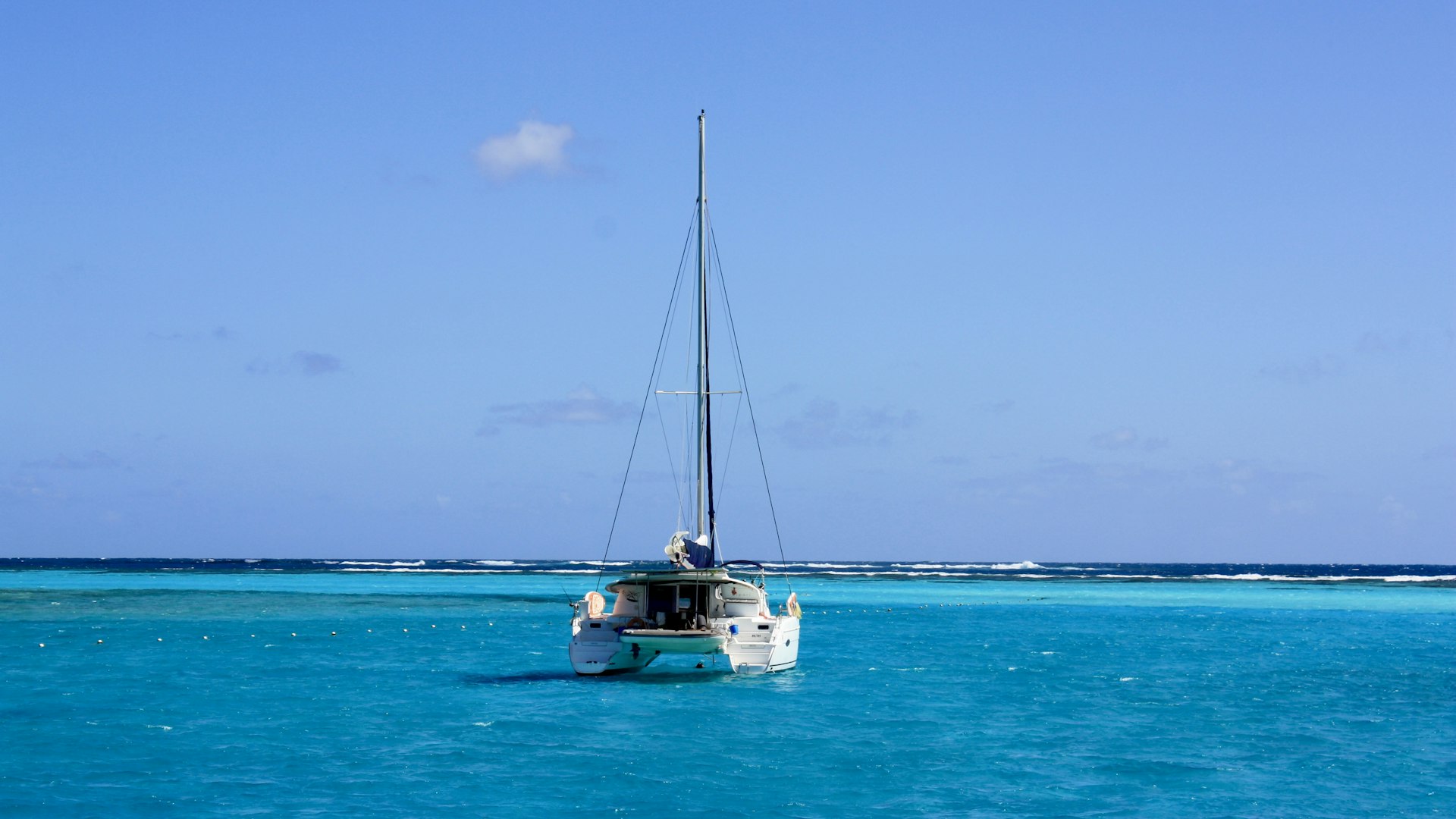
Catamaran Charter Australia
From the sheltered anchorages of the Whitsundays to the remote coral wilderness of the Kimberley coast, Australia rewards catamaran charterers with vast sailing grounds, reliable trade winds, and very few crowds once you leave the main channels.
Catamarans Available in Australia
Browse our selection of catamarans available for charter in Australia.

Bareboat Catamaran Nautitech 40 Open
Nautitech 40 Open
From
$7k/week

Bareboat Catamaran Bali 4.3
Bali 4.3 · 2017
From
€7k/week

Bareboat Catamaran Lagoon 40
Lagoon 40
From
$9k/week

Bareboat Catamaran Bali 4.2
Bali 4.2
From
$9k/week

Bareboat Catamaran Fountaine Pajot Elba 45
Fountaine Pajot Elba 45
From
$13k/week

Luxury Crewed Catamaran BABAC
Lagoon Seventy7 · 2018
From
$60k/week
Other Vessel Types in Australia
Australia is not a single sailing destination but a constellation of them, each with its own wind patterns, marine character, and shore-side culture. The Whitsunday Islands remain the country's most-sailed charter ground, offering 74 islands scattered across the Coral Sea with the SE trade winds blowing 15–25 knots through the passage from May to October. Further north, the Great Barrier Reef opens into something altogether more remote. To the west, the Kimberley offers expedition-grade cruising with tidal ranges that would unsettle most monohull skippers but suit a well-found catamaran beautifully.
Charterers who choose Australia tend to be motivated by genuine wilderness sailing, not marina-hopping. Distances between worthwhile anchorages are real distances, the provisioning logistics require planning, and the marine environment commands respect. In return, you get some of the world's most intact coral reef systems, pod encounters with humpback whales on their annual migration, and the particular satisfaction of anchoring in a bay where your yacht may be the only vessel in sight.
Why Charter in Catamaran charter in Australia
The Whitsunday Passage sits in a near-perfect wind corridor. The Coral Sea trades funnel reliably between Hayman Island and the Outer Reef from June through September, giving charterers consistent 15–20 knot reaching conditions with short, manageable sea states. For charterers who want to actually sail rather than motor, this is one of the most rewarding stretches of subtropical water in the southern hemisphere.
Australia's charter grounds are also genuinely diverse in character. The Whitsundays suit first-time charterers and families well, with protected island anchorages, clear water around Haslewood and Whitsunday islands, and convenient provisioning from Airlie Beach and Hamilton Island Marina. The Coral Sea and Far North Queensland raise the bar significantly, attracting experienced blue-water sailors who want to navigate among reef systems and overnights at sea. The Kimberley coast, operating on extreme tides, is expedition territory and best approached with a professional crew.
On the cultural side, Australia's marina culture is relaxed and competent. Airlie Beach has evolved into a credible provisioning hub with decent chandlery, and Hamilton Island's facilities are genuinely world-class for the Pacific region. Customs and biosecurity requirements are strict and well-administered, which means clearance is predictable once you understand the process.
Catamaran charter in Australia Highlights
Whitehaven Beach, Whitsunday Island: Seven kilometres of 98% pure silica sand accessible only by sea, with tidal patterns that shift the sandbar colour through the day. Arrive early by dinghy before day-tripper vessels.
Hill Inlet lookout: A short walk from the north end of Whitehaven gives the classic overhead view of sand and turquoise water swirling together as the tide moves. Worth timing your anchorage to reach it at first light.
Hardy Reef and Heart Reef: Sailing east from the islands towards the Outer Barrier Reef puts you over world-class coral structure. Hardy Reef is accessible to experienced charterers; the moorings are managed by GBRMPA and must be booked in advance.
Nara Inlet, Hook Island: A narrow fjord-like anchorage in the northern Whitsundays with Aboriginal rock art at its head. Well protected and genuinely quiet compared to the busier anchorages further south.
Hayman Island northern anchorage: Anchoring off the northern tip of Hayman in settled conditions gives access to good snorkelling reef without the resort day-traffic. The channel between Hayman and Bird Island produces consistent afternoon wind for a spirited sail south.
Airlie Beach to Lindeman Island passage: The southern Whitsundays around Lindeman and Shaw Islands are markedly less-visited than the central group and reward charterers who want to extend their range. The passage south through Lindeman Channel runs against the trade swell so time your departure accordingly.
Coral Sea sailing, Osprey Reef: For blue-water catamaran charterers with a professional skipper and the appropriate GBRMPA permits, Osprey Reef, roughly 350 nautical miles north of Cairns, offers some of the most pristine diving in Australian waters. This is liveaboard expedition territory and requires full offshore provisioning and weather routing.
When to Sail
Australia's sailing seasons vary sharply by region. The Whitsundays are at their best between May and October when the SE trades dominate, while the tropical north operates on a wet season and dry season rhythm that makes timing non-negotiable.
High Season (Jun-Sep)
This is the dry season across tropical and subtropical Queensland, with SE trade winds blowing consistently at 15–25 knots through the Whitsunday Passage. Seas are manageable, visibility is excellent, and humpback whales migrate through the channel from July to September. Overnight temperatures are comfortable at anchorage. Book at least four to six months in advance as the best catamarans fill quickly. Hamilton Island Race Week, held in August, draws significant traffic, which can affect berth availability in the central Whitsundays.
Shoulder Season (May, Oct)
May and October offer the transition windows on either side of peak season and can deliver exceptional sailing. Wind patterns are slightly less settled but rainfall is minimal and the charter fleet is notably quieter. October in particular can surprise with warm water temperatures and good visibility for snorkelling. Charterers prepared to be slightly flexible on itinerary find real value in this window, both in terms of yacht availability and anchorage solitude.
Choosing the Right Yacht
Catamarans are the unambiguous choice for Australian charter sailing and have been for well over a decade. The logic is straightforward: coral anchorages are often shallow and sandy, requiring boats to sit at anchor rather than on a mooring, and the twin-hull platform gives both the shallow draft to access the best spots and the stability at anchor that matters when a trade wind swell rolls in overnight. A catamaran drawing 1.0–1.2 metres can access anchorages that would strand a monohull, particularly around the southern islands and some of the inner Great Barrier Reef bommies.
Seven Nights in the Whitsundays, Sailing from Airlie Beach
A suggested week-long charter route
Embark at Coral Sea Marina, Airlie Beach in the afternoon. Complete provisioning, run your safety briefing, and motor south through Pioneer Bay to anchor for the night off Dent Island in the shelter of Hamilton Island's western face. A short dinghy run into Hamilton Island Marina covers any last provisions or fuel top-up.
Depart early on the SE trade and sail north past Whitsunday Island to anchor in Cid Harbour. This protected anchorage on Whitsunday Island's western coast is your base for the afternoon. Walk the ridge trail for views across the Passage, or snorkel the bommies on the southern entrance. The anchorage handles a strengthening SE wind well.
An early move north to Nara Inlet on Hook Island before the trade builds. Proceed by dinghy to the rock art site at the inlet's head. Afternoon is quiet here; the narrow geography blocks most of the trade wind. If the wind allows, sail the southern face of Hook Island on the return reach, keeping clear of the reef patches marked on the Whitsundays chart.
Sail east to the Outer Reef mooring fields at Hardy Reef. The passage from Hook Island runs roughly 25 nautical miles and the trade wind gives a fast, comfortable broad reach in settled conditions. Pre-booked GBRMPA mooring is essential. Spend the afternoon snorkelling or diving the reef structure. Sunset at anchor in open Coral Sea with no land visible is the defining experience of this itinerary.
Return west to Whitehaven Beach on Whitsunday Island. Time your arrival to reach Hill Inlet at low tide when the sand pattern is at its most photogenic. Anchor off the beach's northern end and commit to spending the full day here. The beach warrants it. Evening anchor in Tongue Bay.
Sail south through the Whitsunday Passage to Hayman Island and anchor off the northern tip in settled northerly conditions. Snorkel the reef between Hayman and Bird Island. This is one of the better-quality reef patches accessible without a dinghy transit. If wind has shifted to the NE, consider Butterfly Bay on Hook Island as an alternative where the fringing reef on the eastern face is equally rewarding.
A leisurely southerly passage back towards Hamilton Island with a lunch stop at Sawmill Bay, Whitsunday Island, or anchor off the beach at Henning Island if the SE trades have eased. Final evening aboard at Hamilton Island Marina with the option of dinner ashore at one of the island's restaurants.
Disembark at Hamilton Island Marina or return to Coral Sea Marina, Airlie Beach by mid-morning depending on handover arrangements. Hamilton Island Airport connects directly to Sydney and Melbourne, making this a clean end to the charter without retracing your wake.
Local Tips
- •Australian biosecurity regulations are among the strictest in the world. Do not bring any fresh fruit, vegetables, honey, or unprocessed food across international borders without declaration. For domestic charterers, this is less of a concern, but be aware that moving between some states carries its own produce restrictions. Penalties are real and inspectors are thorough.
- •GBRMPA permits and mooring bookings for the Outer Barrier Reef need to be arranged well in advance of your charter, particularly for Hardy Reef and Bait Reef mooring fields. These are managed online through the Great Barrier Reef Marine Park Authority. Your SelectYachts charter manager can advise on the current process, but do not leave this until the week before departure.
- •Provisioning in Airlie Beach is workable but limited for a full week offshore. The Woolworths in Cannonvale (a short taxi from Coral Sea Marina) covers basics well. Hamilton Island's marina-side provisions store is excellent but priced accordingly. For a longer passage north towards Cairns, provision fully in Cairns before departure rather than relying on intermediate stops.
- •Tidal awareness around the Whitsundays is non-negotiable. The region has a complex mixed tidal regime with ranges up to 4–5 metres on spring tides. Several of the best anchorages dry or become uncomfortably shallow at low water. Download the BoM tide tables for the area before departure and cross-reference with your chart plotter at every anchorage. The approach to Nara Inlet in particular requires timing.
- •Stinger season (November to May) brings Irukandji and box jellyfish to the inshore Queensland waters. This largely overlaps with the wet season when most charterers avoid the area anyway, but any sailing from November onwards warrants stinger suits for swimming and full awareness of current conditions. Check Queensland Health advisories as part of your pre-departure planning.
- •The VHF channel 16 culture in the Whitsundays is active. Volunteer Marine Rescue monitors the channel and local traffic is courteous and well-managed. The Whitsunday Transit Lane runs through the Passage and commercial vessels have priority; keep a proper watch through the central channel particularly between Hayman and Hamilton islands.
Frequently Asked Questions
Do I need a sailing licence to charter a catamaran in Australia+
What is the best base for a catamaran charter in the Whitsundays+
Why choose a catamaran over a monohull in Australian waters+
How far in advance should I book a catamaran charter in Australia+
Can I sail from the Whitsundays to the Great Barrier Reef on a standard charter+
What should I know about sailing in Australian waters as an international charterer+
Speak with a SelectYachts charter specialist to match the right catamaran to your dates, group size, and experience level in Australian waters.
Request Your Charter