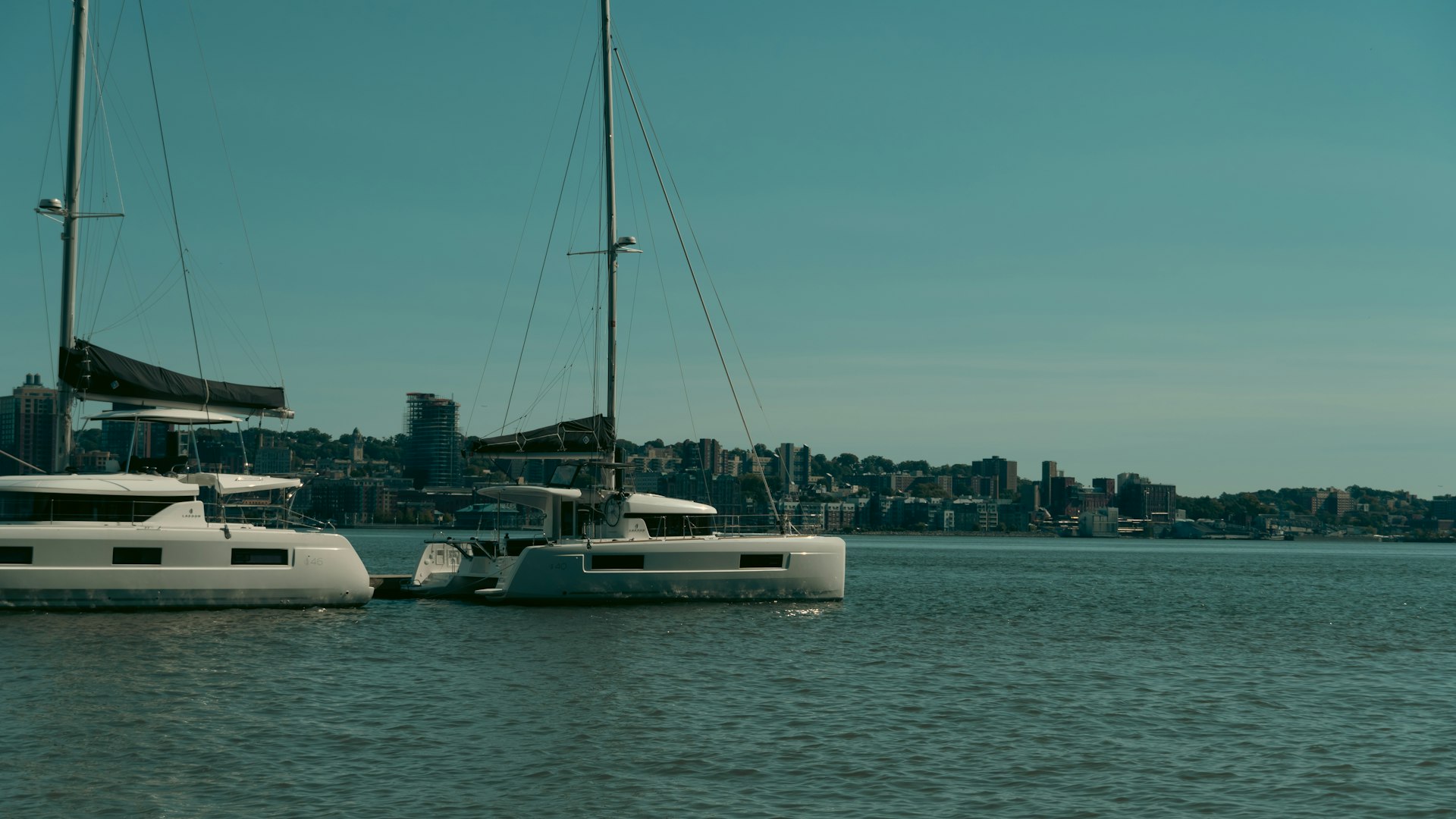
Sailing Yacht Charter France
From the lavender-scented calanques of Provence to the tide-swept estuaries of Brittany, France offers sailing conditions and cultural depth that few Mediterranean or Atlantic destinations can match. This is a coastline that rewards those who know how to read it.
Sailing Yachts Available in France
Browse our selection of sailing yachts available for charter in France.

Crewed Sailing Yacht ZEPHYR
Dufour 525 Grand Large · 2009
From
€1k/week

Crewed Sailing Yacht MAROLA
First 47.7 · 2001
From
€1k/week

Bareboat Sailing Yacht Hanse 350
Hanse 350 · 2010
From
€1k/week

Luxury Crewed Sailing Yacht ALIMA
Hanse 630 · 2007
From
€2k/week

Bareboat Sailing Yacht Sun Odyssey 36i performance
Sun Odyssey 36i Performance · 2009
From
€2k/week

Bareboat Sailing Yacht Hanse 355
Hanse 355 · 2011
From
€2k/week

Bareboat Sailing Yacht Sun Odyssey 379
Sun Odyssey 379 · 2012
From
€2k/week

Bareboat Sailing Yacht Dufour 405 GL
Dufour 405 Grand Large · 2012
From
€2k/week

Bareboat Sailing Yacht Dufour 405
Dufour 405 · 2010
From
€2k/week

Bareboat Sailing Yacht Sun Odyssey 349
Sun Odyssey 349 · 2016
From
€2k/week

Bareboat Sailing Yacht Dufour 425
Dufour 425 · 2011
From
€2k/week

Bareboat Sailing Yacht Dufour 405
Dufour 405 · 2012
From
€2k/week

Bareboat Sailing Yacht Dufour 382
Dufour 38 · 2015
From
€2k/week

Bareboat Sailing Yacht Hanse 430
Hanse 430 · 2010
From
€2k/week

Bareboat Sailing Yacht Sun Odyssey 45 DS
Sun Odyssey 45 · 2011
From
€2k/week

Bareboat Sailing Yacht Bavaria 45
Bavaria 45 · 2013
From
€3k/week

Bareboat Sailing Yacht Hanse 445
Hanse 445 · 2012
From
€3k/week

Bareboat Sailing Yacht Dufour 45
Dufour 45 · 2010
From
€3k/week

Bareboat Sailing Yacht Oceanis 45
Oceanis 45 · 2012
From
€3k/week

Bareboat Sailing Yacht Dufour 455 (2010)
Dufour 455 · 2010
From
€3k/week

Bareboat Sailing Yacht Dufour 450 Grand Large
Dufour 450 Grand Large · 2015
From
€3k/week

Bareboat Sailing Yacht Dufour 460 5 cabins (4 double + 1 twin)
Dufour 460 Grand Large · 2019
From
€3k/week

Sailing Yacht MATISSE
Oceanis 55
From
€3k/week

Bareboat Sailing Yacht Dufour 450
Dufour 450 · 2015
From
€3k/week
Other Vessel Types in France
France presents not one sailing ground but several, each with its own character, prevailing winds, and gastronomic logic. The Mediterranean coast runs from the Spanish border at Cerbère to the Italian frontier beyond Menton, encompassing the Côte d'Azur, the Var islands, and the dramatic limestone inlets east of Marseille. The Atlantic coast stretches across Brittany and the Vendée, where tidal ranges of five metres or more demand genuine seamanship and reward it with anchorages of extraordinary solitude. In between, the Gulf of Lion keeps things honest.
What separates France from other European charter destinations is the combination of world-class provisioning, a marina infrastructure that has been steadily modernised over the past two decades, and a culinary culture that extends all the way to the quayside. Whether you are picking up a Bavaria 45 from Marseille or stepping aboard a CNB Ketch from Antibes, the quality of what you find ashore is consistently high and reliably French.
Why Charter in Sailing Yacht charter in France
The Mediterranean Riviera coast between Toulon and Cannes shelters the Îles d'Hyères, a triangle of three islands, Porquerolles, Port-Cros, and Le Levant, which constitute a national park where anchoring regulations have preserved water clarity and marine life that the rest of the Côte d'Azur lost decades ago. Port-Cros in particular is ringed by underwater snorkelling trails that are genuinely remarkable for their biological density. This is the primary reason serious charterers still base themselves in Toulon or Le Lavandou rather than the more fashionable ports further east.
Brittany operates on an entirely different register. The Golfe du Morbihan, an inland sea fed by tidal currents that can exceed four knots on spring tides, holds around forty inhabited islands within its eleven-kilometre span. Navigating it competently requires attention to the tidal atlas and a skipper who understands the south Breton stream. Get it right and you access anchorages off Île aux Moines and Île d'Arz that feel genuinely removed from the continental world. The Breton market towns of Vannes, Auray, and La Trinité-sur-Mer ensure that remoteness never means deprivation.
Further south, the waters around the Île de Noirmoutier and the Vendée coast offer an alternative for those who want Atlantic sailing without the full exposure of Biscay passages. The Pertuis Breton and Pertuis d'Antioche, the channels separating the mainland from Île de Ré and Île d'Oléron, are consistently well-protected, well-marked, and lined with oyster beds whose produce ends up on the table within hours of harvest. This is practical sailing in its most civilised form.
Sailing Yacht charter in France Highlights
Porquerolles, Îles d'Hyères: Anchor in the Plage de Notre-Dame bay, take the dinghy ashore at first light, and you will understand why the French state bought the island in 1971 to prevent development. The vineyards inland produce a Côtes de Provence white worth seeking out.
Golfe du Morbihan, Brittany: A tidal inland sea requiring careful passage planning but offering some of France's most protected and culturally rich sailing. The flood tide entering through the narrow Locmariaquer channel runs with purpose; time it correctly and it carries you in effortlessly.
Calanque de Morgiou and En-Vau, Marseille: Accessible only by sea or on foot, these limestone inlets east of Marseille require advance reservation under the national park quota system between April and September. The vertical cliff walls and gin-clear water are among the most dramatic coastal scenery on the French Mediterranean.
Île de Ré, Charente-Maritime: Cycle-friendly, salt-marsh rich, and equipped with the port of La Flotte and the walled citadel of Saint-Martin-de-Ré. The island's oysters and Pineau des Charentes make for a specific and excellent provisioning stop.
Saint-Tropez, Var Coast: Its reputation has outgrown the reality for many charterers, but the old port remains genuinely beautiful before 0900 and after 2100. Arrive mid-week and the Baroque church, the Annonciade museum, and the weekly market on Place des Lices remain accessible without the midsummer congestion.
Belle-Île-en-Mer, Brittany: France's largest Atlantic island, with 40 kilometres of deeply indented coastline, the wild Côte Sauvage on its western exposure, and the sheltered port of Le Palais on its eastern side. Mooring buoys are available at Sauzon, a smaller port of real character in the northwest.
Port Grimaud and the Maures Massif coast: The lagoon town of Port Grimaud functions as a convenient staging point for exploring the bay of Saint-Tropez. The anchorage at Cavalaire-sur-Mer, ten miles southwest, is significantly less crowded and gives easy access to the hiking trails of the Maures.
When to Sail
The Mediterranean season runs reliably from May through October, with July and August bringing the strongest thermal winds alongside peak crowds. Brittany and the Atlantic coast offer the most settled conditions from late May to mid-September, though experienced crews frequently charter in April and October for the solitude.
High Season (Jun-Sep)
On the Côte d'Azur, the Mistral is the defining force, capable of blowing Force 6 to 7 through the Gulf of Lion for three to six days at a stretch. It arrives from the north-northwest and is reliably forecast, giving charterers time to plan their position. Between Mistral episodes, the daily Libeccio and sea-breeze cycles provide lively daytime sailing that softens to flat water by evening. Marinas at Antibes, Saint-Tropez, and Cannes reach capacity by mid-July; booking berths well in advance is essential. On the Atlantic coast, July and August see the SW-to-NW summer regime that gives comfortable reaching conditions along the Breton coast, though westerly swells can make exposed anchorages uncomfortable.
Shoulder Season (May, Oct)
May is, by most experienced accounts, the finest month to sail Mediterranean France. Ports are uncrowded, provisions are fresher, temperatures are warm without being oppressive, and the spring wildflowers on Porquerolles and the Estérel massif are at their peak. October extends the season with warm sea temperatures and increasingly dramatic skies. On the Atlantic, late May to early June offers the most consistent westerly breezes before the midsummer light-air periods arrive. October in Brittany can deliver some of the year's best sailing, but weather windows require more tactical monitoring.
Choosing the Right Yacht
For Mediterranean France, modern performance cruisers in the 40-to-50-foot range cover the most ground most efficiently. A Dufour 325 or Hanse 630 both represent very different ends of the spectrum: the former suits couples or small groups wanting ease of handling; the latter offers the sail area and interior volume to make an Antibes-to-Porquerolles crossing genuinely satisfying rather than merely adequate. For larger groups, a Bavaria 51 Cruiser or a CNB Ketch provides the cabin count and deck space to keep eight guests comfortable across a ten-day programme without anyone feeling crowded by day four.
Seven Days from Toulon through the Îles d'Hyères
A suggested week-long charter route
Depart Toulon and sail southwest on the morning sea-breeze to Le Lavandou. Provision at the covered market, take a berth in the marina, and walk the seven-kilometre coastal path east to Cavalière before dinner.
Cross the twelve miles to Porquerolles under sail, arriving before the afternoon influx. Anchor in Notre-Dame bay, snorkel the Posidonium meadows, and dine at one of the island's small restaurants in the village. Overnight on anchor or pick up a mooring buoy.
Move east to Port-Cros, arriving at the national park visitors' mooring field by mid-morning. The underwater snorkel trail off the Plage de la Palud is a genuine marine reserve experience. Hiking the island's interior trail to the Fort de l'Estissac takes ninety minutes and offers views across to the mainland Maures.
Sail northwest, rounding Cap Bénat, and anchor off Cavalaire-sur-Mer or push on to the bay of Saint-Tropez. Enter the old port in the late afternoon when the lunch crowd has thinned. Dinner in the village of Ramatuelle, a twenty-minute taxi ride inland, is worth the effort.
Depart Saint-Tropez early and sail north toward Sainte-Maxime, then continue east toward the red porphyry cliffs of the Estérel massif. Anchor in the Calanque d'Antheor below the viaduct. This stretch of coast is less visited than Cannes or Antibes and considerably more dramatic.
Arrive in Antibes, one of the best-equipped and most efficiently run marinas on the Riviera. The old town, the Picasso Museum in the Château Grimaldi, and the covered Marché Provençal all reward a full afternoon. Antibes is also the best point for provisioning the return passage.
Westerly return passage to Toulon, typically reaching or broad-reaching on the afternoon Ponant. If wind allows, stop for a final lunch anchor off Cap Camarat before handback at Toulon Port Vieux.
Local Tips
- •Calanques national park reservations are mandatory for boats wishing to anchor in En-Vau, Port-Miou, and Morgiou between April and September. The quota system fills quickly; book through the park authority website at least two to three weeks ahead.
- •French marina VHF protocols are consistent: call the capitainerie on Channel 9 before entering, confirm your LOA and draught, and have your charter documents and skipper's qualifications to hand. Officials at larger ports such as Cannes, Antibes, and La Rochelle do conduct checks.
- •Provisioning in France is genuinely excellent and requires minimal compromise. Intermarché and Leclerc supermarkets are present in most coastal towns; covered markets in Toulon, Antibes, and Vannes operate Tuesday through Sunday and are the correct source for cheese, charcuterie, and produce. Budget for slightly longer provisioning stops than you might in other destinations; the selection warrants it.
- •On the Atlantic coast, tidal calculations are non-negotiable. Obtain the SHOM tidal atlas for the region you are sailing, not just the almanac tables, and familiarise yourself with the secondary port corrections. The Raz de Sein off the western tip of Brittany in particular demands passage at slack water and fair conditions only.
- •Wine provisioning is both straightforward and regionally logical. In the Var, buy Côtes de Provence rosé by the case from a domaine rather than a port shop; in Brittany, prioritise local Muscadet and cider from the Cornouaille appellation. Neither benefits from being purchased expensively at a marina chandlery.
- •EU charter regulations mean that foreign-flagged yachts on commercial charters are required to carry the appropriate certification and, in some regions, operate through properly licenced charter companies. Ensure your booking documentation clearly establishes compliance; port officials in Marseille and Toulon are more attentive to this than in smaller harbours.
Frequently Asked Questions
Do I need a skipper to charter a sailing yacht in France+
What are the most practical bases for a sailing charter in France+
How strong does the Mistral get and how should I plan around it+
Is France a suitable destination for first-time charterers+
What is the typical price range for a sailing yacht charter in France+
How far in advance should I book for a summer charter+
Tell our team your preferred sailing ground, group size, and dates and we will match you with the right yacht from our France fleet within 24 hours.
Request Your Charter