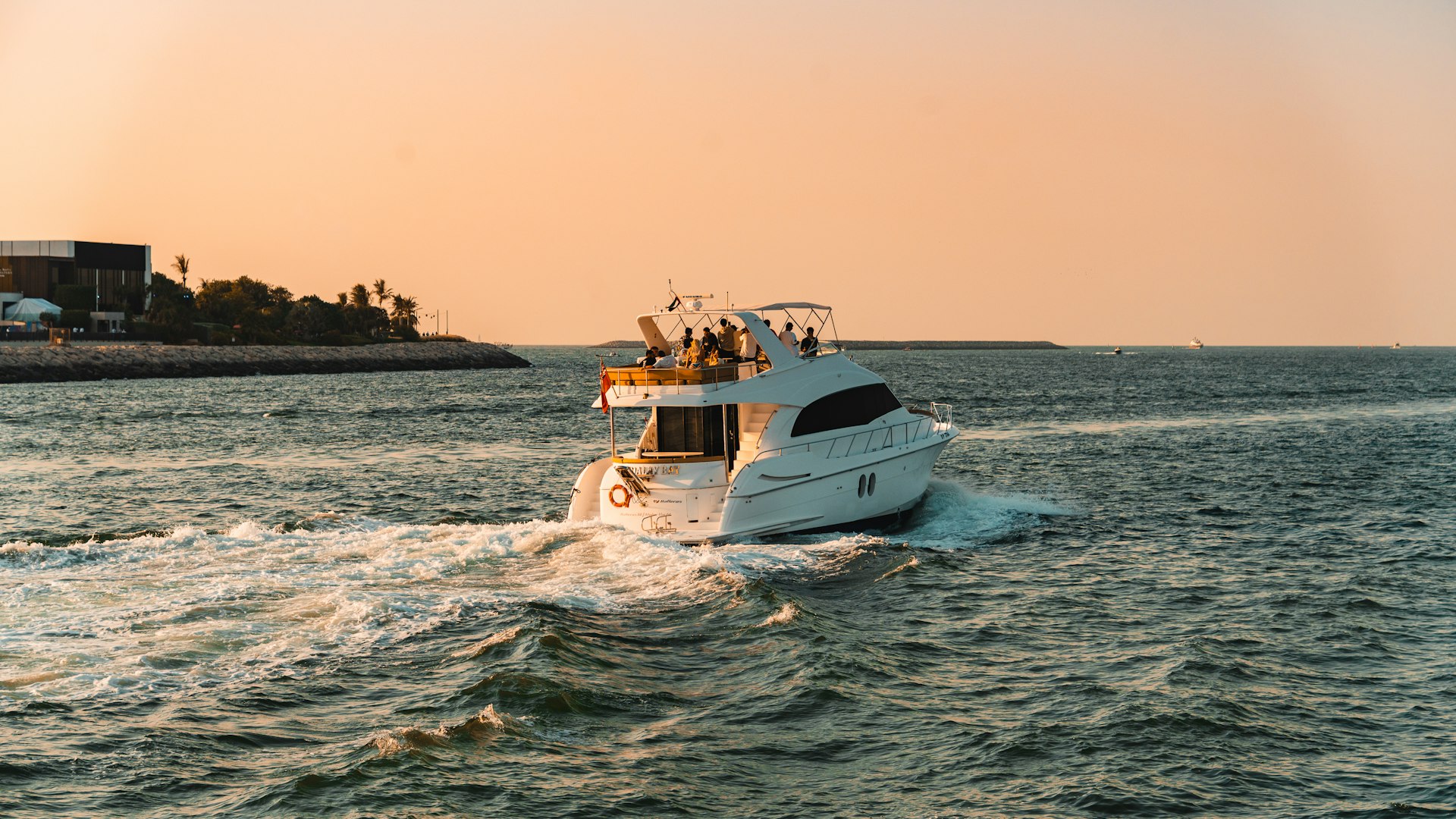
Motor Yacht Charter Northern Europe
From the Norwegian fjords to the Baltic archipelagos, a motor yacht charter in Northern Europe rewards those who move decisively through landscapes that change by the hour. Long summer daylight, uncrowded anchorages, and a seafaring culture older than most nations make this one of the most serious cruising grounds in the world.
Motor Yachts Available in Northern Europe
Browse our selection of motor yachts available for charter in Northern Europe.
Other Vessel Types in Northern Europe
Northern Europe's charter grounds stretch across a vast arc from the Scottish west coast and Scandinavia's fjord systems down through Denmark's island-scattered straits and into the Gulf of Finland. What unites these waters is dramatic, earned scenery — granite cliffs dropping sheer into cold, clear water, fishing villages that have barely changed since the Hanseatic era, and natural anchorages where you may be the only vessel for miles. This is not a region that flatters the passive observer.
For those travelling on a serious charter budget, the rewards are proportionate to the ambition of the itinerary. A custom 55-metre motor yacht has the range, speed, and onboard comfort to cover meaningful distance — linking the Norwegian Hardangerfjord with the Swedish Bohuslän coast, or threading the Finnish Turku Archipelago before crossing to Tallinn — in a single week without sacrificing time ashore. Northern Europe demands a capable vessel, and it repays one generously.
Why Charter in Motor Yacht charter in Northern Europe
The most compelling argument for Northern Europe is genuine solitude at scale. The Norwegian coast alone has over 50,000 islands; the Stockholm Archipelago contains some 30,000 more. Even at peak season in July, a well-planned itinerary can place your yacht in a granite-lined cove with no neighbours, an hour's cruise from a Michelin-starred restaurant in Bergen or Stockholm. This balance of civilisation and wilderness is almost impossible to replicate in the Mediterranean.
The quality of the seafood along this coast is a serious reason to visit on its own terms. Norwegian king crab from the Barents Sea, hand-dived Limfjord oysters from northern Denmark, Baltic herring prepared in the New Nordic tradition, and the particular, briny sweetness of west-coast Swedish prawns eaten directly from the trawler at Smögen — these are experiences that reward guests who care about what they eat. Provisioning from harbourside fish markets is a different exercise here than anywhere in the Med.
Northern European ports also carry an unusual density of cultural and architectural substance. Tallinn's medieval Old Town, Bergen's UNESCO-listed Bryggen wharf, Copenhagen's Nyhavn canal district, and the Art Nouveau streetscapes of Helsinki all sit within easy tender or taxi distance of deep-water berths. For a charter that balances open water passages with genuine cultural content, this region is without peer in summer.
Motor Yacht charter in Northern Europe Highlights
Nærøyfjord, Norway — the narrowest and most dramatic arm of the Sognefjord, UNESCO World Heritage listed, with near-vertical walls rising over 1,700 metres from the waterline. Best approached under engine in early morning before the day-cruise traffic arrives.
Bohuslän Archipelago, Sweden — a 150-kilometre chain of smooth granite skerries running north from Gothenburg to the Norwegian border. Lobster fishing villages, traditional wooden boathouses, and the culturally significant town of Marstrand with its 17th-century Carlsten Fortress.
Stockholm Archipelago's outer islands — Sandhamn and Utö are well-known; the real reward is pushing further east into Huvudskär and Landsort, where the skerry landscape thins to bare rock and the Baltic opens ahead of you.
Tallinn Old Town, Estonia — one of the best-preserved medieval city centres in Europe, accessible directly from the Old City Marina on the western edge of the bay. The contrast between the 13th-century Toompea hill and the contemporary restaurant scene below it makes for an unusually rich evening ashore.
Helsinki and the Suomenlinna fortress — the sea fortress built on six interconnected islands at the entrance to Helsinki harbour is an active UNESCO site you can walk across, and the city's covered Market Hall and waterfront fish market are among the finest provisioning stops in the region.
Bergen and the Hardangerfjord — Bergen functions as the natural gateway to Norway's most accessible fjord system. The Hardangerfjord in late May and early June is lined with fruit-tree blossom, and the Vøringsfossen waterfall at the fjord's eastern end is reachable by tender and a short walk.
The Sound (Øresund), Denmark and Sweden — the narrow strait between Copenhagen and Malmö carries some of Europe's densest marine traffic but rewards a slow transit. Anchor off Ven island for lunch, visit the Tycho Brahe observatory ruins, and arrive in Copenhagen in time for dinner in Nyhavn.
When to Sail
The practical charter window runs from late May to early October, with July and August offering the longest days and most settled weather. Outside this window the Baltic and North Sea become technically demanding and significantly colder.
High Season (Jun-Sep)
July and August are the peak months and for good reason. Sea surface temperatures reach 18-22°C in the southern Baltic and the Norwegian fjords, daylight extends past 10pm at latitudes above 60°N, and the famous Scandinavian summer atmosphere — outdoor dining, regattas, coastal festivals — is fully in evidence. Prevailing winds along the Norwegian coast are southwesterly in summer, typically Force 3-4, while the Baltic's lighter, variable breezes suit motor yachts that can make progress regardless of wind angle. Marinas in Bergen, Stockholm, and Copenhagen fill quickly; advance berthing reservations are essential from April onwards.
Shoulder Season (May, Oct)
May offers genuine rewards for flexible guests — crowds are absent, light is extraordinary in the Nordic afternoon, and temperatures in the fjords can be surprisingly mild. The downside is that some outer island restaurants and seasonal marinas are not yet open, requiring more careful provisioning planning. October brings spectacular autumn colour in the Swedish and Finnish archipelagos, and a crispness to the air that suits guests who prefer dramatic photography to swimming. Wind and swell in October are less predictable; a vessel with strong stabilisers and an experienced captain is important for comfortable passages.
Choosing the Right Yacht
A motor yacht is the correct choice for Northern Europe, and for the region's specific demands, size and range matter more than almost anywhere else. Passages between the major destinations — Bergen to Copenhagen, Stockholm to Tallinn, the crossing from the Bohuslän coast to the outer Finnish archipelago — involve open-water legs of 200 to 400 nautical miles. A custom 55-metre motor yacht at cruising speeds of 12-15 knots can cover these distances without consuming the itinerary, leaving time ashore at every significant stop. Sailing yachts are not impractical in Northern Europe, but the often-light and variable Baltic summer winds, combined with the need to navigate tight skerry channels on a schedule, means a capable motor yacht gives far greater flexibility in practice.
Ten Days from Bergen to Copenhagen
A suggested week-long charter route
Embark in Bergen and spend the afternoon exploring the Bryggen wharf district and the fish market on Torget before sailing south through Bjørnafjorden as daylight holds late into the evening. Anchor in a quiet bay in the outer islands south of the city.
Transit the Hardangerfjord eastward, stopping at Ulvik for lunch ashore. The fjord narrows progressively and the surrounding plateau rises to snowfield level. Return west in the afternoon and anchor near Rosendal, where the small baronial manor and its rose gardens are open to visitors.
Passage south along the Norwegian Skagerrak coast toward Stavanger. The city's old town — Gamle Stavanger — is one of Norway's largest concentrations of preserved 18th-century wooden houses. Berth in the central marina; dinner at one of the restaurants in Øvre Holmegate.
Depart Stavanger and cross the Skagerrak to Kristiansand, the natural southern gateway of Norway. The crossing is approximately 85 nautical miles of open water; arrive in time for an evening in the Posebyen quarter, a grid of low white wooden houses that constitutes one of Norway's most intact 17th-century town plans.
Enter the Bohuslän Archipelago and begin threading south through the Swedish skerries. Call at Fjällbacka, a small harbour where the steep Vetteberget rock face drops directly behind the village square. Anchor overnight in one of the many uninhabited granite inlets north of Grebbestad.
Continue south to Marstrand, arriving in time for lunch. The island town is vehicle-free; explore Carlsten Fortress on foot and take the yacht into the main harbour for the evening. Marstrand's summer sailing regattas often run in late July and early August — the racing backdrop adds genuine atmosphere.
Transit south to Gothenburg and berth in the Lilla Bommen marina near the opera house. Gothenburg rewards an afternoon ashore — the Feskekörka fish market, the Haga district's 19th-century brick buildings, and the broad Kungsportsavenyn boulevard provide three hours of useful walking. Dinner at one of the restaurants along the canal.
Passage through the Øresund, transiting the strait between Sweden and Denmark with the medieval Kronborg Castle at Helsingør visible to port. Pause at Ven island for a tender excursion and a long lunch before continuing south toward Copenhagen. Berth in the Nordhavn marina by early evening.
A full day in Copenhagen. The National Museum, Rosenborg Castle, and the design collections at the Designmuseum Danmark all sit within reasonable distance of the marina. The evening is best spent at Nyhavn or in the Vesterbro district, where the concentration of serious restaurants per street is among the highest in Scandinavia.
Final morning in Copenhagen for last provisioning and any outstanding errands. Disembarkation by midday from Nordhavn, with the option of onward transfer to Copenhagen Airport approximately 8 kilometres from the marina.
Local Tips
- •Advance marina reservations are non-negotiable in July and August at Bergen, Stockholm's Wasahamnen, and Copenhagen's central berths. Contact harbour masters directly from April; some high-demand berths for superyachts are allocated by direct request rather than online system.
- •Provisioning quality is high throughout the region but plan for provisioning in port rather than at anchor. Major supermarket chains with yacht-side delivery operate in Bergen, Stavanger, Gothenburg, and Copenhagen. In the outer Finnish and Swedish archipelagos, supplies are limited to small seasonal kiosks; stock the yacht fully before heading into the skerries.
- •Schengen Area rules apply across Norway, Sweden, Denmark, Finland, and Estonia as a practical single zone for guest arrivals, though Norway is not EU. Non-Schengen guests should confirm visa status carefully before itinerary planning. Estonian Customs are efficient but expect documentation to be in order on arrival in Tallinn.
- •The Norwegian fjords prohibit discharge of grey and black water within their UNESCO protected zones. Ensure your vessel's holding tanks are adequately sized and plan pump-out stops in Bergen or Flåm. Swedish and Finnish archipelago waters carry similar restrictions in designated nature reserves.
- •Fuel planning in Norway requires attention to the spread of bunkering facilities. Major ports — Bergen, Stavanger, Ålesund — have full bunkering services, but outer fjord communities may have only small commercial quays. Carry sufficient range between confirmed bunkering stops, particularly if deviating from the main fjord routes.
- •Tipping culture in Scandinavia is understated but appreciated for exceptional service. A 10-15% addition to a restaurant bill is well-received; overtipping in the American register can cause mild discomfort. The same applies to harbour staff and local guides.
Frequently Asked Questions
How far in advance should we book a motor yacht charter in Northern Europe+
Is Northern Europe suitable for guests who have not chartered in northern waters before+
What is the sea temperature like and is swimming practical+
Do charter yachts in this region carry the right safety and cold-weather equipment+
What currency and payment norms should guests expect ashore+
Can the yacht enter the Norwegian National Tourist Routes by sea and tender+
Speak with our charter team to discuss availability on the Custom 55m and build an itinerary suited to your schedule and preferred cruising grounds.
Request Your Charter