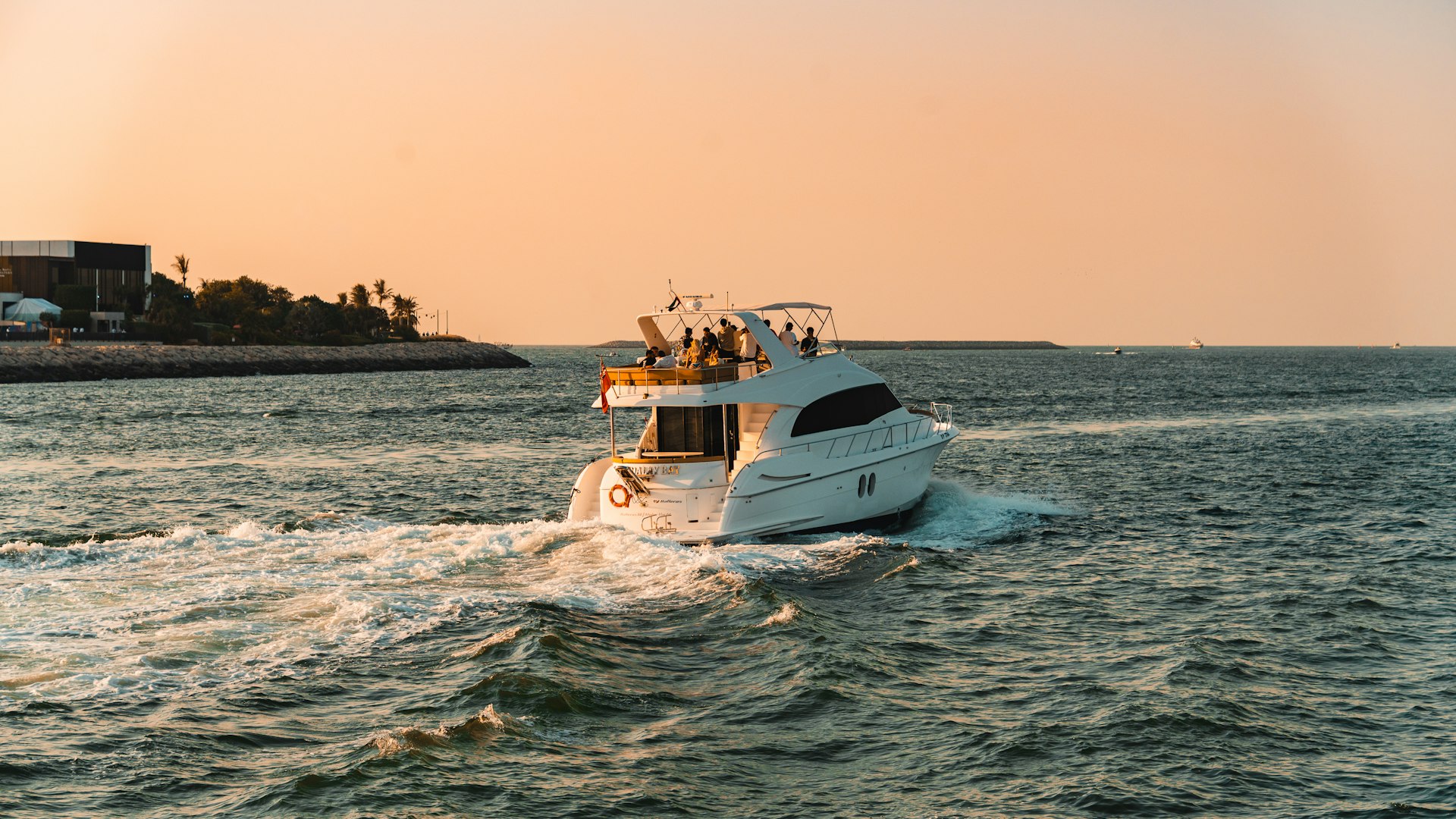
Motor Yacht Charter Southeast Asia
From the limestone karsts of Phang Nga Bay to the remote atolls of Raja Ampat, Southeast Asia rewards motor yacht charterers with extraordinary range, year-round warmth, and a density of world-class anchorages that few regions can match.
Motor Yachts Available in Southeast Asia
Browse our selection of motor yachts available for charter in Southeast Asia.

Crewed Motor Yacht 137 PILLARS SPIRIT
Azimut 16.6m · 2010
From
€22k/week

Luxury Crewed Motor Yacht KAYRA
Phinisi 38m · 2025
From
$42k/week

Crewed Motor Yacht FOR YOUR EYES ONLY
Astondoa 102 GLX · 2004
From
$78k/week

Luxury Crewed Motor Yacht INDIANA
Bilgin 127 · 2010
From
$115k/week

Luxury Crewed Motor Yacht SILENTWORLD
Astilleros Cies Oassive 39m · 2006
From
$130k/week

Luxury Crewed Motor Yacht LADY AZUL
Heesen 129 · 2001
From
$133k/week

Luxury Crewed Motor Yacht KUDANIL
Custom 50m · 1978
From
$140k/week

Luxury Crewed Motor Yacht OCTAVE
Sanlorenzo SL118 · 2018
From
€141k/week

Luxury Crewed Motor Yacht SONG OF SONGS
Heysea 139 · 2022
From
$193k/week

Crewed Motor Yacht Sunbird 80
Sunbird 80 · 2008
Price on request
View →
Crewed Motor Yacht Sunseeker 90
Sunseeker 90 Yacht · 2007
Price on request
View →
Crewed Motor Yacht Tachou Flybridge
Custom Built · 2008
Price on request
View →
Crewed Motor Yacht Windy 58
Windy 58
Price on request
View →
Crewed Motor Yacht Princess 72
Princess 72 · 2015
Price on request
View →
Crewed Motor Yacht Galeon 460 Flybridge
Galeon 460 Flybridge · 2016
Price on request
View →
Crewed Motor Yacht Axopar 28
Axopar 28 · 2017
Price on request
View →
Crewed Motor Yacht Baglietto 85
Baglietto 85
Price on request
View →
Crewed Motor Yacht Maritimo 48
Custom Built · 2008
Price on request
View →
Crewed Motor Yacht Princess 60
Princess 60
Price on request
View →
Luxury Crewed Motor Yacht SEA BEAR
Westport 130 · 2005
Price on request
View →Other Vessel Types in Southeast Asia
Southeast Asia is not a single sailing ground but a constellation of distinct archipelagos, each with its own character, currents, and cuisine. A motor yacht gives you the speed and range to move meaningfully between them, whether that means crossing the Andaman Sea from Phuket to the Mergui Archipelago in a morning, or threading the passages between Komodo's islands before the afternoon katabatic winds build. The distances here are real, and the rewards for covering them are proportionate.
The region spans six countries and thousands of named islands, from the well-provisioned marina infrastructure of Thailand and the cosmopolitan harbour of Singapore, to the near-pristine reefs of the Banda Sea and the tribal cultures of Indonesian Papua. Charter guests who know the Mediterranean will find Southeast Asia operates on different terms: anchorages are less crowded, formalities vary significantly by jurisdiction, and the sensory register, from the smell of frangipani at dawn to the noise of a night market ashore, is entirely its own.
Why Charter in Motor Yacht charter in Southeast Asia
The practical case for a motor yacht in this region is straightforward. Sailing conditions are inconsistent by design: the southwest and northeast monsoons dictate strong seasonal winds in some zones, while others, particularly the equatorial waters around Borneo and the inner Indonesian archipelago, can sit in a windless haze for days. A motor yacht removes that dependency entirely, letting the itinerary follow the guests rather than the weather window.
The anchorages themselves are among the most varied on earth. In Thailand's Phang Nga Bay, you navigate between vertical limestone towers and anchor in hidden lagoons accessible only by tender. In the Philippines' Bacuit Archipelago around El Nido, the water turns the distinctive pale green of shallow coral sand. In Raja Ampat, the reef biomass is the highest recorded anywhere in the Indo-Pacific. These are not interchangeable destinations; they represent genuinely different ecological and cultural worlds within a six-hour flight radius.
Provisioning and crew logistics have matured significantly in the main charter hubs. Phuket's Yacht Haven and Royal Phuket Marina carry European provisions, quality wines, and experienced local crew. Bali's Benoa Harbour and the Singapore Straits corridor offer comparable support. Beyond these hubs, you are in genuinely remote water, which is precisely the point, but experienced captains plan provisioning runs accordingly.
Motor Yacht charter in Southeast Asia Highlights
Phang Nga Bay, Thailand - Navigate between 400-metre limestone karsts and enter hidden hongs (lagoons) by tender at high tide; anchor off Ko Phanak or Ko Hong for near-private waters even in high season.
Mergui Archipelago, Myanmar - Over 800 islands with minimal charter traffic; the Burma Banks to the northwest offer some of the least-dived seamounts in the Andaman Sea, requiring prior liveaboard coordination with Myanmar authorities.
Raja Ampat, West Papua, Indonesia - The Bird's Head Seascape holds the world's highest documented coral and fish species density; Misool's southern lagoons and the Dampier Strait's manta cleaning stations are the primary draws.
Komodo National Park, Indonesia - Anchor at Pink Beach or Kanawa Island, dive with pelagics at Batu Bolong, and observe Varanus komodoensis on guided walks from Rinca or Komodo island; currents run hard and local licensed guides are mandatory.
Bacuit Archipelago, El Nido, Philippines - Helicopter-transfer-accessible from Manila; the inner passage between Miniloc and Shimizu Islands offers turquoise shallows, vertiginous cliffs, and near-absent charter traffic outside peak season.
Langkawi, Malaysia - The Datai Bay anchorage and the mangrove-lined channels of Kilim Karst Geoforest Park offer a quieter alternative to Thailand's more trafficked islands, with excellent provisioning at Royal Langkawi Yacht Club.
Ha Long Bay UNESCO World Heritage area, Vietnam - Charter access is regulated and requires a licensed Vietnamese operator; best experienced from a private motor yacht with a local agent-arranged permit, anchoring among the Cat Ba Archipelago for greater solitude than the tour-boat lanes.
When to Sail
Southeast Asia has no single high season because the monsoons affect different sub-regions at different times. The art is choosing the right waters for the month rather than waiting for a universal window.
High Season (Jun-Sep)
The southwest monsoon brings reliable winds to the Andaman Sea but makes western-facing coasts of Thailand and Myanmar exposed. This is the premium season for Indonesia's Komodo and Flores, where southeast trades produce clear skies and manageable swell. Raja Ampat is at its driest and most accessible. The Philippines' west coast, including Palawan and the Calamian Islands, is sheltered and benign. Visibility on the reefs peaks in July and August. Demand is highest in this window and the best yachts are booked months in advance.
Shoulder Season (May, Oct)
Transitional months that experienced charter captains often prefer. May sees the Andaman region at its most atmospheric before the monsoon arrives in earnest, with warm, flat mornings and dramatic cloud formations. October is the transition out of the wet season in many areas; Gulf of Thailand waters around Koh Samui and Koh Tao settle quickly and offer good value. Neither month is a compromise if the itinerary is planned intelligently around the prevailing system.
Choosing the Right Yacht
Motor yachts between 24 and 40 metres represent the most practical configuration for Southeast Asia. The tender plays a central role in the guest experience here: most anchorages require a dinghy or rigid inflatable to reach beaches, access shallow reef entries, or go ashore at village jetties. Yachts carrying a proper Williams or RIBEYE chase tender with at least 60 horsepower will serve guests far better than those with an undersized dinghy. Flybridge configuration adds genuine value in this region since dawn light over a bay like Phang Nga or the Banda Sea is best appreciated from an elevated deck with a coffee in hand. Air conditioning throughout is non-negotiable rather than a luxury; ambient temperatures regularly exceed 30°C with high humidity, and a well-cooled saloon is a genuine practical asset between passages.
Ten Days in the Thai Andaman and Langkawi
A suggested week-long charter route
Embark at Yacht Haven Marina, Phuket. Brief from captain on passage plan, provisions check, and customs clearance for the Malaysian border crossing later in the week. Afternoon departure southwest toward Ko Racha Yai for a shakedown anchorage in the protected eastern bay. Dinner aboard as the charter crew calibrates to your preferences.
Morning passage north into Phang Nga Bay. Anchor off Ko Phanak and take the tender into the interior hong at high tide, a narrow channel through the rock that opens into a cathedral-like enclosed lagoon. Afternoon move to Ko Panyee, the Muslim fishing village built on stilts, for a walk through the stilted lanes and fresh-grilled seafood from the waterfront stalls.
Full day in Phang Nga's northern reaches. James Bond Island (Ko Tapu) is best visited early before day-trip boats arrive; by 9am the site is largely yours. Continue to the hidden lagoon behind Ko Hong for snorkelling over the shallow patch reef. Anchor overnight in the bay south of Ko Yao Noi.
Passage south and west, rounding Ko Yao Yai and setting course for Ko Rok Nai in the Trang group. The twin islands offer some of the clearest water in the Thai Andaman, with a coral garden running along the channel between them. Overnight anchor in the northern bay.
Continue southwest to Ko Adang and Ko Rawi in the Tarutao Marine Park. Anchor in the bay beneath the granite headland at Ko Adang, snorkel the fringing reef, and take the tender to the freshwater waterfall accessible from the beach. This is the last provisioning stop before the Malaysian border.
Border crossing into Malaysia: the captain handles the clearance with Langkawi port authority via radio and pre-arranged agent; formalities are efficient if paperwork is prepared in advance. Arrive at Royal Langkawi Yacht Club by mid-afternoon. The marina restaurant serves decent rendang and cold Anchor beer; the provisioning market adjacent to the marina stocks Malaysian ingredients you will not find in Phuket.
Full day exploring Kilim Karst Geoforest Park by tender. The mangrove channels here are navigable in a rigid inflatable at low tide and shelter brahminy kites, proboscis monkeys, and monitor lizards. Lunch at the floating restaurant at the Kilim river mouth. Return to the mother yacht anchored off Datai Bay in the northwest for a quieter evening.
Day passage north, re-entering Thai waters and clearing in at Ko Lipe customs. Afternoon on the beach at Sunrise Beach on Ko Lipe's eastern shore, which faces away from the ferry traffic and retains a stripped-back quality. The reef at Hin Ngam, a boulder formation off the island's south, is worth an afternoon dive.
Passage north to Ko Lanta and Ko Phi Phi Don. Arrive at the Maya Bay anchorage on Ko Phi Phi Leh early morning before the day boats appear; the bay reopened to overnight anchoring for charter yachts with permits in 2023 following the reef restoration period. Afternoon snorkel on the outer reef at Hin Phae.
Return passage to Phuket, arriving at Yacht Haven Marina by noon for disembarkation. Final breakfast on the flybridge en route, with the Phuket headland appearing to the north and the crew preparing handover documentation.
Local Tips
- •Thailand's cruising permit (the foreign yacht form processed through an agent in Phuket or Krabi) must be arranged before departure and lists specific ports of entry and exit; deviating from the listed route can trigger fines at check-out. Build this into itinerary planning from day one rather than treating it as an afterthought.
- •Indonesian waters require an CAIT (Cruising Permit) and a specific crew and guest manifest filed through an authorised agent. The Komodo National Park entry levy applies per person and must be paid before anchoring within the park boundaries; rangers do patrol and enforce this rigorously.
- •Fuel quality varies significantly outside of the main marina hubs. In Phuket, Langkawi, Bali, and Singapore, marine diesel meets European standards. In more remote Indonesian or Philippine anchorages, fuel is sourced from local suppliers and should be filtered before use; most experienced captains in these waters carry additional filtration capacity.
- •Provisioning for the Mergui Archipelago or Raja Ampat requires loading everything in Phuket or Bali respectively, including drinking water. Local resupply is extremely limited and unreliable; a ten-day passage in these waters means ten days of self-sufficiency. Work directly with the base manager to ensure the provisioning manifest is accurate.
- •Tipping culture is meaningful across the region. Crew gratuities follow similar conventions to Mediterranean charter (roughly 10-15% of the base charter fee is customary for a happy crew), but ashore, small cash tips to guides, village hosts, and national park rangers are noticed and genuinely appreciated rather than expected as a formality.
- •Currency and cash access beyond the major towns is limited. ATM availability in Langkawi, Phuket, and Bali is fine; in the Mergui Archipelago or Raja Ampat, assume no access at all. Captains routinely carry operating cash for fuel top-ups and port fees; guests should carry sufficient local currency for market visits and incidentals from the first day of the charter.
Frequently Asked Questions
Do I need a specific licence or permit to charter a motor yacht in Southeast Asian waters+
Which sub-region in Southeast Asia is best for first-time charterers in the area+
What is the realistic cruising range I need from a motor yacht for Southeast Asia+
How far in advance should I book a motor yacht charter in Southeast Asia+
Can children charter in Southeast Asia comfortably+
What cuisine should I expect aboard and ashore+
Speak to a SelectYachts broker today to match the right motor yacht to your Southeast Asia itinerary, timeframe, and budget.
Request Your Charter