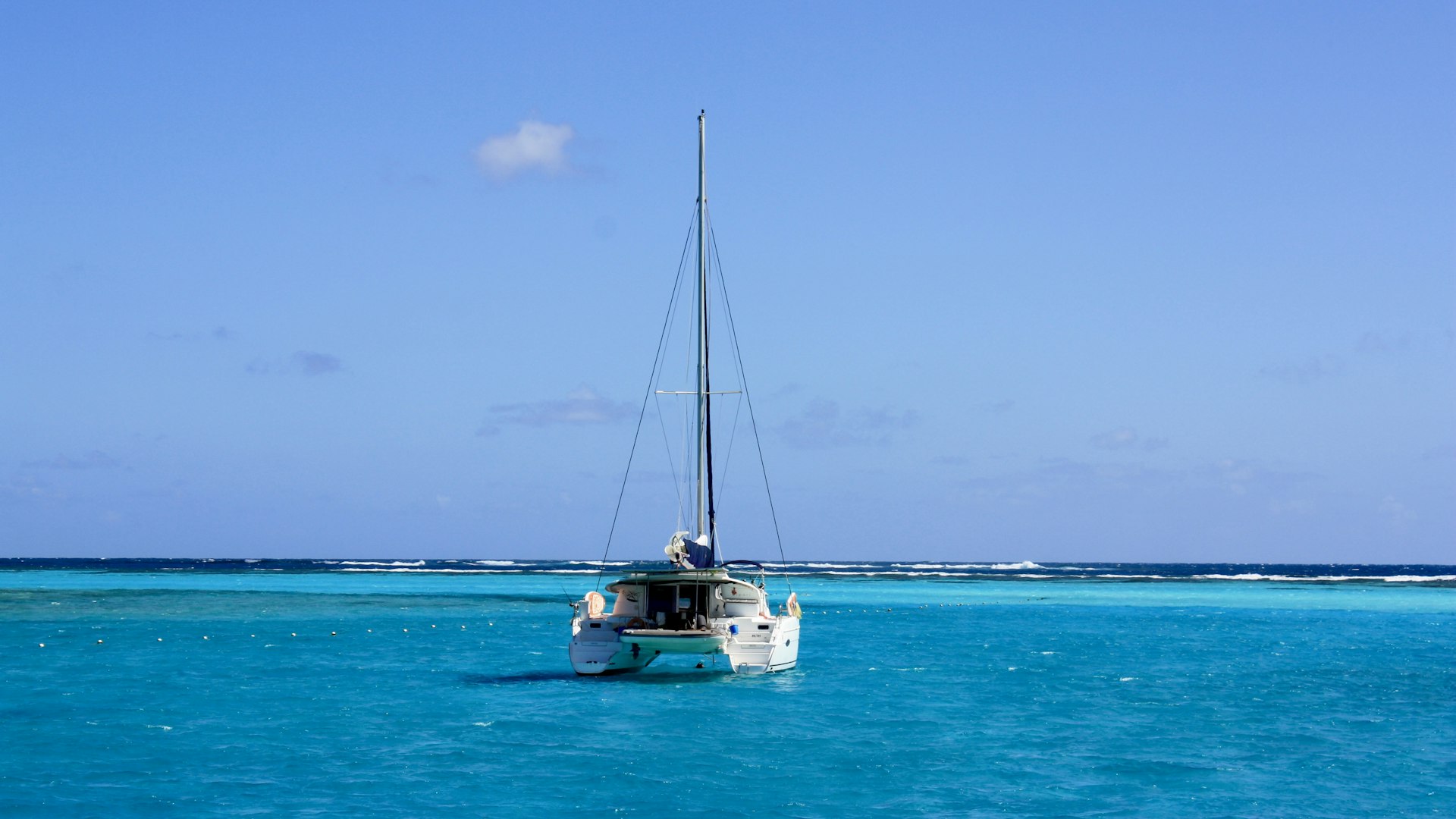
Catamaran Charter Southeast Asia

Catamaran Charter Southeast Asia

From the limestone karsts of Phang Nga Bay to the remote Banda Sea atolls, Southeast Asia rewards catamaran charterers with protected anchorages, warm water year-round, and a sailing culture that still feels genuinely exploratory.

Catamarans Available in Southeast Asia

Browse our selection of catamarans available for charter in Southeast Asia.

Bareboat Catamaran MELETH
catamaran

Bareboat Catamaran MELETH

Bali 4.1 · 2020

12.0m 10 4

From

€2k/week

View →
Bareboat Catamaran Leopard 40
catamaran

Bareboat Catamaran Leopard 40

Leopard 40 · 2007

12.2m 6

From

€2k/week

View →
Bareboat Catamaran Mahe 36
catamaran

Bareboat Catamaran Mahe 36

Mahe 36 · 2013

11.0m 3

From

€2k/week

View →
Bareboat Catamaran Lagoon 380
catamaran

Bareboat Catamaran Lagoon 380

Lagoon 380 · 2015

11.6m 4

From

€3k/week

View →
Bareboat Catamaran Lagoon 380
catamaran

Bareboat Catamaran Lagoon 380

Lagoon 380 · 2015

11.6m 6

From

€3k/week

View →
Bareboat Catamaran Lagoon 400 (2012)
catamaran

Bareboat Catamaran Lagoon 400 (2012)

Lagoon 400 · 2012

12.2m 6

From

€3k/week

View →
Bareboat Catamaran EOS
catamaran

Bareboat Catamaran EOS

Lagoon 400 S2 · 2015

12.0m 3

From

€3k/week

View →
Bareboat Catamaran Lipari 41
catamaran

Bareboat Catamaran Lipari 41

Lipari 41 · 2009

11.9m 4

From

€3k/week

View →
Bareboat Catamaran Island Spirit 380
catamaran

Bareboat Catamaran Island Spirit 380

Island Spirit 38 · 2016

11.6m 4

From

€3k/week

View →
Bareboat Catamaran Lagoon 400 S2 (2015)
catamaran

Bareboat Catamaran Lagoon 400 S2 (2015)

Lagoon 400 S2 · 2015

12.0m 6

From

€3k/week

View →
Bareboat Catamaran LAGOON 400 S2 -3 CABINS -THAILAND
catamaran

Bareboat Catamaran LAGOON 400 S2 -3 CABINS -THAILAND

Lagoon 400 S2 · 2015

12.0m 8 3

From

€3k/week

View →
Bareboat Catamaran Lagoon 400 (2012)
catamaran

Bareboat Catamaran Lagoon 400 (2012)

Lagoon 400 · 2012

12.0m 4

From

€3k/week

View →
Bareboat Catamaran Lagoon 400 S2 (2015)
catamaran

Bareboat Catamaran Lagoon 400 S2 (2015)

Lagoon 400 S2 · 2014

12.0m 6

From

€3k/week

View →
Bareboat Catamaran Voyage 520
catamaran

Bareboat Catamaran Voyage 520

Voyage 520 · 2013

15.8m 6

From

€3k/week

View →
Bareboat Catamaran Nautitech Open 40 2016
catamaran

Bareboat Catamaran Nautitech Open 40 2016

Nautitech 40 Open · 2016

12.0m 5

From

€3k/week

View →
Bareboat Catamaran Nautitech Open 40
catamaran

Bareboat Catamaran Nautitech Open 40

Nautitech 40 Open · 2016

12.0m 4

From

€3k/week

View →
Bareboat Catamaran Nautitech Open 40 2016
catamaran

Bareboat Catamaran Nautitech Open 40 2016

Nautitech 40 Open · 2016

12.0m 6

From

€3k/week

View →
Bareboat Catamaran Fountaine Pajot Lucia 40
catamaran

Bareboat Catamaran Fountaine Pajot Lucia 40

Fountaine Pajot Lucia 40 · 2017

12.1m 4

From

€3k/week

View →
Bareboat Catamaran K35
catamaran

Bareboat Catamaran K35

Lagoon 40 · 2018

11.7m 6 6

From

€4k/week

View →
Bareboat Catamaran Lagoon 40
catamaran

Bareboat Catamaran Lagoon 40

40 · 2019

11.7m 8 4

From

€4k/week

View →
Bareboat Catamaran Lagoon 380
catamaran

Bareboat Catamaran Lagoon 380

Lagoon 380 · 2008

11.2m 4

From

$4k/week

View →
Bareboat Catamaran Island Spirit 38 (2016)
catamaran

Bareboat Catamaran Island Spirit 38 (2016)

Island Spirit 38 · 2016

11.6m 4

From

$4k/week

View →
Bareboat Catamaran Island Spirit 38 (2015)
catamaran

Bareboat Catamaran Island Spirit 38 (2015)

Island Spirit 38 · 2015

11.6m 2

From

$4k/week

View →
Bareboat Catamaran Lagoon 450 (2012)
catamaran

Bareboat Catamaran Lagoon 450 (2012)

Lagoon 450 · 2012

14.0m 5

From

€4k/week

View →

Southeast Asia spans roughly 4,000 nautical miles of navigable coastline, island chains, and interior seas, yet the region's most rewarding sailing grounds share a common characteristic: shallow, sheltered water that suits a catamaran's draught and beam far better than a monohull. Thailand's Andaman coast, the Philippine Visayas, the Indonesian archipelago from Komodo to Raja Ampat, and Malaysia's Langkawi corridor each offer a distinct sailing personality, and a well-chosen catamaran lets you move between them with the stability and deck space the tropics demand.

The charter market here has matured considerably. Phuket, Langkawi, and Bali now operate as the region's primary provisioning and handover bases, with professional crew agencies, reliable fuel docks, and APA management systems that match what you would find in the Mediterranean. What distinguishes Southeast Asia is what lies beyond those bases: fishing villages accessible only by sea, reef systems still largely free of charter traffic, and a cuisine culture so hyperlocal that ingredients change from island to island.

Why Charter in Catamaran charter in Southeast Asia

The practical case for a catamaran in these waters is straightforward. Average depths of 20-40 metres across the major cruising grounds mean you anchor rather than tie to a buoy, and a catamaran's twin hulls let you anchor closer to shore in the calmer lagoons of Palawan or the Mergui Archipelago without worrying about a keel in the sand. The wide beam also matters at anchor in the afternoon heat: a shaded trampoline and twin cockpits are not a luxury but a functional response to 32-degree ambient temperatures.

Sailing conditions across the region are dictated by the monsoon cycle rather than trade winds, which means passage planning requires more attention than a typical Caribbean or Mediterranean charter. The northeast monsoon (roughly November to April) drives the sailing season on Thailand's east coast and the Gulf of Thailand, while the southwest monsoon (May to October) opens the Andaman Sea, Komodo, and the Banda Sea. Understanding which coast is in its lee season is the first decision any serious charterer needs to make.

The region also offers a genuine range of ambition levels. A first-time charter family can spend a week in the protected waters between Phuket and Krabi, never more than 20 miles from a marina, with consistent 10-15 knot breezes and restaurants reachable by dinghy. A more experienced group can commit to a blue-water crossing to Raja Ampat or a live-aboard dive circuit through the Banda Sea, where anchorages have no names on the chart and the crew's local knowledge becomes essential.

Catamaran charter in Southeast Asia Highlights

1

Phang Nga Bay, Thailand: Navigate between vertical karst towers that rise directly from the water, anchor overnight in Hong Island's enclosed lagoon accessible only at high tide, and watch fishing boats head out before dawn from the stilted village of Ko Panyi.

2

Similan Islands, Thailand: Nine granite islands sitting in open Andaman water with exceptional underwater visibility (often 30 metres-plus from January to April), minimal anchorage congestion outside peak weeks, and dive sites that include Elephant Head Rock and the submerged boulders of Deep Six.

3

Mergui Archipelago, Myanmar: Over 800 islands with almost no tourist infrastructure, reachable from Kawthaung or Ranong, where the Moken sea nomads still operate traditional kabang boats and the anchorages off Black Rock and Western Rocky see only a handful of charter vessels per season.

4

El Nido and the Bacuit Archipelago, Philippines: Limestone scenery comparable to Phang Nga but on a larger scale, with Cadlao Lagoon and the Hidden Beach at Matinloc Island among the most photographically arresting anchorages in the region. The Sulu Sea crossing from Coron adds a genuine offshore passage.

5

Komodo National Park, Indonesia: The strong tidal currents that race between Komodo and Rinca create cold upwellings that support some of the richest marine life in the Coral Triangle; manta ray aggregations at Manta Point are a reliable highlight from April through November, and the crossing from Lombok takes two days at passage speed.

6

Langkawi, Malaysia: A duty-free port with a well-run marina at Royal Langkawi Yacht Club, sheltered inner anchorages around Tuba Island and Pulau Singa Besar, and access northward into Thai border waters where boat traffic drops away sharply.

7

Raja Ampat, West Papua: The most biodiverse marine environment on earth by several metrics, with the four main islands of Waigeo, Batanta, Salawati, and Misool each offering distinct reef systems and bird-of-paradise habitats ashore. Infrastructure is limited but improving, and a catamaran charter here is genuinely expedition-level sailing.

When to Sail

There is no single best season for Southeast Asia as a whole because the monsoon affects different coasts in opposite ways; the key is matching your chosen destination to the correct weather window, and most locations offer at least six months of reliable sailing.

High Season (Jun-Sep)

The southwest monsoon brings settled, predictable conditions to Thailand's Andaman coast (Phuket, Krabi, Similan Islands) and to Komodo and Flores in Indonesia, with consistent 15-20 knot southwesterlies that make for proper sailing rather than motoring. The Banda Sea opens fully from June, and this is the prime window for the Spice Islands and Raja Ampat's outer reefs. Note that the Gulf of Thailand and Vietnam's central coast are in their wet season during these months and best avoided for extended cruising.

Shoulder Season (May, Oct)

May and October mark the monsoon transitions, characterised by lighter and more variable winds, occasional squalls, and significantly fewer charter vessels at popular anchorages. Sea temperatures remain warm and visibility in the water is often at its peak before the new season's plankton blooms. Langkawi in October is a particular sweet spot: the southwest monsoon has eased, humidity drops, and you often have the Tuba and Dayang Bunting anchorages almost entirely to yourself. Fuel and provisioning remain fully available throughout.

Choosing the Right Yacht

A catamaran is the logical choice for Southeast Asia for reasons that go beyond comfort. The shallow draught of most production catamarans (typically 1.1-1.4 metres for models in the 45-55 foot range) allows access to mangrove-fringed lagoons, tidal bays, and beach anchorages that would ground a keel boat in the afternoon swell. The wide beam provides stability in the short, steep chop that builds quickly when the monsoon wind blows against a contrary tidal stream, particularly around headlands and through the straits of the Indonesian archipelago. For families, the separation of living space across two hulls means sleeping cabins are acoustically and physically removed from the saloon, which matters on longer passages where guests are keeping different schedules. Within the catamaran segment, the choice of size depends on group composition and ambition. A Fountaine Pajot or Bali in the 45-50 foot range covers the needs of most charter groups of four to eight guests and is well-suited to the Andaman and Langkawi circuits where marina berths are available. For extended blue-water passages to Komodo, the Banda Sea, or Raja Ampat, a Sunreef 60 or comparable performance catamaran with watermaker capacity of 200 litres per day or more, extended fuel range, and a full-time captain-and-crew package is the appropriate specification. The Aquila 36 and Bali 4.5 models available in this region work well for couples or small families keeping to protected coastal waters.

Seven Days in the Andaman Sea, Phuket to Krabi

A suggested week-long charter route

Day 1

Depart Yacht Haven Marina, Phuket, heading north-northwest toward Ko Yao Noi. The passage of roughly 20 nautical miles crosses the main Phuket ferry channel; once clear, the water opens and the limestone outcrops of Phang Nga Bay begin appearing to the northeast. Anchor off the eastern beach of Ko Yao Noi by early afternoon, allowing time to hire bicycles from the village and cycle the single road through rubber and coconut groves before a seafood dinner aboard.

Day 2

An early start northward into Phang Nga Bay proper, timing the approach to Ko Panyi for the morning light. The stilted Muslim fishing village is best visited before 10:00 when day-trip boats arrive from Phuket. Continue northeast to anchor in the enclosed lagoon at Koh Hong, entering the narrow channel at half-tide or above. Kayak into the hong (interior lagoon) at dusk when the bird life returns to roost.

Day 3

Passage south through the karst field, passing the distinctive Khao Tapu pinnacle (James Bond Island) at a respectful distance and continuing into the lower bay. Anchor off Ko Lawa Yai for lunch in clear, shallow water over sand. Afternoon sail south toward the Krabi coast, arriving at the Ao Nang anchorage by late afternoon. The town has good provisioning, and the night market on the main street opens at 18:00.

Day 4

Full day in the Ko Hong group west of Krabi town, a cluster of uninhabited islands with white-sand beaches accessible by dinghy and snorkelling over coral in 4-6 metres of water. The anchorage off the northeast side of Ko Hong (Krabi) is well-protected from the prevailing southwesterly. Crew can prepare a Thai-influenced dinner using ingredients sourced the previous evening in Ao Nang.

Day 5

Sail southwest to the Ko Phi Phi group, covering approximately 25 nautical miles. Anchor north of Ko Phi Phi Don in the bay before Maya Bay on Ko Phi Phi Leh, which is now closed to overnight anchoring; the adjacent bay at Lo Sama remains open and offers comparable scenery with far fewer day visitors. An afternoon dive or snorkel over the reef at Hin Phae is recommended.

Day 6

Longer passage day south and west to the Ha Islands group (Ko Ha), five uninhabited limestone islands with a network of submerged caves and swim-throughs accessible to snorkellers on a falling tide. Anchor off Ko Ha Nuea in 8 metres over sand. This is among the best snorkelling in the southern Andaman and sees significantly less traffic than the Phi Phi sites. Sunset drinks in the cockpit as the last dive boats return to Krabi.

Day 7

Final morning passage back to Phuket, 40 nautical miles northeast with the southwesterly typically building to 15 knots by 10:00, allowing a proper sail for the first time on the itinerary. Arrive at Yacht Haven or Ao Po Grand Marina for a noon handover, with time for a final lunch in Phuket's Sino-Portuguese old town before departure.

Local Tips

  • Thai entry formalities for vessels require a cruising permit obtained on arrival at an official port of entry (Phuket, Phi Phi, or Krabi). The process takes two to four hours and requires original passports for all crew and guests, ship's papers, and a pre-prepared crew list. Your charter company should handle this, but confirm it explicitly before departure.
  • Provisioning in Phuket is genuinely excellent: Villa Market in Chalong stocks imported cheeses, French wines, and international spirits at reasonable prices, and the wholesale fish market at Rawai opens at 06:00 for the day's catch. In Langkawi, the duty-free status means alcohol is priced at roughly 40 percent below Thai or Indonesian equivalents and worth stocking before crossing into either country.
  • The GPS charts for Indonesian waters, particularly east of Bali, carry more errors than charterers accustomed to European waters would expect. Navionics and C-Map both have coverage gaps in the Banda Sea and Raja Ampat; local pilot books (notably those published by Warwick Brown for Indonesia) and current cruiser reports via Noonsite are essential supplements rather than optional extras.
  • Tipping culture in this region is meaningful: a good Thai crew on a week's charter would typically expect a tip of 10-15 percent of the base charter fee if service has been strong. In Indonesia, where crew wages are lower, 15 percent is appropriate. The charter base will advise on how to handle this and whether it should be given directly or via the captain.
  • The durian season in southern Thailand runs from May to August and local markets are worth visiting even if you decline to eat the fruit aboard (most captains will politely request that you don't). Fresh rambutan, mangosteen, and longan are available at roadside stalls throughout the season and are straightforward to bring back to the yacht by dinghy.
  • Marine park fees apply in the Similans, Surin Islands, Ang Thong National Marine Park, and Komodo National Park. Fees are per person per day and should be budgeted within the APA; they are not included in base charter rates. In Komodo, the park authority has periodically adjusted fee structures at short notice, so verify current rates with your charter manager before departure.

Frequently Asked Questions

Do I need a sailing licence to charter a catamaran in Southeast Asia+
Requirements vary by country. Thailand does not have a formal recreational skipper licence requirement for foreign charterers, though most reputable charter companies require an RYA Day Skipper or ASA equivalent as a minimum, and many require Coastal Skipper for bareboat. Indonesia and Malaysia are similar in practice. For any itinerary involving offshore passages (Komodo, Raja Ampat, or the Mergui Archipelago), a professional captain is strongly recommended regardless of your own qualification level, primarily for local knowledge and customs handling.
What is the typical crew arrangement for a catamaran charter in this region+
Most catamarans in the 45-60 foot range operate with a captain and a chef-deckhand, which is the practical minimum for comfortable cruising in Southeast Asia where provisioning stops require negotiation in Thai, Bahasa, or Malay. Fully crewed packages including a dedicated hostess are available on larger vessels. Bareboat charter is available from Phuket and Langkawi for experienced sailors, but the local routing complexity and customs paperwork make crewed or skippered options significantly more practical for first-time visitors to the region.
Is Southeast Asia suitable for families with young children+
Genuinely yes, particularly the Andaman coast of Thailand and Langkawi. Sea temperatures hover around 28-30 degrees year-round, swell in protected anchorages is minimal, and a catamaran's wide deck and trampoline give children substantial outdoor space. The challenge is sun exposure rather than sea conditions; equip children with UPF clothing and establish a shade routine in the midday hours. Many charter captains in Phuket are experienced with family groups and can suggest itineraries that pace snorkelling and beach stops to suit younger guests.
How far in advance should I book a catamaran charter in Southeast Asia+
For high-season travel (December to February for the Gulf of Thailand, June to August for the Andaman coast and Indonesia), book six to nine months ahead for the best selection, particularly on quality crewed vessels in the 50-60 foot range. The Christmas and New Year period across all Southeast Asian sailing bases books out 12 months ahead on popular yachts. Shoulder season bookings can often be confirmed on shorter notice, and last-minute availability does appear, though rarely on the most in-demand vessels.
What is an APA and how much should I budget for it in Southeast Asia+
The Advance Provisioning Allowance covers fuel, provisioning, marina fees, park entrance fees, and crew expenses incurred during the charter. In Southeast Asia, a standard APA is 30 percent of the base charter fee, which is broadly consistent with Mediterranean norms. Fuel costs are lower than Europe (particularly in Malaysia and Indonesia), but provisioning to a high standard adds up quickly, and park fees in protected areas are an additional variable. Your charter manager will provide a post-charter accounting of all APA expenditure, with any surplus refunded.
Can I combine two countries in a single charter week+
It is possible but requires careful planning. The Phuket to Langkawi corridor is the most common multi-country route and is well-established: most charter companies operating this crossing have the customs and immigration paperwork process streamlined. Crossing from Thailand into Myanmar (Mergui Archipelago) requires advance permits and is typically handled by specialist operators rather than standard charter bases. Indonesia-to-Philippines crossings are logistically complex for a one-week charter and are better suited to extended two-week programmes with a dedicated local agent.

Speak with a SelectYachts charter specialist to match the right catamaran to your preferred Southeast Asian itinerary, travel window, and group size.

Request Your Charter

Request Your Charter

Tell us about your dream voyage and we will find the perfect yacht for you.