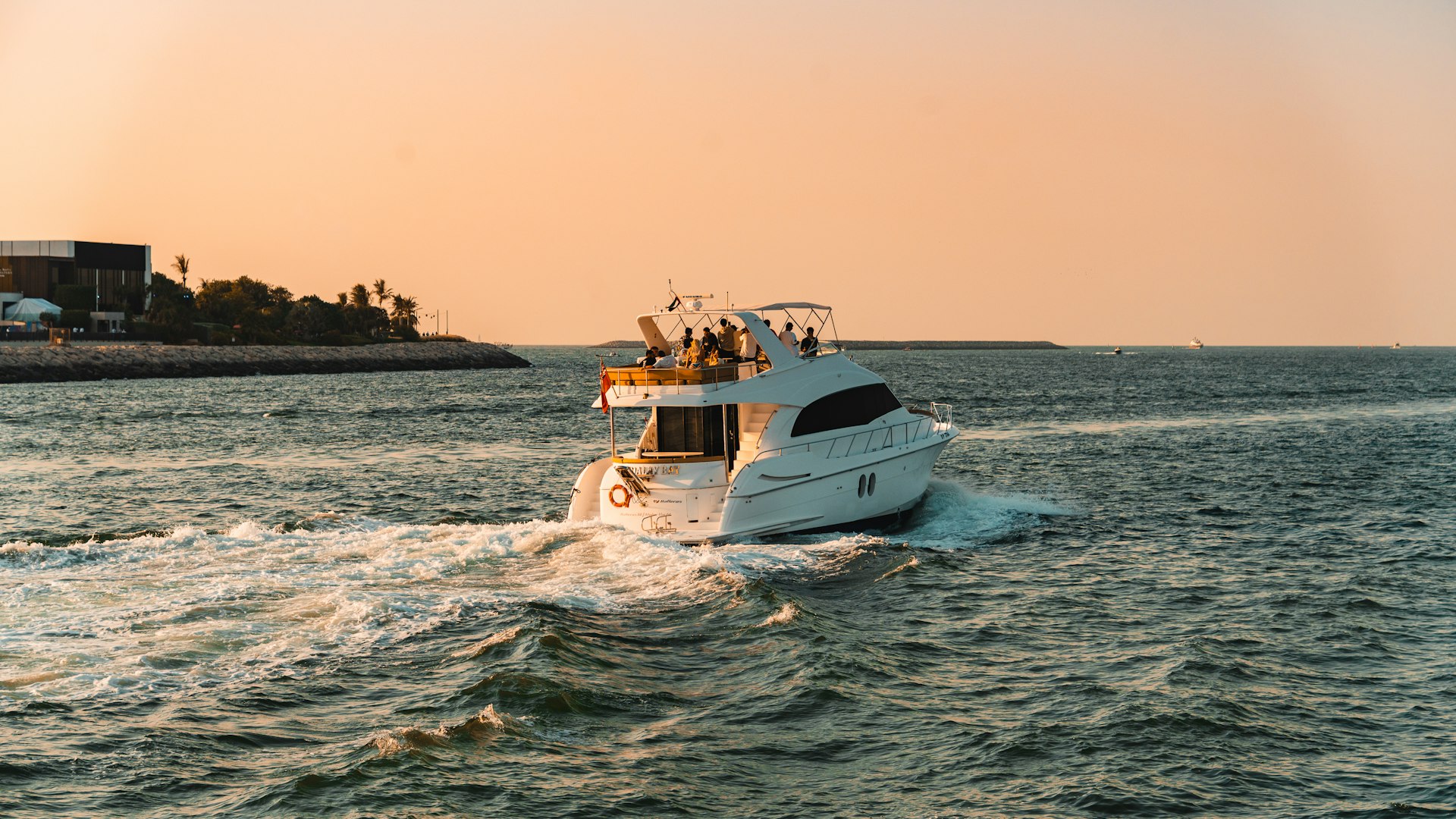
Motor Yacht Charter Italy
From the Ligurian Riviera to the Aeolian Islands, Italy rewards motor yacht charterers with short passages, exceptional anchorages, and a coastline that has been refining the art of hospitality for two millennia. The fleet ranges from nimble day-cruisers to 70-metre expedition vessels, with itineraries as focused or as wide-ranging as you choose.
Motor Yachts Available in Italy
Browse our selection of motor yachts available for charter in Italy.

Crewed Motor Yacht Cranchi 27
Cranchi 27
From
€800/week

Bareboat Motor Yacht Cranchi 34
Cranchi 34 · 2008
From
€1k/week

Crewed Motor Yacht Pershing 37
Pershing 37 · 2011
From
€1k/week

Crewed Motor Yacht Itama 40
Itama 40 · 2011
From
€1k/week

Crewed Motor Yacht Cranchi 41 Endurance
Cranchi 41 Endurance
From
€1k/week

Crewed Motor Yacht Pershing 43
Pershing 43 · 2007
From
€1k/week

Crewed Motor Yacht Prestige 36
Prestige 36
From
€1k/week

Crewed Motor Yacht Cranchi 41 Endurance
Cranchi 41 Endurance · 2007
From
€1k/week

Crewed Motor Yacht Ferretti 47
Ferretti 47
From
€2k/week

Crewed Motor Yacht Primatist G41
Primatist G41 · 2007
From
€2k/week

Crewed Motor Yacht Cranchi 50
Cranchi Atlantique 50 · 2006
From
€2k/week

Crewed Motor Yacht Raffaelli Shamal 40
Raffaelli Shamal 40 · 2005
From
€2k/week

Crewed Motor Yacht Alfamarine 50
Alfamarine 50 · 2012
From
€2k/week

Crewed Motor Yacht Gagliotta 37
Gagliotta 37 · 2006
From
€2k/week

Crewed Motor Yacht Pershing 37
Pershing 37 · 2011
From
€2k/week

Crewed Motor Yacht Riva Aquarama
Riva Aquarama · 1968
From
€2k/week

Crewed Motor Yacht Pershing 46
Pershing 46 · 2010
From
€2k/week

Crewed Motor Yacht Gianetti 50
Gianetti 50 · 2005
From
€2k/week

Crewed Motor Yacht XL Marine 43
XL Marine 43
From
€2k/week

Crewed Motor Yacht AMORE
Nima 34 · 2011
From
€2k/week

Crewed Motor Yacht Spider 43
Spider 43
From
€2k/week

Crewed Motor Yacht Itama 38
Itama 38 · 2008
From
€2k/week

Crewed Motor Yacht Uniesse 54 Sport
Uniesse 54 Sport · 2008
From
€2k/week

Crewed Motor Yacht Cranchi 47
Cranchi 47 · 2008
From
€2k/week
Other Vessel Types in Italy
Italy's coastline stretches for roughly 7,600 kilometres, taking in five distinct sailing regions — the Ligurian coast, Tuscany and the Tuscan Archipelago, the Tyrrhenian coast down to Calabria, Sicily and its satellite islands, and the Adriatic. Each has its own character: the manicured harbours of the Côte d'Azur's Italian neighbour, the wild volcanic anchorages of the Aeolian Islands, the amber light of the Sicilian south. A motor yacht opens all of it, allowing you to reposition quickly when weather or whim demands.
The charter season runs from late April through to October, though the most experienced charterers are increasingly choosing May and September for their combination of reliable winds, uncrowded anchorages, and water temperatures that remain perfectly swimmable. High summer delivers the full theatre of Italian coastal life — bustling marinas, private beach clubs, al fresco dining that runs until midnight — but the pace requires planning.
Why Charter in Motor Yacht charter in Italy
Italy produces some of the world's most respected motor yacht builders, and that heritage is visible everywhere on the water. Sanlorenzo, Riva, and Ferretti yards are based here, and you will find their vessels moored alongside Abeking & Rasmussen and Amels builds in any major marina from Portofino to Palermo. The practical consequence for charterers is a fleet of unusually high average quality, well-maintained and handled by crews who understand Italian coastal customs.
Passage distances are forgiving. From Porto Cervo in northern Sardinia to Bonifacio in Corsica is under 20 nautical miles; from Naples to Capri is 17. This allows a motor yacht crew to arrive fresh, anchor by noon, and spend the afternoon exploring rather than covering ground. The proximity of world-class restaurants, private beach clubs, and historic town centres to the water's edge is unmatched almost anywhere in the Mediterranean.
The cuisine alone justifies the itinerary. Eating anchored off the Amalfi Coast in late August, when local fishermen are still landing the day's catch, or provisioning in a Sicilian market at dawn before a passage south, these are experiences that a land-based stay cannot replicate. Italian coastal food is rooted in place, and moving by sea gives you access to its full regional breadth, from the pesto of Liguria to the bottarga of Sardinia.
Motor Yacht charter in Italy Highlights
Porto Cervo, Sardinia — the benchmark marina of the Italian high season, with La Piazzetta as its social centre. Plan to arrive by Wednesday during Settimana del Golfo if you want to watch superyacht racing from the water.
The Aeolian Islands — seven volcanic islands north of Sicily, each distinct. Stromboli's active crater, best observed from the sea at night, and the white pumice cliffs of Lipari are within a single day's passage of each other.
Portofino and Paraggi Bay — Liguria's most famous anchorage is small and fills quickly, but arriving by tender in the early morning before the day-trippers arrive gives you the village almost to yourself.
The Amalfi Coast — Positano, Praiano, and Nerano are best approached by water. The Villa Romana at Minori and the cloisters at Ravello are day-excursion distance from any anchorage between Amalfi and Salerno.
Capri and the Faraglioni — the sea stacks are navigable at slow speed in calm conditions; the Blue Grotto is accessible by tender outside peak hours. Marina Grande fills fast; anchor off the eastern shore for privacy.
The Pontine Islands — Ponza and Ventotene, roughly 60 nautical miles west-south-west of Naples, remain undervisited relative to their quality. Ponza's multi-coloured cliffs and clear water rival Sardinia, with a fraction of the foot traffic.
Venice and the Northern Adriatic — arriving in Venice by motor yacht, entering the lagoon through the Lido inlet at dusk, is one of the genuinely unrepeatable arrivals in Mediterranean sailing. The Istrian coast to the east adds historic walled towns to the itinerary.
When to Sail
Italy's main sailing season runs from May through October, with high season from late June to early September accounting for the majority of charters. Shoulder months offer a quieter, often more rewarding experience for those with flexibility.
High Season (Jun-Sep)
Sea temperatures reach 24-26°C and air temperatures regularly exceed 30°C in July and August. The Maestrale (north-westerly) blows with some regularity in the Tyrrhenian and around Sardinia, providing natural cooling but occasionally disrupting itineraries around exposed anchorages. Marinas at Portofino, Porto Cervo, and Positano require advance booking — sometimes months ahead for prime berths. The Adriatic in summer is calmer on average, with the Bora less prevalent than in spring and autumn. Full crew, beach clubs, and provisioning are at peak availability.
Shoulder Season (May, Oct)
May is arguably the finest month for experienced charterers. Anchorages that are inaccessible by August are quiet, wildflowers are still visible on the Aeolian slopes, and provisioning is easier and less expensive. October brings low-angle light that is exceptional for those who care about photography and atmosphere, with sea temperatures still around 20-22°C in the south. Wind patterns are less predictable in October and the Tramontane and Libeccio can produce short, sharp weather windows, so flexible itinerary planning is essential. Many beach clubs and smaller restaurants close by mid-October.
Choosing the Right Yacht
Italy's varied coastline rewards motor yachts in the 15-45 metre range most consistently. A vessel in the 24-35 metre bracket — represented in the fleet by models such as the Sanlorenzo SD96 or Cerri Flying Sport 102 — offers the right combination of range, shallow draft for cove anchoring, and crew accommodation to handle a week-long passage from Liguria to the Aeolian Islands without repositioning constraints. Larger displacement vessels above 40 metres, including Admiral and Amels builds, are best suited to fixed-base charters from major marinas like Porto Cervo or Capri, where the infrastructure and social scene justify staying in one region. For charterers who want to cover multiple regions — say, combining the Amalfi Coast with a run to Sicily — a planing or semi-displacement hull with a genuine range of 400-plus nautical miles between fuel stops is worth specifying. The Italian coastline's fuel infrastructure is good, with bunkering available at all major marinas, but distances between the islands are not trivial and slow-speed displacement passages in high summer can feel frustrating against an ambitious itinerary. Day boats such as the AB Yachts 72 are best treated as a secondary vessel, kept aboard a larger yacht or chartered for single-day excursions from a fixed base.
Campania and the Islands — 7-Night Motor Yacht Itinerary
A suggested week-long charter route
Embarkation in Naples at Mergellina or the Molo Beverello pontoons. Afternoon briefing with captain, then an early evening passage south-west to Ischia, approximately 18 nautical miles. Anchor in Baia di San Montano or take a berth at Porto d'Ischia. Dinner ashore at one of the island's thermal-spa towns.
Morning spent at anchor off Ischia's north coast before a midday passage across to Capri (roughly 12 nautical miles). Arrive ahead of the afternoon ferry surge. Tender into Marina Grande, take the funicular to Capri town for late afternoon exploration. Anchor overnight off the eastern shore near Punta Tragara.
Early morning entry to the Blue Grotto by tender before the tour boats arrive — entry is only possible in calm conditions with swell below 0.5 metres. Late morning passage along the Amalfi Coast eastward, with a slow pass below the cliffs at Positano. Anchor off Li Galli for lunch, then move to Nerano Bay in the late afternoon.
Full day at Positano. Take the tender in for breakfast at one of the terrace cafes on Via Pasitea, then return to the yacht for swimming and water toys through the afternoon. The Fiordo di Furore — a narrow inlet carved into the cliffs 8 kilometres east — is accessible by tender for those who want to explore.
Morning passage around Punta Licosa to the Cilento coast, one of the least visited stretches of the Campanian shoreline. Anchor off Marina di Camerota or Cala Bianca. Paestum's Greek temples are 25 kilometres inland and reachable by car arranged through the captain — an excursion most charterers in this area overlook.
Passage north-west to the Pontine Islands, approximately 70 nautical miles from the Cilento coast. This is the day's serious passage, best started early to arrive at Ponza by early afternoon. The coloured cliffs on Ponza's western side, and the series of coves accessible only from the sea, justify the transit entirely. Dinner ashore in Ponza town.
A relaxed morning at anchor off Cala dell'Acqua or Cala Feola before the return passage of roughly 65 nautical miles back towards Naples. Arrive Mergellina by early evening for disembarkation the following morning, or extend with a final night anchored in the Bay of Naples with Vesuvius as a backdrop.
Local Tips
- •Italian maritime zones require advance notification or permits in several protected areas. The Tuscan Archipelago National Park and parts of the Aeolian Islands have restricted anchoring zones that change seasonally; your captain should file the necessary paperwork in advance, but confirm this explicitly at briefing.
- •Fuel and provisioning are generally straightforward at major marinas, but smaller island harbours such as Ventotene and Marettimo have limited fuel availability and often no advance reservation system. Carry reserves if your itinerary takes you to the outer islands.
- •Tipping culture on Italian charters follows international superyacht norms — 10-15 per cent of the charter fee is customary for a satisfied crew, distributed at disembarkation. Unlike some markets, Italian crews will not prompt you; this is entirely at your discretion.
- •Provisioning in local markets rather than via marina chandleries rewards both quality and budget. The morning fish markets in Palermo (Vucciria and Ballaro), Syracuse, and Naples' Pignasecca are genuinely among the finest in the Mediterranean. Ask your chef to plan a market morning early in the charter.
- •VHF channel 16 is monitored by the Guardia Costiera at all times; in southern Italy, it is also used for local traffic coordination in the smaller island ports. Crews operating in Sicily and Calabria should be aware that local fishing vessels do not always broadcast their intentions and can move unpredictably in harbour approaches.
- •Mobile data and connectivity are reliable on the main coastline and larger islands, but signal drops significantly around Marettimo, Alicudi, and the remote Cilento headlands. Download offline charts and local information before leaving major ports.
Frequently Asked Questions
What is the minimum budget for a motor yacht charter in Italy+
Do I need a licence to charter a motor yacht in Italy+
What are the main additional costs beyond the base charter fee+
Which Italian region is best for a first motor yacht charter+
How far in advance should I book a motor yacht charter in Italy in peak season+
Are there restrictions on anchoring in Italian protected marine areas+
Speak to our Italy specialists to match the right motor yacht to your preferred region, dates, and budget — most enquiries receive a curated shortlist within 24 hours.
Request Your Charter