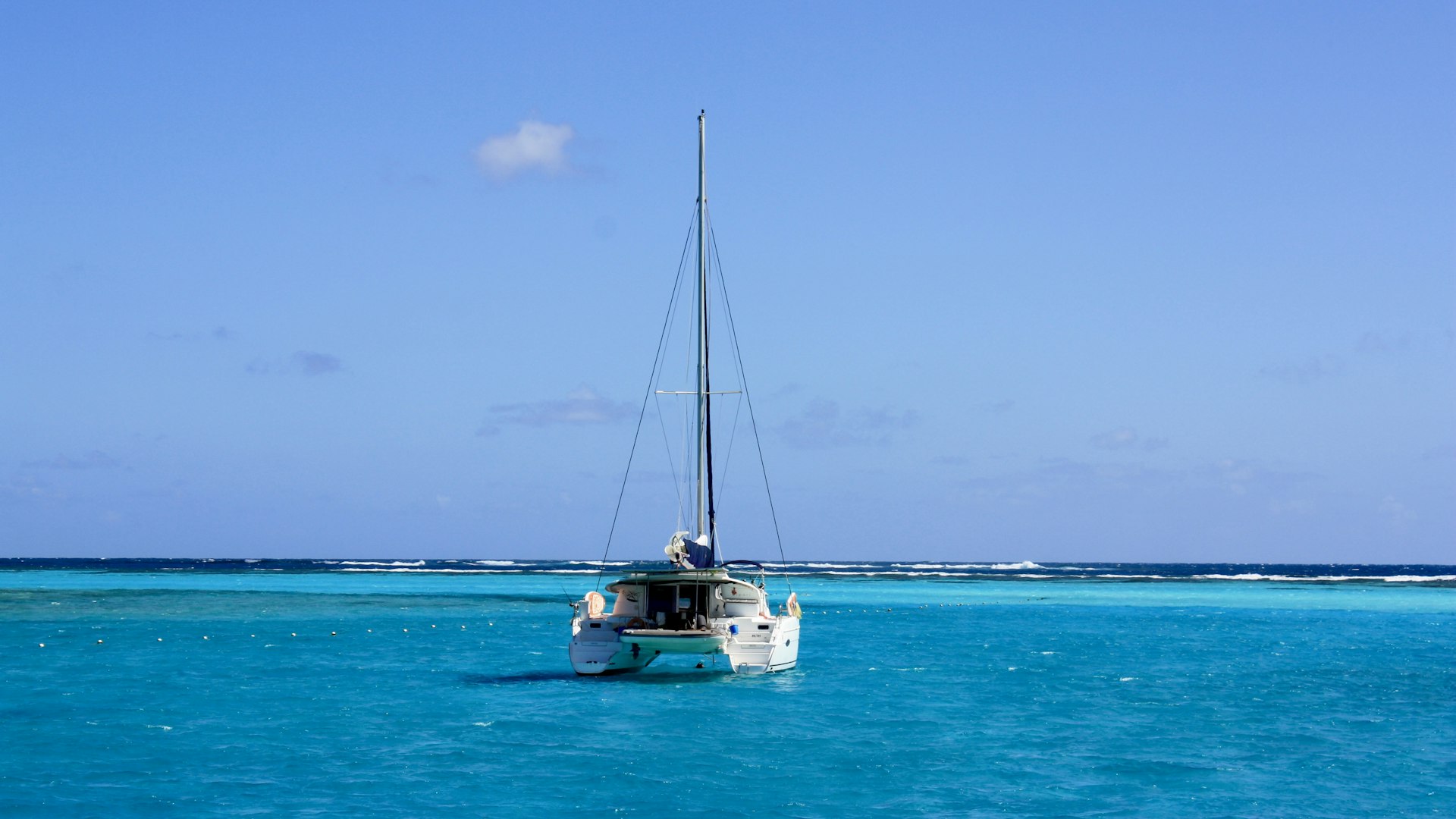
Catamaran Charter Italy

Catamaran Charter Italy

Italy's coastlines reward catamarans like few other destinations in the Mediterranean — wide decks for lazy lunches off the stern, shallow-draught access to Sicilian coves, and enough sailing variety to keep a seasoned crew engaged from the Ligurian Riviera to the Aeolian Islands.

Catamarans Available in Italy

Browse our selection of catamarans available for charter in Italy.

Bareboat Catamaran Leopard 384
catamaran

Bareboat Catamaran Leopard 384

Leopard 384 · 2010

11.6m 4

From

€2k/week

View →
Bareboat Catamaran Lagoon 380 S2
catamaran

Bareboat Catamaran Lagoon 380 S2

Lagoon 380 · 2008

11.6m 10 4

From

€3k/week

View →
Bareboat Catamaran AQUILA
catamaran

Bareboat Catamaran AQUILA

Lagoon 40 · 2021

40.0m 10 4

From

€3k/week

View →
Bareboat Catamaran Lagoon 380
catamaran

Bareboat Catamaran Lagoon 380

Lagoon 380 · 2013

11.6m 4

From

€3k/week

View →
Bareboat Catamaran Lagoon 40
catamaran

Bareboat Catamaran Lagoon 40

Lagoon 40 · 2018

12.0m 4

From

€3k/week

View →
Bareboat Catamaran Lagoon 380
catamaran

Bareboat Catamaran Lagoon 380

Lagoon 380 · 2017

11.6m 4

From

€3k/week

View →
Bareboat Catamaran Lagoon 400 S2
catamaran

Bareboat Catamaran Lagoon 400 S2

Lagoon 400 S2 · 2014

12.0m 12 4

From

€3k/week

View →
Bareboat Catamaran Lagoon 400 S2
catamaran

Bareboat Catamaran Lagoon 400 S2

Lagoon 400 · 2014

12.0m 12 4

From

€3k/week

View →
Bareboat Catamaran Lagoon 39
catamaran

Bareboat Catamaran Lagoon 39

Lagoon 39 · 2017

11.7m 4

From

€3k/week

View →
Bareboat Catamaran Lagoon 400
catamaran

Bareboat Catamaran Lagoon 400

Lagoon 400 · 2011

12.0m 12 4

From

€4k/week

View →
Bareboat Catamaran Lagoon 421
catamaran

Bareboat Catamaran Lagoon 421

Lagoon 421 · 2012

12.6m 12 4

From

€4k/week

View →
Bareboat Catamaran Electra
catamaran

Bareboat Catamaran Electra

Bali 4.0

30.2m 10 5

From

€4k/week

View →
Bareboat TESEO
catamaran

Bareboat TESEO

Oceanis 46.1 · 2024

48.0m 8 3

From

€4k/week

View →
Bareboat Catamaran Lagoon 400
catamaran

Bareboat Catamaran Lagoon 400

Lagoon 400 · 2012

12.0m 4

From

€4k/week

View →
Bareboat Catamaran Lagoon 440
catamaran

Bareboat Catamaran Lagoon 440

Lagoon 440 · 2010

13.6m 4

From

€4k/week

View →
Bareboat Catamaran Lagoon 42
catamaran

Bareboat Catamaran Lagoon 42

Lagoon 42 · 2019

12.8m 10 4

From

€4k/week

View →
Bareboat Catamaran Lagoon 42
catamaran

Bareboat Catamaran Lagoon 42

Lagoon 42 · 2023

12.8m 8 8

From

€4k/week

View →
Bareboat Catamaran Lagoon 42
catamaran

Bareboat Catamaran Lagoon 42

Lagoon 42 · 2019

12.8m 8 4

From

€4k/week

View →
Bareboat Catamaran Lagoon 450
catamaran

Bareboat Catamaran Lagoon 450

Lagoon 450 · 2011

13.4m 12 4

From

€4k/week

View →
Bareboat Catamaran Lagoon 450
catamaran

Bareboat Catamaran Lagoon 450

Lagoon 450 · 2011

13.4m 12 4

From

€4k/week

View →
Bareboat Catamaran Baina d`Aesta
catamaran

Bareboat Catamaran Baina d`Aesta

Lipari 41

12.5m 10 4

From

€4k/week

View →
Bareboat Catamaran Lagoon 421
catamaran

Bareboat Catamaran Lagoon 421

Lagoon 421 · 2011

12.6m 12 4

From

€4k/week

View →
Bareboat Catamaran Lagoon 42
catamaran

Bareboat Catamaran Lagoon 42

Lagoon 42 · 2016

12.8m 4

From

€4k/week

View →
Bareboat Catamaran Excess 11
catamaran

Bareboat Catamaran Excess 11

Excess 11

11.3m 8 4

From

€4k/week

View →

Chartering a catamaran in Italy means trading the constraints of a monohull for a platform built around how people actually want to spend a week at sea. Stable platforms, generous living space, and the ability to anchor in water too shallow for deeper-keeled vessels make catamarans the logical choice for Italy's richly varied coastline. From the granite anchorages of Sardinia's Costa Smeralda to the volcanic geology of the Pontine Islands, the country offers a sailing circuit that rewards those willing to plan beyond the obvious.

Italy's charter waters span five distinct cruising grounds — Liguria, the Tuscan Archipelago, Campania and the Amalfi Coast, Sardinia and Corsica, and the waters around Sicily including the Aeolian and Egadi Islands. Each has its own wind regime, provisioning culture, and onshore draw. A well-chosen catamaran, whether a performance-oriented Sunreef 80 or a family-focused Bali 5.4, allows you to move between anchorages and marinas without compromise.

Why Charter in Catamaran charter in Italy

Italy's coastline stretches over 7,600 kilometres, and for catamaran charterers the critical number is draught. Many of the most coveted anchorages along the Sardinian coast, the Pontine Islands, and the lesser-visited Calabrian shore sit in water between two and four metres deep at anchor. Catamarans with a draught of under 1.5 metres reach spots that exclude most monohulls of comparable size, which matters considerably when you are trying to avoid the crowded stern-to mooring at a marina in August.

The prevailing winds across central and southern Italian waters — the Maestrale from the northwest and the Tramontane that sweeps down from the Alps in the north — are well-suited to upwind and reaching passages. In the Tyrrhenian Sea, the summer thermal pattern typically produces reliable afternoon breezes of 12 to 20 knots, enough to sail productively between islands without motor-sailing. The wide beam of a catamaran also means guests are not pinned to the high side on a brisk reach; al fresco dining underway is a realistic prospect rather than an aspiration.

Italian cruising culture rewards those who take it seriously. Fresh provisioning at local mercati — tuna from the fish auction at Mazara del Vallo, burrata sourced directly in Puglia, Sardinian bottarga brought aboard in Cagliari — elevates a charter week in ways that a resort cannot replicate. A catamaran's large galley and cockpit table turn provisioning runs into a centrepiece of the trip rather than a logistical chore.

Catamaran charter in Italy Highlights

1

Cala Brandinchi, Sardinia — A sheltered bay on the northeast coast with turquoise water and a sand bottom that holds an anchor well; arrive before 1000 in July to secure a position without a catamaran-length swinging radius issue.

2

The Aeolian Islands, Sicily — Seven islands of volcanic origin, each with a distinct character: Stromboli for the active crater, Panarea for its social scene, Filicudi and Alicudi for near-total quiet. The crossing from Milazzo takes four to five hours under sail in the prevailing northwest wind.

3

Ponza and the Pontine Islands — Italy's most underrated offshore archipelago. The limestone cliffs and natural sea tunnels of Ponza reward a catamaran's ability to anchor close inshore; the local wine cooperative produces a Falanghina worth seeking out.

4

The Egadi Islands, western SicilyFavignana, Levanzo, and Marettimo sit in clean Atlantic-influenced water west of Trapani. Marettimo in particular offers some of the most transparent water in the central Mediterranean and anchorages that are sheltered from the Maestrale by the island's ridge.

5

Portofino and the Ligurian Riviera — The anchorage off Portofino is small and regulated; a catamaran requires careful positioning. The reward is direct access to Cinque Terre by tender, and the ability to day-sail between Genoa and La Spezia on a coastline that most charterers only see from a train window.

6

Amalfi and the Sorrentine Peninsula — The deep water close to the Amalfi cliffs suits a catamaran's anchoring style; the morning light on Positano's tiered houses is best appreciated from a boat rather than a terrace. Marina di Stabia is the practical base for provisioning before a circuit of Capri and Ischia.

7

La Maddalena Archipelago, northern Sardinia — A national marine park covering over 180 islands and islets between Sardinia and Corsica. The Bocche di Bonifacio straits between the two islands produce significant wind acceleration; crossing to Bonifacio in a catamaran in 20-plus knots of Mistral is a proper sail.

When to Sail

Italian charter waters are navigable from late April through October, but the character of the sailing changes dramatically between seasons. July and August bring settled conditions and the full social life of Italian coastal towns, while May, June, and September offer better wind consistency and significantly less congestion at anchorage.

High Season (Jun-Sep)

July and August are peak months across all Italian cruising grounds. The Maestrale is at its most reliable in Sardinia, running 15 to 25 knots on many afternoons, and the Aeolian Islands attract serious sailors looking to catch the thermal winds that funnel between Lipari, Vulcano, and Salina. The trade-off is marina congestion: Porto Cervo, Portofino, and Positano are extremely busy, and securing a berth without advance booking is unrealistic. Provisioning markets are well-stocked but prices reflect the season. June and September bookend the peak with lighter crowds and only marginally less reliable winds.

Shoulder Season (May, Oct)

May is arguably the finest month for serious sailing in southern Italy and Sicily. Winds are more variable but often stronger and more interesting than the predictable summer thermals; the risk of a Scirocco from the south is real but manageable with good routing. Ashore, Italian coastal towns are in local hands rather than tourist hands. October extends the season across Sardinia and Sicily with warm sea temperatures and noticeably quieter anchorages throughout. Provisioning quality remains high as the summer harvests feed the markets. Some smaller marinas begin reducing services after the first week of October.

Choosing the Right Yacht

Catamarans suit Italian waters for practical reasons that become obvious once you are anchored stern-to in a crowded Sardinian bay. The wide beam and low freeboard of models like the Bali 5.4 or Fountaine Pajot 66 make boarding from a dinghy straightforward, and the large cockpit area means eight guests can eat together comfortably rather than rotating in two shifts. For families with children or mixed groups where not everyone is an enthusiastic sailor, the stability of a catamaran transforms the passage-making experience. Italy's marina infrastructure is generally catamaran-friendly, though some historic ports with narrow pontoon fingers — Portofino and Porto Ercole among them — reward careful pre-arrival planning on beam clearance.

Seven Days in the Aeolian Islands and Western Sicily

A suggested week-long charter route

Day 1

Board at Palermo or Milazzo after 1600 and complete provisioning at the adjacent market — the Vucciria in Palermo is worth the detour. Sail or motor the 15 nautical miles to anchor off Vulcano's Porto di Levante for dinner aboard. The sulphur-scented thermal mud baths onshore are divisive but memorable.

Day 2

Morning passage of 14 nautical miles northeast to Lipari, the commercial hub of the archipelago. Secure a mooring buoy or anchor in the bay south of the harbour. The upper town and its archaeological museum warrant several hours ashore; provisioning the catamaran's galley from the local deli is straightforward here.

Day 3

Sail north 12 nautical miles to Salina, stopping at anchor in the bay below Santa Marina before rounding the island to the quieter Rinella anchorage on the southwest coast. Salina produces the finest Malvasia delle Lipari dessert wine in the archipelago; the Caravaglio estate accepts visitors.

Day 4

An early start for the 25-nautical-mile passage to Panarea and then the 14 nautical miles to Stromboli. Approach Stromboli in the afternoon and anchor below the Sciara del Fuoco. The night passage back toward Panarea, watching the volcano's eruptions illuminate the sky astern, is a genuinely unrepeatable experience.

Day 5

Return southwest to Filicudi or Alicudi for a morning of snorkelling in water that sees a fraction of the summer traffic hitting the main islands. The afternoon passage of 40 nautical miles takes you back toward Sicily, arriving at anchor off San Vito Lo Capo on the northwest coast as the sun drops behind Monte Cofano.

Day 6

Morning sail of 35 nautical miles southwest to Marettimo, the westernmost of the Egadi Islands. Anchor in the bay north of the village and spend the afternoon diving or snorkelling the clearest water of the trip. The island has one restaurant worth booking ahead: simple, fish-led, and unhurried.

Day 7

Final passage of 22 nautical miles east to Favignana for a last swim off the catamaran's stern steps before the 14-nautical-mile motor into Trapani for disembarkation. The salt marshes between Marsala and Trapani, visible from the water as you approach, are a fitting last image of a sailing week in western Sicily.

Local Tips

  • Italian maritime traffic regulations require all charter guests to carry original identity documents aboard at all times. A photocopy is insufficient; the Guardia Costiera conduct routine boarding checks in the Aeolian Islands and along the Sardinian coast throughout summer.
  • Posidonia oceanica seagrass meadows are a protected habitat throughout Italian waters. Anchoring directly into a posidonia field is illegal and carries significant fines. Confirm with your charter base which designated anchoring zones apply in your cruising area; many protected anchorages now operate seasonal mooring buoy systems that remove the question entirely.
  • Marina booking in July and August requires confirmed reservations weeks in advance for major ports including Porto Cervo, Portofino, and the main Aeolian Island harbours. Many catamaran charterers use a combination of one or two confirmed marina nights per week and free anchoring for the rest, which is both cheaper and more enjoyable.
  • Provisioning strategy differs by region. In Sicily and Sardinia, morning fish markets (aste del pesce) in working fishing ports sell the overnight catch at prices that bear no relation to what the same fish costs in a resort restaurant. Your skipper or local charter base can direct you to Mazara del Vallo, Sant'Antioco, or Teulada for this experience.
  • Italian fuel costs for catamarans are a meaningful line item. A twin-engine catamaran motor-sailing in light conditions consumes between 8 and 15 litres per hour depending on hull size and speed. Factor this into your provisioning budget and build in sailing days when the wind allows to manage fuel costs on longer passages between cruising grounds.
  • Customs and formalities for EU-flagged yachts in Italian waters are minimal, but non-EU nationals arriving from a non-Schengen port — including some northern African day trips occasionally done from Sicilian bases — must complete standard entry procedures. Confirm requirements with your charter manager before departure if your itinerary touches any non-EU territory.

Frequently Asked Questions

What is the best region of Italy for a catamaran charter if this is our first time sailing the country+
Sardinia's La Maddalena Archipelago in the north, combined with the Costa Smeralda coast, is the most reliable introduction. The density of anchorages within short sailing distances means a crew of varying experience levels can manage passages comfortably. The Maestrale wind pattern is predictable, the seabed holds anchors well, and shore infrastructure for provisioning is well developed. Sicily and the Aeolian Islands reward those willing to accept slightly longer passages between islands but offer more dramatic sailing and greater geographic variety.
How many guests can a catamaran in Italy accommodate+
The fleet available through our Italy listing includes catamarans accommodating between two and fourteen guests, depending on hull size and configuration. Most mid-range charter catamarans — the Bali 5.4 or Lagoon 51 category — sleep eight to ten guests in four or five cabins. Larger performance catamarans such as the Sunreef 80 can accommodate up to twelve guests in genuine comfort. Italian maritime law applies the same maximum capacity rules as elsewhere in the EU, and certified maximum occupancy is stated on the vessel's documentation.
Do I need a skipper for a catamaran charter in Italy+
Italy requires the person responsible for the yacht to hold a recognised sailing qualification. The RYA Coastal Skipper or Day Skipper certificate, the ICC, or an equivalent national licence is generally accepted for bareboat charter. If your party's qualifications do not meet the bareboat requirement — or if you simply prefer to have a professional on board — all catamarans in the fleet can be chartered with a skipper and, separately, a hostess or cook. This is strongly recommended for first-time visitors to a specific cruising area, particularly in the Strait of Messina or the Bocche di Bonifacio where current management matters.
What is the typical weekly cost for a catamaran charter in Italy+
Weekly base charter rates across the current Italy catamaran fleet range from approximately EUR 2,400 at the entry level to EUR 350,000 for the largest luxury performance catamarans. The majority of mid-fleet bookings for a well-specified six to eight berth catamaran fall in the EUR 10,000 to EUR 20,000 per week range. To this you should add an Advance Provisioning Allowance (APA) of typically 30 to 35 percent of the charter fee to cover fuel, marina fees, provisioning, and crew gratuity if applicable. July and August attract a premium over May, June, and September.
When should I book a catamaran charter in Italy for the summer season+
For July and August departures, particularly in popular areas such as Sardinia and the Aeolian Islands, booking six to twelve months in advance is realistic for the best-specification yachts. The middle weeks of August — Ferragosto, the Italian national holiday period — are booked earliest and represent the highest-demand dates across all Italian charter bases. Shoulder season charters in May, June, and September can often be arranged with two to three months' notice, and last-minute availability occasionally appears for October.
Is a catamaran harder to sail than a monohull in Italian conditions+
A modern performance catamaran is not inherently harder to handle than a comparable monohull, but it requires a different approach to some manoeuvres. Stern-to mooring in a tight Italian marina with a full beam catamaran in a crosswind demands practice and ideally a bow-thruster on larger hulls. Open-water passages in the Maestrale or through the Bocche di Bonifacio are well within the capability of a competent crew, and the motion at sea is generally more comfortable. If your experience is primarily on monohulls, a pre-charter briefing from the base team on catamaran-specific handling is worth requesting.

Speak to our Italy specialists to match your group to the right catamaran, cruising ground, and departure window — we know the fleet and the waters in equal measure.

Request Your Charter

Request Your Charter

Tell us about your dream voyage and we will find the perfect yacht for you.