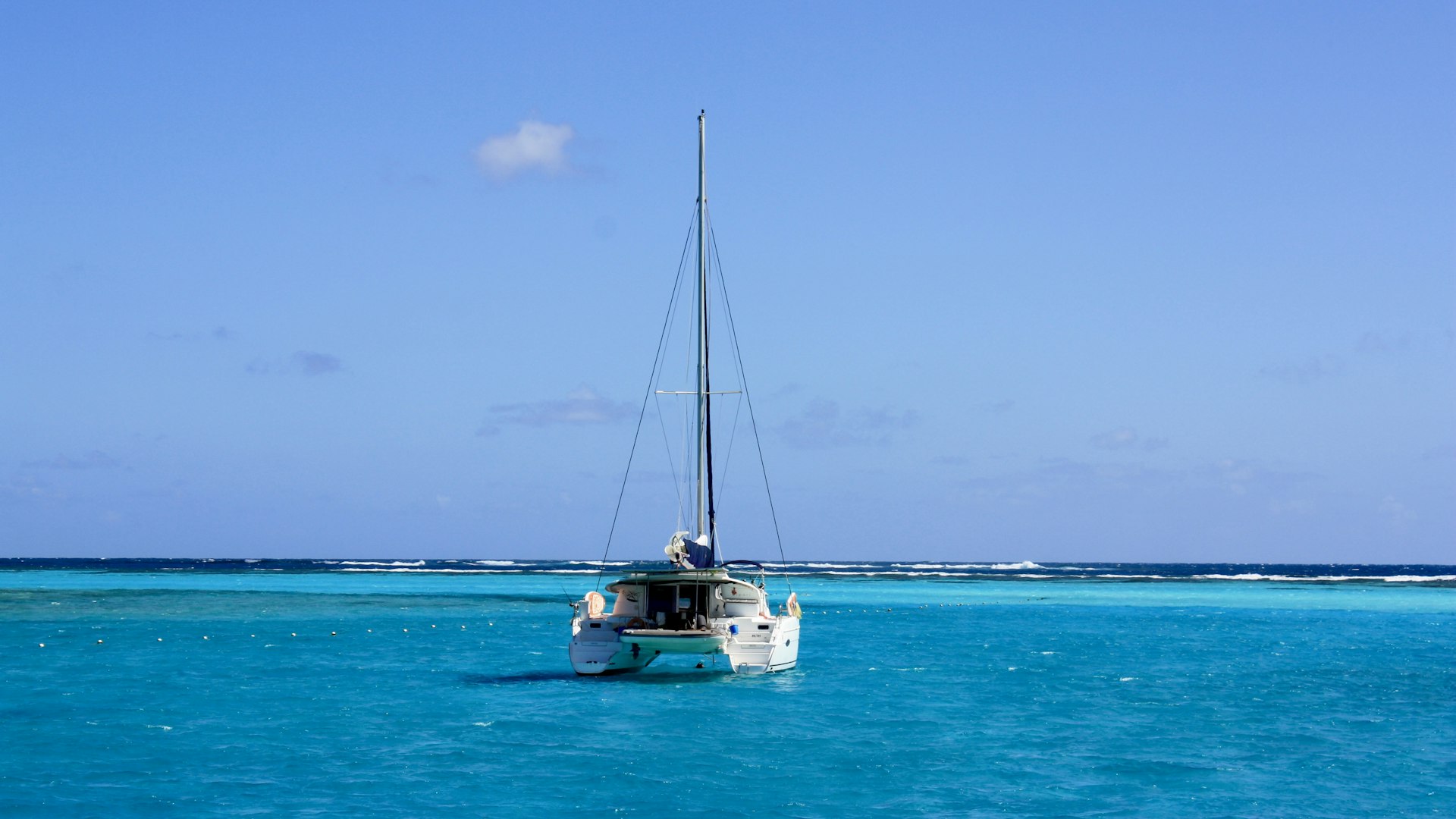
Catamaran Charter Indian Ocean

Catamaran Charter Indian Ocean

The Indian Ocean offers some of the world's most rewarding catamaran sailing: predictable trade winds, clear anchorages, and island groups far enough apart to reward passage-making yet close enough to structure a coherent week afloat.

Catamarans Available in Indian Ocean

Browse our selection of catamarans available for charter in Indian Ocean.

Bareboat Catamaran Lagoon 39 (2015)
catamaran

Bareboat Catamaran Lagoon 39 (2015)

Lagoon 39 · 2017

11.7m 6

From

€3k/week

View →
Bareboat Catamaran Lipari 41
catamaran

Bareboat Catamaran Lipari 41

Lipari 41 · 2010

11.9m 5

From

€3k/week

View →
Bareboat Catamaran Lagoon 380 (2016)
catamaran

Bareboat Catamaran Lagoon 380 (2016)

Lagoon 380 · 2016

11.5m 6

From

€4k/week

View →
Bareboat Catamaran Lagoon 380 (2018)
catamaran

Bareboat Catamaran Lagoon 380 (2018)

Lagoon 380 · 2018

11.6m 6

From

€4k/week

View →
Bareboat Catamaran Lagoon 42 (2016)- 6 Cabins
catamaran

Bareboat Catamaran Lagoon 42 (2016)- 6 Cabins

Lagoon 42 · 2016

12.8m 6

From

€4k/week

View →
Bareboat Catamaran Lagoon 400 S2
catamaran

Bareboat Catamaran Lagoon 400 S2

Lagoon 400 S2 · 2016

12.0m 6

From

€4k/week

View →
Bareboat Catamaran Fountaine Pajot Helia 44
catamaran

Bareboat Catamaran Fountaine Pajot Helia 44

Fountaine Pajot Helia 44 · 2018

13.3m 6

From

€4k/week

View →
Bareboat Catamaran Lagoon 40
catamaran

Bareboat Catamaran Lagoon 40

Lagoon 42 · 2019

11.7m 10 6

From

€4k/week

View →
Bareboat Catamaran Lagoon 450 with watermaker & A/C
catamaran

Bareboat Catamaran Lagoon 450 with watermaker & A/C

Lagoon 450 · 2013

14.0m 6

From

€4k/week

View →
Bareboat Catamaran Lagoon 42
catamaran

Bareboat Catamaran Lagoon 42

Lagoon 42 · 2018

12.8m 6

From

€4k/week

View →
Bareboat Catamaran Lagoon 42 (2017)
catamaran

Bareboat Catamaran Lagoon 42 (2017)

Lagoon 42 · 2017

12.8m 6

From

€4k/week

View →
Bareboat Catamaran Lagoon 450
catamaran

Bareboat Catamaran Lagoon 450

Lagoon 450 · 2015

14.0m 6

From

€4k/week

View →
Bareboat Catamaran Lagoon 450 Sportop (2017)
catamaran

Bareboat Catamaran Lagoon 450 Sportop (2017)

Lagoon 450 Sportop · 2017

14.0m 6

From

€5k/week

View →
Bareboat Catamaran Lagoon 450 Sportop (2018)
catamaran

Bareboat Catamaran Lagoon 450 Sportop (2018)

Lagoon 450 Sportop · 2018

14.0m 6

From

€5k/week

View →
Bareboat Catamaran Fountaine Pajot Saona 47
catamaran

Bareboat Catamaran Fountaine Pajot Saona 47

Fountaine Pajot Saona 47 · 2019

13.9m 5

From

€7k/week

View →
Bareboat Catamaran Lagoon 52 (2017)
catamaran

Bareboat Catamaran Lagoon 52 (2017)

Lagoon 52 · 2017

15.8m 6

From

€7k/week

View →
Crewed Catamaran SEA SPIRIT LAMU
catamaran

Crewed Catamaran SEA SPIRIT LAMU

Leopard 47 · 2006

14.3m 8 4

From

€7k/week

View →
Crewed Catamaran SAILFISH
catamaran

Crewed Catamaran SAILFISH

Knynsa 480 · 2009

14.8m 4

From

€8k/week

View →
Bareboat Catamaran Fountaine Pajot Saba 50
catamaran

Bareboat Catamaran Fountaine Pajot Saba 50

Fountaine Pajot Saba 50 · 2018

15.0m 7

From

€9k/week

View →
Crewed Power Catamaran OVER REEF
catamaran

Crewed Power Catamaran OVER REEF

Custom · 2019

16.0m 3

From

$15k/week

View →
Luxury Crewed Catamaran BETWEEN
catamaran

Luxury Crewed Catamaran BETWEEN

Leopard 58 · 2018

17.6m 5

From

€29k/week

View →
Crewed Catamaran LONESTAR
catamaran

Crewed Catamaran LONESTAR

Lone Star 85 · 2015

25.9m 16 6

From

€43k/week

View →
Luxury Crewed Catamaran MARIE JOSEPH
catamaran

Luxury Crewed Catamaran MARIE JOSEPH

Sunreef 80 Eco · 2021

24.0m 8 4

From

€87k/week

View →

From the granite-and-palm archipelago of the Seychelles to the reef-fringed atolls of the Maldives and the storied shores of Mauritius and Réunion, the Indian Ocean is not a single destination but a family of sailing theatres, each with its own character, wind regime, and culture. What they share is warm water year-round, reliable trade-wind patterns during their respective high seasons, and a depth of marine biodiversity that makes anchoring feel like a privilege.

Catamarans dominate the charter fleets here for good reason. Shallow-draft hulls open anchorages and lagoons that are simply off-limits to monohulls above a certain displacement. Wide deck space suits the tropical tempo: long breakfasts, afternoon snorkelling off the stern, sundowners watched from the trampoline. Our Indian Ocean fleet spans 23 catamarans from builders including Fountaine Pajot, Lagoon, Leopard, and Sunreef, covering everything from a competitively priced 38-footer for a couple seeking solitude to a custom performance cat capable of accommodating 16 guests in genuine comfort.

Why Charter in Catamaran charter in Indian Ocean

The Indian Ocean's defining sailing asset is its predictability. The Southeast Trade Winds that sweep across the southern basin between May and October arrive with the reliability of a scheduled service, typically sitting between 15 and 25 knots and generating long, well-formed swells that catamarans handle with particular efficiency. In the Seychelles, the NW monsoon from November to March brings lighter, warmer conditions favoured by those who prefer relaxed day-sailing over committed passages. Either way, charterers are rarely left searching for wind.

The geography rewards the catamaran format specifically. In the Seychelles inner islands, shallow lagoons behind Curieuse, the anchorage off Grand Anse Praslin, and the granite boulders of St Pierre islet all demand a boat that can nose into calm water in 2 metres or less. The Maldives' atoll structure means the most desirable overnight spots are inside reef systems that exclude deeper-keeled vessels entirely. Even in Mauritius, the lagoon system running from Le Morne to Île aux Bénitiers is catamaran country by design.

Beyond the sailing mechanics, the Indian Ocean delivers cultural breadth that is genuinely unusual for a sailing region. A week in the Seychelles means Creole cooking rooted in French, African, and South Asian tradition. Mauritius layers Hindu festivals, Hakka Chinese cuisine, and a Franco-Mauritian wine culture onto the same small island. The Maldives offers its own understated Dhivehi culture alongside some of the most technically impressive house-reef diving in the world. Charter here is rarely just about the sailing; the stops themselves carry weight.

Catamaran charter in Indian Ocean Highlights

1

Aldabra Atoll, Seychelles - the world's largest raised coral atoll and a UNESCO site accessible only by private vessel, home to 100,000 giant tortoises and pristine reef systems that see perhaps a handful of charter yachts per month

2

Curieuse Island and the Baie Laraie anchorage, Seychelles - a Marine National Park where granite boulders and mangrove channels frame a sheltered overnight stop within an easy day-sail of Praslin

3

Grand Anse, La Digue, Seychelles - the beach itself is only reachable by ox-cart or foot from the anchorage, which keeps crowds manageable and the setting intact; the snorkelling off the southern granite outcrops is genuinely excellent

4

Île aux Cocos, Rodrigues - a protected marine reserve east of Mauritius that most charter itineraries never reach; those who make the two-day passage find lagoon water of exceptional clarity and seabird colonies that treat visiting boats as unremarkable furniture

5

Rangiroa-equivalent reef passes in the Maldives - notably the Vaadhoo Channel and passes around South Malé Atoll, where strong tidal flows create drift dives rich with manta rays and grey reef sharks visible directly from the anchor

6

Le Morne Peninsula lagoon, Mauritius - the south-west corner of the island hosts water shallow enough to kiteboard in and deep enough to anchor overnight; the basalt mountain behind creates reliable thermal winds that make it the best sailing day on any Mauritius circuit

7

Bird Island, Seychelles - the northernmost coral island of the inner archipelago, flat and low-lying in contrast to the granite drama elsewhere, with tern colonies numbering in the hundreds of thousands between May and November and a calm anchorage on the western side

When to Sail

Sailing conditions vary significantly across the Indian Ocean's sub-regions because different archipelagos experience opposing monsoon cycles. Broadly, May to October represents the premium sailing window across the Seychelles, Mauritius, and the southern Maldives, though the Seychelles' inner islands remain accessible year-round thanks to their position close to the equator.

High Season (Jun-Sep)

The Southeast Trades are at their most reliable across the southern Indian Ocean, typically sustained between 18 and 28 knots with a directional consistency that simplifies passage planning. Seychelles inter-island sailing is at its best from June through August, with clear visibility and manageable seas in the inner island group around Mahé, Praslin, and La Digue. Mauritius experiences its dry, cooler winter during these months, making coastal sailing comfortable and the lagoon at Le Morne particularly well-sheltered. The Maldives' southern atolls, including Addu and Huvadhoo, see the tail of the SW monsoon, which is manageable for experienced charterers seeking emptier anchorages.

Shoulder Season (May, Oct)

May and October represent the transition windows between monsoon regimes and are often underrated. In May, the Southeast Trades are establishing themselves: winds are lighter and less consistent than mid-summer but the anchorages are quieter and provisioning in hubs like Victoria (Mahé) or Port Louis is easier without the peak-season pressure. October brings the dying stages of the SE Trades before the NW monsoon arrives in November; sea states settle, temperatures climb, and visibility underwater peaks. Both months suit charterers prioritising flexibility and privacy over optimal wind consistency.

Choosing the Right Yacht

Catamarans are the empirically correct choice for the Indian Ocean's island sailing, and the logic is straightforward. Draft is the primary constraint across all three major archipelagos: the Maldives' pass and lagoon systems, the Seychelles' granitic shallows, and the Mauritian fringing reef all impose depth restrictions that eliminate most monohulls from the most interesting anchorages. A Fountaine Pajot Saba 50 or a Lagoon 380 typically draws under 1.2 metres, which is the difference between anchoring in a turquoise lagoon and watching it from the channel. The wide beam also matters more here than in Mediterranean sailing: with fewer marina berths and more nights at anchor, the deck becomes living space, and the cockpit-to-saloon flow of a well-designed cat is genuinely superior for tropical liveaboard use.

Seven Days Through the Seychelles Inner Islands from Mahé to Praslin

A suggested week-long charter route

Day 1

Depart Victoria Harbour, Mahé after crew briefing and provisioning. The capital's market on Sir Selwyn Clarke Street is worth an early start for fresh tuna, breadfruit, and Creole spices. Sail north on the SE Trades to Beau Vallon Bay on Mahé's northwest coast for a first night at anchor, short enough to settle in and long enough to confirm everything works.

Day 2

Passage north-east to Silhouette Island, approximately 20 nautical miles. Anchor in the lee of Grande Barbe on the western shore. Silhouette is the third-largest island in the Seychelles and one of the least developed: dense forest runs to the waterline and the resident Hawksbill turtle population uses the beaches nightly. Dinner aboard using the morning's market provisions.

Day 3

Sail east across the North Island Channel to Curieuse. The passage is typically 15 to 18 knots of SE breeze on the beam, the cat's ideal point of sail. Anchor in Baie Laraie and dinghy ashore to walk the ranger-managed tortoise reserve. Afternoon snorkel along the southern granite wall before repositioning to the anchorage off Anse Volbert on Praslin's north coast for the night.

Day 4

Day at Praslin: morning visit to the Vallée de Mai, the prehistoric palm forest that is the only wild habitat of the Coco de Mer palm and a UNESCO World Heritage site. Arrange a guided walk through the charter; it warrants the time. Afternoon sailing south to Anse Georgette, accessible only by sea or by private arrangement through the adjacent resort, which makes the catamaran approach preferable to any alternative.

Day 5

Downwind run south-east to La Digue. Anchor off the main settlement and take the dinghy to the jetty. Hire bicycles, the primary mode of island transport, and ride to Anse Source d'Argent, whose granite boulder formations are among the most photographed in the Indian Ocean for good reason. The reef here is shallow in places, so snorkelling kit off the rocks is more productive than bringing the dinghy.

Day 6

Explore the outer islands south of La Digue. Île Cocos and the anchorage off Félicité offer a full day of snorkelling in a Marine National Park with genuinely high fish density. This is the itinerary's most remote day, with limited other vessel traffic if you arrive early. Return to Anse Volbert, Praslin for a final night alongside or at anchor.

Day 7

Return passage to Mahé, approximately 40 nautical miles south-west. The SE Trade Wind makes this a fast, comfortable run in following or quartering conditions. Arrive Victoria by mid-afternoon for customs clearance and handover. The port authority at Victoria processes departures efficiently with 24 hours' notice; your charter manager will coordinate clearance paperwork from day five onwards.

Local Tips

  • Entry formalities in the Seychelles require a valid cruising permit from the Seychelles Maritime Safety Authority. Your charter base will handle this, but confirm it is issued before departure and carry both the physical permit and a digital copy; park rangers at Curieuse and other marine reserves ask to see it.
  • Provisioning in Victoria (Mahé) is the most reliable option across all Seychelles itineraries. SMB Hypermarché near the waterfront carries reasonable imported wine and spirits. For fresh produce, the Sir Selwyn Clarke Market opens early and the fish section is supplied directly from the Mahé fishing cooperative, so the quality of tuna and snapper is consistently high.
  • Tide planning matters more than charterers expect in the Seychelles' granitic inner islands. Several anchorages near La Digue and around Félicité have coral heads that are manageable on a rising tide and require caution at low water. Study the tidal data daily; the range is modest (under a metre) but the combination of low tide and swell from the south-east can expose coral that is not charted in granular detail.
  • In Mauritius, the Inland Revenue Authority requires a cruising licence for foreign yachts, and the Port Louis Customs clearance at Caudan Marina is generally efficient. Note that some northern lagoon anchorages near Île d'Ambre have restricted access related to protected reef zones; check the latest MACOI (Maritime Authority of Côte d'Ivoire, do not confuse) guidance via the Mauritius Port Authority directly.
  • Reef anchoring protocols are strictly enforced across all three Seychelles, Mauritius, and Maldives jurisdictions. Sand anchoring only in designated zones is the rule, not a courtesy request. Most charter catamarans with modern chartplotters will have waypoints marked for acceptable sand patches at the main anchorages, but always verify visually with a mask and snorkel before setting.
  • Local cuisine is one of the stronger reasons to eat ashore at least twice per itinerary. In the Seychelles, seek out the small Creole restaurants (karo lakwizin) at Grand Anse Praslin or La Passe on La Digue, where octopus curry, breadfruit chips, and smoked sailfish are served at prices that bear no relationship to the exclusivity of the surrounding scenery.

Frequently Asked Questions

Do I need a skipper or can I bareboat charter in the Indian Ocean+
Both options exist within our fleet, but the answer depends heavily on your destination. The Seychelles permits bareboat chartering for competent sailors with documented offshore experience and a recognised qualification such as RYA Coastal Skipper or ISPA equivalent. The Maldives is more complex: the atoll navigation requires very current chart knowledge and familiarity with pass entry in swell, and most experienced charterers there opt for a local skipper even with strong CVs. Mauritius bareboat is generally straightforward for the lagoon circuit. We assess your experience against the specific destination before confirming bareboat availability.
What is the minimum budget for a week's catamaran charter in the Indian Ocean+
The entry point in our current fleet is around EUR 3,000 per week for smaller catamarans in the shoulder season, though the more representative range for a comfortable week with adequate space for four to six guests sits between EUR 4,000 and EUR 8,000. Larger performance cats and custom builds for eight or more guests move the figure considerably higher. These figures are the yacht charter fee only; provisioning, fuel, port fees, and crew gratuity are additional and should be budgeted at roughly 25 to 35 per cent of the base rate for a typical week.
Which is better for a catamaran charter, the Seychelles or the Maldives+
They suit different priorities. The Seychelles offers a sailing holiday in the traditional sense: island-hopping, variable scenery from granite drama to coral cay, and a Creole culture that rewards going ashore. The Maldives is primarily a marine experience where the above-water scenery is relatively uniform but the underwater world, mantas, whale sharks, and reef fish density, is exceptional. Seychelles passages are longer and more rewarding for those who want to actually sail; the Maldives is better for those whose primary motivation is being in the water rather than on top of it.
How far in advance should I book an Indian Ocean catamaran charter+
For high-season dates between June and September, the better boats in our fleet book out six to nine months ahead. December and January are also heavily subscribed due to the NW monsoon season and the Christmas premium. If your dates are flexible, the shoulder months of May and October offer both better availability and the possibility of negotiated rates on some yachts. Contact us with a 3-month window of flexibility and we can typically find strong options at shorter notice.
What sailing qualifications are accepted for bareboat charter in the Seychelles+
The Seychelles Port Authority and most charter operators accept RYA Coastal Skipper (or Day Skipper with sufficient logged offshore miles), ISPA equivalents, and ASA certifications at the offshore passage-making level. You will need to provide a sailing CV alongside your certification, and most bases conduct a brief checkout sail before releasing the yacht. If your qualification is sailing-school based with limited offshore mileage, we would recommend adding a professional skipper for the first day or two, which is an arrangement we can organise independently of a full crewed charter.
Are children well-suited to an Indian Ocean catamaran charter+
Catamarans are generally well-suited to families with children: the stability at anchor removes much of the motion that unsettles younger guests, the wide deck provides safe play space, and the shallow-water snorkelling across all three main archipelagos engages children from around age six upwards. The main practical consideration is sun management; the Indian Ocean UV index is consistently extreme and mid-afternoon deck time without serious SPF and shade is not advisable. Most of our larger catamarans have substantial hardtop shade structures over the cockpit, which we would specify as a priority criterion for families.

Speak to our Indian Ocean specialists to match the right catamaran to your dates, party size, and sailing ambitions.

Request Your Charter

Request Your Charter

Tell us about your dream voyage and we will find the perfect yacht for you.