Miami Yacht Charters

Miami Yacht Charters

From Biscayne Bay to the Bahamas, Miami places you at the intersection of serious offshore sailing and one of the world's most energetic waterfront cities — with the Gulf Stream running just 50 miles east.

Charter by Vessel Type in Miami

Catamaran Charter in Miami

Spacious twin-hull vessels offering stability, comfort, and generous deck space for the ultimate charter experience.

Sailing Yacht Charter in Miami

Classic sailing vessels that combine timeless elegance with the thrill of wind-powered adventure.

Motor Yacht Charter in Miami

Powerful luxury vessels delivering speed, sophistication, and effortless cruising across any waters.

Miami is not simply a departure point. The city itself is part of the charter experience: a working deep-water port and pleasure-craft capital where the skyline rises directly from Biscayne Bay, and where provisioning, crew, and fuel logistics are among the most efficient on the Eastern Seaboard. Charterers flying into MIA or FLL can be aboard and underway within hours of landing.

What distinguishes a Miami charter from other Florida bases is the genuine range of options available within a single week. You can spend mornings anchored off Stiltsville in the shallow flats of Biscayne National Park, afternoons threading the cuts between the barrier islands of Key Biscayne and Virginia Key, and — if your yacht and weather window permit — be waking up in the Bahamas within 24 hours of departure. The fleet here reflects that versatility: from nimble day boats to capable offshore motor yachts.

Why Charter in Miami

Miami sits at a genuinely privileged geographic position. Biscayne Bay provides 35 miles of protected, shallow-to-moderate depth water directly behind the barrier islands, making it excellent for catamarans and mid-size motor yachts that prefer calm anchorages over open-water passages. The bay's clarity, particularly south of Coconut Grove, is often underestimated by first-time visitors.

The city's marina infrastructure is outstanding. Dinner Key Marina in Coconut Grove is one of the largest municipal marinas in the US and a genuine hub of local sailing culture. Island Gardens at Watson Island sits minutes from the Art Deco districts of Miami Beach. Bayside Marina places you within walking distance of Bayfront Park and the downtown core. Fuel, chandlery, provisioning from premium grocers, and concierge yacht services are available at all major facilities.

For charterers with an eye on the offshore, the Gulf Stream is an irreplaceable asset. Running northeast at two to four knots along Florida's coast, it compresses the effective crossing time to the Bahamas and provides a reliable, warm-water passage for appropriately equipped vessels. The window for crossing is well-documented: winds below 15 knots from the south or southeast, which occur frequently between November and April, produce a comfortable beam reach across the Florida Straits.

Miami Highlights

1

Biscayne National Park — Over 95% of this 173,000-acre park is water. The Elliott Key anchorage, Convoy Point, and the Adams Key day dock offer wilderness-level quiet within 25 miles of downtown Miami. Manatees and bottlenose dolphins are consistent companions.

2

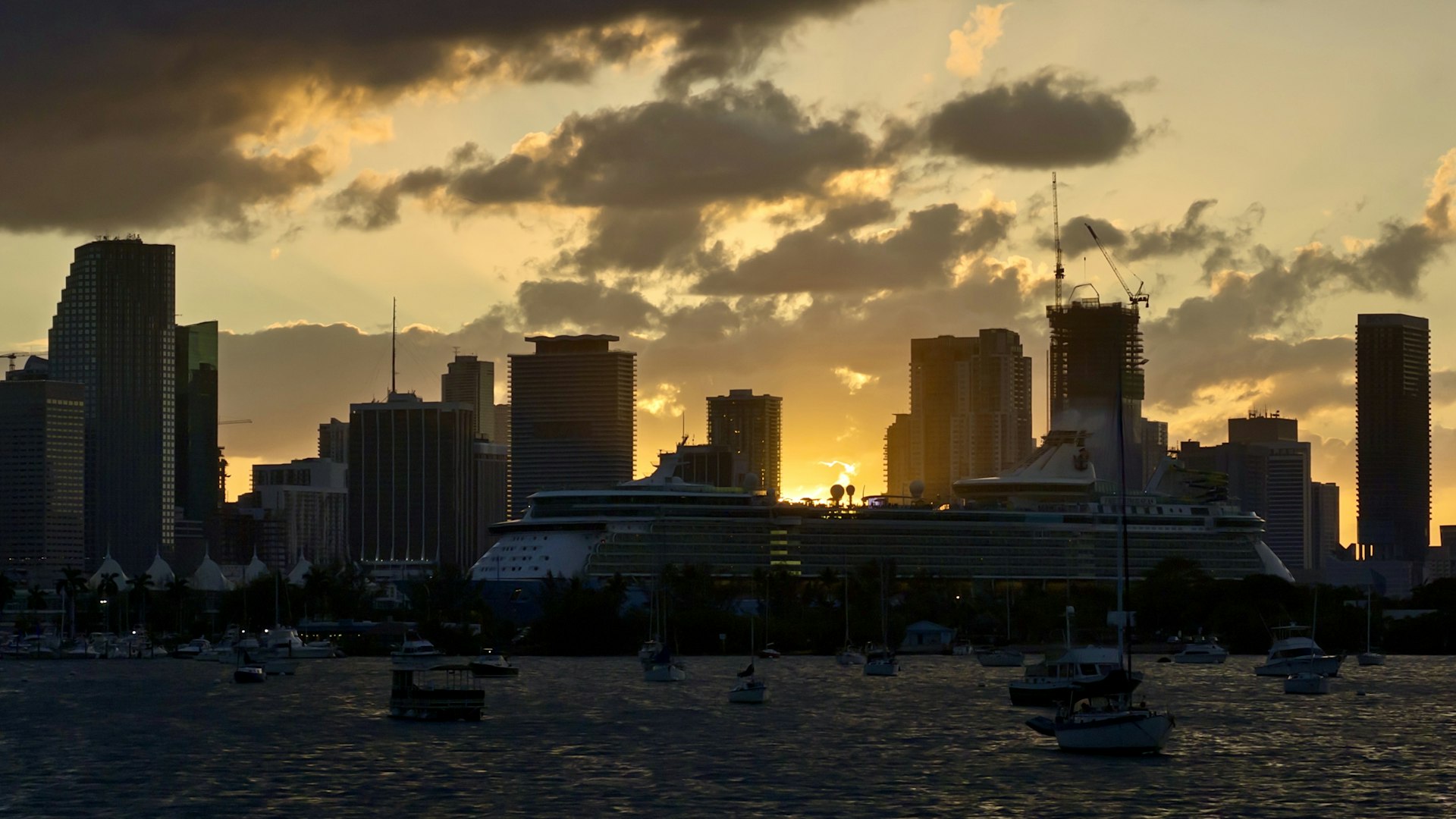
Stiltsville — Seven elevated structures sitting on wooden pilings in the middle of Biscayne Bay, remnants of a mid-20th-century fishing and social scene. Anchoring nearby at sunset, with the Miami skyline glowing behind you, is one of the more quietly dramatic moments available on any US coastal charter.

3

Key Biscayne and Cape Florida — The lighthouse at Cape Florida State Park marks the southern tip of Key Biscayne island and one of the best dinghy landing beaches in the bay. Anchor in the lee of the cape and explore the 1825 lighthouse, the oldest standing structure in Miami-Dade County.

4

The Miami Beach Sandbars — At low tide, several sandbars emerge between Miami Beach and the barrier islands. On summer weekends these become impromptu social gatherings for the local boating community. They are worth timing into any itinerary once.

5

Dinner Key Anchorage, Coconut Grove — The anchorage off Coconut Grove retains a genuine sailing-village character at odds with the rest of Miami. The dinghy dock at Dinner Key puts you minutes from the Coconut Grove restaurants along Grand Avenue and the quieter lanes of the historic neighbourhood.

6

Government Cut — The main ship channel separating Miami Beach from Fisher Island. Watching container ships and cruise liners transit at close quarters, framed by the South Beach skyline, is a distinctly Miami experience. The outer sea buoy at Government Cut is also the staging point for Bahamas passages.

7

The Florida Keys Gateway — A southbound run from Miami through Card Sound or Biscayne Channel opens into the upper Florida Keys within three to four hours. Key Largo's John Pennekamp Coral Reef State Park — the first underwater park in the US — is within easy range for a multi-day itinerary extending south.

When to Sail

Miami's charter calendar divides sharply between a dry, settled winter season that is ideal for offshore passages and a warm, wetter summer with stronger afternoon winds — both have their advocates depending on what kind of sailing you are after.

High Season (Jun-Sep)

Summer in Miami is hot and humid, with sea surface temperatures reaching 86°F and afternoon thunderstorms that build reliably between 3 and 6pm from June through September. Winds are predominantly from the southeast at 10 to 18 knots in the morning, strengthening ahead of convective cells in the afternoon. This is peak season for Biscayne Bay sailing — flat water, warm nights on the hook, and lively weekends at Sandbar off Nixon Beach. Hurricane season runs June through November; most experienced charterers monitor conditions closely and avoid week-long offshore commitments from August onwards. Rates tend to be lower than the winter peak.

Shoulder Season (May, Oct)

May and October represent the most balanced sailing conditions of the year. May is particularly prized: the winter crowds have thinned, wind patterns are transitional and generally benign, water temperatures are already above 80°F, and the risk of severe weather remains low. October is marginally more complex given the tail end of hurricane season, but statistically produces excellent weather and is a favourite among experienced offshore charterers positioning for a Bahamas run before the winter holidays. Both months offer more flexibility with marinas and berths.

Choosing the Right Yacht

The majority of the SelectYachts fleet available from Miami is motor yachts, and the logic is straightforward: Biscayne Bay's varying depths and the need for passage flexibility favour a vessel that is not dependent on wind direction. Mid-size motor yachts in the 42- to 55-foot range, including Azimut and Cranchi models, handle the bay comfortably and carry enough range for a Bahamas day-run if conditions allow. For larger groups or those prioritising social deck space, the Ferretti and Pershing range offers proper offshore capability with significant entertaining volume. Catamarans are a strong choice for charterers whose priorities are shallow-water anchoring, stability at rest, and maximum deck space. Bali and Fountaine Pajot models in the fleet draw less than four feet, which opens up the park anchorages and the sandbar areas that deeper-drafted motor yachts cannot access. The wide beam also means more practical living space for families or groups spending nights aboard. For a Bahamas-focused itinerary departing Miami, a capable catamaran in settled conditions is an excellent platform — comfortable on a reach and spacious once anchored.

Seven Days from Miami Through Biscayne Bay and the Upper Keys

A suggested week-long charter route

Day 1

Board at Dinner Key Marina or Island Gardens in the late afternoon. Familiarise yourself with the yacht and conduct a shakedown around Biscayne Bay's northern reaches. Anchor off the Coconut Grove waterfront for dinner either aboard or ashore in the Grove's restaurant quarter. The bay is calm by evening.

Day 2

Transit south through the bay in the morning, passing the Stiltsville structures on a rising tide. Continue to the Adams Key day dock at Biscayne National Park for lunch. Anchor overnight in the Elliott Key Harbour, where the park's only overnight anchorage offers flat, protected water and total darkness after sunset.

Day 3

A full day at Elliott Key. Explore the hardwood hammock trails ashore, snorkel the nearshore reef at Elkhorn and Caesar Creek, and take the dinghy into the shallower flats to the west. This is prime territory for spotting manatees and tarpon. Return to the anchorage by late afternoon.

Day 4

Depart early and transit through Biscayne Channel into the Atlantic side, heading south towards Key Largo. Conditions on the ocean side are typically more active than the bay — a useful gauge of the group's offshore appetite. Arrive at Key Largo and berth at or anchor near Pennekamp State Park for snorkelling on the coral reef system.

Day 5

A morning dive or snorkel at John Pennekamp — the Christ of the Abyss statue at 25 feet is the most recognised underwater landmark in Florida. Lunch aboard, then retrace north up the inside of the Keys through Florida Bay's shallow channels back into Biscayne Bay. Anchor off Cape Florida for the final approach into the bay.

Day 6

A day structured around the city. Motor north to Watson Island or Bayside Marina and spend the day ashore: the Wynwood Walls art district, the Design District, or South Beach are all within reach. Return to the yacht for sunset cocktails in Government Cut, watching the cruise ships depart.

Day 7

Final morning at anchor off Key Biscayne or the northern bay sandbars, depending on wind. Swim, paddleboard, and take a last breakfast aboard before returning to base for disembarkation by midday. Luggage transfer and taxis to MIA or FLL can be arranged through your charter manager.

Local Tips

  • US Customs and Border Protection protocols apply to all vessels arriving from the Bahamas. If your itinerary crosses international waters, ensure your charter manager arranges the appropriate documentation in advance. CBP's ROAM app handles re-entry reporting for recreational vessels and significantly streamlines the process at official ports of entry including Ft. Lauderdale and Miami.
  • Provisioning in Miami is genuinely excellent. Whole Foods at Coconut Grove, Fresh Market on South Beach, and the Epicure Market on Alton Road all supply charter-quality produce, charcuterie, and wine. For dry goods and spirits, Total Wine at the Falls on US-1 offers significant selection and volume pricing for week-long stocks.
  • Bridge clearance matters more in Miami than in most sailing destinations. The Venetian Causeway, Julia Tuttle Causeway, and several bay crossings have fixed bridge heights that will constrain taller motor yachts. Confirm your vessel's air draft with your charter manager before planning any route through the causeways or the inland waterway sections.
  • Miami's waterways attract heavy weekend recreational traffic from late morning on Saturdays and Sundays. Sandbars and popular anchorages fill by noon on peak summer weekends. Arriving by 10am secures the best positions and avoids the wake from personal watercraft. Weekday mornings in the bay are an entirely different experience.
  • The local cuisine is worth engaging with seriously. Miami's food scene is heavily influenced by Cuban, Venezuelan, and Colombian communities. Versailles on Calle Ocho (SW 8th Street) has been serving Cuban food since 1971. In Coconut Grove, GreenStreet Café and Bombay Darbar offer quieter settings appropriate for a dinner off the boat after a day on the water.
  • Afternoon convective storms between June and September develop rapidly and move fast. Keep an eye on the western horizon by 2pm daily. Most storms pass within 30 to 45 minutes, but seeking a protected anchorage or marina before they arrive is standard practice. The National Weather Service Miami office issues timely small craft advisories that your captain will monitor.

Frequently Asked Questions

Can I sail to the Bahamas on a Miami charter+
Yes, provided you charter an appropriately equipped and crewed vessel and the weather window is suitable. The crossing from Government Cut to Bimini is approximately 50 nautical miles across the Florida Straits, typically taking four to six hours on a motor yacht. The Gulf Stream runs northeast through this corridor at up to four knots, which becomes a significant factor in routing — most skippers depart at first light and head south of the direct track before crossing. Not all charter vessels in the fleet are cleared or equipped for offshore passages, so confirm this requirement at the enquiry stage.
What is the best base marina for a Miami charter+
It depends on your priorities. Dinner Key in Coconut Grove is the most practical base for those wanting neighbourhood character and easy access to provisioning. Island Gardens at Watson Island is closer to Miami Beach nightlife and the MacArthur Causeway. Bayside Marina is convenient for groups arriving downtown. All three have adequate fuel, pump-out, and crew facilities. For vessels heading south into Biscayne National Park early, Homestead Bayfront Marina near Florida City significantly shortens the transit.
What type of licence or experience do I need to bareboat charter in Miami+
US bareboat operators typically require evidence of sailing or powerboat experience commensurate with the vessel size. In practice, most charter companies require a completed sailing résumé and may conduct a brief competency check on departure. For larger or offshore-capable vessels, a US Coast Guard licence or recognised equivalent (RYA Coastal Skipper or above) is often required. If you prefer to focus on the experience rather than the navigation, a crewed or skippered charter removes this requirement entirely and is the more common format among first-time Miami charterers.
How far in advance should I book a Miami winter charter+
The December through March window is the most competitive period. Art Basel Miami Beach in early December creates a sharp spike in demand across all marine and hospitality sectors, and suitable yachts for that week are typically committed six or more months in advance. For January through March, three to four months ahead is a reasonable minimum for a specific yacht preference. Summer weeks are generally more available, though the best vessels still go early in the season.
Is Miami suitable for families with younger children+
Very much so, particularly on Biscayne Bay. The protected water inside the barrier islands is calm, the temperatures are warm year-round, and the marine wildlife — manatees, nurse sharks, pelicans, rays — is consistently engaging for younger guests. Catamarans are the preferred platform for families given the stability and deck space. The national park anchorages at Elliott Key have dinghy landing beaches and trail systems that work well for children, and provisioning for dietary requirements is straightforward in Miami.
What are the anchoring rules in Biscayne National Park+
Anchoring within Biscayne National Park is permitted in designated areas only. Elliott Key Harbour is the primary overnight anchorage and has a mooring field maintained by the National Park Service. Anchoring directly on seagrass is prohibited and enforced. No discharge of any waste is permitted within park boundaries. Day-use areas at Adams Key, Convoy Point, and the Elliott Key basin have dinghy docks with short time limits. Your captain will carry the relevant park charts and regulations; it is worth reviewing them before the southern legs of any Biscayne itinerary.

Tell us your dates and group size and we will identify the right vessel from our Miami fleet within 24 hours.

Request Your Charter

Request Your Charter

Tell us about your dream voyage and we will find the perfect yacht for you.