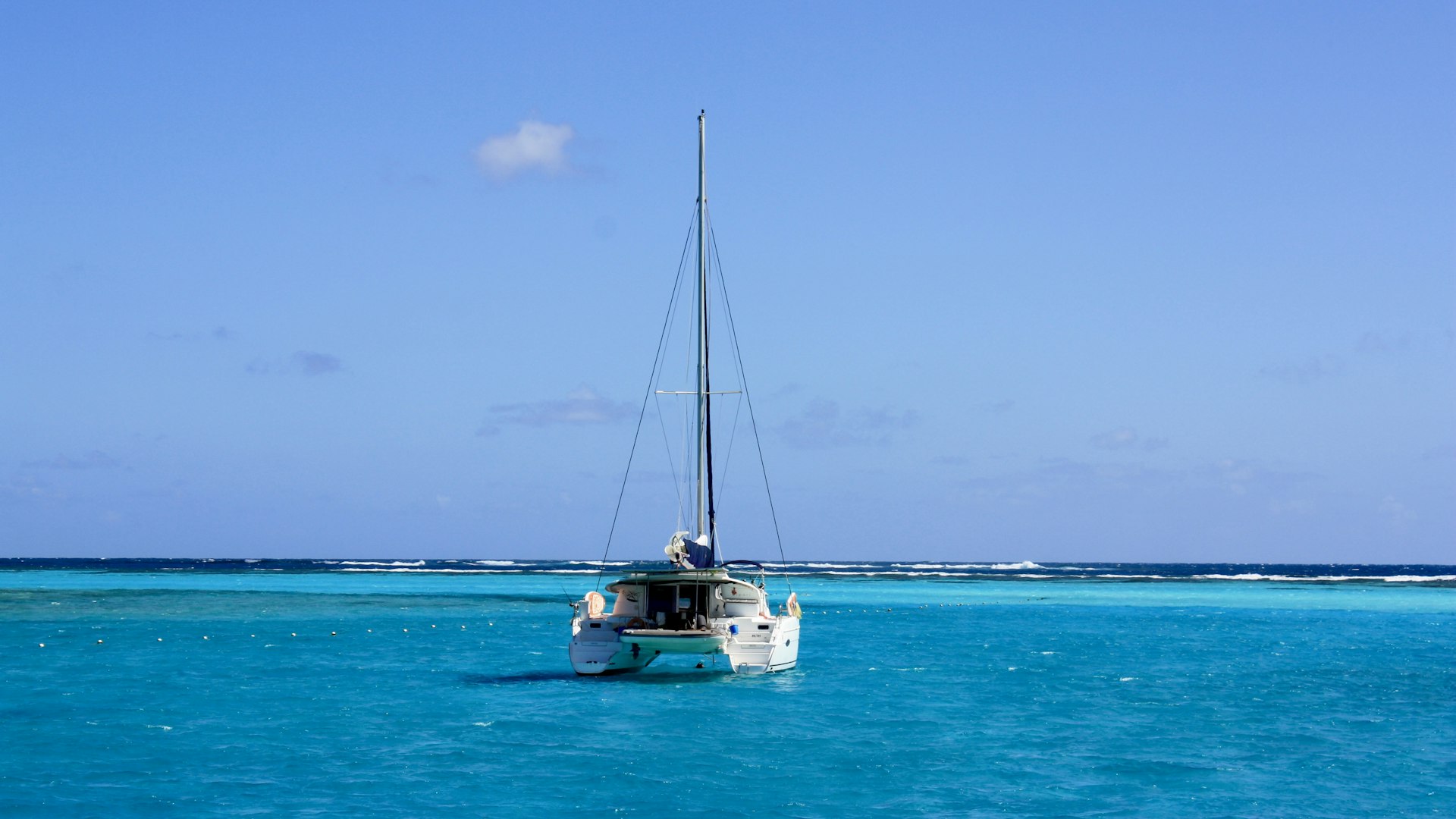
Catamaran Charter USA

Catamaran Charter USA

From the protected sounds of the Chesapeake to the turquoise shallows of the Florida Keys, catamaran charter in the USA offers a breadth of sailing environments that few countries can match. Wide decks, shallow draught, and generous living space make the platform the natural choice for exploring America's most varied coastal waters.

Catamarans Available in USA

Browse our selection of catamarans available for charter in USA.

The United States coastline stretches across six distinct sailing regions, each with its own wind patterns, anchorages, and character. New England's granite harbours, the mid-Atlantic's sheltered estuaries, the Gulf Coast's warm and forgiving shallows, the Pacific Northwest's dramatic fjord-like inlets, and the sun-bleached archipelagos of the Florida Keys and the Virgin Islands all fall within reach of a well-chosen catamaran charter. Few countries reward the live-aboard sailor with quite this level of variety.

Catamarans suit the American sailing landscape particularly well. The shallow-draught advantage is decisive in the Bahamas side-trips accessible from Florida, along the Intracoastal Waterway, and in the tidal flats of the Chesapeake Bay, where a monohull of comparable size would either anchor well offshore or not visit at all. The stable platform also converts sceptical first-time charterers into committed sailors, which matters when you are persuading a group of friends or business partners to share a week afloat.

Why Charter in Catamaran charter in USA

The United States offers something that most premium charter destinations cannot: genuine variety within a single country. Spend Monday anchored off a deserted sandbar in the Keys, and by Friday you could be dining at a waterfront restaurant in a New England harbour town where the lobster came out of the water that morning. Customs formalities, currency, and communications are frictionless, which means you can focus entirely on the sailing and the destination.

Marina infrastructure along the eastern seaboard is among the best in the world. Fuel docks, pump-out stations, provisioning stores, and riggers are accessible in nearly every substantial harbour from Maine to Miami. The US Coast Guard maintains well-lit channels and reliable buoyage, and NOAA chart coverage is exhaustive. For charterers who want predictable logistics, this matters as much as the scenery.

For those who want open-water sailing rather than coastal hopping, the Gulf Stream passage between Florida and the Bahamas adds an offshore dimension that can be managed on a one-week itinerary. The Stream runs at two to four knots northeast and can be crossed in a brisk day sail from Fort Lauderdale or Miami, delivering the boat into the clear Bahamian shallows that a catamaran was designed to explore.

Catamaran charter in USA Highlights

1

The Florida Keys, Mile Marker Zero to Marathon - reef-protected anchorages, flats fishing for permit and bonefish, and some of the clearest inshore water on the eastern seaboard, accessible from Key West's well-equipped Garrison Bight Marina.

2

Penobscot Bay, Maine - granite islands, spruce-lined anchorages at North Haven and Deer Isle, and fog-free summer weeks that feel genuinely remote despite being three hours from Boston.

3

Narragansett Bay and Newport, Rhode Island - strong tidal currents through the West Passage demand attention, but the reward is an anchorage within walking distance of the Gilded Age Newport mansions and an exceptionally well-provisioned town.

4

The San Juan Islands, Washington State - Roche Harbor and Stuart Island offer protected anchorages in one of the most biodiverse sailing environments in North America, with orca sightings between June and October a real possibility.

5

Chesapeake Bay, Maryland and Virginia - 11,600 miles of shoreline, the South River and Eastern Shore tributaries, blue-crab season from May to October, and a unique architecture of colonial waterfront towns that rewards slow exploration.

6

Biscayne Bay and the Baha Mar approach, Florida - the catamaran's natural habitat: sand banks, mangrove channels, and day-sail access to the northern Bahamas via an overnight Gulf Stream crossing from Miami's Miamarina.

7

Puget Sound, Washington - Gig Harbor and the Tacoma Narrows require tidal timing, but the Sound delivers mountain backdrops, excellent dungeness crab, and a distinctly Pacific Northwest mood that has no equivalent on the east coast.

When to Sail

The USA's sailing regions have meaningfully different optimal windows. The Florida Keys and Gulf Coast sail comfortably from November through April, while the Northeast and Pacific Northwest peak between June and September. The Caribbean-influenced US Virgin Islands offer year-round sailing with a brief hurricane-season pause.

High Season (Jun-Sep)

Summer is the dominant charter season for New England and the mid-Atlantic, particularly Cape Cod, Narragansett Bay, and Long Island Sound. Prevailing south-westerlies average 12-18 knots, temperatures are warm enough for swimming, and the lobster season is in full swing. In the Pacific Northwest, summer brings the Juan de Fuca and San Juan Islands their best wind and longest daylight. Note that peak summer in the Gulf of Mexico and Florida falls outside optimal charter season due to heat and afternoon thunderstorm activity; the North Atlantic hurricane corridor requires careful monitoring from July onwards for anyone sailing south of the Carolinas.

Shoulder Season (May, Oct)

May and October represent exceptional value in the Northeast, with fewer charter boats on the water, settled winds, and foliage colour in October that transforms anchorages like Penobscot Bay and Narragansett. In Florida, October is the beginning of the dry, cooler season that runs through April, making it the shoulder entry point for Keys and Bahamas itineraries. Wind is generally more consistent in October than in the height of winter, and marinas have not yet filled with the snowbird flotilla that arrives from November.

Choosing the Right Yacht

Catamarans are the most practical choice across the majority of US charter regions, and the reasoning is structural rather than stylistic. The shallow draught of a 42-48ft catamaran typically sits between 1.0 and 1.4 metres, opening up anchorages in the Chesapeake's tributary rivers, the Florida Keys' nearshore flats, and the tidal estuaries of the Pacific Northwest that monohulls of equivalent accommodation simply cannot reach. The wide beam delivers a cockpit and saloon that feel genuinely residential, which matters on longer itineraries where the boat is your home as much as your transport. Models from Lagoon, Fountaine Pajot, and Bali dominate the US charter fleet for good reason: the Saba 50 and Salina 48 carry eight guests in four cabins without feeling crowded, while the Bali 4.1 and 4.5 offer the enclosed flybridge helm station that works well in variable weather.

Seven Days in the Florida Keys, Biscayne Bay to Key West

A suggested week-long charter route

Day 1

Depart Miamarina at Bayside in Miami on the afternoon tide. Motor south through Biscayne Bay's well-marked channel, anchor in the lee of Elliott Key by early evening. The water here is clear to twelve feet, and the National Park Service prohibits power craft at anchor after dark, making it genuinely quiet.

Day 2

Sail south down the bay to Card Sound and negotiate the fixed bridge at 65-foot clearance (confirm your mast height before departure). Anchor off Pumpkin Key in Card Sound's protected eastern arm. Provisioning run by dinghy to the Alabama Jack's dock for conch fritters.

Day 3

Transit through Jewish Creek at high water and down into the upper Keys. Islamorada offers a full-service marina at Bud n' Mary's and access to world-class flats fishing guides who can put you on permit and tarpon before breakfast.

Day 4

Full day at anchor off Fiesta Key or Vaca Key in Marathon. The catamaran's stability makes snorkelling off the stern ladder easy; the Sombrero Reef lighthouse marker is a short dinghy ride for experienced snorkellers. Marathon's Publix supermarket for provisioning mid-week.

Day 5

Sail the Seven Mile Bridge approach down to the lower Keys. Anchor in the Newfound Harbor Channel, one of the consistently clearest anchorages in the Keys, with a coral head at the northern end that justifies bringing dive equipment.

Day 6

Arrive Key West and berth at the Conch Harbor Marina on the north-western side of the island. Key West's Duval Street is a short walk. The evening crowd thins considerably once you move two blocks north towards the Bahama Village neighbourhood, where the cooking is better and the noise lower.

Day 7

Morning at leisure in Key West, then a downwind return passage with the prevailing south-easterly on the quarter. If the breeze is above 15 knots, the run from Key West to Marathon under a poled-out genoa on a catamaran is one of the better afternoon sails in Florida. Return to Miami the following morning after a final night at anchor in Biscayne Bay.

Local Tips

  • US Customs and Border Protection requires advance notice for any vessel arriving from foreign waters, including the Bahamas. File a CBP Form 3300 through the CBP ROAM app before crossing the Gulf Stream; the fine for non-compliance is significant and enforced.
  • Pump-out is mandatory in most Florida State waters and in National Parks. Most marinas charge two to five dollars per use, and the infrastructure is reliable. Budget time for it rather than treating it as optional.
  • The US Coast Guard operates Vessel Safety Check inspections voluntarily but recommends fire extinguishers, flares, and life rings meet current standards before departure. Charter boats from reputable operators will already be compliant; confirm equipment condition at base handover.
  • Provisioning in Miami, Fort Lauderdale, and Newport is excellent by any international standard. Whole Foods, Trader Joe's, and Total Wine locations near most charter bases mean you can stock for a week in two hours. In more remote regions like Maine's Penobscot Bay, provision at Rockland or Camden before heading to the outer islands.
  • Tipping culture is embedded in American charter operations. Base crew gratuity expectation runs at 15-20 per cent of the charter fee for fully crewed charters; for bareboat, tipping marina staff and fuel dock personnel at a dollar or two per service is standard and appreciated.
  • In New England and the Pacific Northwest, carry a current cruising guide alongside digital charts. The Reed's Nautical Almanac for the US East Coast and the Dreamspeaker series for British Columbia and Washington are both current and genuinely accurate for tidal calculations and anchorage depths.

Frequently Asked Questions

Do I need a licence to charter a bareboat catamaran in the USA+
The US does not issue a single national boating licence equivalent to the RYA or ICC. Most charter operators require evidence of sailing experience through a logbook, completion of an ASA course, or an ICC issued by another country. Some operators conduct an in-person competency assessment before handing over the boat. Bring your logbook and any qualifications you hold; it speeds up the check-in process considerably.
What is the minimum crew size for a catamaran charter in the USA+
For bareboat charters, most operators require a minimum of two qualified adults aboard. For crewed charters, the crew count is set by the booking and the boat's certification. Most US-flagged charter catamarans in the 42-50ft range can carry up to eight to twelve guests depending on their USCG certification class.
Which US sailing region is best suited to a first catamaran charter+
The Florida Keys from Miami southward offer the most forgiving conditions for first-time charterers: protected waters, predictable south-easterly trades between November and April, good marina infrastructure, and very little tidal current to manage. The Chesapeake Bay is the next best option for the mid-Atlantic region, with the caveat that summer afternoons can produce sharp thunderstorms that require early anchoring decisions.
Can I cross to the Bahamas on a US charter catamaran+
This depends entirely on the specific operator's cruising permit. Some Florida-based charter companies include the northern Bahamas within their permitted cruising area; others restrict the boat to US waters. Always confirm the cruising limits in writing before booking if a Bahamas crossing is part of your plan. The Gulf Stream crossing itself is straightforward in settled conditions, typically five to seven hours from Fort Lauderdale to Grand Bahama.
What is the hurricane season risk for US catamaran charters+
The Atlantic hurricane season runs from 1 June to 30 November, with peak activity between mid-August and mid-October. Most reputable charter operators maintain force majeure clauses that allow rebooking if a named storm threatens. For Florida and the Gulf Coast, chartering between November and May eliminates practically all hurricane risk. New England is rarely affected by direct landfalls, though tropical remnants can produce strong easterly swells in September.
What should I budget for on top of the charter fee+
Plan for provisioning, fuel, marina fees, and crew gratuity as the four main additional costs. Fuel on a catamaran is modest compared to a motoryacht but factor roughly 100-150 US dollars per day if you are motoring in light air or against current. Marina fees in prime locations like Newport, Key West, or Friday Harbor in the San Juans range from 3-5 dollars per foot per night. A security deposit, typically held on a credit card, is standard practice.

Tell our charter specialists which US coast interests you and they will match you with the right catamaran, region, and itinerary within 24 hours.

Request Your Charter

Request Your Charter

Tell us about your dream voyage and we will find the perfect yacht for you.