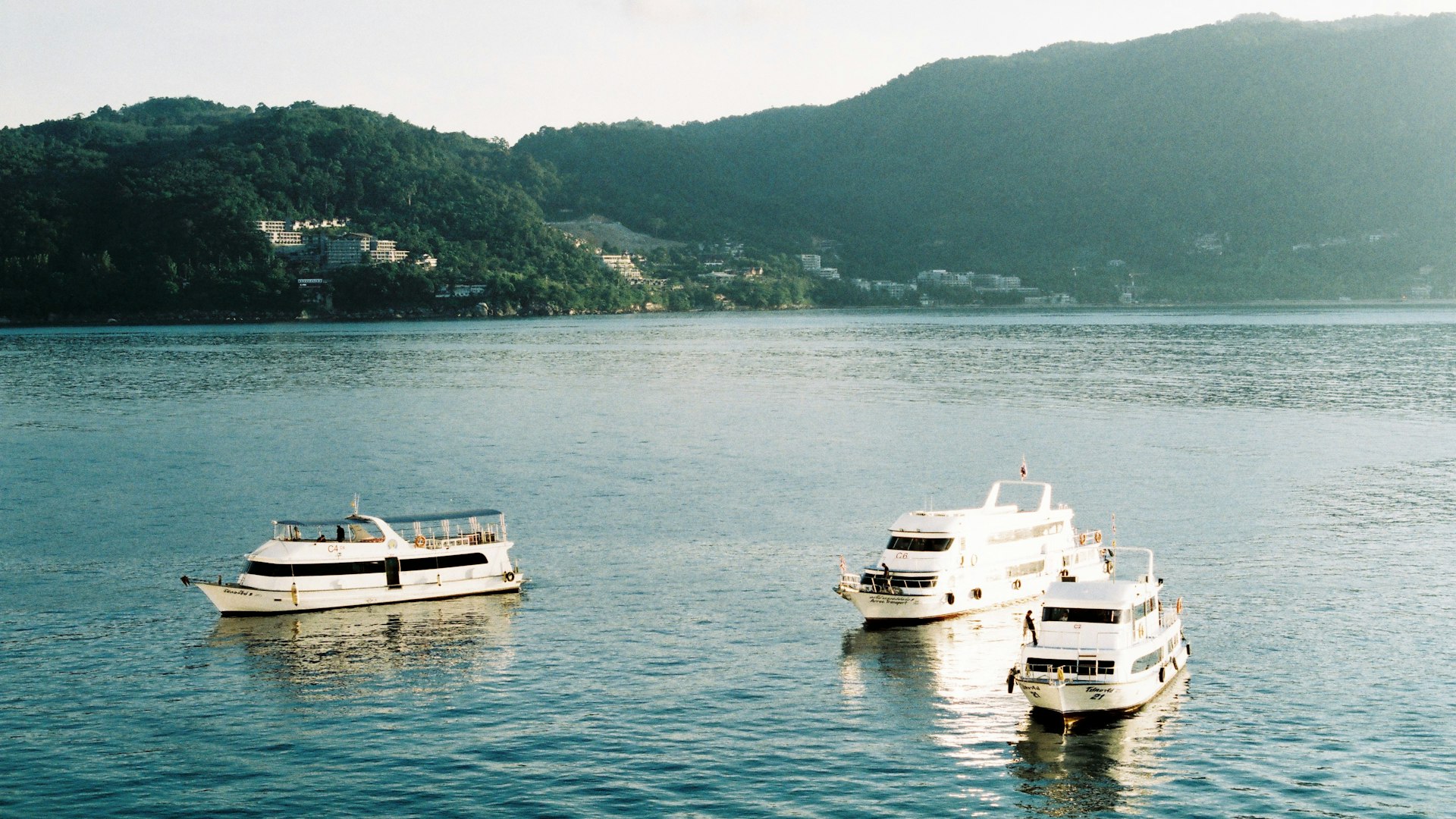
Thailand Yacht Charters

Thailand Yacht Charters

From the karst-studded waters of Phang Nga Bay to the quieter Trang archipelago, Thailand rewards charterers who move beyond the obvious anchorages and let the wind — and the tide — set the pace.

Charter by Vessel Type in Thailand

Catamaran Charter in Thailand

Spacious twin-hull vessels offering stability, comfort, and generous deck space for the ultimate charter experience.

Sailing Yacht Charter in Thailand

Classic sailing vessels that combine timeless elegance with the thrill of wind-powered adventure.

Motor Yacht Charter in Thailand

Powerful luxury vessels delivering speed, sophistication, and effortless cruising across any waters.

Thailand's Andaman Coast and Gulf of Thailand offer two distinct sailing theatres, each with its own rhythm, weather window, and character. The Andaman side — anchored by Phuket and Krabi — draws the majority of charter traffic, and rightly so: the limestone towers of Phang Nga Bay, the sheltered coves of the Similan Islands, and the relatively predictable southwest monsoon combine to produce one of Southeast Asia's most compelling sailing grounds. The Gulf side, centred on Koh Samui and the Samui Archipelago, runs on a near-opposite seasonal clock, making it a sensible alternative when the Andaman is unsettled.

What distinguishes Thailand from other Southeast Asian charter destinations is the density of anchorages within short passages. Day hops of fifteen to thirty nautical miles routinely deliver an entirely different landscape, a different village market, and a different kitchen. Provisioning is excellent in Phuket and Samui. The cruising infrastructure — fuel, ice, chandlery, haul-out — is the most developed in the region. And the cuisine, accessed everywhere from floating market boats to night markets a short longtail ride from your anchorage, is reason enough to extend the trip.

Why Charter in Thailand

The Andaman charter ground is geographically compact but visually varied. Phang Nga Bay's flooded karst landscape — eroded limestone pinnacles rising sixty to three hundred metres from shallow tidal water — is unlike anything in the Mediterranean or Caribbean. Navigation here requires attention to tidal state rather than depth: the bay shallows dramatically at low water, and timing your passage through the mangrove channels to Koh Panyee or the sea caves at Koh Ping Gan (the James Bond Island of the 1974 film) is part of the skill and part of the pleasure.

Beyond the bay, the Similan Islands (approximately sixty nautical miles northwest of Phuket) offer some of the clearest water in the Andaman Sea, with underwater visibility frequently exceeding twenty-five metres. The island group is a national marine park: anchoring is restricted to designated buoy fields, which keeps the reefs in good condition and the diver-to-fish ratio sensible. Further south, the Trang Islands — Koh Kradan, Koh Muk, and the Emerald Cave at Tham Morakot — attract a fraction of the Similan traffic and reward those willing to make the longer passage.

On the Gulf side, the Samui Archipelago — Koh Samui, Koh Pha Ngan, and Koh Tao — offers a more social charter experience, with the full moon party calendar on Pha Ngan drawing a certain crowd and the dive sites around Koh Tao drawing another. The passage between islands is rarely more than ten to fifteen nautical miles. Charter guests who want to combine sailing with serious diving tend to favour this corner of the Gulf, where Sail Rock (Hin Bai) is widely regarded as one of the best dive sites in Southeast Asia.

Thailand Highlights

1

Phang Nga Bay — Navigate the tidal channels at high water for access to the mangrove interior and the inhabited limestone stack of Koh Panyee, where the floating Muslim fishing village has a genuine off-grid quality in the early morning before day-trippers arrive.

2

Similan Islands National Marine Park — Nine granitic islands with bouldered headlands above water and coral gardens below. Ko Bon and Ko Tachai (the outer islands) reward divers and snorkellers with manta ray sightings from December through April. Mooring buoys are compulsory; book through the park authority in advance.

3

Koh Rok and the Trang Archipelago — Roughly thirty nautical miles south of Krabi, Koh Rok Nai and Koh Rok Nok are among the most visually striking anchorages on the coast: white-sand beaches, hard coral in the shallows, and limited daily visitor numbers enforced by the national park system.

4

Koh Lipe and the Tarutao National Marine Park — Thailand's southernmost Andaman island group, close to the Malaysian border. Koh Lipe itself is increasingly busy, but Koh Adang, Koh Rawi, and Koh Hin Ngam (the 'pebble beach' island) offer near-solitary anchorages and extraordinary water clarity.

5

Sail Rock (Hin Bai), Gulf of Thailand — A submerged pinnacle roughly fifteen nautical miles northeast of Koh Pha Ngan, rising from forty metres to within five metres of the surface. The swim-through chimney and regular whale shark sightings from March to May make this a Gulf highlight.

6

Ko Nang Yuan, Koh Tao — A three-islet formation connected by sandspits, with snorkelling that requires no specialist equipment. The anchorage is tight and busy in season; arrive before 0900 or after 1600 to secure space.

7

Koh Yao Noi and Koh Yao Yai — The two Yao islands sit in the middle of Phang Nga Bay and function as an excellent midpoint anchorage between Phuket and Krabi. The pace is markedly slower than Phuket, cycling is the primary transport mode, and the seafood at Bang Rak pier is unselfconsciously local.

When to Sail

Thailand's two coasts operate on opposing seasonal cycles driven by the northeast and southwest monsoons, which means there is almost always a good sailing window somewhere in the country. The Andaman peaks between November and April; the Gulf is most reliable from March through September.

High Season (Jun-Sep)

On the Gulf of Thailand, this is the prime window. The northeast monsoon has retreated, seas in the Samui Archipelago are calm, and daytime temperatures are consistent at 30-33°C. Koh Tao and Sail Rock are at their best for diving visibility. On the Andaman side, the southwest monsoon is active from May through October, bringing squally conditions, reduced visibility, and significant swell on exposed west-facing coasts. Many Andaman charter operators pause operations in July and August. Experienced offshore passages to the Similan Islands or Mergui Archipelago (Myanmar) during this window carry real weather risk and require careful planning.

Shoulder Season (May, Oct)

May and October are transitional months on both coasts and carry the highest weather variability. May on the Gulf can produce excellent sailing before the pattern settles; October on the Andaman sees the tail of the southwest monsoon and is generally the wettest month in Phuket. For charterers with schedule flexibility, late October into early November represents a sweet spot on the Andaman as the northeast monsoon establishes: winds moderate to 10-15 knots from the northeast, swell drops, and the Similan Islands open. Similarly, late April on the Gulf offers calm, clear conditions before the southwest monsoon arrives on the Samui side.

Choosing the Right Yacht

Catamarans dominate the Thailand charter fleet for good reason. The Andaman's protected inner anchorages and the Gulf's scattered island groups both suit shallow-draft, twin-hull platforms: you can anchor in a metre and a half of water over sand, launch the paddleboards in a flat lagoon, and use the wide bridgedeck as a social space in the heat. The Lagoon 52 and Island Spirit 410 are representative of what works well here — enough watermaker capacity and fuel range for multi-day passages, sufficient interior volume for the equatorial heat, and a draft that opens anchorages unavailable to deeper-keeled monohulls. For groups of eight or more, a catamaran is essentially the only practical choice in this fleet.

Seven Days on the Andaman — Phuket to Krabi and Return

A suggested week-long charter route

Day 1

Depart Yacht Haven Marina, Phuket (north tip of the island, sheltered from most weather) in the late afternoon. Motor north and east into Phang Nga Bay, anchoring overnight off Koh Naka Yai — a quiet bay with a useful small pier for dinghy landing and a village market.

Day 2

Full day in Phang Nga Bay. Time your entry to Koh Panyee for the two hours either side of high water; the floating village market opens by 0800 and the best light for photography is before 1000. Afternoon: explore the sea caves at Koh Ping Gan by kayak, then anchor in the protected water south of the island for the evening.

Day 3

Exit Phang Nga Bay southeast and make passage to the Koh Yao islands, roughly twenty nautical miles. Koh Yao Noi's east coast has several clean sandy anchorages suitable for an overnight stay. Hire bicycles ashore and ride the back roads through rubber and oil palm plantations to the west coast for sunset.

Day 4

Passage south and east to Koh Hong in Krabi Province — approximately eighteen nautical miles. The inner lagoon at Koh Hong is accessible by dinghy through a narrow entrance and rewards a full afternoon. The anchorage on the island's southern side is well protected. Dinner aboard.

Day 5

Explore Railay Peninsula from the water — the beach is inaccessible by road, so arriving by yacht is the appropriate way. The east lagoon provides day anchorage; the long-tail taxi service to Ao Nang town runs from the east beach pier. Overnight anchor off Koh Poda to the south: a small national park island with good snorkelling on the southern reef.

Day 6

Make passage northwest back toward Phuket, stopping at Koh Yao Noi or, for those with time and settled weather, pushing further to the Khai Islands (Koh Khai Nai, Koh Khai Nok) east of Phuket for a final afternoon snorkel. These islands are busy with day-trippers from Phuket before 1400; arrive late afternoon for calm.

Day 7

Return to Yacht Haven Marina by early afternoon for the standard 0900 the following morning check-out. If the charter ends at Ao Chalong on Phuket's southeast coast, the market at Chalong Circle is worth a final morning stop for preserved fruits, fresh roti, and local provisions to take home.

Local Tips

  • Entry and cruising permits matter. Foreign-flagged private yachts require a cruising permit, which must be obtained on arrival at an official port of entry (Phuket, Samui, or Pattaya are the main ones). Charter boats registered in Thailand operate under different rules, but verify your vessel's documentation status with your broker before departure — enforcement has become more consistent in recent years.
  • Provisioning is best done in Phuket town or at the marina supermarkets (Lotus's at Boat Lagoon is well stocked). Fresh produce is excellent and inexpensive at the markets in Ranong Road, Phuket town. On the Gulf side, Samui's Fisherman's Village area has reliable supermarkets. For longer passages toward Trang or Tarutao, provision fully before departure — resupply options become limited and expensive.
  • National park fees apply at the Similan Islands, Koh Rok, Koh Lipe/Tarutao, and Koh Hong. Fees are collected at the park ranger stations or jetties and are payable in cash (Thai Baht). The per-person foreign national rate is typically higher than the Thai rate. Budget for this in advance and carry sufficient small denomination Baht aboard.
  • Longshore currents and tides in Phang Nga Bay are not trivial. Spring tidal range in the bay approaches three metres in places. Running aground on a falling tide with a catamaran is manageable; doing the same with a keel boat is a more significant problem. Use current tide tables (not just the app) and consult a local pilot or your marina briefing for the specific channels you intend to transit.
  • Eating ashore is integral to the experience and should be planned rather than left to chance. Seek out the Muslim fishing communities on the Andaman coast for fresh grilled fish and roti canai breakfasts. In the Gulf, the night markets at Koh Samui's Chaweng district and the fresh fish stalls on Koh Pha Ngan's Thong Sala pier are distinctly better value than restaurant equivalents. Most anchorages are within dinghy range of a settlement with at least a small market or food vendor.
  • Heat management aboard is a real consideration. Even in the nominally cooler high season (November to February on the Andaman), midday temperatures aboard a dark-hulled vessel in direct sun reach uncomfortable levels. Ensure your charter yacht has functioning air conditioning in the cabins and adequate shade over the cockpit or bridgedeck. Catamarans with large bimini covers and open bridgedeck layouts handle the equatorial heat significantly better than enclosed cockpit monohulls.

Frequently Asked Questions

Do I need a sailing licence to charter in Thailand+
For bareboat charter, a recognised sailing qualification is required — typically an RYA Day Skipper (practical) or equivalent. The International Certificate of Competence (ICC) is not always accepted as a standalone document; check with your broker and the specific charter company. A VHF operator's certificate is also expected. If you do not hold the appropriate qualifications, a professional skipper can be arranged for most vessels in the fleet, typically at an additional daily rate.
Which coast — Andaman or Gulf — should I choose+
The decision comes down almost entirely to when you are travelling. The Andaman (Phuket, Krabi, Trang) is at its best from November through April, with the northeast monsoon providing consistent 10-18 knot sailing breezes and calm seas. The Gulf (Koh Samui, Koh Tao) is most reliable from March through September. If your travel window falls in October or November, both coasts are transitional; the Andaman tends to settle earlier in November, making it the safer choice for that window.
Are the Similan Islands accessible by charter yacht+
Yes, but with important caveats. The Similan Islands National Marine Park is open from approximately mid-October to mid-May; it closes during the southwest monsoon season for conservation reasons. Anchoring is not permitted — all vessels must use designated mooring buoys, which are limited in number and must be reserved. Overnight stays aboard are permitted on the buoys. The passage from Phuket is roughly sixty nautical miles, making it a full day's sail or a night passage. Some charter operators include the Similans in standard cruising ground; others require a specific passage endorsement.
What is the best Thailand itinerary for first-time charterers+
For first-timers, the Phuket-Phang Nga Bay-Krabi loop on the Andaman coast offers the best combination of navigational accessibility, visual variety, and shoreside interest within short passages. Day hops average fifteen to twenty-five nautical miles, anchorages are plentiful and well-charted, and the provisioning and support infrastructure around Phuket is reassuring for those less familiar with tropical sailing. The Gulf's Samui Archipelago is equally manageable and slightly better suited to those whose primary interest is diving.
Is there a fuel and water infrastructure for extended passages+
Fuel is available at Yacht Haven Marina and Boat Lagoon Marina in Phuket, at Ao Chalong pier, and at Koh Samui on the Gulf side. Away from the main centres, fuel availability is inconsistent — diesel is sometimes available from fishing village piers in jerry cans, but this should not be relied upon for planning purposes. Most charter catamarans carry 400-600 litres of diesel, which is sufficient for a week of mixed sailing and motoring. Watermakers are standard on most boats in this fleet; confirm capacity before departure if you plan to spend extended time at national park anchorages where water resupply is not possible.
What are the typical weather patterns during the Andaman high season+
From November through February, the northeast monsoon delivers consistent 10-18 knot winds across the Andaman Sea, predominantly from the northeast to east-northeast. Seas are generally calm on the sheltered east coasts of the islands and in Phang Nga Bay. March and April see the wind ease and back further south; conditions become light and often glassy by late April. February is statistically the driest month in Phuket. The occasional cold front pushing south from the Bay of Bengal can bring a day or two of unsettled weather even in the high season, but these are predictable on a five-day forecast and generally pass within 24 to 48 hours.

Speak to our Thailand specialists to match the right vessel and the right week to your plans.

Request Your Charter

Request Your Charter

Tell us about your dream voyage and we will find the perfect yacht for you.