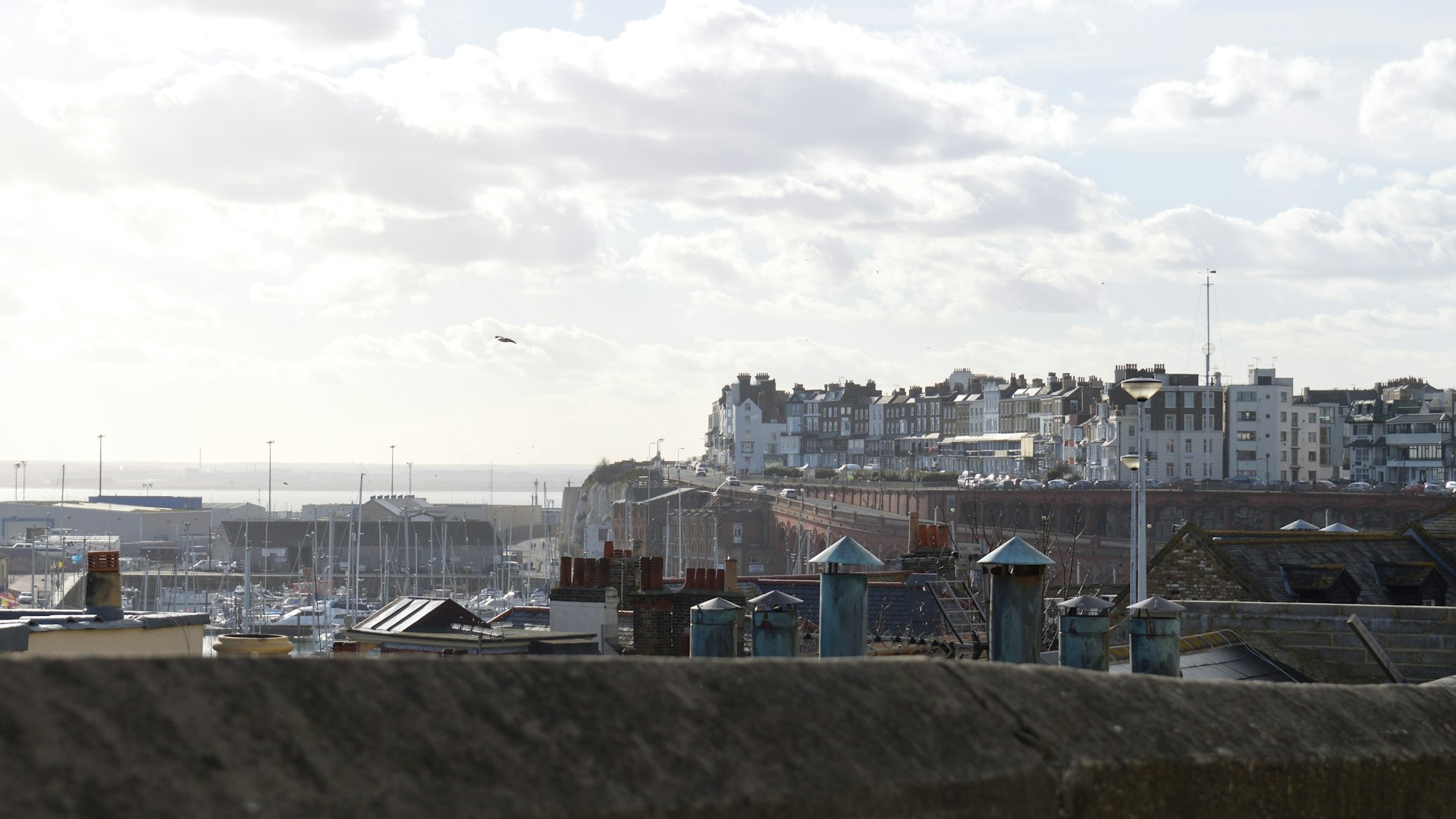
England Yacht Charters
From the tidal races of the West Country to the sheltered estuaries of East Anglia, England's coastline demands seamanship and rewards it generously — with medieval harbour towns, world-class seafood, and passages that change character with every tide.
Charter by Vessel Type in England
Catamaran Charter in England
Spacious twin-hull vessels offering stability, comfort, and generous deck space for the ultimate charter experience.
Sailing Yacht Charter in England
Classic sailing vessels that combine timeless elegance with the thrill of wind-powered adventure.
Motor Yacht Charter in England
Powerful luxury vessels delivering speed, sophistication, and effortless cruising across any waters.
Available Yachts in England

Bareboat Sailing Yacht Dufour 382
Dufour 382 GL · 2017
From
£1k/week

Bareboat Sailing Yacht Dufour 40
Dufour 40
From
£2k/week

Bareboat Sailing Yacht Hanse 458
Hanse 458 · 2018
From
£2k/week

Bareboat Sailing Yacht Dufour 460 Grand Large
Dufour 460
From
£3k/week

Crewed Sailing Yacht Crusade 64
Crusade 64
From
£5k/week

Crewed Sailing Yacht Andre Hoek 74
Andre Hoek 74
From
£6k/week
England is not a destination most charterers associate with warm-weather sailing, and that is precisely the point. The coastline stretching from the Isles of Scilly in the far southwest to the chalk cliffs of the Yorkshire coast is among the most technically engaging in European waters — one shaped by strong tidal streams, variable winds, and a density of historically significant anchorages that few Mediterranean destinations can rival. Sailors who know their craft come here for the challenge and the authenticity.
The infrastructure is equally serious. Marinas at Dartmouth, Falmouth, Cowes, and Chichester operate to high standards, the Solent remains one of the busiest and best-supported sailing waters in the world, and the network of south-coast harbours means shelter is rarely more than a few hours away when the weather dictates a change of plan. This is a destination where preparation and tide tables matter as much as the itinerary.
Why Charter in England
The southern coast of England offers an unusually dense variety of sailing environments within relatively compact geography. The Solent, bounded by the Isle of Wight to the south, provides sheltered water and consistent summer winds — predominantly south-westerlies at Force 3 to 4 — that make it ideal for both competitive racing and relaxed passage-making. Cowes Week alone draws over 1,000 yachts each August, and the racing infrastructure on the water is matched by the social programme ashore.
Further west, the West Country beyond Portland Bill opens into longer ocean swings, with exposed headlands, tidal gates, and the distinctive green-grey light of the English Channel. Harbours such as Salcombe, Dartmouth, and Fowey sit at the mouths of drowned river valleys, offering deep-water anchorages surrounded by oak woodland and stone quays that have been in continuous maritime use since the medieval wool trade. The provisioning here — crab, lobster, Cornish-landed fish, locally brewed ales — has improved significantly over the past decade.
For those comfortable with longer passages, the East Anglian coast and the Thames Estuary reward patience. The shallow-water sailing from the Medway to Harwich requires careful attention to the charted channels and sandbanks, but the reward is near-solitude, extraordinary birdlife on the estuarine marshes, and harbours like Mersea Island and Pin Mill that feel genuinely removed from the charter circuit. It is a very different proposition from the Solent and the better for it.
England Highlights
The Isles of Scilly, 28 miles south-west of Land's End — a five-island archipelago with white sand beaches, sub-tropical garden vegetation, and no cars beyond the main island of St Mary's. The approach through St Mary's Sound requires careful pilotage but rewards with anchorages that feel genuinely remote.
Salcombe, Devon — a long drowned estuary accessible only by water at low tide (the bar restricts entry at certain states of tide), lined with Georgian merchant houses and some of the most sought-after dining in the South Hams. The town crab sandwiches are not an accident of geography.
Dartmouth and the River Dart — home to the Britannia Royal Naval College and one of the most protected deep-water rivers on the English coast. Anchor upstream at Dittisham for the plum orchards and the Anchorstone Café, or take a swinging mooring in the outer pool and walk the old town.
The Solent and Cowes — the organisational centre of English yacht racing. Cowes High Street in August, with racing marks being set in the Western Solent and the Royal Yacht Squadron cannon firing start signals, is a piece of sailing history that still functions as advertised. Newtown Creek on the Isle of Wight offers a complete contrast: a National Trust nature reserve where you anchor in reeds and hear no engine noise.
Fowey, Cornwall — a working port that handles china clay cargo ships alongside visiting yachts, with a tight harbour entrance, strong tides, and a town built on steep hillsides above the river. The Fowey Estuary and the village of Polruan on the opposite bank reward exploration by dinghy.
Chichester Harbour, one of the most sheltered Areas of Outstanding Natural Beauty on the south coast — a complex of tidal channels and creeks covering over 50 square miles, with the yachting village of Itchenor as its social centre and excellent provisioning at Birdham Pool marina.
The Needles Channel, approaching the western entrance to the Solent past the chalk stacks off the Isle of Wight's western tip. In a south-westerly breeze with the tide running east, this is some of the most exhilarating tidal sailing in English waters.
When to Sail
The core sailing season runs from late May through September, with July and August offering the most settled conditions. Spring and early autumn can produce exceptional sailing with smaller crowds and notably better harbour access.
High Season (Jun-Sep)
July and August bring the most reliable south-westerly airflow across the Channel, sea temperatures that make swimming viable in the West Country (around 17-18°C), and the widest opening hours for marinas, chandleries, and waterfront restaurants. The Solent in August is at its most animated — Cowes Week typically falls in the first week of the month — but popular anchorages fill quickly and some visitors find Dartmouth or the Isles of Scilly preferable for a quieter experience. June has the longest daylight hours and often less settled weather, but strong winds from the south-west can produce excellent sailing conditions for experienced crews.
Shoulder Season (May, Oct)
May is an underrated month on the English south coast. High-pressure systems from the Azores push north more frequently, winds are lighter, anchorages are quieter, and the countryside above the harbour towns is in full spring colour. Tidal streams remain the same throughout the year, so the technical demands do not diminish. October can produce some of the most characterful sailing of the year — long Atlantic swells rolling up the Channel, dramatic skies, and harbours that feel entirely one's own — but crews should be prepared for shorter days, stronger gales, and the reality that some smaller facilities have closed for winter.
Choosing the Right Yacht
England's coastal waters suit performance sailing yachts more than motorboats or wide-beam catamarans, for reasons that are largely practical. The tidal gates at Portland Bill, the Needles, and the approach to the Isles of Scilly all require timing against strong streams that can run at 4-5 knots on springs, making speed through the water a genuine operational consideration. A well-found monohull sailing yacht in the 40 to 74-foot range — the type of vessel represented in the available fleet by Dufour and Andre Hoek designs — handles these conditions cleanly and provides the upwind ability needed when south-westerly winds freshen in the Channel.
Seven Days on the English South Coast — Cowes to the Isles of Scilly
A suggested week-long charter route
Join the yacht at Cowes, Isle of Wight, and spend the afternoon familiarising yourself with the vessel and exploring the town. Cowes is compact, walkable, and well-provisioned. Dine ashore at one of the quayside restaurants on the Parade, and plan the passage west with the skipper over the tide tables.
Depart Cowes on the west-going tide through the Needles Channel, timing the gate to carry the stream through into open water. Passage west along the Dorset coast, rounding Portland Bill with the tide rather than against it — a 4-knot foul stream here can add hours and significant discomfort to any passage. Arrive at Dartmouth in the early evening, picking up a swinging mooring in the pool.
A rest day on the River Dart. Take the passenger ferry upriver to Totnes, or hire the yacht's tender to explore the creek at Dittisham. The Seahorse restaurant in Dartmouth town is among the best fish restaurants on the English south coast — book ahead. Walk the coastal path above Kingswear for a view of the river entrance you will not forget.
Passage to Salcombe, approximately 20 nautical miles south-west. Check tide tables and the bar forecast before entering — the Salcombe Bar is passable in all but strong onshore swell, but should be treated with respect. Anchor in the upper estuary at Snapes Point or take a mooring in the main pool. Salcombe has excellent independent food shops; provision here for the offshore passage ahead.
The offshore passage to the Isles of Scilly — approximately 85 nautical miles from Salcombe, or 50 from Falmouth if you prefer a staged approach. Experienced crews sailing direct should plan to arrive at St Mary's Sound in daylight and with the tide making into the sound. The passage is open Atlantic: treat it as such regardless of the forecast, and carry appropriate offshore safety equipment.
Explore the Scilly archipelago at anchor. Tresco is the highlight of the group — anchor off the eastern shore and walk up to the Abbey Gardens, where tree ferns and agaves grow in open ground within sight of a working lighthouse. St Agnes to the south has the most remote feel; the cove at Porth Conger is sheltered in northerly winds and largely free of other yachts outside August.
Return passage to Falmouth — 27 miles east-north-east, with the prevailing south-westerly usually giving a comfortable reach. Falmouth is one of the finest deep-water natural harbours in northern Europe, and the National Maritime Museum Cornwall is worth the visit for any serious sailor. Return the charter yacht at Falmouth Marina, or continue the cruise east towards Fowey and the Cornish rivers if the schedule allows.
Local Tips
- •Tide tables are non-negotiable on the English south coast. Portland Bill, the Needles, and the approaches to the Scilly Isles all have strong tidal streams that must be worked with rather than against. Download the UKHO's EasyTide or carry printed Reeds Almanac pages for the relevant sections; your skipper will plan all passages around the tidal gates.
- •VHF Channel 16 and local port control channels are actively monitored throughout English waters — commercial traffic in and out of Falmouth, Dartmouth, and the Solent is significant, and maintaining a listening watch is both a legal requirement and good seamanship. Solent Coastguard broadcasts weather on a scheduled rotation.
- •Marina bookings in the Solent during July and August should be made well in advance, particularly for Cowes, Yarmouth (Isle of Wight), and Chichester. Many South Coast harbours operate a first-come, first-served system for visitor berths outside peak events, but assuming availability without checking is optimistic. Harbour Authority websites and Cruising Association berth-finder tools are reliable.
- •The food culture on the English south coast is genuinely regional and has improved dramatically in the last 15 years. Crab and lobster are landed locally in Cornwall and Devon; Native oysters are available at Mersea and West Mersea in Essex; Hogs Pudding is a Cornish breakfast staple worth seeking out in Fowey or Padstow. Many harbourside pubs have retained their character — the Shipwright's Arms at Helford is a notable example — but smart dining has arrived in Salcombe, Dartmouth, and Falmouth without displacing it.
- •No visa or entry formalities are required for UK and EU nationals sailing within English waters under a charter. Non-EU visitors should carry passports; if arriving from France or other continental ports, the yacht must clear UK Customs via the CERS (Crew and Goods Reporting Service) system before passengers disembark. Your charter broker will confirm current requirements at booking.
- •Fuel and provisioning are available at all major marinas. Bunkering berths exist at Falmouth, Dartmouth, Cowes, and Chichester Harbour. Note that fuel in the UK is priced in sterling and is generally more expensive than in France or Spain — fill up selectively and plan passages to minimise motor-sailing where possible.
Frequently Asked Questions
Do I need an RYA qualification or specific licence to charter a sailing yacht in England+
Is England suitable for first-time charterers or families with children+
What is the sailing weather typically like in summer+
What currency and language are used, and what are the tipping conventions+
How far in advance should I book an England charter+
Can I charter a yacht and cruise across to France from England+
Speak to a SelectYachts broker to select the right vessel for your English coastal itinerary and reserve your preferred dates.
Request Your Charter