Corsica Yacht Charters

Corsica Yacht Charters

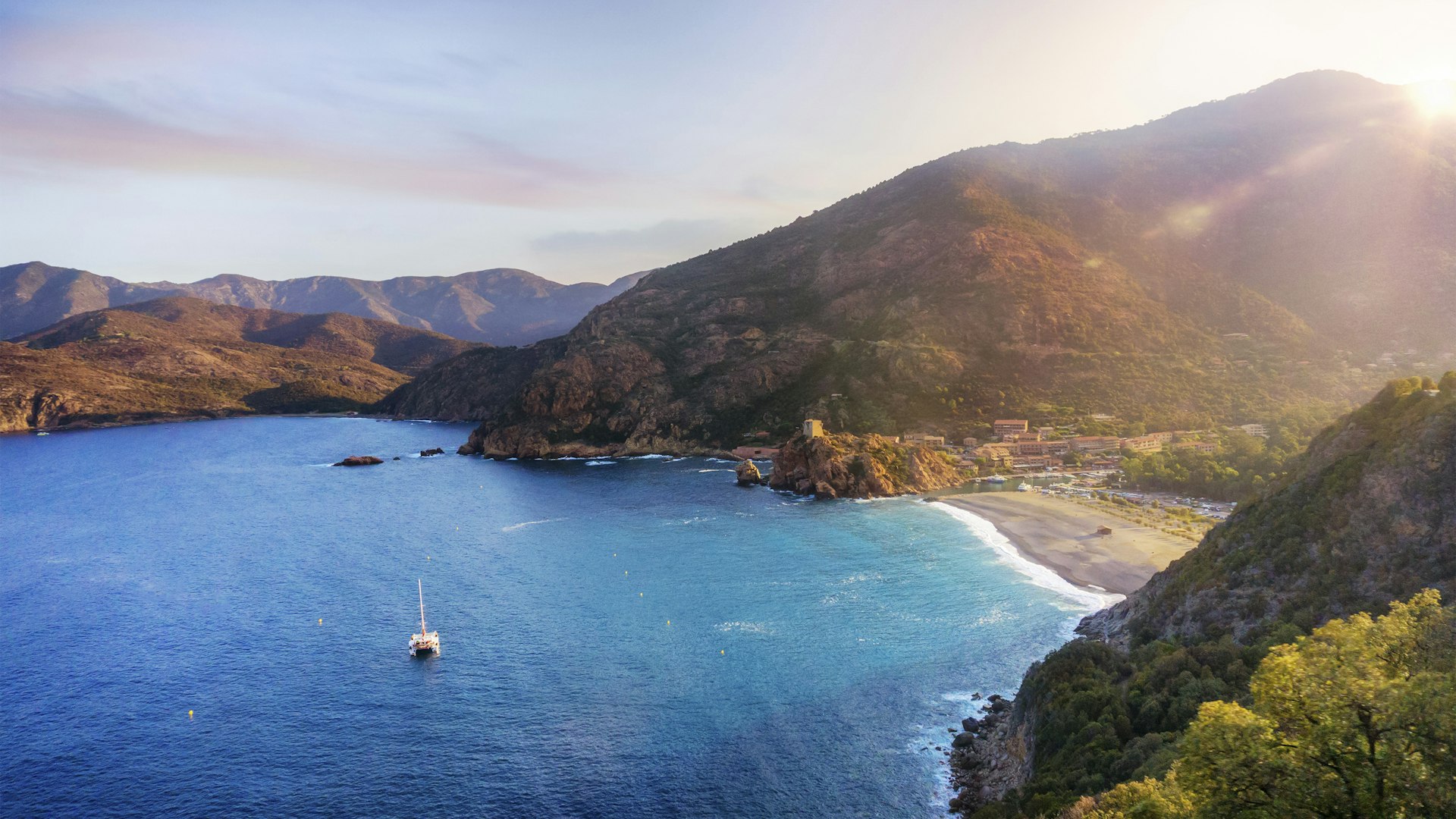
Granite peaks dropping to turquoise water, a French island with a fiercely Genoese soul, and some of the most varied sailing in the western Mediterranean. Corsica rewards charterers who come prepared.

Charter by Vessel Type in Corsica

Catamaran Charter in Corsica

Spacious twin-hull vessels offering stability, comfort, and generous deck space for the ultimate charter experience.

Sailing Yacht Charter in Corsica

Classic sailing vessels that combine timeless elegance with the thrill of wind-powered adventure.

Motor Yacht Charter in Corsica

Powerful luxury vessels delivering speed, sophistication, and effortless cruising across any waters.

Corsica sits at the intersection of French administration and Italian sensibility, roughly 170 nautical miles south of Nice and 80 miles north of Sardinia. The island's coastline runs to over 1,000 kilometres, ranging from the exposed granite headlands of Cap Corse in the north to the broad sandy crescents of the Bouches de Bonifacio in the south. Between those two extremes you will find deep, sheltered calanques, working fishing ports, Genoese watchtowers standing sentinel on almost every promontory, and a maquis-covered interior that scents the offshore breeze with rosemary, cistus, and wild herbs well before land is visible.

What sets Corsica apart from busier charter destinations is the combination of genuine wilderness and reliable infrastructure. The Réserve Naturelle des Bouches de Bonifacio protects some of the most ecologically rich waters in the French Mediterranean, yet Bonifacio's deep-cut harbour offers excellent provisioning and a strong berth allocation for visiting yachts. Porto-Vecchio, Calvi, and Ajaccio all have well-equipped marinas capable of handling vessels up to superyacht scale. The island is French territory, which simplifies documentation for EU-flagged yachts, while the bilingual Corsican character ensures that even a modest effort in either French or Italian is warmly received.

Why Charter in Corsica

The Corsican coastline has a geological drama that is rare in the Mediterranean. The Calanche de Piana on the west coast, a UNESCO World Heritage site, presents walls of orange porphyry descending vertically into water so clear that anchor chains are visible at eight metres. Further north, the Scandola Nature Reserve is accessible only by sea, making a yacht charter the only practical way to spend meaningful time in waters that are closed to commercial traffic. These are not experiences replicable from a hotel.

From a sailing perspective, Corsica offers genuine wind variety across a compact geography. The Maestrale, the north-westerly that dominates in summer, produces consistent pressure on the exposed western coast and around Cap Corse. The Tramontane and Libeccio create more localised effects in the straits and bays. Sailors who know the island's microclimates can route accordingly, picking sheltered east-coast anchorages like Solenzara or Santa Giulia when the west is running hard, or crossing to Sardinia for a change of scene when the Bouches de Bonifacio are settled.

Corsican cuisine is one of the most distinctive in France, and it is best accessed by sea. Charcuterie from pigs raised on chestnut-forest acorns, brocciu cheese, aziminu fish stew in the Bastia tradition, and the local Nielluccio and Vermentinu wines rarely appear on mainland menus at the standard found here. Arriving by tender in a small port like Macinaggio or Cargèse and eating at a family-run restaurant with no reservations taken is an experience that rewards the spontaneity that only a crewed charter provides.

Corsica Highlights

1

Réserve Naturelle de Scandola – accessible by sea only, this volcanic west-coast reserve offers exceptional snorkelling and birdwatching in a protected zone where anchoring is restricted to designated areas; time your arrival early to secure a spot.

2

Bonifacio – the old town perches on white limestone cliffs above a narrow inlet deep enough for sizable yachts; the approach from the east through the Bouches de Bonifacio, with Sardinia visible to the south, is one of the finest harbour entrances in the Mediterranean.

3

Calanche de Piana – orange porphyry cliffs dropping directly into the Golfe de Porto; best experienced from the water at dawn before day-charter boats arrive from Porto.

4

Lavezzi Islands – a granite archipelago at the southern tip of Corsica within the marine reserve; snorkelling over submerged boulders in gin-clear water, with the option to cross to Maddalena Archipelago in Sardinia in under an hour.

5

Cap Corse – the 40-kilometre peninsula pointing north from Bastia offers a string of small calanques, Genoese towers, and the working port of Macinaggio at its tip, with good holding in settled conditions off the eastern shore.

6

Girolata – a village with no road access, reachable only by boat or a long mountain trail; a small quay accommodates tenders, and the single restaurant serves grilled fish and local rosé at unhurried pace.

7

Golfe de Valinco and Propriano – a deep south-western gulf with excellent wind protection behind Punta di Campomoro; the surrounding maquis hills and near-empty beaches make it one of the quieter anchorages of the summer season.

When to Sail

The core sailing season runs from May through October, with July and August offering the warmest water and highest demand. May and September deliver the best balance of favourable winds, manageable anchorage density, and lower provisioning pressure.

High Season (Jun-Sep)

July and August bring sea temperatures above 24°C, sustained Maestrale winds of 15-25 knots on the western coast, and full animation in ports like Calvi, Bonifacio, and Porto-Vecchio. Anchorages at Rondinara and the Lavezzi Islands become crowded by mid-morning; arriving the previous evening or departing early is standard practice. Marina berths in Ajaccio and Porto-Vecchio should be booked well in advance, particularly for vessels above 20 metres. June is marginally quieter and often has the clearest water of the season.

Shoulder Season (May, Oct)

May and October are the considered choice for charterers who prioritise uncrowded anchorages and moderate prices. Winds can be less predictable in May, with occasional low-pressure systems still moving through, but temperatures are pleasant from mid-month onwards. October sees the maquis beginning to turn, the vendange underway in Patrimonio vineyards, and a notable reduction in marina tariffs. Water temperature in early October typically remains above 20°C. Both months suit experienced sailors or well-crewed motor yachts more than novice bareboat crews.

Choosing the Right Yacht

Corsica suits all three principal yacht categories, but the right choice depends on your cruising priorities. Sailing yachts from 40 to 60 feet, including Beneteau and Dufour models well represented in the local fleet, are the natural choice for charterers who want to make use of the Maestrale. The west coast and the straits between Corsica and Sardinia generate reliable pressure; a well-found monohull handles both conditions with efficiency. Catamarans have become increasingly popular for family groups and those prioritising shallow-draft access to beaches and calanques. Their broader beam allows comfortable use of the cockpit at anchor, and drafts of under 1.5 metres open anchorages that are marginal for deep-keeled yachts. The Lavezzi Islands and Rondinara Bay are particularly well suited to catamaran exploration. Motor yachts, including Azimut, Apreamare, and the occasional Benetti or Baglietto in the premium tier, are the choice for groups who want to cover larger distances without dependency on wind schedules. Corsica's coastline is long enough that a motor yacht can realistically complete a full circuit in a week without feeling rushed, stopping at a different port each night. Vessels in the Sanlorenzo SD92 class or comparable semi-displacement designs manage the exposed passages north of Ajaccio comfortably when the Maestrale is running at the higher end of its range.

Corsica Full Circuit, 7 Nights from Ajaccio

A suggested week-long charter route

Day 1

Depart Ajaccio marina in the afternoon, heading north up the west coast with the maquis interior to starboard. Anchor in the Golfe de Sagone for a quiet first night; the gulf provides shelter from the north-west and the beaches are largely empty outside August.

Day 2

Morning passage north to the Réserve Naturelle de Scandola. Enter the designated anchorage early, spend several hours by tender and in the water, then continue to Girolata for a late lunch ashore at the quayside restaurant. Overnight at anchor in the calanche.

Day 3

Transit the Calanche de Piana in the morning light before the day-charter traffic builds. Continue to Calvi, where the citadel rising above the marina provides the backdrop for an evening ashore. Marina berths here are well-managed; book ahead in July or August.

Day 4

Sail or motor around Cap Corse, stopping in Macinaggio for provisioning and a walk up to the coastal path above the port. The east-coast passage south is typically calmer than the western side; anchor off the Îles Finocchiarola nature reserve if conditions allow.

Day 5

Continue south down the east coast to Solenzara or Porto-Vecchio. Solenzara offers a pleasant marina and easy access to the Aiguilles de Bavella in the interior; Porto-Vecchio suits those who want a more animated evening with a broader choice of restaurants.

Day 6

Full day in the Bouches de Bonifacio. Explore the Lavezzi Islands in the morning, then enter Bonifacio harbour in the afternoon. The approach under the limestone cliffs at close quarters is one of the most memorable in the western Mediterranean. Dine in the old town.

Day 7

Depart Bonifacio and head north through the Golfe de Valinco, anchoring off the headland at Campomoro for a final swim stop. Afternoon passage back to Ajaccio for handover the following morning.

Local Tips

  • Corsica is French territory, so EU-flagged vessels face no customs formalities and VAT on charter fees follows standard French rates. Non-EU flagged yachts should ensure CITES documentation is in order for any protected timber or materials aboard, as inspections do occur in Bonifacio.
  • The Réserve Naturelle des Bouches de Bonifacio has strict anchoring regulations. Anchoring on Posidonia seagrass meadows carries meaningful fines; the use of eco-mooring buoys in the reserve is mandatory in designated zones and buoy availability is first-come in high season.
  • Provisioning is best done in Ajaccio, Porto-Vecchio, or Calvi, all of which have dedicated ship chandlers and quality food markets. The covered market in Ajaccio (Marché du Cours Napoléon) is exceptional for local charcuterie, cheese, and honey. Smaller ports like Girolata or Centuri have very limited supplies.
  • Wind forecasting in Corsica requires attention to localised effects that GFS models underrepresent. The Maestrale accelerates through the Ligurian and Tyrrhenian seas and can arrive with less warning than equivalent winds further west. Météo-France's marine bulletin, supplemented by Passage Météo, is the most reliable combination for the island.
  • Corsican cuisine rewards curiosity. Request brocciu fritters, figatellu sausage, and chestnut-flour pastries wherever they appear on menus; these are genuinely regional products rather than tourist reconstructions. In wine terms, Patrimonio (Nielluccio) and Ajaccio (Sciacarellu) appellations are worth taking seriously, and several domaines will receive visiting yachts by appointment.
  • High-season marina reservations in Bonifacio's Port de Plaisance and Calvi's Port de Plaisance should be made weeks in advance for vessels above 15 metres. Bonifacio in particular has a waiting list system in July and August; arriving without a reservation and expecting a berth is not a reliable strategy.

Frequently Asked Questions

Do I need a cruising permit to charter in Corsica+
Corsica is French territory, so EU-flagged yachts on charter require no special cruising permit beyond standard French maritime documentation. Non-EU flagged vessels may require a transit log (passeport de transit douanier) depending on flag state. Your charter broker will confirm exact requirements based on the vessel's flag.
Can I sail from Corsica to Sardinia on the same charter+
Yes, and the crossing is popular. The Bouches de Bonifacio, the strait separating the two islands, is roughly 12 nautical miles at its narrowest point. Sardinia is Italian territory, so you will need to complete Italian customs entry formalities upon arrival. Porto Cervo and the Maddalena Archipelago are the most common first stops from Bonifacio.
What is the best base for a Corsica charter+
Ajaccio and Porto-Vecchio are the two principal charter bases. Ajaccio suits those planning to focus on the west coast and Cap Corse. Porto-Vecchio is more convenient for the southern calanques, the Lavezzi Islands, and a crossing to Sardinia. Calvi is a viable base for charterers focused on the north-west coast and Scandola.
Is Corsica suitable for inexperienced sailors or first-time charterers+
The east coast and southern anchorages in settled weather are manageable for competent beginners on a bareboat. The west coast, Cap Corse passages, and the Bouches de Bonifacio in anything above a Force 4 are better suited to experienced crews. A skippered or fully crewed charter removes this variable entirely and is the recommended option for first-time visitors.
How far in advance should I book a Corsica charter for July or August+
For high season, particularly July and the first three weeks of August, six to nine months in advance is standard for the most sought-after yachts and marina allocations. Shoulder season departures in May, June, September, and October typically allow for shorter lead times of two to four months, though premium vessels still attract early bookings.
Are there anchoring restrictions around the Scandola Reserve+
Yes. The Réserve Naturelle de Scandola is divided into zones with varying levels of restriction. Anchoring is prohibited in the core zone and regulated in buffer areas. Navigation is permitted but stopping and anchoring must be done only in the designated areas clearly marked on current Navionics and SHOM charts. A tender excursion from an anchor outside the restricted zone is the standard approach.

Speak to a SelectYachts specialist to match the right vessel and itinerary to your Corsica charter dates.

Request Your Charter

Request Your Charter

Tell us about your dream voyage and we will find the perfect yacht for you.